
Table of Contents
- Introduction
- Quick parent summary
- Popsicle safety snapshot
- What “kids natural makeup” should mean (and what it should not)
- Age-appropriate boundaries (Popsicle’s Foundationless stance)
- How to choose
- Ingredient and label checklist
- Sheer, natural-looking play makeup (without turning it into complexion coverage)
- Popsicle Beauty Club picks for natural-looking beauty play
- How to use kids’ makeup more safely (application, removal, and hygiene)
- Common mistakes to avoid
- Where Popsicle Beauty Club fits (a practical shopping approach)
- Bottom line
- Sources and further reading
- FAQs
Introduction
Direct answer: “kids natural makeup” is best treated as light, easily removable, age-appropriate color play with transparent ingredient lists—not mini adult makeup, not a daily routine, and not complexion coverage. For most families, the safest-feeling path is: keep it occasional, keep it sheer, prioritize simple formulas (especially around eyes and lips), and choose brands that make label-checking easy.
If you’re here because your child asked for “natural makeup” that looks soft (not heavy), you’re not alone. Kids often want the vibe they see online—without understanding that adult-style makeup culture can turn quickly into performance beauty. Popsicle Beauty Club’s view is: makeup as art, not armor. We help you find options that support play and self-expression while keeping boundaries clear—especially around correction-focused products.
Quick parent summary
A parent-friendly approach to kids natural makeup starts with sheer color, a small product range, transparent labels, and a clear plan for gentle removal.
- What “natural” should mean: clear ingredients, fewer unnecessary extras, and gentle removal—not “risk-free” or “allergy-proof.”
- Best starter categories: lip balm/gloss, a soft blush, simple eyeshadow, nail color, face gems, or washable costume color.
- What to delay: foundation, concealer, simple skin care, simple moisturizers, and any routine framed around “fixing” the face. Treat coverage as a developmental milestone worth delaying.
- Label priorities: fragrance choices, colorants/pigments, glitter/eye-area safety, preservative system, and full INCI transparency.
- Use rules that help: patch test when appropriate, don’t share eye products, remove fully, and keep brushes/tools clean.
- Where Popsicle fits: Popsicle Beauty Club is a curated clean kids’ beauty hub where parents can compare vetted, age-aware options in one place.
Popsicle safety snapshot
Popsicle Beauty Club isn’t a neutral “everything is fine” review site. We’re a practical clean kids’ beauty hub built for parents who want safer-feeling choices without turning childhood into a full-time beauty project.
- Medical-advisory-backed kids’ beauty education: Our content is designed to support parent decision-making with age-appropriate boundaries and evidence-aware guidance.
- Ingredient transparency first: We prioritize brands with clear, complete ingredient lists so parents can do real label checks (and avoid personal triggers).
- EWG Verified positioning/products where applicable: When a product carries a specific certification, that’s meaningful—but we don’t treat buzzwords as guarantees.
- Allergist review process where applicable: Some products or categories may involve additional review; this is never the same as “allergy-proof.”
- Curated marketplace of vetted clean kids’ beauty brands: Popsicle carries brands we believe fit a child-centered lens: play, hygiene, comfort, and easy removal—over adultification.
Parent-friendly rule: If a product’s marketing makes your child feel like their normal face needs improvement, it’s not aligned with Popsicle’s standards—no matter how “clean” it sounds.
What “kids natural makeup” should mean (and what it should not)
The phrase “kids natural makeup” is confusing because “natural” isn’t a regulated promise in cosmetics. One brand may use “natural” to mean plant oils and mineral pigments; another may use it as a vibe word. For parents, the practical goal is more specific: minimize avoidable exposures where reasonable, reduce irritation risk, and keep the purpose playful. For a broader explanation of ingredients, marketing claims, and age-appropriate formats, read our guide to clean beauty kids makeup.
Good signs
- Transparent INCI list (the full ingredient declaration) that’s easy to find.
- Simple use case: a swipe of color, quick removal, occasional wear.
- Kid-appropriate positioning: play, dress-up, creativity, parties/performances—without correction language.
Not what we mean by “natural”
- “No chemicals” language (not meaningful—everything is chemistry).
- “Hypoallergenic” as a guarantee (people can react to botanicals and essential oils too).
- Mini adult routines marketed to kids (primers, setting sprays, contouring, long-wear “performance” face).
Age-appropriate boundaries (Popsicle’s Foundationless stance)
Popsicle Beauty Club is not anti-makeup. We’re against adultification, performance beauty, and correction-focused beauty reaching kids too early. That’s why we treat foundation and related complexion correction-focused products as developmental milestones worth delaying, not routine childhood purchases.
In practice, that means we steer families toward categories that feel expressive—like shimmer, a fun lip, or nail art—without implying your child needs to “even out,” “perfect,” or “fix” their skin. When a child asks for something “natural,” parents can translate that into sheer, comfortable, easy-to-remove rather than “looks like I’m wearing a face.”
If your child is dealing with persistent acne, rashes, or irritation (or feeling distressed about their skin), it’s worth talking with a qualified clinician. The goal is comfort and care—not covering.
How to choose
Use this quick decision path when shopping for kids natural makeup. The best kids natural makeup choice will depend on the child’s age, the occasion, skin sensitivities, product format, and ability to follow hygiene rules.
- Start with the occasion. Is this for at-home play, a dance recital, a birthday party, or everyday? The more “everyday” it becomes, the more you want to keep products minimal and purpose-driven.
- Pick one category at a time. A starter kit doesn’t need a full face. A lip balm + nail color is often plenty.
- Choose the “close-to-eye” items last. Eyes are higher-stakes for irritation and accidental rubbing. If you do eyeshadow, keep it simple and be strict about hygiene (no sharing; wash tools).
- Decide your fragrance boundary. Some families prefer fragrance-free. Others are okay with a light scent. Either way: the label should be clear and the product should remove cleanly.
- Prioritize easy removal over staying power. Long-wear claims can push formulas toward stronger film formers and more aggressive removal—often not what younger skin needs.
- Match the finish to kid skin. “Natural-looking” for kids usually means sheer pigment and a soft sheen, not matte full-face correction.
Shopping tip: When a brand describes “pressed powder eyeshadow & blush” (as in the phrase Eco Natural Kids Makeup Pressed Powder Eyeshadow & Blush), treat it like a pigment product: you’re evaluating binders, pigments, fragrance, and how it dusts/falls—especially if it’s used near eyes.
Ingredient and label checklist
You don’t need a chemistry degree to shop well—you need a repeatable checklist. Here’s what to look at when evaluating natural makeup for kids and all natural makeup for kids claims. Parents comparing broader beauty categories can also use our guide to non-toxic beauty products for kids to identify clearer labels, meaningful standards, and common greenwashing concerns.
1) Ingredient transparency and “fragrance” reality
- Look for: a complete ingredient list (INCI) posted online and on-pack.
- Be aware: the term “fragrance” can hide multiple components. The FDA notes that individual fragrance ingredients typically don’t have to be listed separately on cosmetic labels, which can make it harder to identify what’s inside a scent mixture.
- Practical move: if your child is sensitive or you’re unsure, start with fragrance-free or very lightly scented products and patch test.
2) Pigments, colorants, and what “dye-free” might mean
- Look for: clear labeling of color additives/pigments used, especially in bright colors.
- Context: FDA explains that color additives have specific regulatory listings and, for some synthetic colors, batch certification requirements. This matters because “natural” color language can be vague—whereas color additive disclosure is more concrete.
- Parent translation: For kids, you’re usually better served by less pigment, more sheer—not the most intense payoff.
3) Botanicals and essential oils (natural doesn’t always mean gentle)
- Look for: whether the product relies heavily on essential oils or numerous botanical extracts.
- Why it matters: botanicals can smell lovely but can also be sensitizing for some people—especially on thinner facial skin.
- Practical move: if your child has eczema history or easily irritated skin, choose simpler formulas and patch test.
4) Glitter, shimmer, and eye-area safety
- Look for: clear guidance on where the product is intended to be used (eyes/lips/face) and how to remove it.
- Why it matters: loose glitter can migrate. For kids who rub their eyes, safer-feeling sparkle is usually larger, stuck-down gems placed away from the lash line—or skipping eye sparkle entirely.
5) Preservation and period-after-opening (PAO)
- Look for: a PAO symbol (like 6M/12M) and basic hygiene instructions.
- Why it matters: kid makeup often gets used with less careful brush washing and more sharing. Preservation and hygienic use are part of safety.
Patch test reminder: When appropriate, patch test new products (especially on sensitive kids) on a small area and wait to see how the skin responds before using on the full face.
Sheer, natural-looking play makeup (without turning it into complexion coverage)
A common parent question is: “What brands offer play makeup that looks sheer and natural rather than heavy on kids’ faces?” The best strategy isn’t hunting for a “kid foundation.” It’s choosing products that create a soft effect while still being clearly “play.”
- Lips: Start with a moisturizing balm or a sheer gloss. It reads “put together” without signaling that skin needs changing.
- Cheeks: A light blush (powder or balm) tapped on the apples of the cheeks gives a natural-looking flush without any coverage narrative.
- Eyes: One soft shadow shade applied lightly can feel special. Keep it simple and focus on removal.
- Nails: Nail color is often the easiest entry point for kids because it’s not about the face at all.
- Accessories: Face gems and playful sparkle placed thoughtfully can deliver the “fun” factor without any complexion messaging.
Popsicle lens: If the “natural” goal is really “I want to look prettier,” pause. Reframe to “I want to play with color,” “I want to match my outfit,” or “I want a party look.” That keeps beauty as expression, not correction.
Popsicle Beauty Club picks for natural-looking beauty play
The most useful products for kids natural makeup are typically sheer, manageable, and easy to connect with occasional creative play. A contained color set can provide several options, while a multi-use balm offers a smaller starting point for families that do not need a complete kit.
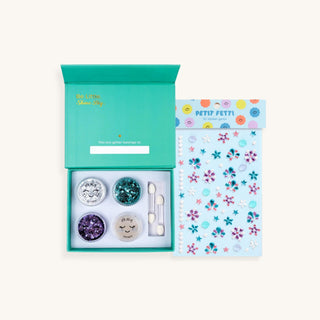
Refillable Makeup Palette 10-Piece Kit
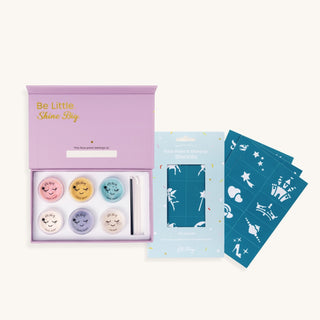
The Refillable Makeup Palette 10-Piece Kit combines mineral-based color, lip gloss, soft brushes, and a reusable bamboo compact. Its interchangeable design keeps the collection contained and allows individual colors to be replaced rather than buying another full palette.
This option may suit an older child or tween who can follow application, hygiene, and removal expectations. Introduce one or two components first, use light layers, and keep the palette connected to dress-up or special occasions rather than complexion correction.
For families comparing kids natural makeup, the refillable format demonstrates how color play can remain organized, gradual, and focused on self-expression.
Refillable Makeup Palette 10-Piece Kit

$59.99
Unbox a world of self-expression—without the worry. This 10-piece makeup kit is thoughtfully designed for imaginative play, using gentle, organic ingredients and a fresh, interchangeable color palette that keeps creativity flowing—all made with non-toxic ingredients and eco-friendly materials. Inside, you'll… read more
Unicorn Balm
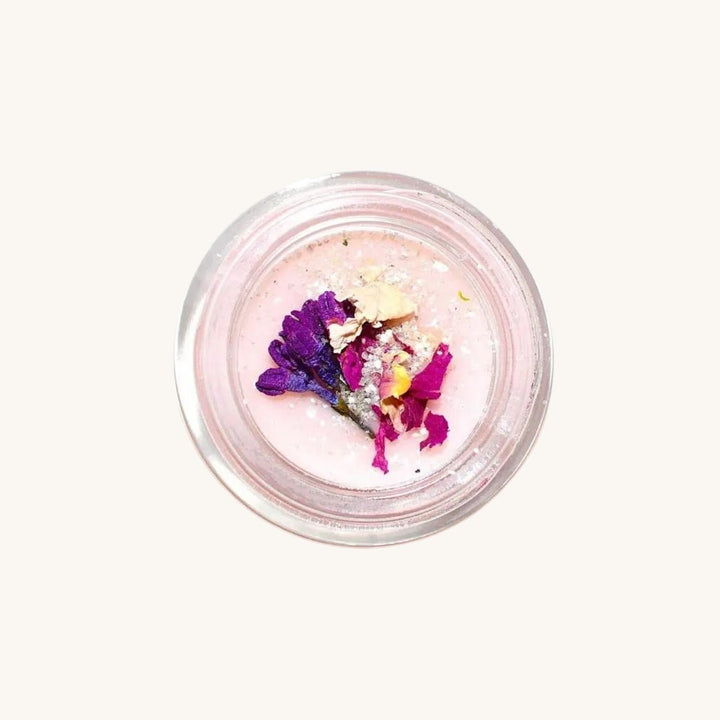
Unicorn Balm is a shimmering plant-based lip and cheek balm made for simple color play. Popsicle describes it as a multi-use balm with moisturizing ingredients and plastic-free packaging.
A balm format is easier to control than loose powder and can provide a soft wash of color without introducing a full-face routine. Apply a small amount with clean fingers, keep the product personal, and remove it gently after play.
This is a practical example of kids natural makeup for families that prefer one versatile item instead of a larger kit.
Unicorn Balm
$14.99
This organic, plant-based balm delivers multi-purpose shimmer with safe, skin-loving ingredients, all packaged in sustainable materials. Infused with coconut oil, locally sourced lilac blossoms, roses, and pure mineral-based mica glitter, it gives a sheer, glossy finish while nourishing and moisturizing—whether… read more
How to use kids’ makeup more safely (application, removal, and hygiene)
Even “clean” products can cause problems when used like toys. This is where parents make the biggest impact—through boundaries and basic hygiene.
Application rules that actually help
- Wash hands first. A surprising amount of irritation comes from dirty hands touching products and then eyes/face.
- No sharing eye products. Kids share. Make a simple rule: anything used on eyes is personal-only.
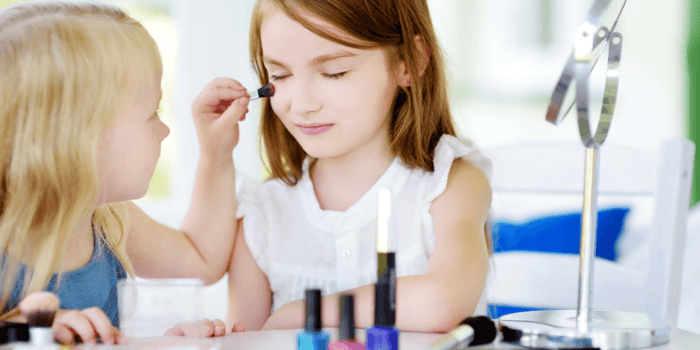
- Use less product than they think they need. For kids natural makeup, sheer is the win: fewer layers = easier removal.
- Avoid the waterline and lash line. Keep color on the lid/cheek area, not inside the eye.
Removal that respects kid skin
- Remove fully. Leaving residue can increase irritation and breakouts—especially when combined with sweat or sunscreen.
- Choose gentle cleansers. You shouldn’t need harsh scrubbing. If you do, the product may not be a great fit for kids.
- Moisturize if needed. A simple, gentle moisturizer can help restore comfort after cleansing.
Common mistakes to avoid
Even thoughtfully selected kids natural makeup can become unsuitable when products are shared, applied too heavily, placed close to the eyes, or treated as part of a required daily routine.
- Buying “natural” based on packaging alone. Always read the ingredient list. “Natural kids makeup” is a marketing phrase; the INCI list is the real information.
- Normalizing coverage. Foundation, concealer, simple skin care, and simple moisturizers are easy to slide into “every day.” Popsicle recommends delaying these correction-focused products for kids, tweens, and many teens.
- Choosing long-wear, transfer-proof formulas for children. They often require stronger removers and more rubbing.
- Letting glitter roam free. Loose glitter near eyes is a common regret. Choose safer-feeling sparkle options and placement.
- Ignoring hygiene. Unwashed brushes, shared products, and old cream products are a bigger real-life issue than most parents expect.
- Skipping the patch test. Especially if your child has sensitive skin or a history of reactions, patch testing is a simple step that can prevent a bad experience.
Where Popsicle Beauty Club fits (a practical shopping approach)
If you’re overwhelmed by “clean,” “natural,” “non-toxic,” and “safe for kids” claims, you’re exactly who Popsicle is built for. Popsicle Beauty Club functions as a curated marketplace—a parent-friendly safety filter—so you can compare vetted, age-appropriate options in one place without turning shopping into a research project.
When you shop through Popsicle, use our standards as your shortcut:
- Age-aware positioning: products that support beauty play, not correction.
- Clear labels: ingredient transparency that parents can actually evaluate.
- Practical use: options that are easier to apply and remove, with kid life in mind.
If you want a simple starter set, start small: a lip product + one fun color item (blush or shadow) + nails or gems. That’s enough for the “I want makeup” moment—without making it a daily identity.
Bottom line
Kids natural makeup works best when it’s treated as occasional, sheer, easy-to-remove color play with transparent labels. Look for simple ingredient lists, be cautious with fragrance and eye-area sparkle, patch test when appropriate, and keep correction-focused products (foundation/concealer/simple skin care/simple moisturizers) off the kids’ routine. If you want vetted options without the label-check rabbit hole, Popsicle Beauty Club is designed to be your clean kids’ beauty hub—beauty as expression, not correction.
Sources and further reading
- NIEHS: Cosmetics and Your Health - Explains what counts as cosmetics and notes that most cosmetics/ingredients don’t require FDA preapproval (except color additives).
- FDA: Phthalates in Cosmetics - Discusses how phthalates may be used and why “fragrance” can limit ingredient visibility.
- FDA: Color Additives in Foods - Helpful context on certified colors and why color additive rules are a distinct category.
For a complete guide on non-toxic play makeup, check out our in-depth resource: The Ultimate Guide to Non-Toxic Play Makeup for Kids for expert tips, product recommendations, and everything you need to know about choosing safe beauty play products for your child.
About the Author: This article was written by the contributing writers at Popsicle Beauty Club—a team of moms, educators, and clean beauty advocates passionate about creating a safer, more imaginative world for kids. We believe in empowering parents with trusted information and offering fun, non-toxic beauty and personal care products that let children play, express, and explore—without compromising their health.
FAQs
What does “kids natural makeup” actually mean?
What brands offer play makeup that looks sheer and natural rather than heavy on kids’ faces?
Is it safe for kids to wear makeup every day?
Does natural makeup mean it is safe for every child?
No. “Natural” is not a universal safety guarantee. Plant oils, mineral pigments, botanical extracts, essential oils, fragrance, and preservatives may still cause individual reactions. Review the full ingredient list and patch test when appropriate.
What products belong in a kids natural makeup starter set?
A small starter set may include lip balm or sheer gloss, one light cheek or eye color, nail color, and a clean applicator. Avoid beginning with foundation, concealer, contour, long-wear eye makeup, or a large adult-style palette.
How should parents remove natural makeup from a child?
Use lukewarm water and a gentle cleanser or remover the child already tolerates. Allow the product to soften, then wipe lightly with a soft cloth. Avoid scrubbing, and stop using formulas that repeatedly require forceful removal.