

Table of Contents
Non-toxic play makeup can make dress-up, storytelling, and color play feel more approachable for parents. The useful question is what is in the particular kit, how it is meant to be used, and whether it suits your child. A reassuring label alone cannot answer those questions.
At Popsicle Beauty Club, we favor makeup that keeps the focus on creativity. A child can enjoy a mermaid look or a favorite shade without learning that their face needs correcting. This guide explains how to compare formulas and formats, introduces several options from our collection, and offers a practical routine for supervised play.
What does non-toxic play makeup mean?
Treat “non-toxic” as a starting point for questions rather than a guarantee that a product cannot cause a reaction. A product's full ingredient list, directions, intended application area, and any warnings are more useful than a promise on the front of its box.
Cosmetics sold in the United States are regulated, although most finished cosmetics do not receive FDA approval before sale. Color additives have separate approval requirements. A kit described as play makeup is still a cosmetic when its contents are intended to color skin or lips. FDA explains how cosmetics are regulated.
Read marketing terms carefully
- Natural: This describes a product's positioning or ingredient origins; it does not tell you whether your child will tolerate it.
- Hypoallergenic: FDA does not have a federal standard defining this claim. It is not a promise of no allergies.
- Vegan and cruelty-free: These address animal-derived ingredients and animal testing policies. They do not establish skin compatibility.
- Water-based and washable: These describe different things. Dry mineral powders and oil-and-wax lip products can be easy to remove without being water-based.
For more on one commonly misunderstood label, see FDA's explanation of hypoallergenic cosmetics.
How to compare a play makeup kit
Start with the individual child
Think about whether your child can follow directions, keep products out of their mouth and eyes, and let an adult supervise. Use the manufacturer's age guidance and small-parts warnings for the exact product. A single birthday is not a universal medical threshold for every cosmetic or every child.
If your child has eczema, known allergies, or previous cosmetic reactions, ask their clinician about suitable products. A set chosen for its appealing colors may still contain an ingredient your child needs to avoid.
Choose a manageable format
Pressed powders, loose powders, lip gloss, and refillable palettes offer different play experiences. A compact set may be easier to organize; loose powder may call for closer help with dispensing; a refillable palette can appeal to a child who enjoys choosing and rearranging shades. Choose the format your family will enjoy using and cleaning up.
Match each product to its intended use
Check which items are for eyes, cheeks, lips, or nails. Do not assume a lip product or craft glitter belongs near the eyes. FDA advises using only products specifically intended for the eye area there. Read FDA's eye cosmetic safety guidance.
Play makeup options from our collection
These are different formats to compare, rather than a safety ranking. Read the current ingredients and directions on the linked product page and packaging before choosing. Shades and availability can change.
Oh Flossy: Natural Kids Play Makeup Kit
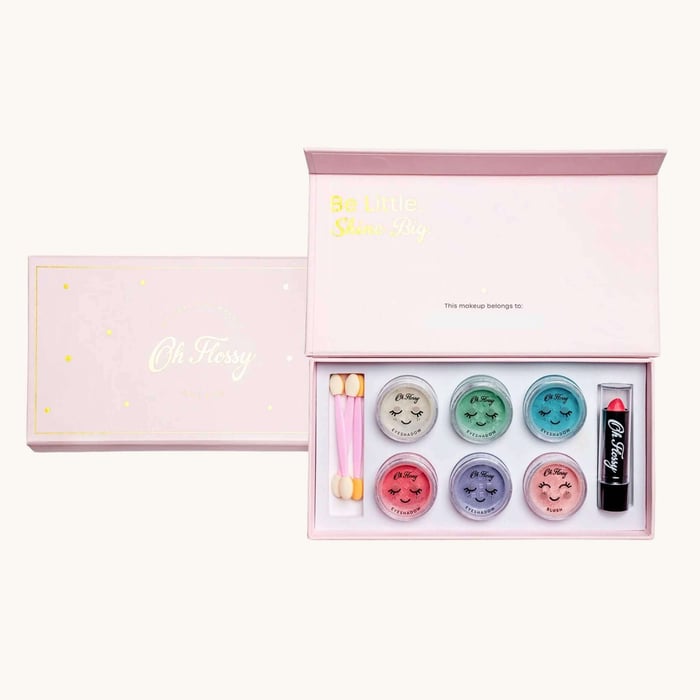
The Natural Kids Play Makeup Kit offers loose powder eye colors, blush, and a lip product, with Mini, Regular, and Deluxe options. Check the selected size for its contents.
The published powder formulas include mica, tapioca starch, kaolin, and magnesium stearate. The lipstick uses waxes and oils. These are dry powders and an oil-and-wax lip formula. This kit is a useful option when the appeal is mixing and applying color with an adult helping manage loose powders.
No Nasties: 5-Piece Makeup for Kids
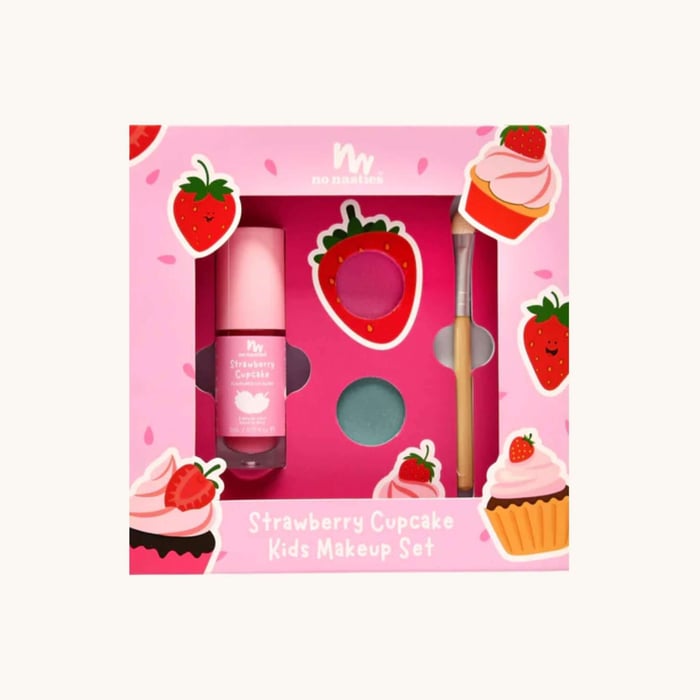
The 5-Piece Strawberry Cupcake, Mermaid or Unicorn Makeup for Kids brings together pressed eye colors, a lip gloss wand, nail stickers, and an applicator. Its themed packaging gives a child a starting point for imaginative play.
The listed pressed-powder ingredients include mica and rice starch. The gloss has an oil-and-wax formula with added flavor. Flavored does not mean edible, and a botanical ingredient list does not remove the need to check individual sensitivities. Apply the stickers only as directed on their packaging.
True Bloom: Refillable Makeup Palette 10-Piece Kit
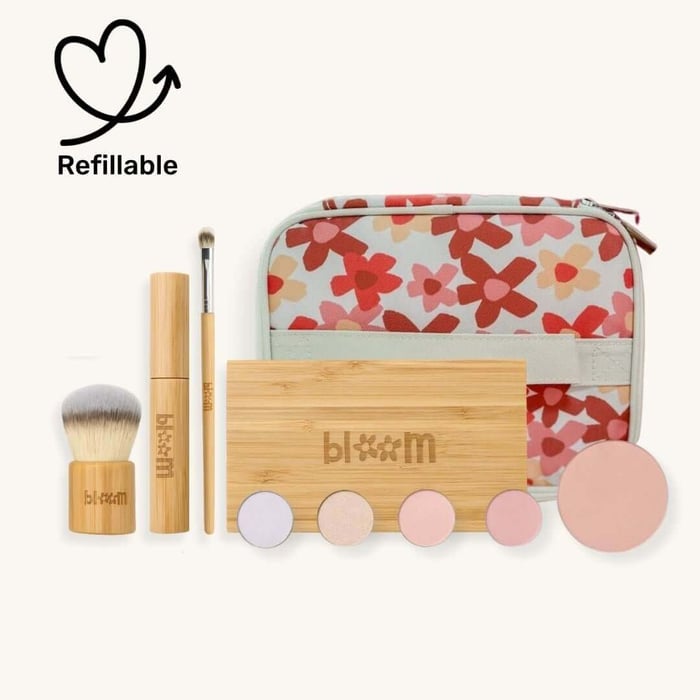
The Refillable Makeup Palette 10-Piece Kit includes a bamboo compact with magnetic eye-color and blush pans, brushes, lip gloss, and a makeup bag. Perfectly Pink and Just Peachy are the current color options listed in our store.
Choose the Complete Set if you need the compact and accessories. The Refill Only option contains the color pans, not another full kit. This is a practical distinction for gifting or replacing favorite colors. The listed lip gloss contains oils, wax, and pomegranate flavor. Review that added flavor when considering individual sensitivities.
Build a simple supervised play routine
Let your child choose a character, color, or story first. Set out only the products needed for that idea, and agree that stopping is always fine. There is no need to turn occasional makeup play into an everyday routine.
- Read the directions together before opening a new product.
- Wash hands and use clean applicators.
- Give each child their own products and tools rather than sharing eye or lip makeup.
- Use a small amount in the intended application area.
- Remove makeup gently using the product's instructions, then close and store it as directed.
Keep the conversation about making something: “Which colors belong in your ocean story?” works just as well as discussing the finished look. Paper face charts, costumes, and hair accessories can extend the game when your child wants more play without more product.
Check tolerance without promising an allergy-free result
The American Academy of Dermatology describes testing a new skin-care product on a small area twice daily for seven to ten days. This is different from medical patch testing and does not guarantee future tolerance. Follow product directions and seek individual advice for a child with previous reactions. Read AAD's product-testing guidance.
Extend the game with creative activities
Draw a pretend makeup palette on paper, design a face chart, or decorate an empty play compact. These activities let a child plan colors and characters without needing additional cosmetics. Keep kitchen powders for cooking; food suitability does not establish suitability for the eye area.
Likewise, a homemade mixture cannot be assigned a reliable shelf life simply because its container is clean or it is refrigerated. FDA explains that contamination, handling, and preservation affect cosmetic shelf life. Read FDA's shelf-life guidance.
Keep beauty play optional
A useful starter kit is one your child can use as directed, with ingredients you have reviewed and a cleanup routine you can manage. The goal is an enjoyable creative activity, not a longer shopping list. For a shorter comparison, explore our five children's cosmetics picks.
FAQs
Is non-toxic play makeup guaranteed not to cause a reaction?
No. Review the actual formula, directions, and your child's sensitivities. Marketing language cannot establish individual tolerance.
Does washable makeup have to be water-based?
No. A powder or oil-and-wax product can be designed for easy removal. Follow the removal directions rather than inferring the formula from the word washable.
What age should children start using play makeup?
Use the exact product's age guidance, warnings, and intended use, together with your child's ability to follow directions and your supervision. Ask a clinician when skin conditions or past reactions complicate the choice.
Can I use food powders to make eyeshadow?
This guide does not recommend it. Food suitability does not establish suitability for the eye area. Choose an eye cosmetic intended for that use.
Which kit should I choose first?
Choose by format and interest: loose-powder color play, a themed pressed-powder set, or a refillable palette. A few products your child enjoys are enough; they do not need every option.
Can children share eye and lip makeup during play?
Keep eye and lip makeup personal, and use clean hands and applicators. Close containers after play and follow the product's cleaning and storage directions.