
Table of Contents
- Introduction
- Answer-ready summary: what parents should look for
- Popsicle safety snapshot
- What “safe” can (and can’t) mean for kids’ makeup
- Age-appropriate boundaries (Foundationless, on purpose)
- How to choose
- Ingredient and label checklist
- What a starter kit should include (and what to skip)
- Popsicle Beauty Club starter-kit examples
- How to use a kids safe makeup kit (hygiene + removal)
- Common mistakes to avoid
- Where Popsicle Beauty Club fits (the practical parent shortcut)
- Bottom line
- Sources and further reading
- FAQs
Introduction
A kids safe makeup kit isn’t about turning a child into a mini adult—or building a daily “face” routine. It’s about age-appropriate beauty play: washable color, gentle-feeling formulas, simple tools, and parent-friendly labels that help you avoid unnecessary irritants. For most families, the safest-feeling path is: keep the kit small, keep it removable, keep it away from correction culture, and choose brands that are transparent about ingredients and use.
If you’re shopping for a kids safe makeup kit because your child is curious (or because a birthday party, dance recital, or dress-up phase has arrived), this guide walks you through what to buy, what to skip, and how to set boundaries that protect both skin and self-esteem.
Answer-ready summary: what parents should look for
A parent-friendly kids safe makeup kit should combine a small product range with clear ingredients, controlled application, straightforward hygiene, and gentle removal.
- Start with the basics: tinted lip balm or gloss, a gentle blush/cheek color, and kid-appropriate nail color are usually plenty.
- Prioritize easy removal: products that come off with mild cleanser and water (or a gentle remover) reduce rubbing and irritation.
- Choose transparent labels: a complete ingredient list on the package or brand site, not just “non-toxic” marketing.
- Avoid adultifying categories: foundation, concealer, simple skin care, and simple moisturizers are developmental milestones worth delaying.
- Be cautious with fragrance and eye-area products: especially for sensitive kids; patch test when appropriate.
- Keep it hygienic: individual applicators, no sharing, clean hands, and replace products that smell “off” or irritate.
Popsicle safety snapshot
Popsicle Beauty Club is designed to be a practical clean kids’ beauty hub—not a neutral review site. Parents come to Popsicle because kids are already encountering beauty culture, and families want safer-feeling, clearer standards in one place.
- Curated marketplace: Popsicle carries kids’ beauty brands that align with our focus on ingredient transparency and age-appropriate positioning.
- Medical-advisory-backed education: our content is built to help parents make calmer, more confident decisions without fearmongering.
- EWG Verified positioning where applicable: when a product is explicitly EWG Verified, that can be a helpful signal; we don’t assume it unless it’s stated.
- Allergist review process where applicable: for certain products and categories, we apply extra scrutiny; families should still patch test and avoid known triggers.
- Child-centered beauty standards: Popsicle prioritizes beauty as expression, not correction—because self-perception matters as much as ingredients.
If you want to compare vetted options without doing 40 tabs of label-checking, start with what’s available at Popsicle Beauty Club and use the checklist below to confirm fit for your child.
What “safe” can (and can’t) mean for kids’ makeup
Parents search “safe makeup for kids” because “for kids” on the front of a box doesn’t always tell you what you need to know. In the U.S., cosmetics are regulated differently than many parents assume: NIEHS notes that cosmetic products and ingredients generally do not require FDA approval before going on the market, except color additives. That’s why your best protection is ingredient transparency + smart limits on how and where products are used.
Also important: “safe” isn’t one-size-fits-all. A child with eczema, very sensitive skin, fragrance sensitivity, or frequent eye rubbing needs a more cautious approach than a teen experimenting with occasional lip color.
Age-appropriate boundaries (Foundationless, on purpose)
Popsicle Beauty Club is not anti-makeup. We’re against adultification, performance beauty, and correction-focused routines arriving too early. A kids safe makeup kit should support creativity—sparkle, color, themed looks for play—without telling a child their face needs fixing.
That’s why we recommend delaying complexion coverage (foundation, concealer, simple skin care, simple moisturizers) for children, tweens, and many teens. These categories are often marketed around hiding, perfecting, and correcting. Foundation is a developmental milestone worth delaying—not because makeup is “bad,” but because kids deserve time to feel at home in their skin.
Instead, build around: lip care, cheek color, fun eye-adjacent sparkle that stays out of the waterline, nail color, face gems, and washable costume-style face paint for special occasions.
How to choose
Use this parent decision path to choose a kids safe makeup kit that matches your child’s age, skin, and the actual reason you’re buying it.
Step 1: Decide the use case
- Dress-up / play at home: choose washable, minimal pieces; avoid huge kits that encourage daily routine-building.
- Party / holiday / school spirit day: prioritize quick-on, quick-off items (lip balm, cheek tint, nails, face gems).
- Dance / theater: treat this as costume grooming. You may need stronger pigments, but still prioritize removal and eye-area caution. (Stage makeup is not a daily standard.)
Step 2: Match the kit to skin sensitivity
- Sensitive/reactive skin: go fragrance-free when possible; keep the kit tiny; patch test; avoid glitter close to the eyes.
- Normal skin: still patch test new products and avoid “mystery fragrance” if your child will use it often.
Step 3: Choose formats that keep things clean
- Solid balms and creams (in sticks or compacts) can be easier to control than loose powders for younger kids.
- Individual applicators or easy-to-wash brushes reduce sharing and contamination.
- Skip kits with lots of tiny pans if your child is likely to mix everything together (it gets unhygienic fast).
Step 4: Decide your boundaries before you buy
- Where can it be worn? (Home only vs. special occasions.)
- How often? (Play weekends vs. every school day.)
- What’s off-limits? (Anything that implies covering, correcting, or “needing” makeup.)
Ingredient and label checklist
Bring this checklist to any “kids makeup kit safe” claim—because the phrase isn’t regulated the way parents wish it were. You’re looking for clarity, not perfection.
- Full ingredient list: on packaging or an easy-to-find product page. If you can’t find it, that’s a reason to pause. For a more detailed shopping audit, read our kids makeup kit label-checking guide before comparing large sets, themed kits, and individual products.
- Fragrance labeling: be cautious with products that list “fragrance” (or “parfum”) if your child is sensitive. FDA notes that individual fragrance ingredients don’t have to be listed separately, which can make it harder to know what’s inside a scent blend.
- Color additives and pigments: kids love bright color, but you still want responsible labeling. (In the U.S., color additives have specific rules; NIEHS and FDA explain that color additives are treated differently than most cosmetic ingredients.)
- Eye-area caution: avoid anything that suggests use on the waterline. Choose products meant for the face/lips rather than craft glitter.
- “Clean” claims with specifics: look for clear “free-from” lists only when they’re paired with a full ingredient list and brand standards. Marketing without transparency isn’t helpful.
- Simple is safer-feeling: fewer products and fewer steps usually means fewer opportunities for irritation and overuse.
Patch test when appropriate: especially for first-time use, sensitive skin, or new-to-you brands. And if there’s persistent rash, burning, swelling, or ongoing distress, pause and seek guidance from a qualified clinician.
What a starter kit should include (and what to skip)
If you’re building a safe makeup kit for kids, think “tiny wardrobe,” not “full vanity.” Here’s a practical breakdown. Our first makeup kit checklist can help you choose a smaller combination of color, tools, hygiene essentials, and clear family boundaries.
Better starter picks
- Tinted lip balm or gentle gloss: easiest entry point, lowest mess, and supports lip comfort.
- Cream blush or cheek color: one shade can be used lightly and blended with clean fingers.
- Fun nails: kid-appropriate nail color can feel “grown up” without turning skin into a project.
- Face gems or stickers: expression-forward and clearly “play,” not “correction.”
- Washable face paint (for costumes/holidays): keep it occasional, remove gently, and avoid broken skin.
What to delay or skip for kids
- Foundation, concealer, simple skin care, simple moisturizers: correction-focused products can turn normal skin into something to manage. Popsicle treats these as milestones worth delaying.
- Heavy contour/highlight kits: these teach “changing your face” rather than playing with color.
- Strong actives bundled into makeup: kids don’t need adult-style skincare ingredients in makeup.
- Loose glitter: glitter can migrate into eyes; choose eye-safe sparkle formats and keep it out of the lash line.
Popsicle Beauty Club starter-kit examples
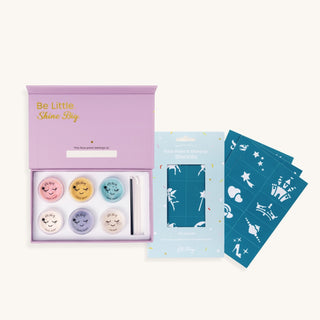
A thoughtfully chosen kids safe makeup kit should offer enough color for imaginative play without overwhelming the child with dozens of pans, adult complexion products, or complicated application steps. These two options demonstrate different approaches: a compact play set and a refillable palette that can grow gradually.
Natural Kids Play Makeup Kit
The Natural Kids Play Makeup Kit includes eyeshadow, blush, lipstick, brushes, and a storage box in Mini, Regular, and Deluxe configurations. Popsicle describes the formulas as washable and publishes separate ingredient information for the powders and lipstick.
This is a useful option when the child wants a contained dress-up activity rather than individual items stored in different places. Because the blush and eyeshadow use loose powder, open one container at a time, apply a small amount, and keep powder away from the waterline.
For a younger child, begin with the smallest version that meets the purpose of the gift. A kids safe makeup kit does not need every available color to support creativity.
Natural Kids Play Makeup Kit
$34.99
$40.99
Looking for a clean beauty gift that’s safe, fun, and worry-free? This natural play makeup kit lets little ones explore color and creativity with non-toxic, skin-friendly formulas parents trust. Each kit includes vibrant loose powder eyeshadows, soft blush, lipstick, and… read more

Refillable Makeup Palette 10-Piece Kit
The Refillable Makeup Palette 10-Piece Kit combines mineral-based color, lip gloss, brushes, and a reusable bamboo compact. Its interchangeable format allows families to keep the collection contained rather than buying a new full palette whenever one color runs out.
This option may suit an older child or tween who can follow hygiene and removal expectations more independently. Introduce the components gradually, keep brushes clean, and treat the palette as an occasional creative tool rather than a required everyday routine.
A refillable design can make a kids safe makeup kit easier to organize while giving parents more control over which shades and formats enter the collection.
Refillable Makeup Palette 10-Piece Kit
$59.99
Unbox a world of self-expression—without the worry. This 10-piece makeup kit is thoughtfully designed for imaginative play, using gentle, organic ingredients and a fresh, interchangeable color palette that keeps creativity flowing—all made with non-toxic ingredients and eco-friendly materials. Inside, you'll… read more

How to use a kids safe makeup kit (hygiene + removal)
Even a well-chosen kit can go sideways if it’s used like a shared art bin. A few simple rules make a big difference.
- Clean hands first. Most kid makeup “reactions” start with dirty hands, not a scary ingredient.
- No sharing. Especially lip products and anything used near eyes.
- Use small amounts. You can always add more; you can’t un-rub irritated skin.
- Remove gently. Use a mild cleanser and lukewarm water. If you need extra slip, choose a gentle remover and wipe without scrubbing.
- Keep it out of irritated areas. No makeup on rashes, chapped skin, or healing pimples.
- Store it like skincare. Close caps tightly, keep away from heat, and toss anything that smells off or changes texture.
Parent tip: make “take it off before bed” part of the ritual. That keeps makeup in the play category—not a permanent mask.
Common mistakes to avoid
Even a carefully selected kids safe makeup kit can become messy or uncomfortable when products are shared, layered heavily, stored open, or treated as part of a compulsory daily routine.
- Buying the biggest kit. More colors often means more mess, more bacteria exposure (shared pans), and more pressure to use it daily.
- Trusting front-label claims without checking the ingredient list. “Clean,” “natural,” and “non-toxic” aren’t standardized promises.
- Letting the kit drift into correction. If your child starts asking for coverage to hide freckles, redness, or “bad skin,” that’s a cue to pause and reset boundaries.
- Using craft glitter or non-cosmetic pigments on the face. Keep art supplies in the art box; use cosmetic products on skin.
- Over-rubbing during removal. Irritation can come from friction. Slow down, soften product first, and use gentle wipes or cleanser.
- Ignoring discomfort. Stinging, itching, or watery eyes are not “normal.” Stop use and consider a simpler, fragrance-free approach.
Where Popsicle Beauty Club fits (the practical parent shortcut)
If you want a kids safe makeup kit but don’t want to become a full-time ingredient detective, Popsicle Beauty Club is built for exactly this moment. Popsicle is a curated clean kids’ beauty marketplace: vetted brands in one place, with a child-centered lens on what’s age-appropriate.
Use Popsicle’s standards as your filter:
- Ingredient transparency you can actually read
- Kid-appropriate positioning (expression, play, hygiene—not correction)
- Parent-friendly routines that remove easily and don’t require adult-level steps
And if you’re feeling pulled toward complexion products because “everyone at school is doing it,” remember: delaying coverage is protective. Makeup should be art, not armor.
Bottom line
The best kids safe makeup kit is usually the smallest one that supports joyful self-expression and comes off easily at the end of the day. Choose transparent labels, keep fragrance and eye-area risk in mind, patch test when appropriate, and set clear boundaries that keep makeup in the play category—not the self-correction category.
Sources and further reading
- NIEHS: Cosmetics and Your Health - Background on what counts as cosmetics and how oversight works in the U.S.
- FDA: Phthalates in Cosmetics - Explains phthalates’ roles and why “fragrance” labeling can limit transparency.
- NIEHS: Endocrine Disruptors - General context on endocrine-disrupting chemicals and exposure routes.
For a complete guide on non-toxic play makeup, check out our in-depth resource: The Ultimate Guide to Non-Toxic Play Makeup for Kids for expert tips, product recommendations, and everything you need to know about choosing safe beauty play products for your child.
About the Author: This article was written by the contributing writers at Popsicle Beauty Club—a team of moms, educators, and clean beauty advocates passionate about creating a safer, more imaginative world for kids. We believe in empowering parents with trusted information and offering fun, non-toxic beauty and personal care products that let children play, express, and explore—without compromising their health.
FAQs
What age is appropriate for a kids safe makeup kit?
How do I know if a “kids makeup kit safe” claim is legit?
Is a kids safe makeup kit okay for sensitive skin?
How many products should a first kids makeup kit contain?
A small set with two to five products is usually enough. Lip balm or gloss, one cheek or eye color, nail color, and a clean applicator provide plenty of creative variety without introducing an oversized routine.
How should parents remove makeup from a child’s skin?
Use lukewarm water and a gentle cleanser or remover the child already tolerates. Allow the product to soften, then wipe with a soft cloth without scrubbing. Stop using any formula that repeatedly requires forceful removal.
Can children share a kids safe makeup kit during parties or playdates?
Avoid sharing lip products, eye products, sponges, and brushes. Give each child separate applicators or individual products, wash reusable tools afterward, and discard anything that becomes contaminated or changes smell or texture.