
Table of Contents
- Introduction
- Answer-ready summary
- Popsicle Beauty Club’s parent-first approach
- Why children’s lip products deserve extra attention
- Kids lipstick ingredients that deserve a closer look
- What about petrolatum and mineral oil?
- How to choose a first lip product
- Popsicle Beauty Club lip-product examples
- Product comparison
- Internal guidance for choosing lip products
- How to introduce lipstick safely
- What to do if lipstick irritates a child’s lips
- Common mistakes to avoid
- Where Popsicle Beauty Club fits
- Bottom line
- FAQs
Introduction
Kids lipstick ingredients matter because lip products sit directly on the mouth, are reapplied often, and may be licked or swallowed in very small amounts during normal use. That does not mean parents need a frightening blacklist. It means the best first lip products are usually simple, clearly labeled, comfortable, and easy to remove.
For children and many tweens, lipstick should remain occasional color play rather than a daily correction routine. A balm-like tint, soft shine, or light swipe of color can support creativity without teaching a child that her natural lips or face need fixing.
Popsicle Beauty Club’s position is straightforward: makeup can be art, not armor. We support age-appropriate expression while helping families delay adult-style coverage, long-wear performance products, and appearance pressure.
Answer-ready summary
When comparing kids lipstick ingredients, parents should pay closest attention to:
Complete ingredient disclosure
Fragrance, parfum, flavor, and aroma
Strong essential oils or tingling ingredients
Clearly identified lip-approved pigments
Preservatives in water-containing formulas
Known allergens such as nut, seed, or botanical ingredients
Long-wear, transfer-proof, plumping, or super-matte claims
Whether the product removes without aggressive rubbing
A practical beginner option is often a fragrance-free balm, a lightly tinted balm, or a creamy lip color with a short and readable formula. No label can guarantee that every product will suit every child, so individual sensitivity and previous reactions still matter.
Popsicle Beauty Club’s parent-first approach
Popsicle Beauty Club is a curated children’s beauty and personal-care marketplace built around ingredient transparency, age-aware use, and beauty as expression rather than correction.
When Popsicle evaluates a lip product, the questions extend beyond whether the front label says “clean,” “natural,” or “non-toxic”:
Is the complete formula easy to find?
Is fragrance or flavor clearly disclosed?
Are the pigments suitable for use on lips?
Does the texture glide without pulling?
Is the product easy to remove?
Does the packaging support hygienic use?
Is the product positioned for play, care, or age-appropriate self-expression?
Does the brand avoid plumping, perfection, or “fix your face” language?
This Foundationless approach keeps a child’s natural face outside the problem-solving frame. Lip color can be playful without becoming a requirement.
Why children’s lip products deserve extra attention
Lipstick is different from nail color or hair accessories because it is applied to a high-contact area. Children may lick their lips, eat while wearing the product, spread it beyond the lip line, or reapply more often than an adult expects.
That makes three things especially important:
Formula simplicity
A careful review of kids lipstick ingredients helps parents compare the full formula rather than relying on a reassuring front-label claim.
A shorter list is not automatically better, but a clear and understandable formula is easier to compare against known sensitivities.
Comfort
Burning, tingling, strong cooling, tightness, or difficult removal are unnecessary for children’s lip products.
Hygiene
Lip products should stay personal. Sharing can spread germs and make it harder to identify the cause of irritation.
The goal of reviewing kids lipstick ingredients is not to label every unfamiliar term as dangerous. It is to identify products that fit the child, the intended use, and the family’s comfort level.
Kids lipstick ingredients that deserve a closer look
1. Fragrance, parfum, flavor, and aroma
These terms can represent blends whose individual components may not be listed separately. Some children tolerate flavored or scented products, while others experience dryness, stinging, headaches, or irritation.
Flavored products may also encourage repeated licking and reapplication.
Parents who want a simpler starting point can choose:
Fragrance-free lip balm
Unflavored balm
Lightly tinted balm with clearly disclosed aromatic ingredients
A product with one mild scent rather than a complex blend
When comparing kids lipstick ingredients for sensitive lips, fragrance and flavor are reasonable first places to simplify.
2. Plumping, warming, or cooling ingredients
Adult lip products sometimes use menthol, peppermint, cinnamon derivatives, capsicum, or similar ingredients to create tingling or temporary fullness.
Children do not need that effect. A product should not have to sting, burn, or feel hot to be fun.
Pause when the label or marketing uses terms such as:
Plumping
Volumizing
Cooling
Warming
Lip injection
Maximum tingle
Choose comfortable moisture and light color instead.
3. Essential oils and strong botanical extracts
Natural origin does not guarantee universal tolerance. Peppermint, cinnamon, citrus, lavender, and other aromatic plant ingredients may irritate some lips, especially when the skin is already dry or cracked.
Botanical ingredients can still be appropriate, but parents should check the exact plant, the product’s scent, and the child’s reaction history.
4. Colorants and pigment disclosure
Color is the purpose of lipstick, so pigments are not automatically a problem. The useful question is whether the brand clearly identifies what creates the shade and whether the product is intended for lips.
Look for:
Specific color names or Color Index numbers
“May contain” pigment lists tied to the shade range
Clear lip-use directions
Ingredient information for each color when formulas vary
Avoid products that provide no meaningful colorant information or use vague language that makes the formula impossible to evaluate.
5. Preservatives
Water-free balms made mainly from oils, butters, and waxes may require a different preservation approach from glosses or liquid colors that contain water.
Preservatives are not automatically undesirable. They help prevent microbial growth in formulas that need protection. The better questions are:
Does the product need preservation?
Is the complete formula disclosed?
Does the product have a period-after-opening symbol?
Has the smell, color, or texture changed?
Do not keep an old product simply because it was marketed as natural.
6. Nut, seed, wax, and botanical allergens
Lip formulas commonly use coconut oil, shea butter, cocoa butter, castor oil, sunflower oil, sesame oil, beeswax, carnauba wax, and other plant-derived ingredients.
Many children use these comfortably, but families managing known allergies should review every formula carefully. Product names such as “natural” or “organic” do not replace allergen checks.
7. Long-wear and transfer-proof systems
Long-wear lipstick is designed to resist food, water, and movement. That may be useful for adults, but it is often unnecessary for children.
These formulas may feel drier and can require stronger remover or repeated rubbing. For younger users, easy removal is usually more valuable than all-day wear.
A creamy balm, soft tint, or sheer gloss keeps the activity lighter and easier to supervise.
What about petrolatum and mineral oil?
Some families prefer to avoid petroleum-derived ingredients such as petrolatum or mineral oil and choose plant-based emollients instead. Others use well-formulated petrolatum products because they provide effective moisture protection.
This is best treated as a family preference rather than a universal safety rule.
Parents who prefer plant-based options may look for:
Shea butter
Cocoa butter
Mango butter
Castor oil
Jojoba oil
Coconut oil
Sunflower oil
Candelilla wax
Carnauba wax
Beeswax, when suitable for the family
The overall formula, purity, comfort, and the child’s individual response matter more than one marketing category.
How to choose a first lip product
Use this simple path when reviewing kids lipstick ingredients and product claims.
Start with the purpose
Is the child asking for:
Relief for dry lips?
A pretend getting-ready ritual?
Color for a party or costume?
A first tween makeup product?
A gift?
A care need may call for a bland balm. A play need may call for a sheer tint or soft gloss. The product should match the real goal.
Choose the smallest step
A child does not need a full lip collection. One balm or one light color is enough to learn application, storage, hygiene, and removal.
Check the formula before the packaging
Bright boxes, character themes, and sweet scents can be appealing, but the ingredient list and intended-use instructions carry more weight.
Prefer balm-like or sheer formats
Tinted balms, creamy crayons, and sheer glosses are often more forgiving than stiff matte bullets or liquid long-wear lipstick.
Make removal part of the purchase decision
A child-friendly lip product should come off with gentle cleansing or a soft cloth. If the formula needs aggressive scrubbing, it may not be the best first choice.
Popsicle Beauty Club lip-product examples
The products below illustrate different ways families can keep lip care and color age-appropriate. Review the current ingredient list and intended age before introducing any new formula.
All-Natural Kids Lip Balm
All-Natural Kids Lip Balm is a practical care-first option for children who want a personal lip product without visible color. Its child-sized push-up format supports controlled use and keeps the focus on moisture rather than appearance correction.
This type of product works well as a first step because it teaches a simple routine: one swipe, replace the cap, keep it personal, and use it when lips feel dry.
When reviewing kids lipstick ingredients for a beginner, a balm can provide a useful baseline before introducing pigment, fragrance, or gloss. Popsicle’s official listing describes the product as a child-sized balm made with natural ingredients and fruity flavor options.
All-Natural Kids Lip Balm
$29.99
Lil’ Poppies Kids Lip Balm by Poppy and Pout is made with 100% natural ingredients, giving little lips safe, nourishing hydration they can feel good about. Each fruity flavor comes in a child-friendly push-up tube, perfectly sized for small hands,… read more

All-Natural Play Lipstick for Kids
All-Natural Play Lipstick for Kids offers light color in a familiar lipstick format. A soft tint can give a child the fun of choosing a shade while keeping application manageable and occasional.
Use one light layer, keep the product personal, and frame it as color play for dress-up, parties, or special occasions. Parents should still compare the specific shade formula against known sensitivities.
All-Natural Play Lipstick for Kids
$5.99
Because childhood should be fun, bold, and bursting with color, Oh Flossy Play Lipstick for Kids adds the perfect pop of pink or purple to every pretend-play adventure—safe, gentle, and made just for little ones. Formulated by a world-leading cosmetic… read more

Natural Flavor Lip Gloss for Kids
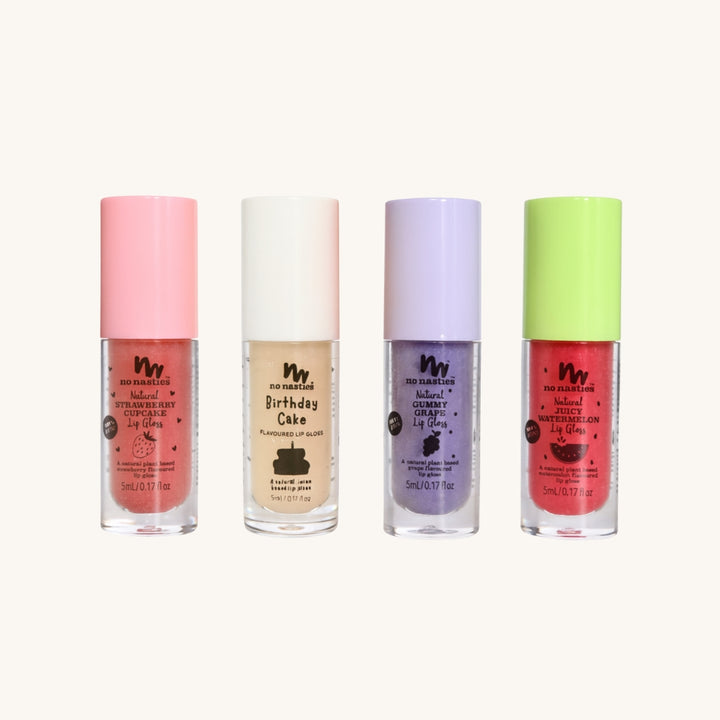
Natural Flavor Lip Gloss for Kids provides sheer shine with sunflower, olive, coconut, and jojoba oils. The official listing describes it as a lightly colored, naturally flavored gloss and notes that the formula is made without almond oil or wheat derivatives.
Because it contains flavor, it may suit families whose children tolerate scented lip products, while fragrance-sensitive households may prefer an unflavored balm.
This example shows why kids lipstick ingredients should be assessed product by product. Two child-focused lip products can serve similar purposes while differing significantly in scent, flavor, texture, and allergy considerations.
Natural Flavor Lip Gloss for Kids
$7.99
A yummy, all-natural treat for little lips, this natural flavor lip gloss for kids adds a whisper of color while keeping lips soft and nourished with sunflower, olive, coconut, and jojoba oils. Formulated for even the most sensitive skin, it’s… read more
Product comparison
| Product | Format | Best fit | Parent consideration |
|---|---|---|---|
| All-Natural Kids Lip Balm | Color-free balm | First lip-care product or dry lips | Review flavor-specific ingredients |
| All-Natural Play Lipstick for Kids | Light lipstick-style color | Occasional dress-up and creative play | Check shade pigments and known allergens |
| Natural Flavor Lip Gloss for Kids | Sheer flavored gloss | Older child who enjoys shine and scent | Flavor may not suit sensitive lips |
Internal guidance for choosing lip products
For a wider comparison of balm, gloss, flavor, pigments, and hygienic packaging, read our guide to lip gloss for kids.
Families building a first makeup collection can also use our kids safe makeup kit guide to keep the product range small and age-appropriate.
How to introduce lipstick safely
Good kids lipstick ingredients still need appropriate application, personal hygiene, and gradual introduction to support a comfortable first experience.
Patch test when appropriate
Patch testing cannot guarantee future tolerance, but it may help identify an immediate response. Test a small amount on healthy skin such as the inner arm rather than cracked lips.
Apply to healthy lips
Skip lipstick when the lips are severely chapped, bleeding, blistered, or actively irritated.
Use clean hands
Children should wash their hands before applying lip products, especially when using pots or balms applied with a fingertip.
Do not share
Lipstick, balm, and gloss should remain personal.
Keep wear time reasonable
For play or special occasions, remove the product before bed and check that the lips still feel comfortable.
Watch the child’s response
Stop if the product causes burning, swelling, persistent itching, peeling, blistering, or a spreading rash.
What to do if lipstick irritates a child’s lips
If discomfort develops:
Stop using the product.
Remove it gently.
Simplify to a bland product the child already tolerates.
Review the formula for fragrance, flavor, essential oils, pigments, and known allergens.
Do not immediately test several replacement products.
Seek qualified medical guidance when symptoms are severe, persistent, recurrent, or accompanied by swelling or breathing difficulty.
The child’s actual reaction history is more useful than relying on a universal blacklist of kids lipstick ingredients.
Common mistakes to avoid
Even thoughtfully chosen kids lipstick ingredients cannot compensate for poor hygiene, excessive reapplication, or a product that does not match the child.
Buying plumping lipstick for children
Tingling and temporary fullness are adult cosmetic effects, not useful features for a child.
Choosing flavor as the main selling point
Strong flavor may encourage licking and repeated use. Comfort and formula transparency should come first.
Assuming natural means irritation-free
Plant oils, waxes, flavors, and extracts can still cause individual reactions.
Letting children share lip products
Sharing increases contamination risk and can spread infections.
Choosing long-wear formulas for convenience
Easy removal is more important than transfer resistance for most children.
Applying over damaged lips
Broken or inflamed skin is more likely to sting and react.
Turning lip color into a daily requirement
A child should be able to enjoy lipstick without feeling that her natural lips are unfinished.
Where Popsicle Beauty Club fits
Parents should not need to compare dozens of adult products to find one child-appropriate lip option.
Popsicle Beauty Club helps families narrow the choices through:
Curated children’s and tween beauty products
Ingredient-forward product information
Age-aware guidance
Sensitive-skin considerations
Practical hygiene and removal advice
Foundationless positioning
Makeup as expression rather than correction
The goal is not to identify one lipstick that is perfect for every child. It is to help parents match a product to the child’s age, use case, sensitivities, and ability to follow basic care rules.
Bottom line
Kids lipstick ingredients should be assessed through transparency, comfort, intended use, and the child’s individual sensitivities—not through fear or one universal blacklist.
Start with balm-like or sheer formulas, be cautious with fragrance, flavor, plumping ingredients, strong essential oils, unclear pigments, and unnecessary long-wear claims. Keep lip products personal, use them on healthy lips, and remove them gently after play.
Most importantly, keep lipstick in the creative lane. A swipe of color can be fun, but a child’s natural lips and face never need fixing.
Curious about which harmful ingredients to avoid in your child's beauty products? Read The Truth About Harmful Beauty Ingredients for Kids to uncover the hidden toxins in mainstream makeup, skincare, and hair care—and discover safer alternatives.
About the Author: This article was written by the contributing writers at Popsicle Beauty Club—a team of moms, educators, and clean beauty advocates passionate about creating a safer, more imaginative world for kids. We believe in empowering parents with trusted information and offering fun, non-toxic beauty and personal care products that let children play, express, and explore—without compromising their health.
FAQs
Is “fragrance” in lipstick actually a problem for kids?
What’s the safest type of lip product for a beginner kid or tween?
What ingredients should parents avoid in kids lipstick if my child has sensitive skin?
What kids lipstick ingredients are most likely to irritate sensitive lips?
Fragrance, flavor, menthol, peppermint, cinnamon derivatives, citrus oils, and other strong aromatic ingredients may irritate some children. Individual pigment, wax, oil, or botanical allergies can also matter.
Is flavored lipstick appropriate for children?
It can be appropriate when the formula suits the child, but strong flavor may encourage licking and frequent reapplication. Families managing sensitive lips may prefer unflavored products.
Can children share lipstick or lip gloss?
No. Lip products should remain personal because sharing can transfer germs and make irritation or infection more likely.