
Table of Contents
- Introduction
- Answer-ready summary: what to look for in a kid safe makeup kit
- Popsicle safety snapshot
- Age-appropriate boundaries: keep makeup in the “play” lane
- How to choose a kid safe makeup kit (a parent decision path)
- Ingredient and label checklist (what to look for, what to pause on)
- 1) Look for a full ingredient list (INCI) for every item
- 2) Be cautious with fragrance (especially for sensitive skin)
- 3) Be extra conservative around eyes and lips
- 4) Watch for “adult performance” marketing words
- 5) Consider color additives and dyes with your family’s comfort level
- 6) Prioritize easy removal (a safety feature parents overlook)
- Using a kid safe play makeup kit safely: routine, hygiene, and patch testing
- Common mistakes to avoid
- Where Popsicle Beauty Club fits: a safer-feeling way to shop
- Bottom line
- Sources and further reading
- FAQs
Introduction
If you’re searching for a kid safe makeup kit, the most practical way to shop is to focus on three things: (1) age-appropriate product types (think lip balm, sheer color, nail polish, face gems—not coverage makeup), (2) transparent labels you can actually read and verify, and (3) safety-in-use (easy removal, hygiene, and extra caution around eyes and lips). A “safe makeup kit for kids” isn’t one magic product—it’s a set of choices that reduces avoidable irritation and keeps makeup in the lane of play and self-expression, not self-correction.
Below is exactly how we’d evaluate a kid safe makeup kit at Popsicle Beauty Club, plus a parent-friendly checklist you can use in-store or online.
Answer-ready summary: what to look for in a kid safe makeup kit
- Choose play-first formats: lip balm/gloss, nail polish, washable sparkle, face gems, fun brushes.
- Delay correction-focused products: skip foundation, concealer, simple skin care, simple moisturizers, and “blur/cover” language. Those are developmental milestones worth delaying.
- Prioritize transparent ingredient lists: avoid kits that hide key ingredients behind vague labeling or missing INCI lists.
- Be cautious with fragrance and eye-area products: fragrance and the eye area are common irritation zones—keep it simple and supervised.
- Plan for hygiene + removal: individual applicators, no shared mascara, and a gentle removal routine matter as much as the formula.
- Patch test when appropriate: especially for sensitive skin or first-time products.
Popsicle safety snapshot
Popsicle Beauty Club is built to be a practical clean kids’ beauty hub for parents who want safer, vetted options in one place—without turning childhood into a performance. When we curate products, we look for:
- Cleaner ingredient standards and transparent labels: we prioritize products with ingredient lists parents can actually check and compare.
- Age-appropriate positioning: beauty as expression, not correction; makeup as art, not armor.
- Medical-advisory-backed education: our content is designed to help families make calmer, more informed choices (not panic purchases).
- EWG Verified positioning/products where applicable: we may highlight EWG Verified options when a brand/product truly carries that designation.
- Allergist review process where applicable: when relevant to a product/brand, we apply additional scrutiny to help parents shop with more confidence.
Important note: no kit can be guaranteed “allergy-proof” for every child. The goal is smarter selection, fewer unnecessary products, and gentler routines that are easier to remove.
A thoughtfully selected kid safe makeup kit should therefore balance transparent product information with age-appropriate formats, manageable routines, and realistic expectations about individual sensitivities.
Age-appropriate boundaries: keep makeup in the “play” lane
At Popsicle, we’re not anti-makeup. We’re against adultification, performance beauty, and “fix-your-face” messaging for kids, tweens, and many teens. That’s why we treat complexion coverage—foundation, concealer, simple skin care, simple moisturizers, and routines designed to hide normal skin—as a developmental milestone worth delaying, not a default childhood purchase.
So when you’re evaluating a kid safe makeup kit, don’t just ask “Is it clean?” Ask: What story does this kit tell my kid about her face? A great kit supports creativity (color, sparkle, costume looks) and basic care (lip comfort, nail care, gentle cleansing). A not-great kit trains a child to scan for flaws.
For more guidance on keeping makeup creative rather than correction-focused, explore our complete guide to non-toxic play makeup for kids, including age-appropriate product choices, ingredient checks, supervision, hygiene, and gentle removal.
How to choose a kid safe makeup kit (a parent decision path)
Use this quick decision path to choose a kid safe makeup kit based on your child’s age, skin sensitivity, and the real use case (dress-up vs. school vs. performance).
Step 1: Choose the purpose (it changes what “safe” means)
- Dress-up / pretend play: prioritize washable, easy-to-remove color; avoid long-wear claims.
- Birthday party / special occasion: think lip balm, a swipe of shimmer, nail polish, hair accessories; keep it minimal.
- Dance/theater performance: stage makeup can be heavier and not “everyday.” Consider keeping performance makeup as a supervised, occasional tool and remove thoroughly after.
Step 2: Build a “smart kit” (you don’t need 25 pieces)
A safer-feeling starter kit is often smaller. Look for a kit that includes:
- Lip balm or lip gloss (comfort + fun)
- One or two color items (like a sheer blush or a playful eyeshadow used sparingly and supervised)
- Nail polish plus a gentle remover option you’re comfortable with
- Tools you can clean (a brush, not sponge wands you can’t sanitize)
- Optional: face gems or cosmetic glitter that’s intended for cosmetic use and applied away from the waterline
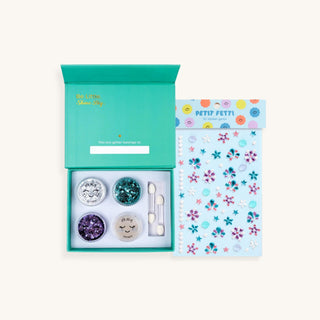
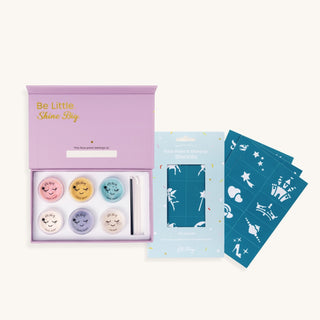
For families looking for a coordinated kit without buying an oversized collection, the Refillable Makeup Palette 10-Piece Kit by True Bloom Kids offers a more intentional approach to beauty play. Its reusable bamboo compact and interchangeable color pans allow children to explore color and creativity within one manageable set, while the included brushes and shimmer lip gloss provide the basic tools needed for supervised play.
Refillable Makeup Palette 10-Piece Kit
$59.99
Unbox a world of self-expression—without the worry. This 10-piece makeup kit is thoughtfully designed for imaginative play, using gentle, organic ingredients and a fresh, interchangeable color palette that keeps creativity flowing—all made with non-toxic ingredients and eco-friendly materials. Inside, you'll… read more

Step 3: Decide your boundaries before you buy
- Boundary A (our default): no complexion correction-focused products marketed as “perfecting,” “blurring,” or “covering.”
- Boundary B: no mascara sharing; eye products are supervised only.
- Boundary C: fragrance is optional, not required—especially for sensitive kids.
Setting these expectations before purchasing a kid safe makeup kit can help families keep beauty focused on occasional creativity while avoiding products or routines that feel too advanced for the child’s age.
Ingredient and label checklist (what to look for, what to pause on)
Because “kid safe makeup” is not a regulated term, your best protection is being label-literate. Here’s what to check on any kids safe makeup kit before it goes in your cart.
For a faster product-page review, use our guide to nine label checks for a non-toxic kids makeup kit, including ingredient transparency, age-appropriate products, color information, hygiene, and easy removal.
1) Look for a full ingredient list (INCI) for every item
If the kit only lists a few hero ingredients, or the ingredient list is missing for some pieces, treat that as a reason to pause. Parents deserve to know what’s in the lip product vs. the eye product vs. the nail polish.
2) Be cautious with fragrance (especially for sensitive skin)
Fragrance can be a common irritation trigger for some families. Also, the FDA notes that individual fragrance ingredients generally don’t have to be listed separately on cosmetic labels, which can make it harder to know what’s inside a “fragrance” blend.
3) Be extra conservative around eyes and lips
The closer a product is used to the eyes or mouth, the more conservative many parents choose to be. For eye-area play, look for simple, easy-to-remove formulas and avoid products that encourage tightlining/waterline use or all-day wear.
4) Watch for “adult performance” marketing words
Even if the ingredients look fine, marketing matters. For kids, we recommend skipping kits that lean on:
- “full-face correction,” “flawless,” “conceals,” “perfects,” “photoshoot-ready” language
- Anything that suggests a child needs to correct skin texture, pores, redness, or “imperfections”
This is the Foundationless line: keep makeup as art, not armor.
5) Consider color additives and dyes with your family’s comfort level
Some parents prefer to avoid certain synthetic dyes, especially when kids are young or prone to sensitivities. The FDA explains that color additives are a specific regulated category and that certified colors are synthetically produced for consistent, intense color. You don’t need to panic—just decide your family’s comfort level and shop accordingly.
6) Prioritize easy removal (a safety feature parents overlook)
For kids, “gentle” isn’t only about the ingredients—it’s also about whether you can remove the product without scrubbing. If a kit is long-wear by design, removal often becomes harsher than it needs to be for a child’s routine.
Using a kid safe play makeup kit safely: routine, hygiene, and patch testing
A kid safe play makeup routine should be simple, supervised (especially for younger kids), and easy to undo.
Patch test when appropriate
If your child has sensitive skin, eczema history, or you’re trying a new product type for the first time, consider patch testing when appropriate: apply a small amount to a small area and wait to see if irritation develops before using it more broadly. If irritation, rash, or ongoing discomfort happens, stop use and consider guidance from a qualified clinician.
Set hygiene rules that match the product type
- No sharing mascara or lip gloss between kids.
- Wash brushes regularly with gentle soap and let them dry fully.
- Avoid finger-dipping into cream products; use a clean tool.
- Replace products that smell off, look separated, or have been stored in hot cars/backpacks.
Keep eye-area play simple and supervised
Eye makeup is where “kids makeup kit safe” decisions matter most. For many families, the safest approach is: shimmer on the lid only, no waterline use, no tightlining, and remove everything before bed.
Removal: the bedtime rule
Even playful makeup should come off at the end of the day. Use a gentle cleanser or a mild remover you already trust, then apply a simple moisturizer if needed. Kids don’t need a 10-step routine.
Common mistakes to avoid
- Buying a huge kit because it looks like “value.” More pieces usually means more pigments, more tools to clean, and more opportunities for irritation. A smaller kit is often the better starter kid safe makeup kit.
- Accidentally buying “mini adult makeup.” Watch for complexion products, strong actives, or language about perfecting/covering. That’s not age-appropriate beauty play.
- Letting kids apply eye products unsupervised. Wand applicators and glitter near eyes can be risky if kids rub or get product into the eye. Supervise and keep application simple.
- Assuming “clean” is a guarantee. “Clean,” “non-toxic,” “hypoallergenic,” and even “safe for kids” aren’t universal guarantees. Labels and full ingredient lists matter.
- Ignoring fragrance sensitivity. If your child reacts to scented products, don’t try to “push through.” Choose simpler, low-scent options.
- Using makeup to manage confidence. If a child is asking for makeup because she feels she needs to look prettier or cover her face, that’s a cue to pause and reset the message: makeup is art, not armor.
Where Popsicle Beauty Club fits: a safer-feeling way to shop
If you’re overwhelmed by conflicting claims, Popsicle Beauty Club is designed to be the parent-friendly filter: a curated clean kids’ beauty marketplace where you can compare vetted options in one place and shop with age-appropriate boundaries in mind.
Our practical approach to building a kid safe makeup kit is to start with the products that support joyful, low-stakes play—then add complexity later only if it truly fits your child’s age, environment, and comfort. For many families, that means starting with lip care, nails, and playful extras (like face gems), while delaying correction-focused products.
Bottom line
The best kid safe makeup kit is the one that keeps beauty playful, keeps labels transparent, and keeps routines easy to remove. Start smaller than you think, be conservative around eyes and fragrance, and treat foundation/concealer/simple skin care as milestones worth delaying. If you want to shop with fewer tabs open, Popsicle Beauty Club is the curated clean kids’ beauty hub where parents can find vetted, age-appropriate options in one place.
Sources and further reading
- NIEHS: Cosmetics and Your Health - Explains what cosmetics are and notes that, except for color additives, cosmetics/ingredients generally do not require FDA approval before market.
- FDA: Phthalates in Cosmetics - Notes how phthalates may be used and explains that individual fragrance ingredients don’t have to be listed separately on labels.
- FDA: Color Additives in Foods - Helpful background on certified color additives and what “certification” means for certain synthetic colors.
For a complete guide on non-toxic play makeup, check out our in-depth resource: The Ultimate Guide to Non-Toxic Play Makeup for Kids for expert tips, product recommendations, and everything you need to know about choosing safe beauty play products for your child.
About the Author: This article was written by the contributing writers at Popsicle Beauty Club—a team of moms, educators, and clean beauty advocates passionate about creating a safer, more imaginative world for kids. We believe in empowering parents with trusted information and offering fun, non-toxic beauty and personal care products that let children play, express, and explore—without compromising their health.