
Table of Contents
- Introduction
- Answer-ready summary (for parents)
- What makeup brands should I avoid (and what to look for instead)
- Popsicle safety snapshot
- Age-appropriate matters: avoid “correction” beauty (Foundationless guidance)
- How to choose
- Ingredient and label checklist
- Common mistakes to avoid
- Better alternatives to “adult makeup” for kids who love tutorials
- Bottom line
- Sources and further reading
- FAQs
Introduction
What makeup brands should I avoid for my child? The most practical, safety-first answer is: avoid any brand (or specific product) that relies on vague “fragrance” labeling, doesn’t clearly list color additives/pigments, uses messy glitter not designed for the face, or markets adult-style “perfecting” beauty to kids. Brand names alone don’t guarantee safety or age-appropriateness—so shop by label transparency, formula simplicity, ease of removal, and kid-appropriate positioning, not hype.
At Popsicle Beauty Club, we’re not anti-makeup. We’re anti-adultification and anti “performance beauty” for children. For most kids and many tweens, foundation and concealer-style routines are developmental milestones worth delaying. Makeup should be art, not armor—and your shopping choices can reinforce that message.
Answer-ready summary (for parents)
When parents ask, “What makeup brands should I avoid?” the most useful answer is to identify repeat warning signs across products rather than assume that every item from one brand is equally suitable or unsuitable.
- What makeup brands should I avoid? Avoid brands/products with opaque fragrance, unclear pigments/dyes, non–eye-safe glitter, long-wear/industrial-stay formulas, and adult correction-focused marketing aimed at kids.
- Shop by criteria: full ingredient lists, clear color additive disclosure, minimal irritants, easy removal, and age-appropriate claims.
- For kids/tweens: choose playful, washable color (balms, gloss, nail color, face gems) and simple skincare; delay correction-focused products as routine.
- Do a patch test when appropriate, and stop use if irritation shows up.
What makeup brands should I avoid (and what to look for instead)
Parents usually ask this question because they want a shortcut: a “good list” and a “bad list.” The hard truth is that brands can be inconsistent across product lines, and even within one product (shade-to-shade) because pigments vary. So rather than naming a universal blacklist, here’s the brand behavior and product pattern we recommend avoiding:
- Brands that hide what’s in “fragrance” or “flavor.” If a product relies heavily on scent but gives you zero meaningful detail, you’re stuck guessing what your child is reacting to if irritation happens. The FDA notes that individual fragrance ingredients are not required to be listed separately on cosmetic labels, which limits parent visibility.
- Brands that market “full glam,” “snatched,” “perfecting,” or “flawless” to kids. That’s not just an ingredient issue—it’s a developmental message: that her face needs managing.
- Brands that push long-wear, budge-proof, stain-like wear for children. Long-wear often means more tenacious film formers and more aggressive removal—two things that can be rough on young skin and on the parent-child dynamic at bedtime.
- Brands that don’t make color additives/pigments easy to identify. Kids’ products should be extra transparent about what creates the color (especially for eye and lip areas).
- Brands that use loose glitter or craft glitter language for face use. Sparkle is fun, but glitter that migrates near eyes is a common parent regret.
What to look for instead: simple, clearly labeled formulas; playful color that removes easily; and positioning that supports beauty as expression, not correction.
For a more detailed framework, read our guide to comparing safety claims from kid-friendly makeup brands, including how to assess ingredient transparency, product positioning, and age-appropriate use.
Popsicle safety snapshot
Popsicle Beauty Club is designed to be the practical clean kids’ beauty hub for parents who want safer, vetted options in one place—without spending hours decoding labels.
For families wondering, “What makeup brands should I avoid?” a curated marketplace can make comparison easier by prioritizing ingredient transparency, age-appropriate positioning, and products designed around creative play rather than correction.
- Curated marketplace: Popsicle carries a curated selection of kids’ beauty, skincare, hair care, nail, fragrance, and wellness products from vetted brands.
- Ingredient-forward standards: We prioritize transparent ingredient lists and parent-friendly label checks so you can compare options quickly.
- Medical-advisory-backed education: Our education is built with medical advisory input to help families set age-appropriate boundaries and routines.
- EWG Verified positioning where applicable: When a product is EWG Verified, that’s worth noting—but we don’t imply it when it’s not explicitly true for that specific item.
- Allergist review process where applicable: For categories or products where allergist review is part of the process, we treat that as an added lens—not a blanket guarantee.
Translation: our “club” isn’t exclusive about people—it’s exclusive about ingredient transparency and child-appropriate standards.
Age-appropriate matters: avoid “correction” beauty (Foundationless guidance)
Even if you find a “clean” option, the product category can still be the problem. For children, tweens, and many teens, daily complexion coverage (foundation, concealer, simple skin care, simple moisturizers) turns makeup into face management. That’s why Popsicle’s stance is to treat coverage as a developmental milestone worth delaying, not a routine childhood purchase.
If your child is asking for the products she sees in tutorials, try a boundary that still honors creativity:
- Keep face makeup in the “art” lane: gloss, balm, playful eyeshadow for special occasions, face gems, nail color, temporary hair color sprays (where age-appropriate), or costume face paint used occasionally.
- Keep skincare in the “care” lane: gentle cleanse, moisturize if needed, and sunscreen in the morning (choose what works for your family).
- Keep acne in the “health” lane: if acne is persistent or distressing, consider guidance from a qualified clinician rather than covering it up.
This is one of the biggest ways to answer What makeup brands should I avoid without turning it into fear: avoid the brands that sell kids the idea that their natural face needs correcting.
How to choose
Instead of using “What makeup brands should I avoid?” as the only shopping question, evaluate the individual product’s purpose, formula, scent, placement, removal needs, and message to the child.
If you’re shopping for kid makeup (or tween makeup) and want a simple path, use this decision tree:
- Start with the use case.
- Play at home / dress-up: prioritize washable, low-mess color and easy removal.
- Party / performance (dance, theater): choose products that apply predictably, don’t flake into eyes, and remove without aggressive scrubbing.
- “Everyday” makeup request: pause. For most kids and many tweens, steer toward lip care and a simple routine rather than daily face makeup.
- Choose the format that minimizes risk and regret.
- Easiest for most families: lip balm, lip gloss, cream blush used sparingly, nail color.
- Be extra cautious: eye-area products, glitter, and strongly scented products.
- Decide your “scent rule.” If your child has sensitive skin, eczema tendencies, headaches with scent, or you just want simpler labels, choose fragrance-free or very lightly scented products (and verify on the ingredient list/label claims).
- Prioritize easy removal. A kid’s product should come off with gentle cleansing. If you need heavy removers nightly, it’s a sign the product is too adult-oriented for the job.
- Pick fewer items than you think. A small, curated kit reduces irritation risk and reduces the “performance” pressure to use it daily.
If you want the simplest shopping experience, this is where a curated hub helps: Popsicle Beauty Club is built so parents can compare vetted, kid-appropriate options in one place rather than guessing across the entire internet.
Ingredient and label checklist
Use this checklist to evaluate any brand—especially when you’re trying to figure out What makeup brands should I avoid without relying on rumors or viral posts.
For additional help evaluating full ingredient lists, fragrance, pigments, product formats, and easy removal, explore our guide to clean kids makeup ingredients and labels.
1) Fragrance transparency
- Look for “fragrance-free” if scent is a trigger in your family.
- If the label says “fragrance” without detail, remember: the FDA notes that individual fragrance ingredients don’t have to be listed separately, which can make it harder to know what’s inside a scent blend.
2) Pigments, dyes, and color additives
- For kids, many parents prefer clear disclosure of pigments/color additives so reactions are easier to troubleshoot.
- If you’re avoiding certain synthetic dyes in food, you may also prefer to avoid them in cosmetics. (If this is you, keep expectations realistic: cosmetics color rules differ from food, and “clean” isn’t a regulated term.)
3) Glitter and shimmer near eyes
- Avoid loose glitter or products that shed easily around the eye area.
- Prefer adhesive-backed face gems or controlled shimmer formats that are easier to place and remove.
4) Preservation and “clean” marketing
- Don’t assume “preservative-free” is better. Any water-containing product needs a preservation strategy to reduce microbial contamination risk.
- Instead, prioritize brands that are clear about usage periods, storage, and hygiene-friendly packaging.
5) Patch test and stop-signal plan
- Patch test when appropriate (especially for first-time users and sensitive skin).
- Have a simple rule: if there’s burning, swelling, persistent redness, or rash, stop using and consider clinician guidance if it doesn’t resolve.
Common mistakes to avoid
Even after researching “What makeup brands should I avoid?” parents can overlook how many products they are introducing, where those products are applied, and whether the routine remains age-appropriate.
- Buying a huge kit first. More products = more chances for irritation, more clutter, and more pressure to “use it all.” Start with 2–4 items.
- Copying adult tutorial routines. Many tutorials are built around correction (cover, contour, bake). For kids, keep it playful and occasional.
- Using adult long-wear products for school days. Hard-to-remove makeup can lead to over-cleansing and friction.
- Ignoring the eye area. Eye products deserve extra caution: migrating shimmer, pokey applicators, and unclear labeling can turn fun into tears.
- Assuming “clean” equals “can’t irritate.” Any ingredient—even botanical oils or essential oils—can be a trigger for some kids.
- Forgetting hygiene basics. Don’t share mascara-like products, replace old items, and wash brushes/sponges regularly (or choose easy-to-clean tools).
Better alternatives to “adult makeup” for kids who love tutorials
If your child is obsessed with makeup videos, you don’t have to shut it down to keep it healthy. You can redirect it.
Sometimes the question “What makeup brands should I avoid?” is really a request for alternatives that let children explore color, sparkle, and creativity without copying a full adult beauty routine.
- Choose “camera-safe play,” not “camera-ready perfection.” Think lip gloss, nail color, temporary face gems, and colorful looks for weekends or special events.
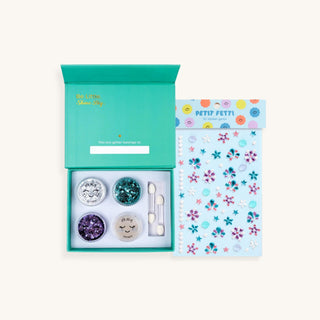
For children who mainly want a colorful, camera-fun look, the Face Sticker Gemstone Set for Kids by xo, Fetti offers a creative alternative to adult-style makeup. The self-adhesive gems create an imaginative party, costume, mermaid, unicorn, or princess look without introducing foundation, concealer, contouring, or a complicated beauty routine.
Face Sticker Gemstone Set for Kids

$9.99
Add a touch of sparkle with sticker gems that shine as bright as her creativity! Each face sticker has a soft, skin-friendly adhesive backing that applies in seconds and removes easily. The Splash set features 52 ocean-inspired gems, from 3D seashells and… read more
- Try a “creative brief” instead of a routine. For example: “Today’s look is rainbow freckles,” or “Today’s look is sparkly fairy eyes”—then it’s art.
- Build a gentle removal ritual. A soft cleanse and moisturizer (if needed) reinforces that skin is something to care for, not cover.
This approach often answers the real need behind What makeup brands should I avoid: you’re not only avoiding questionable ingredients—you’re avoiding a mindset that tells kids their face needs fixing.
Bottom line
If you’re asking What makeup brands should I avoid, you’re already doing the right thing: slowing down and using judgment. Avoid brands and products that are opaque about fragrance and pigments, that prioritize long-wear “performance,” and that market correction-focused beauty to kids. Choose fewer, simpler, clearly labeled products that remove easily, and keep makeup in the lane of expression—not concealment.
When you want vetted, kid-appropriate options without label overload, Popsicle Beauty Club is built to be that practical clean kids’ beauty hub: curated products, clearer standards, and age-appropriate beauty play families can feel better about.
Sources and further reading
- NIEHS: Cosmetics and Your Health - Explains what counts as cosmetics and notes that most cosmetic ingredients don’t require FDA preapproval (except color additives).
- FDA: Phthalates in Cosmetics - Notes how phthalates may be used and explains fragrance labeling limits.
For a complete guide on non-toxic play makeup, check out our in-depth resource: The Ultimate Guide to Non-Toxic Play Makeup for Kids for expert tips, product recommendations, and everything you need to know about choosing safe beauty play products for your child.
About the Author: This article was written by the contributing writers at Popsicle Beauty Club—a team of moms, educators, and clean beauty advocates passionate about creating a safer, more imaginative world for kids. We believe in empowering parents with trusted information and offering fun, non-toxic beauty and personal care products that let children play, express, and explore—without compromising their health.