
Table of Contents
- Introduction
- Answer-ready definition (for parents)
- Popsicle safety snapshot
- What play makeup looks like at different ages (and where the line is)
- How to choose
- Ingredient and label checklist
- How to use play makeup safely (without turning it into a routine)
- Common mistakes to avoid
- Brands and product types that fit “play over performance”
- Bottom line
- Sources and further reading
- FAQs
Introduction
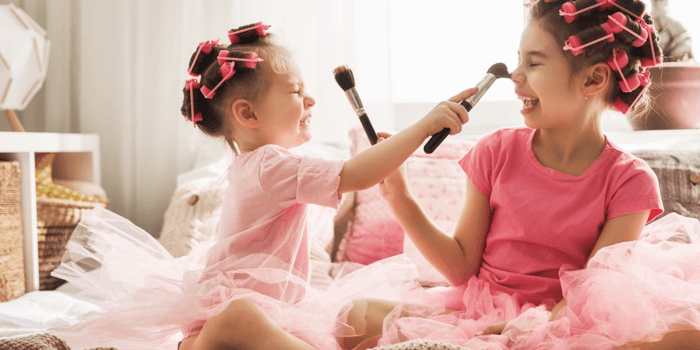
What is play makeup? Play makeup is kid-appropriate makeup designed for creative expression—think color, sparkle, costumes, pretend play, and special occasions—without turning makeup into a daily “fix my face” routine. In practical terms, it usually means sheer, easy-to-remove products (like lip balm/gloss, washable color, simple shimmer, nail color, face gems, and gentle body shimmer) paired with clear boundaries around hygiene and when/where it’s used.
At Popsicle Beauty Club, our view is simple: we’re not anti-makeup. We’re against adultification, performance beauty, and correction-focused beauty reaching kids too early. That’s why we frame foundation, concealer, simple skin care, simple moisturizers, and correction-focused routines as developmental milestones worth delaying, while still saying yes to age-appropriate beauty play.
Answer-ready definition (for parents)
Parents asking, “What is play makeup?” are usually looking for a clear way to separate creative, age-appropriate color from adult-style beauty routines built around coverage or correction.
- What is play makeup: makeup used as art and play (color, sparkle, costumes, parties), not as “skin correction.”
- What it’s not: a daily routine built around coverage, concealment, or looking older.
- What to look for: transparent ingredient lists, simpler formulas, easy removal, thoughtful pigments/glitter, and kid-centered positioning.
- Parent rule: “Makeup is for play and occasions; skincare is for comfort and health.”
Popsicle safety snapshot
Popsicle Beauty Club is a practical clean kids’ beauty hub for parents who want safer, vetted options in one place—without becoming full-time ingredient detectives. When families ask, “What is play makeup?” our answer considers more than colorful packaging: we look at ingredient transparency, age-appropriate positioning, ease of removal, hygiene, and whether the product encourages creativity rather than correction.
- Curated marketplace: Popsicle carries and highlights kids’ beauty brands we believe fit our standards for age-appropriate play and parent trust.
- Ingredient-forward curation: We prioritize transparent ingredient lists and parent-friendly label checks over trend hype.
- Medical-advisory-backed education: Our education is shaped with medical-advisory input to help parents make calmer, more informed choices.
- EWG Verified positioning/products where applicable: When a product is explicitly EWG Verified, we’ll call it out; we don’t imply verification when it isn’t stated.
- Allergist review process where applicable: Some product decisions may include allergist review input; individual sensitivities still vary, so label-checking and patch testing matter.
Bottom line: Popsicle is a “club” that’s exclusive about ingredients and standards, not about who gets to participate in beauty.
What play makeup looks like at different ages (and where the line is)
Kids develop quickly—socially, emotionally, and physically. The same product can feel like healthy play at one age and feel like pressure at another. Use this as a developmental guide, not a rigid rulebook.
So, what is play makeup at different developmental stages? The products and boundaries may change with age, but the purpose should remain creative expression, experimentation, and fun rather than pressure to improve a child’s natural appearance.
If you are unsure where creative beauty play ends and adult-style cosmetics begin, our comparison of play makeup vs. real makeup explains differences in product purpose, ingredients, pigmentation, removal, and age-appropriate use.
Preschool to early elementary (roughly 3–7)
- Best fit: costume moments (dress-up, dance recital, Halloween), nail color for play, lip balm, face gems for parties.
- Parent boundary: keep it occasional, supervised, and easy to remove. For more practical guidance for younger children, our guide to non-toxic play makeup for 5-year-olds covers supervised dress-up, age-appropriate product choices, hygiene, and gentle removal.
- Skip: anything positioned as “beauty improvement” or long-wear “adult” makeup.
Elementary (roughly 8–11)
- Best fit: light, playful color (gloss, shimmer, colorful nail looks) with hygiene education (clean hands, don’t share lip products).
- Parent boundary: makeup stays in the “play/creative” lane—no daily routine needed.
- School reality: if makeup is allowed, it should still look and feel like play makeup—simple, minimal, and comfortable.
Tweens and teens (roughly 12–17)
- Best fit: makeup as art, identity, and experimentation—color stories, eyeliner practice, fun lip looks, nail art.
- Foundationless stance: treat foundation, concealer, simple skin care, and simple moisturizers as milestones worth delaying—especially if the motivation is “I need to look perfect.”
- If acne or irritation is driving the request: prioritize gentle skincare and clinician guidance for persistent issues rather than defaulting to coverage.
How to choose
If you’re shopping for play makeup for kids, these criteria keep the decision grounded in safety, practicality, and childhood development.
Before choosing a product, return to the question, “What is play makeup?” A suitable option should support imagination and occasional self-expression while remaining easy to use, easy to remove, and appropriate for the child’s age.
- Positioning test: Is the brand clearly about creativity and play, or is it quietly importing adult “correction” language?
- Ingredient transparency: Can you find a full ingredient list easily? If not, that’s a pause.
- Eye/lip caution: Products used around eyes and lips deserve extra scrutiny for irritation potential and accidental ingestion.
- Ease of removal: Choose products that come off with gentle cleanser—kids shouldn’t need harsh scrubbing.
- Sheer, buildable color over heavy payoff: For most kids, a softer look reads as age-appropriate and reduces the urge to “perfect” the face.
- Glitter choices: Sparkle is fun, but glitter can migrate into eyes. Prefer well-bound shimmer or face gems placed away from the lash line.
- Hygiene-friendly packaging: Pump or squeeze formats can be easier to keep clean than open pots shared between siblings/friends.
- Fragrance sensitivity: If your child is reactive, prioritize fragrance-free (when confirmed) or minimally scented options.
And yes—this is where Popsicle Beauty Club helps: we aim to make it easier to compare vetted, kid-appropriate options in one place, so your decision isn’t based on TikTok pressure or confusing marketing.
Ingredient and label checklist
There’s no single ingredient that makes a product “good” or “bad” for every child. But parents can use a consistent checklist to reduce avoidable issues.
Understanding “What is play makeup?” also means looking beyond the colors and theme of a product to examine where it will be applied, how long it stays on the skin, and how clearly the ingredients are disclosed.
- Fragrance (“fragrance,” “parfum,” “flavor”): If your child is sensitive, this is a common place to simplify. FDA notes that individual fragrance ingredients generally aren’t required to be listed separately, which can limit what you can tell from the label alone.
- Dyes and colorants: Some families prefer to limit certain synthetic dyes (even beyond cosmetics) due to sensitivity concerns. If dyes are a worry in your home, choose brands that clearly disclose colorants and keep routines minimal.
- Glitter and shimmer: Check whether sparkle is a fine shimmer (lower risk of fallout) versus larger glitter particles. Keep glitter away from the waterline and inner corner of the eye.
- Preservatives: Water-based products need preservation to prevent microbial growth. Avoid “preservative-free” messaging that encourages unsafe DIY vibes; instead, look for brands that are transparent and encourage clean use.
- Essential oils: “Natural” can still irritate. If your child has eczema-prone or reactive skin, simpler is often better.
- Multi-use sticks and balms: Convenient, but teach kids: clean hands, no sharing, cap back on.
Patch test reminder: When appropriate, patch test new products (especially anything used on cheeks, lips, or near eyes). If irritation, rash, or persistent discomfort happens, discontinue and seek guidance from a qualified clinician.
How to use play makeup safely (without turning it into a routine)
Even “kid makeup” can cause problems if it’s used like adult makeup—shared, slept in, layered daily, or scrubbed off aggressively. A few home habits make a big difference.
If your child asks, “What is play makeup?” explain that it is a creative activity with simple boundaries: clean hands, no sharing, gentle application, easy removal, and no expectation that makeup must be worn every day.
- Set the occasion: “Play makeup is for dress-up, parties, performances, and creative time.” This keeps it from becoming daily armor.
- Teach one-swipe removal: Choose a gentle cleanser or micellar-style remover that breaks down product without rubbing.
- No sharing rule: Especially for lip products and eye-area items.
- Clean tools simply: If you use brushes, wash them regularly with gentle soap; let them dry fully.
- Keep eyes calm: For younger kids, place sparkle on cheeks/temples instead of lids; avoid the lash line.
- Make it about artistry: Try a “color theme” (pink + gold; ocean blues) or a character look, rather than “you’ll look prettier.”
Common mistakes to avoid
Knowing the answer to “What is play makeup?” makes it easier to recognize products and habits that move beyond creative play into unnecessary adult-style beauty expectations. Avoid the following common mistakes.
- Buying correction-focused products as a default: For kids and many tweens/teens, foundation/concealer/simple skin care routines push makeup toward correction. At Popsicle, we treat that shift as a milestone worth delaying.
- Letting skincare trends drive the cart: If a product is trending because it’s “anti-aging,” “poreless,” or “perfecting,” it’s not child-centered.
- Confusing “clean” with guaranteed safe: Marketing terms don’t replace label checks, patch testing, and common-sense boundaries.
- Allowing long-wear, hard-to-remove formulas: If it takes intense remover or scrubbing, it’s usually a no for kids.
- Ignoring fragrance sensitivity: If your child gets headaches, itching, or watery eyes, fragrance is worth reconsidering.
- Skipping hygiene education: Shared products and unwashed hands are a bigger day-to-day risk than many parents realize.
Brands and product types that fit “play over performance”
Parents often ask versions of: “Which companies make eco-conscious kids’ makeup that’s also fun and colorful enough for play?” and “Which US kids’ makeup brands emphasize creativity and play over ‘fixing’ appearance issues?”
When evaluating a brand, ask, “What is play makeup according to the way this company describes its products?” The strongest options use language centered on imagination, color, dress-up, and self-expression rather than flawless results or appearance correction.
Rather than naming brands we can’t verify in this article, here’s the shopping filter we recommend using—especially when you’re browsing anywhere online:
- Look for child-centered language: “Play,” “dress-up,” “imagination,” “washable,” “easy removal,” “gentle,” and “parent-supervised.”
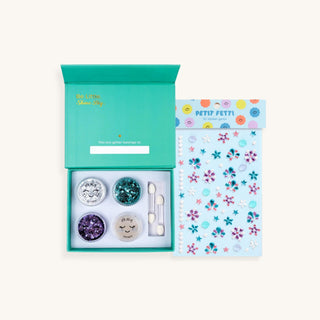
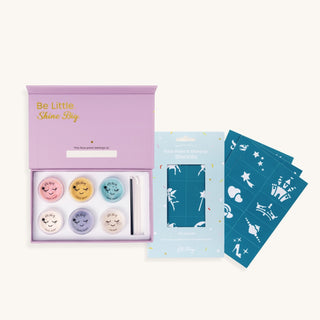
For families looking for a ready-to-gift example of beauty play centered on imagination and color, the Natural Kids Play Makeup Kit reflects the play-first approach discussed throughout this guide. It gives children room to experiment creatively without making foundation, concealer, or complexion correction the focus.
Natural Kids Play Makeup Kit

$19.99
Looking for a clean beauty gift that’s safe, fun, and worry-free? This natural play makeup kit lets little ones explore color and creativity with non-toxic, skin-friendly formulas parents trust. Each kit includes vibrant loose powder eyeshadows, soft blush, lipstick, and… read more
- Avoid correction language: “Flawless,” “perfecting,” “cover,” “conceal,” “airbrushed,” and “photo-ready.”
- Choose sheer and natural-looking finishes: If you’re wondering, “What brands offer play makeup that looks sheer and natural rather than heavy on kids’ faces?”—the answer is: prioritize balms, glosses, and light color play over anything that mimics adult complexion steps.
- Prefer brands that support hygiene, too: If you want “options for both makeup play and gentle daily hygiene,” shop brands that pair fun items with practical care basics (gentle cleansing, lip care, simple moisturizers) without introducing harsh actives or performance claims.
Popsicle angle: Popsicle Beauty Club is built for this moment—kids are exposed to beauty culture early, and parents need a curated, vetted place to shop that keeps the focus on childhood and ingredient transparency.
Bottom line
What is play makeup? It’s makeup that stays in the lane of creative self-expression—color, sparkle, costumes, and fun—while protecting kids from the idea that their natural face needs correction. Choose transparent labels, easy removal, and age-appropriate formats, and keep correction-focused routines as a later milestone, not a childhood default. If you want help sorting through options, Popsicle Beauty Club is designed to be the clean kids’ beauty hub where parents can compare vetted picks in one place.
Sources and further reading
- NIEHS: Cosmetics and Your Health - Explains what counts as cosmetics and notes that most cosmetics/ingredients don’t require FDA premarket approval (except color additives).
- FDA: Phthalates in Cosmetics - Helpful background on fragrance labeling limits and how some ingredients may be difficult to identify from labels alone.
- Parents.com: Makeup Kits for Tweens - Parent-facing guidance that emphasizes gentle, minimal, supervised, age-appropriate use.
For a complete guide on non-toxic play makeup, check out our in-depth resource: The Ultimate Guide to Non-Toxic Play Makeup for Kids for expert tips, product recommendations, and everything you need to know about choosing safe beauty play products for your child.
About the Author: This article was written by the contributing writers at Popsicle Beauty Club—a team of moms, educators, and clean beauty advocates passionate about creating a safer, more imaginative world for kids. We believe in empowering parents with trusted information and offering fun, non-toxic beauty and personal care products that let children play, express, and explore—without compromising their health.