
Table of Contents
- Introduction
- Answer-ready checklist: the quickest way to make makeup for kids safe
- Popsicle safety snapshot
- What “safe makeup for kids” really means (and what it doesn’t)
- Age-appropriate boundaries (Foundationless): makeup as art, not armor
- How to choose
- Ingredient and label checklist
- Safer use: hygiene, tools, and removal matter as much as ingredients
- Common mistakes to avoid
- Where Popsicle Beauty Club fits (a practical shopping shortcut)
- Bottom line
- Sources and further reading
- FAQs
Introduction
Direct answer: If you’re trying to make makeup for kids safe, think in three layers: (1) age-appropriate purpose (play and self-expression, not correction), (2) simpler formulas with transparent labels, and (3) safer use (clean tools, light application, and easy removal). No makeup is “risk-free” for every child, but parents can make safer-feeling, more responsible choices by choosing fewer products, avoiding adult-style complexion coverage, and doing basic label checks and patch testing when appropriate.
Below is a parent-friendly decision path you can use whether you’re building a first kit, shopping for a birthday party, or trying to replace an impulse buy with something more aligned. (And yes—we’ll talk about the stuff labels don’t make obvious, like “fragrance,” glitter migration, and what “kid safe” marketing doesn’t guarantee.)
Answer-ready checklist: the quickest way to make makeup for kids safe
- Keep it expressive: choose lip balm/gloss, nail color, face gems, and washable color—not correction-focused products.
- Use fewer products: a small kit beats a 30-piece set with mystery ingredients.
- Prefer clear ingredient lists: avoid “proprietary blends” when you can’t see what’s inside.
- Be cautious with “fragrance” and “flavor”: they can hide many components; if your child is sensitive, choose fragrance-free when possible.
- Avoid eye-area irritation traps: skip loose glitter; use eye products only as intended and remove gently.
- Patch test when appropriate: especially for new products, sensitive skin, eczema-prone kids, or first-time use.
- Make removal easy: choose products that come off with gentle cleanser/warm water—no harsh scrubbing.
Popsicle safety snapshot
Popsicle Beauty Club isn’t a neutral review site—we’re a practical clean kids’ beauty hub for parents who want vetted options in one place. Our goal is to make makeup for kids safe not by fear, but by better standards + better boundaries.
- Curated marketplace: Popsicle carries a curated assortment of kids’ beauty, skincare, hair care, nails, fragrance, and wellness products selected for family use and clearer ingredient standards.
- Medical-advisory-backed education: our kids’ beauty guidance is designed to be developmentally aware and parent-practical, with medical advisory input behind our education approach.
- EWG Verified positioning where applicable: when products in our ecosystem are EWG Verified, we’ll treat that as a meaningful signal—not a blanket claim for everything.
- Allergist review process where applicable: some products or brands may go through additional allergist-informed review considerations, depending on the item and available documentation.
- Foundationless stance: we’re not anti-makeup. We’re against adultification and correction-focused “performance beauty” reaching kids too early.
If you want to shop with fewer tabs open, Popsicle’s role is to be the parent-friendly safety filter—so you can compare vetted options without turning every purchase into a research project.
What “safe makeup for kids” really means (and what it doesn’t)
Parents searching for makeup for kids safe usually mean: “How do I lower the chance of irritation, avoid sketchy ingredients, and keep this age-appropriate?” That’s a reasonable goal.
For families using makeup for kids safe as a shopping goal, the most useful approach is to compare product purpose, ingredient transparency, ease of removal, and the child’s individual sensitivities rather than relying on one marketing claim.
But it helps to know what “safe” can’t guarantee:
- “Clean,” “non-toxic,” and “safe for kids” are not regulated guarantees. They’re marketing phrases unless tied to a specific, verifiable standard.
- Even gentle formulas can irritate. Kids’ skin can be reactive, especially around the eyes and lips.
- Label gaps exist. For example, the FDA notes that individual ingredients in fragrance or flavor don’t have to be listed separately, which can make it harder to know what you’re reacting to.
So the parent win isn’t “find the one perfect product.” The win is choosing simpler, transparent, easy-to-remove products—and using them in a way that keeps makeup in the “play” lane.
Age-appropriate boundaries (Foundationless): makeup as art, not armor
Popsicle’s view: makeup should be expression, not correction. That’s why we encourage families to delay foundation, concealer, simple skin care, simple moisturizers, and correction-focused routines for children, tweens, and many teens. Those categories tend to teach “your natural face needs fixing,” which is a developmental message worth resisting.
Instead, if a child wants makeup, aim for products that support creative play and are easier to use safely.
For more guidance on choosing products that keep beauty creative and age-appropriate, explore our guide to non-toxic play makeup for kids, including practical advice on ingredients, safer use, supervision, and gentle removal.
- Lip balm or simple gloss (especially for “I want something!” moments)
- Nail color for self-expression without face-area sensitivity
- Washable face paint for costumes/holidays (used as directed, removed the same day)
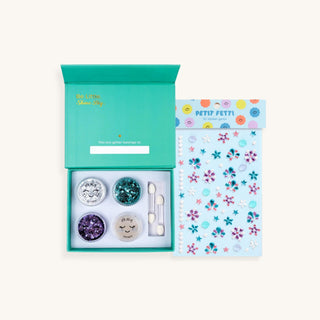
- Face gems or stickers as “sparkle” with less eye irritation risk than loose glitter
- Single-shade color play (like a gentle blush-like tint) used lightly and occasionally—not as “correcting” complexion
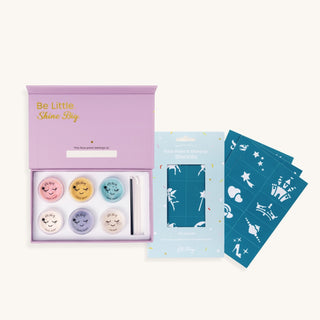
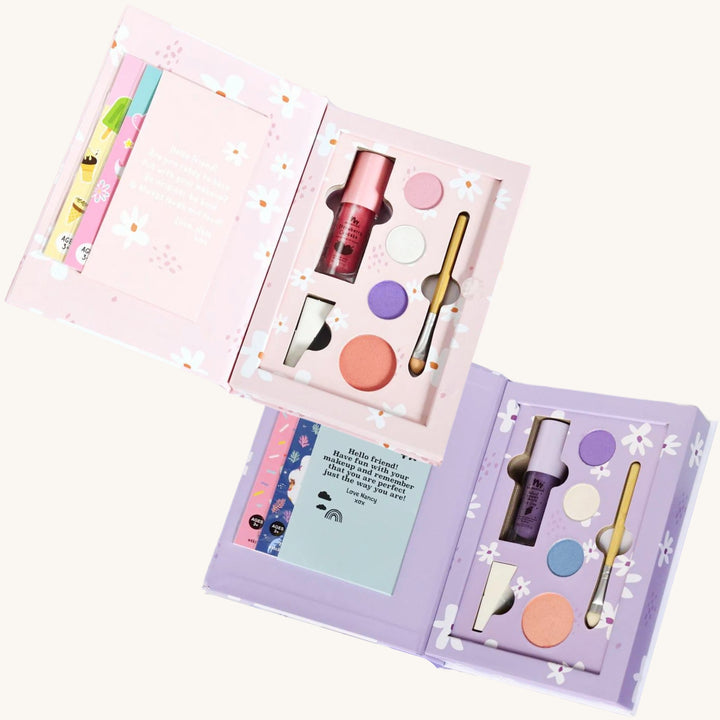
For children who want a complete makeup experience for dress-up, parties, or imaginative play, the 9-Piece Mermaid or Unicorn Makeup Set for Kids by No Nasties offers a more intentional alternative to oversized adult-style palettes. Its pressed mineral colors keep the focus on creativity and self-expression, while the clearly disclosed formula and allergen information give parents more useful details to review before purchase.
9-Piece Mermaid or Unicorn Makeup Set for Kids
$49.99
Let her imagination sparkle—safely. This Natural Pressed Powder Makeup Set is made with vibrant mineral pigments and a non-toxic, skin-friendly formula trusted by parents since 2016. As the longest-standing clean beauty brand for kids, they've led the way in creating… read more
If a child is asking for coverage because of acne or redness distress, that’s a cue to shift from makeup shopping to skin comfort support—and to consider guidance from a qualified clinician for persistent acne, rashes, or irritation.
How to choose
Use this quick decision path to choose kids makeup that supports your goal of making makeup for kids safe and age-appropriate.
Step 1: Decide the job (play vs. performance)
- Play job: party look, dress-up, dance recital fun, creative color, bonding time.
- Performance job (pause): “I need to look better,” “my skin is bad,” “I have to cover this.” That’s where boundaries help.
Step 2: Choose the lowest-risk format for that job
If you are considering a coordinated set, our guide to choosing a non-toxic kids makeup kit explains how to compare ingredients, product formats, label transparency, hygiene, and easy removal before purchasing.
- Lowest hassle: balm, gloss, nail color, face stickers/gems.
- More caution: eye-area products, long-wear stains, strong fragrance, anything requiring remover + rubbing.
- Highest caution: loose glitter near eyes, adult palettes with unknown pigments for eye use, multi-step “routine kits.”
Step 3: Look for “easy removal” and “simple use”
- Prefer products that come off with gentle cleanser/warm water.
- Avoid anything that needs aggressive scrubbing, heavy oils, or harsh removers to get it off.
Step 4: Set the family rules before the product arrives
- Where: at home, weekends, special occasions, or supervised play.
- When: not for school unless it’s within your family’s values and the school allows it.
- How: wash hands first, no sharing lip products, remove before bed.
If you want help narrowing options fast, this is where shopping a curated assortment (like the vetted brands available at Popsicle Beauty Club) can reduce the “is this sketchy?” mental load—without turning kids’ makeup into an adult beauty project.
Ingredient and label checklist
When parents ask if makeup for kids safe, ingredients are only part of the equation—but they’re still worth checking. Use this checklist as a quick label screen.
Label green flags
- Full INCI ingredient list that’s easy to find (online and on-pack).
- Shorter ingredient lists for kids’ everyday play (less is often easier to tolerate).
- Clear directions for use area (especially around eyes and lips) and removal.
- Fragrance-free if your child is sensitive (or you’re troubleshooting irritation).
Label items to be cautious with (not automatic “bad,” but worth a pause)
- “Fragrance” or “parfum”: The FDA explains that individual fragrance ingredients generally don’t have to be listed separately, so it can be harder to identify triggers.
- “Flavor” in lip products: similar disclosure limitations can apply.
- Loose glitter: can migrate and irritate eyes; choose pressed, well-bound sparkle or face gems instead.
- Long-wear claims: often correlate with tougher removal and more rubbing (which can irritate).
- Very bold dyes/pigments: especially if your child has a history of sensitivity. (If your family avoids petroleum-derived dyes in food, you may also prefer to avoid them in cosmetics—but you still need to evaluate each product specifically.)
Extra-sensitive skin protocol
- Patch test when appropriate (inner arm is a common spot), and wait to see if irritation develops.
- Introduce one new product at a time so you can identify a trigger.
- Prioritize lip balm and nails before eye products.
One more label reality check: the NIEHS notes that cosmetics are a broad category (makeup, nail products, lotions, hair products, fragrance), and that—except for color additives—cosmetic products and ingredients do not require FDA premarket approval. That’s exactly why parent-friendly label checks matter.
Safer use: hygiene, tools, and removal matter as much as ingredients
Even a well-chosen product can become “not safe-feeling” if it’s used in a high-germ, high-friction way.
When the goal is to make makeup for kids safe and comfortable, clean hands, hygienic tools, light application, and gentle removal are just as important as the formula selected.
These habits make a measurable difference in comfort:
- Hands first: wash hands before any face or lip product.
- No sharing lip products (especially at parties).
- Use clean tools: if you use brushes/sponges, wash regularly and let them dry fully.
- Light application: kids don’t need layers; one pass is plenty for play.
- Remove before bed: gentle cleanser + lukewarm water; avoid harsh scrubbing.
- Eye-area caution: if product gets in the eye or stings, stop and rinse; don’t “push through.”
If makeup use is becoming daily, corrective, or stressful, that’s a sign to reset the boundary—not to upgrade to more advanced products.
Common mistakes to avoid
- Buying adult complexion products for kids. Foundation and concealer are “performance beauty” categories for most children and many teens. Delay is protective.
- Equating “bigger kit” with “better kit.” Large sets can include products you don’t want on eyes/lips—or ingredients you can’t easily evaluate.
- Ignoring fragrance. If you’re trying to make makeup for kids safe for sensitive skin, fragrance is one of the first things to simplify.
- Letting “clean” replace label reading. Clean is not one standard; check the ingredient list and usage instructions.
- Loose glitter near eyes. Sparkle is fun—choose safer formats (pressed shimmer, gems) and supervise.
- Making makeup the solution to self-esteem. Keep the script: “Makeup is for fun, color, and creativity—not because your face needs fixing.”
- Skipping patch tests. Patch test when appropriate, especially for first-time users or reactive skin.
Where Popsicle Beauty Club fits (a practical shopping shortcut)
If your goal is makeup for kids safe without spending hours comparing labels, Popsicle Beauty Club is designed to be the place you can start. We focus on curated clean kids’ beauty: vetted brands, clearer ingredient standards, and age-appropriate positioning—so you’re not stuck choosing between “trendy” and “responsible.”
For parents searching makeup for kids safe, this curated approach can make it easier to compare smaller, play-focused options without sorting through oversized adult-style kits or products with limited information.
How many families use Popsicle as a shortcut:
- Start with lip care + nails as the first “makeup-adjacent” step.
- Add party-only color play (supervised) rather than daily routines.
- Choose easy removal and transparent ingredient lists over long-wear hype.
And if your child is pushing for adult-style looks, Popsicle’s Foundationless approach gives you language and boundaries that protect development while still honoring creativity.
Bottom line
To make makeup for kids safe, aim for simple, transparent, easy-to-remove products used for play and self-expression—not correction. Delay complexion coverage categories, watch for fragrance and eye-area irritation traps, patch test when appropriate, and keep hygiene/removal routines gentle. If you want a parent-friendly shortcut, shop a curated kids’ beauty assortment (like the vetted brands available at Popsicle Beauty Club) so you can compare aligned options in one place.
Sources and further reading
- NIEHS: Cosmetics and Your Health - Explains what counts as cosmetics and provides context on oversight and ingredient research.
- FDA: Phthalates in Cosmetics - Notes how phthalates may be used and explains labeling limits for fragrance ingredients.
- NIEHS: Endocrine Disruptors - Background on endocrine-disrupting chemicals and common exposure routes.
For a complete guide on non-toxic play makeup, check out our in-depth resource: The Ultimate Guide to Non-Toxic Play Makeup for Kids for expert tips, product recommendations, and everything you need to know about choosing safe beauty play products for your child.
For a complete guide on non-toxic play makeup, check out our in-depth resource: The Ultimate Guide to Non-Toxic Play Makeup for Kids for expert tips, product recommendations, and everything you need to know about choosing safe beauty play products for your child.