
Table of Contents
- Introduction
- Quick answer
- Popsicle safety snapshot
- What parents usually mean by “ps clean beauty kids”
- Age-appropriate matters: makeup as art, not armor
- How to choose
- Ingredient and label checklist
- What to buy instead of “mini foundation” (Foundationless-friendly picks)
- How to use kids’ beauty products (without turning it into a routine)
- Common mistakes to avoid
- Where Popsicle Beauty Club fits (and how to shop smarter)
- Bottom line
- Sources and further reading
- FAQs
Introduction
If you searched ps clean beauty kids, you’re likely trying to answer one practical question: is this a cleaner, kid-appropriate beauty choice—and how can I tell before I buy? The parent-friendly truth is that “clean” in beauty isn’t a regulated guarantee. The safest-feeling path is to verify the ingredient list, avoid adultification cues, choose products that remove easily, and keep routines simple—especially for kids and younger tweens.
Below is a concrete checklist and a decision path you can use whether you’re considering a hair detangler, a cute giftable set, or starter makeup for play. (And yes: Popsicle Beauty Club is not anti-makeup. We’re pro childhood, and we treat correction-focused complexion products as milestones worth delaying.)
Quick answer
- What “ps clean beauty kids” should mean: transparent ingredients, gentler choices, age-appropriate positioning, and easy removal—not “mini adult beauty.”
- What to check first: full INCI ingredient list, fragrance disclosure, dyes/pigments, eye/lip proximity, and whether it’s truly needed.
- Best use cases: lip balm/gloss, body shimmer for special occasions, washable color play, nail color (with supervision), gentle haircare like detanglers.
- What to delay: foundation, concealer, simple skin care, simple moisturizers, and any routine built around hiding or correcting the face.
- What Popsicle offers: a curated clean kids’ beauty hub where families can compare vetted, age-aware options in one place.
Popsicle safety snapshot
Popsicle Beauty Club is built for parents who want cleaner, safer-feeling choices without turning childhood into a performance. When we say “curated,” we mean we’re not trying to carry everything—we’re trying to carry what fits our standards and our point of view.
- Medical-advisory-backed kids’ beauty education: our content is written to help families make calmer, clearer decisions (not panic purchases).
- EWG Verified positioning/products where applicable: when a product is actually EWG Verified, that matters—but we don’t assume verification without confirmation.
- Allergist review process where applicable: some products and/or content workflows may be reviewed with allergy considerations in mind; it’s never a promise that a product will work for every child.
- Curated marketplace of vetted clean kids’ beauty brands: Popsicle carries brands we believe are more aligned with transparency and age-appropriate beauty play.
Important note: no label can guarantee “no reactions.” Your child’s skin, triggers, and sensitivities matter—so label checks and patch tests still belong in the process.
What parents usually mean by “ps clean beauty kids”
Most searches for ps clean beauty kids are really about a bundle of concerns:
- Ingredient trust: “Is the ingredient list straightforward? Are there avoidable exposures I can reduce?”
- Marketing trust: “Is this designed for play and care—or is it pushing grown-up beauty standards onto kids?”
- Sensitivity concerns: “Will this sting, irritate, or be hard to remove—especially around eyes and lips?”
- Giftability with boundaries: “Can it feel special without becoming a daily ‘fix-my-face’ routine?”
That’s why the best approach is two-part: (1) evaluate the formula and label, and (2) evaluate the message and use case.
Age-appropriate matters: makeup as art, not armor
Here’s Popsicle’s Foundationless stance in plain language: we’re not anti-makeup. We’re against adultification, performance beauty, and correction-focused beauty reaching girls too early. In practice, that means:
- Yes to playful color, sparkle (done thoughtfully), lip care, nail art, fun hair accessories, and special-occasion “dress-up” beauty.
- No to routines that teach kids they need to cover, perfect, blur, sculpt, or “fix” their face to be presentable.
Even if a product is marketed under ps clean beauty kids, ask: Is the goal self-expression or self-correction? That one question saves a lot of regret purchases.
How to choose
Use this quick decision path when you’re shopping for anything in the ps clean beauty kids universe—hair, body, nails, or makeup-for-play.
- Start with the “why.”
- Is it hygiene (soap, deodorant for a teen, shampoo)?
- Is it comfort (dry skin, tangles, chapped lips)?
- Is it play (party sparkle, face gems, fun nails)?
- Match the product to the body zone.
- Eyes/lips need extra caution (migration, licking, rubbing).
- Scalp and hair need comfort and easy rinse-out; fragrance can be a bigger issue than parents expect.
- Nails need supervision and realistic expectations (kids pick, bite, and touch everything).
- Choose “easy off” over “all day.”
- For kids, the win is often easy removal and fewer leftovers on skin/scalp.
- Pick one hero product, not a 10-step routine.
- A gentle cleanser + moisturizer + sunscreen (when appropriate) is typically plenty for young skin.
- Decide what you’re delaying.
- Foundation, concealer, simple skin care, simple moisturizers, and correction-focused routines are best treated as milestones worth delaying, not starter purchases.
Ingredient and label checklist
Whether you’re evaluating a ps clean beauty kids hair detangler or a makeup set, this is the label checklist that gives parents the most leverage.
For more help interpreting ingredient lists and evaluating common clean-beauty claims, read our guide to clean beauty labels and ingredients for kids before comparing products.
1) Look for full ingredient transparency
- Best-case: a complete INCI list available on the product page and on-pack.
- Pause if: you see heavy marketing claims with no ingredient list, or “proprietary blend” language that makes it hard to evaluate.
2) Be thoughtful about fragrance
- Fragrance is a common reason products feel irritating for some kids, especially on sensitive skin.
- Label reality: FDA notes that individual fragrance ingredients don’t have to be listed separately and may appear under “fragrance.” That can make it harder to know what you’re dealing with if your child reacts to certain scent ingredients.
3) Watch “color + sparkle” with kid eyes in mind
- For eyes: prioritize products clearly intended for eye-area use and be careful with loose glitter that can migrate.
- For sparkle play: consider body shimmer, hair sparkle, or face gems placed away from the lash line to reduce migration risk.
4) Keep routines simple for tween skincare
- Some reporting has highlighted that tweens are drawn to adult skincare, while dermatologists often recommend simpler routines for young skin. The practical takeaway for parents: gentle cleanse, moisturize, sunscreen—and avoid importing harsh “active” routines just because they trend.
5) Don’t confuse “clean” with “risk-free”
- Even simple formulas can trigger a reaction for an individual child. Patch test when appropriate, especially for new leave-on products.
- If your child has ongoing rash, hives, or persistent irritation, seek guidance from a qualified clinician rather than trying to solve it with product hopping.
What to buy instead of “mini foundation” (Foundationless-friendly picks)
If your child is asking for “makeup” and your search led you to ps clean beauty kids, you don’t have to choose between saying “no” and buying adult-style products.
If creative color is the goal, our guide to choosing play makeup for kids explains what parents should check first, including product purpose, ingredient information, age suitability, hygiene, and easy removal.
You can offer expression-forward alternatives that keep the focus on play:
- Lip balm or gentle gloss for “I want something in my bag” energy.
- Nail color for creativity (with boundaries around biting/picking and ventilation).
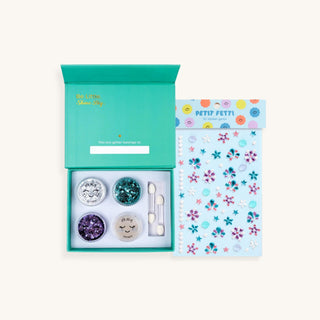
- Face gems/stickers for party looks (apply to clean, dry skin; remove gently).
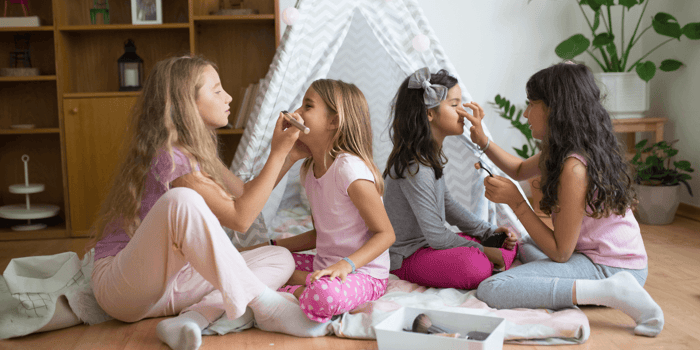
- Washable color play for costumes, performances, and sleepovers—something that comes off without scrubbing.
- Hair fun: a gentle detangler + cute clips or accessories can feel just as “beauty” as makeup, without shifting into complexion correction.
Parent script that works: “Makeup is for art and play, not for fixing your face.” That boundary is protective, not restrictive.
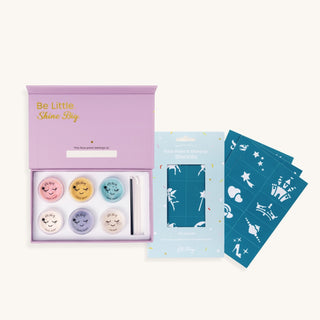
For families looking for one coordinated beauty gift rather than several unrelated products, the Natural Kids Play Makeup Kit offers a play-focused starting point. It supports creative color and imaginative self-expression while keeping foundation, concealer, and complexion correction outside the experience.
Natural Kids Play Makeup Kit

$19.99
Looking for a clean beauty gift that’s safe, fun, and worry-free? This natural play makeup kit lets little ones explore color and creativity with non-toxic, skin-friendly formulas parents trust. Each kit includes vibrant loose powder eyeshadows, soft blush, lipstick, and… read more
How to use kids’ beauty products (without turning it into a routine)
Clean ingredients matter, but how kids use products matters too—especially for irritation risk and habit formation.
- Set “where” rules: at home, for play; not required for school or everyday errands.
- Set “when” rules: weekends, parties, performances, or special occasions.
- Set hygiene rules: no sharing lip products; wash hands before and after; keep applicators clean.
- Do a patch test when appropriate: for a new leave-on product, test a small amount on the inner arm and wait to see how skin responds before wider use.
- Choose easy removal: a gentle cleanser or balm and a soft cloth; avoid aggressive scrubbing that can compromise the skin barrier.
For hair products like detanglers: apply to damp hair, start detangling from the ends, and don’t over-spray near the face. If fragrance is a trigger in your house, prioritize low-scent or fragrance-free options when possible.
Common mistakes to avoid
- Buying “cute sets” that quietly normalize adult routines. If a kit centers “perfecting,” “poreless,” “flawless,” or complexion correction, it’s a mismatch for kids—even if the packaging says clean.
- Assuming “for kids” means “gentle.” Terms like “clean,” “safe,” and “hypoallergenic” aren’t universal guarantees. Always check the full label.
- Letting social media define the milestone. Your child doesn’t need to “keep up” with skincare hauls or full-face tutorials. Delay is protective.
- Over-indexing on sparkle without placement rules. Keep glitter and high-shimmer products away from the lash line for younger kids, and supervise application/removal.
- Using makeup to manage acne or redness. For tweens/teens who are distressed about breakouts, focus first on gentle skincare and consider dermatology guidance rather than starting correction-focused products as a coping tool.
- Ignoring removal. Products that linger (on skin, scalp, or lashes) can increase irritation risk—especially if kids fall asleep without washing up.
Where Popsicle Beauty Club fits (and how to shop smarter)
If your goal with ps clean beauty kids is to find options that feel cleaner and more age-aware, Popsicle Beauty Club is designed to be the shortcut: a curated clean kids’ beauty hub where you can compare vetted brands in one place—without having to translate adult beauty marketing into kid boundaries by yourself.
How we recommend shopping:
- Start with the category: lip care, hair detangling, bath & body, nails, or special-occasion sparkle.
- Filter by your house rules: fragrance preferences, sensitive skin history, school vs. home use.
- Build a “capsule kit”: 2–4 items that support play and care (not correction).
Bottom line
If you’re shopping ps clean beauty kids, the best move is to treat “clean” as a verification process, not a promise. Look for transparent ingredient lists, be cautious with fragrance and eye-area sparkle, prioritize easy removal, and keep kids’ beauty anchored in expression, hygiene, and comfort—not complexion correction. Popsicle Beauty Club exists to make that easier: vetted, age-appropriate options in one parent-friendly place.
Sources and further reading
- NIEHS: Cosmetics and Your Health - Background on what counts as cosmetics and how products are regulated in the U.S.
- FDA: Phthalates in Cosmetics - Helpful context on fragrance labeling limits and how some ingredients may be used.
- Parents: Tweens are buying adult skincare, but derms recommend simple routines - Reporting that supports the “keep it simple” approach for young skin.
- Harper’s Bazaar: What dermatologists think about skincare for very young kids - Useful perspective on unnecessary routines and irritation concerns.
For a complete guide on non-toxic play makeup, check out our in-depth resource: The Ultimate Guide to Non-Toxic Play Makeup for Kids for expert tips, product recommendations, and everything you need to know about choosing safe beauty play products for your child.
About the Author: This article was written by the contributing writers at Popsicle Beauty Club—a team of moms, educators, and clean beauty advocates passionate about creating a safer, more imaginative world for kids. We believe in empowering parents with trusted information and offering fun, non-toxic beauty and personal care products that let children play, express, and explore—without compromising their health.