
Table of Contents
- 1) What “safe” means for lip gloss for kids (without the panic)
- 2) How to read the label on kids lip gloss (and spot what matters)
- 3) Ingredient checklist: what’s usually a good sign in lip gloss for kids
- 4) Ingredients and features to be cautious with in lip gloss for kids
- 5) Shopping criteria beyond ingredients: packaging, applicators, and hygiene
- 6) How to use lip gloss for kids safely: patch testing, routines, and when to skip
- 7) Bottom line: how to choose lip gloss for kids with confidence
- FAQs
Lip Gloss for Kids: Ingredients Parents Should Check
Shopping for lip gloss for kids sounds simple—until you start reading labels and seeing “natural,” “clean,” “non-toxic,” and “food-grade” sprinkled everywhere. The truth is, most glosses are mixtures of oils/waxes, a shine agent, optional color, and optional fragrance or flavor. For kids, the goal isn’t perfection; it’s choosing a formula that’s comfortable, low-fuss, and less likely to irritate—and using it in a way that keeps lips and applicators clean.
This guide walks you through what to look for (and what to think twice about) when buying lip gloss for kids, with practical shopping criteria and realistic use advice. As always, check the label on the exact product you’re buying (formulas change), and patch test when appropriate—especially for kids with sensitive skin.
1) What “safe” means for lip gloss for kids (without the panic)
When parents look for lip gloss for kids, they’re usually balancing three things:
- Comfort: Does it feel smooth, not gritty or sticky, and does it avoid the “tingly” sensations kids may dislike?
- Low irritation potential: Especially around the mouth where skin can be reactive, and where saliva and wiping can amplify dryness.
- Practicality: Easy to apply, not too messy, and not so fragranced/flavored that it encourages constant licking.
No cosmetic can be guaranteed irritation-free for every child. That’s why the most useful approach is: choose simpler formulas, avoid common triggers, introduce one new product at a time, and use it with clean habits.
2) How to read the label on kids lip gloss (and spot what matters)
Ingredient lists can look intimidating, but most kids lip gloss falls into a few formula styles. Knowing the style helps you interpret the label:
- Clear gloss: Usually oils + waxes + shine agents. Lower risk of staining, often simpler.
- Tinted gloss: Similar base, plus colorants (pigments or dyes). More variables to consider if sensitivity is a concern.
- Plumping/tingling gloss: Often includes sensation ingredients. Typically not ideal for kids who want comfort.
On the label, pay attention to these areas:
- Fragrance and flavor: Look for “fragrance,” “parfum,” “aroma,” or essential oils, and obvious flavor descriptors. These are common reasons a gloss smells amazing—but they can also be common irritants for some people.
- Actives and “effects”: Wording like “plumping,” “cooling,” or “warming” can signal ingredients that cause tingle or redness sensations.
- Color system: Tinted products may list pigments (like iron oxides) or dyes. If your child reacts to one product, you’ll want to know whether it was a dye, fragrance, or base.
Tip: If you’re comparing two options for lip gloss for kids, choose the one with the shorter, more straightforward ingredient list—especially for a first purchase.
Understanding how marketing terms like "clean," "natural," and "non-toxic" are used can make shopping much easier, especially when comparing beauty products designed for children. Read our Parents Guide To Clean Beauty Products to better understand what these labels really mean and how to choose safer options for young skin.
3) Ingredient checklist: what’s usually a good sign in lip gloss for kids
There’s no single “best” formula, but the following ingredient categories often align with a comfortable, kid-appropriate gloss. You’ll see some or many of these in clean lip gloss for kids and in more conventional formulas too.
Comfortable bases (the main body of the gloss)
- Oils and emollients: Examples include castor oil, jojoba oil, sunflower seed oil, squalane, or similar emollients. These create slip and shine.
- Waxes/butters: Beeswax, candelilla wax, carnauba wax, shea butter, cocoa butter, or similar ingredients can add cushion and help reduce runny mess.
Many parents looking for organic lip gloss for kids prefer plant oils and waxes. That can be a great starting point, but remember: “natural” ingredients can still bother sensitive skin. The best formula is the one your child tolerates well.
Gentle shine/texture helpers
- Texture modifiers: Some glosses include ingredients that improve spread and feel. If the gloss feels smooth and non-gritty, it’s often because the formula is well-balanced.
- Simple film formers: These can help shine last longer and reduce transfer. For kids, the priority is usually comfort over long wear.
Colorants that tend to be easier to track
- Mineral pigments: Many tinted glosses use iron oxides and similar pigments. These can be easier to identify on labels than “flavor/fragrance blends.”
If you’re buying lip gloss for kids for play or dress-up, a sheer tint is often more forgiving than an opaque, highly pigmented gloss—less staining, less perfection required.
Preservation/antioxidant support
Water-free glosses don’t always need the same preservative systems as water-based products, but you may see antioxidants (like vitamin E) used to help oils stay fresh longer. Don’t treat antioxidants as a guarantee of stability—focus on buying from reputable retailers and storing products well.
4) Ingredients and features to be cautious with in lip gloss for kids
This section isn’t about fear—it’s about knowing what commonly causes discomfort so you can make an informed call. If your child has a history of sensitivity, these are especially worth scanning for when choosing lip gloss for kids.
Strong fragrance, essential oils, and heavy flavoring
Fragrance (including essential oils) is one of the most common reasons lip products sting, feel “hot,” or trigger dryness over time. Flavors can also encourage licking, which can worsen chapping. If you’re aiming for non toxic lip gloss for kids in the practical, parent sense (low irritation and kid-friendly), going fragrance-free or lightly scented is often the easiest win.
Many of the same ingredients that can cause irritation in lip products also appear in children's makeup. Our guide on The Truth About Harmful Beauty Ingredients for Kids explains which additives parents should watch for and why ingredient transparency matters.
Plumping, warming, cooling, or “tingle” ingredients
These products are designed to create a sensation. For adults that may be desirable; for kids it often reads as “it burns” or “my lips feel weird.” If a gloss is marketed for plumping or tingling, it’s usually not the most comfortable choice for lip gloss for kids.
“Natural” and “clean” claims without clarity
Marketing terms like “clean,” “green,” and “non-toxic” are not standardized definitions across all brands. Instead of relying on front-label claims, flip the product over and check:
- Is it fragranced or flavored?
- Does it contain sensation ingredients (warming/cooling)?
- Is the ingredient list relatively short and understandable?
If your goal is safe lip gloss for kids, transparency and simplicity tend to matter more than buzzwords.
Glitter and shimmer particles (comfort + mess factor)
Shimmer can be fun, but some glittery formulas feel gritty or migrate outside the lip line. If your child is younger or tends to rub their face, consider choosing a smooth, high-shine clear formula instead of chunky glitter.
5) Shopping criteria beyond ingredients: packaging, applicators, and hygiene
Ingredients matter, but the delivery system matters too—especially for lip gloss for kids that gets tossed into backpacks, shared with friends, or applied with not-so-clean hands.
- Choose a squeeze tube or click pen for younger kids: These can be more hygienic than a doe-foot wand that goes back into the tube after touching lips.
- Look for a cap that closes securely: A leaky gloss is a bag-ruiner. Secure closures also reduce the chance of contamination.
- Consider a clear gloss for first-time users: It’s easier to apply without a mirror and less likely to stain clothes.
- Avoid “shareable” habits: Even with siblings, it’s best not to share lip products. If you’re buying multiples, label them with names.
For parents building a small “play makeup” kit, one clear gloss plus one sheer tint is usually more useful than several heavily scented, novelty flavors.
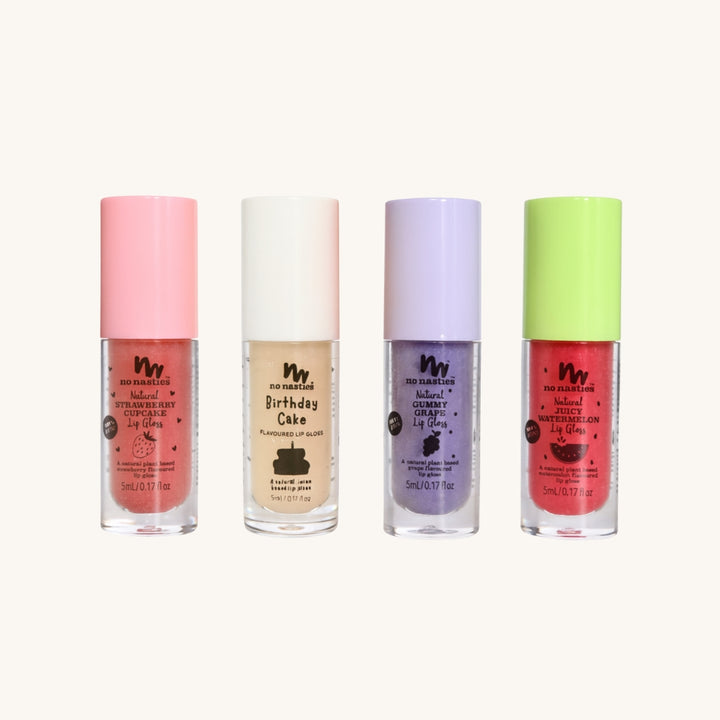
We highly recommend this natural lip gloss set by No Nasties. Formulated for even the most sensitive skin, it’s nut-free, gluten-free, dairy-free, and made without wheat derivatives or almond oil—making it our most allergy-friendly lip gloss yet.
Natural Flavor Lip Gloss for Kids
$7.99
A yummy, all-natural treat for little lips, this natural flavor lip gloss for kids adds a whisper of color while keeping lips soft and nourished with sunflower, olive, coconut, and jojoba oils. Formulated for even the most sensitive skin, it’s… read more
6) How to use lip gloss for kids safely: patch testing, routines, and when to skip
The best lip gloss for kids is the one used in a way that keeps lips comfortable. Here are practical routines that help:
Patch test when appropriate
If your child has sensitive skin, eczema-prone areas, or has reacted to lip products before, do a basic patch test: apply a small amount to a discreet area of skin (like the inner forearm) and wait to see if irritation develops. If there’s any discomfort or redness, discontinue use. When in doubt, check with a qualified professional for individualized guidance.
Keep application simple
- Start with clean, dry lips. Wipe off food residue first.
- Use a tiny amount. A thin layer reduces migrating and sticky buildup.
- Reapply strategically. After snacks or outdoor play, wipe and reapply rather than layering repeatedly.
Pair gloss with basic lip care
If lips are already chapped, gloss can sometimes highlight dryness or feel uncomfortable. On those days, a simple, bland lip balm (fragrance-free if sensitivity is a concern) can be a better first step. Once lips feel comfortable, gloss can go on top for shine.
Know when to skip the gloss
- If lips are cracked or sore, keep it minimal and focus on comfort.
- If a new product stings or causes persistent dryness, stop using it and review the label for fragrance/flavor or sensation ingredients.
- If your child is in a phase of constant lip licking, consider a less flavored option; flavor can unintentionally encourage licking.
7) Bottom line: how to choose lip gloss for kids with confidence
Choosing lip gloss for kids is mostly about selecting a comfortable, age-appropriate formula and using it hygienically. Look for a simple base of oils/waxes, avoid strong fragrance/flavor and tingling “plumping” effects, and pick packaging that’s easy to keep clean. Claims like non toxic lip gloss for kids or clean lip gloss for kid
About the Author: This article was written by the contributing writers at Popsicle Beauty Club—a team of moms, educators, and clean beauty advocates passionate about creating a safer, more imaginative world for kids. We believe in empowering parents with trusted information and offering fun, non-toxic beauty and personal care products that let children play, express, and explore—without compromising their health.
s can be helpful starting points, but the real decision should come from the ingredient list and how your child’s skin responds.
Check labels every time you repurchase (formulas can change), and patch test when appropriate—especially if you’re trying a new brand, a new flavor, or a tinted formula. With a simple checklist and a light hand on application, lip gloss for kids can be a fun, low-stress part of play or a special occasion routine.
For a complete guide on non-toxic play makeup, check out our in-depth resource: The Ultimate Guide to Non-Toxic Play Makeup for Kids for expert tips, product recommendations, and everything you need to know about choosing safe beauty play products for your child.
About the Author: This article was written by the contributing writers at Popsicle Beauty Club—a team of moms, educators, and clean beauty advocates passionate about creating a safer, more imaginative world for kids. We believe in empowering parents with trusted information and offering fun, non-toxic beauty and personal care products that let children play, express, and explore—without compromising their health.