
Table of Contents
- Introduction
- Why “is nail polish safe for kids” is a fair question (and what “safe” really means)
- Age and readiness: when nail polish makes sense (and when to wait)
- Shopping checklist: how to read labels and what “non-toxic” can’t promise
- Regular polish vs. kids peel-off: what to choose for low-stress wear
- Is gel nail polish safe for kids? Why gel is a different category
- How to apply and remove nail polish on kids more safely (routine that works in real life)
- Troubleshooting: staining, peeling, picking, and possible reactions
- Bottom line: is nail polish safe for kids when you shop and use it thoughtfully?
- FAQs
Introduction
Parents and gift-givers ask is nail polish safe for kids because it sits in that gray area: it’s “just for fun,” but it’s also a product that touches the body, has a smell, and needs remover. The good news is that many families use nail polish without issues when they choose simpler formulas and keep the routine low-key. The more realistic answer to is nail polish safe for kids is: it depends on the child’s age and habits, the type of polish (regular vs. gel), and how you apply and remove it.
This guide is designed for beauty shoppers who want practical, label-based criteria—not hype. You’ll learn what to look for on packaging, what to skip for kids, and how to set up a kid-friendly routine. You’ll also see why “non-toxic” marketing can be helpful, but isn’t a substitute for reading the ingredient list and using common-sense precautions.
Why “is nail polish safe for kids” is a fair question (and what “safe” really means)
When someone asks is nail polish safe for kids, they’re usually worrying about a few specific risks:
- Ingestion: little kids may put fingers in their mouth, chew nails, or peel and nibble polish chips.
- Skin sensitivity: the skin around nails can react to fragrance, dyes, preservatives, or resins.
- Fumes and ventilation: strong odors during application/removal can be unpleasant, especially in small rooms.
- Nail surface changes: frequent removal, heavy buffing, or aggressive peeling can make nails feel dry or rough.
“Safe,” in a practical parenting sense, usually means minimizing these exposures and avoiding product types that are inherently more intense (like gel systems that require curing and stronger removers). For most families, nail polish safe for kids looks like an occasional, short-wear manicure done with regular polish or peelable kids polish, used with supervision, good airflow, and gentle removal.
Age and readiness: when nail polish makes sense (and when to wait)
There’s no universal “perfect age,” but there are clear readiness signs that make safe nail polish for kids more realistic:
- They can keep hands out of their mouth for the dry-down period and afterward.
- They won’t pick or peel the polish constantly (or you’re okay with quick removal if they do).
- They can sit still long enough for a thin coat and drying time.
For many families, the “starter” stage is toddler-to-early elementary with a peel-off, water-based kids formula, done for a special occasion and removed soon after. As kids get older and are less likely to mouth fingers, regular polish can be an option. If you’re still unsure, a helpful way to frame is nail polish safe for kids is: “Can my child use this without chewing, rubbing eyes, or peeling aggressively?” If the answer is no, wait or choose a very temporary option. Similar age-appropriate guidance applies to other beauty products as well.
Looking And Feeling Good: Age-Appropriate Makeup Tips for Preteens shares practical ways to introduce cosmetics gradually while keeping the focus on healthy habits and self-confidence.
Supervision matters more than age. A supervised manicure on a child who doesn’t mouth fingers is typically lower-risk than an unsupervised manicure on an older child who bites nails and peels chips.
Shopping checklist: how to read labels and what “non-toxic” can’t promise
If you’re trying to buy non toxic nail polish for kids or non toxic kids nail polish, start by translating marketing into label checks. “Non-toxic” isn’t a single regulated standard across all brands, so your best tool is the ingredient list and the brand’s safety information. Learning how ingredient transparency works across children's cosmetics can make beauty labels much easier to evaluate.
Our guide to The Science & Ethics Behind Non-Toxic Beauty explores how clean beauty brands approach safety, testing, and ingredient selection.
What to look for on the package
- Clear ingredient list (not just “free-from” claims).
- Age guidance and usage instructions, especially for kids-targeted polish.
- Contact and customer support information (a sign the brand expects questions).
- “For external use” and safety warnings that match how the product is actually used.
Common “free-from” claims (and how to use them)
You’ll often see “3-free,” “5-free,” “7-free,” “10-free,” or similar. These claims usually mean the formula avoids certain commonly discussed ingredients (the exact list varies by brand). This can be a useful shortcut while shopping for nail polish safe for kids, but it’s not the whole story. Even a “free-from” formula can include ingredients that bother sensitive skin, and a product can be irritating simply because it’s a solvent-based lacquer.
Use “free-from” as a starting filter, then do two more steps:
- Scan for fragrance and added scent, which can be a common sensitivity trigger for some kids.
- Check for a kids-appropriate removal plan (peel-off or gentle remover) so you don’t have to scrub.
Patch test when appropriate
If your child has sensitive skin, eczema-prone hands, or a history of reacting to personal care products, patch testing is a smart extra step. Apply a tiny amount of the polish to one nail (or a small area per product instructions), let it fully dry, and watch for redness, itching, or swelling over the next day. Patch testing can’t prevent every issue, but it’s a practical way to reduce surprises—especially when you’re still deciding is nail polish safe for kids in your household.
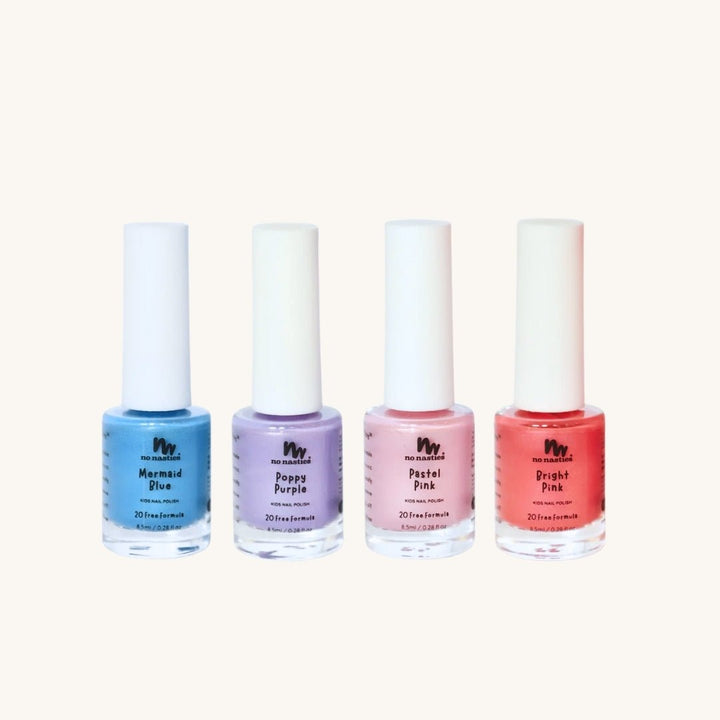
We highly recommend this natural set of nail polish by No Nasties. It’s made without the 20 most common toxic ingredients found in conventional nail polish, including formaldehyde (a known carcinogen), toluene (linked to headaches and nervous system damage), and dibutyl phthalate (a hormone disruptor).
20 FREE Unscented, Non-Toxic Nail Polish for Kids
$9.99
Give your little one’s nails a safer mani/pedi with this 20 FREE Unscented Nail Polish—meaning it’s made without the 20 most common toxic ingredients found in conventional nail polish, including formaldehyde (a known carcinogen), toluene (linked to headaches and nervous… read more
Regular polish vs. kids peel-off: what to choose for low-stress wear
For most families, the best “first step” toward safe nail polish for kids is choosing a formula that doesn’t require strong removers.
Kids peel-off (often water-based)
- Pros: easy removal (less scrubbing), typically lower odor, great for occasional play.
- Cons: can pop off quickly, may encourage picking in kids who like to peel things.
Traditional solvent-based polish
- Pros: better wear time, smoother finish, widely available colors and top coats.
- Cons: stronger smell, usually needs remover (which can be drying), chips can become something to chew or pick.
A practical compromise: use traditional polish on older kids for short stretches (a weekend, a party), then remove gently rather than letting it chip for days. That approach addresses a big reason parents ask is nail polish safe for kids: chips that end up in mouths, beds, and carpet.
Is gel nail polish safe for kids? Why gel is a different category
Gel nail polish safe for kids is a common search, but gel systems are fundamentally different from regular polish. Gel typically involves:
- Specialized formulas designed to cure (harden) under a lamp.
- More steps (base, color, top, wipe, prep).
- More intense removal (often soaking and scraping), which can be rough on nails if done frequently or improperly.
Because gel is longer-wear and removal is more involved, it’s generally not the most kid-friendly choice for casual use. If you’re still considering it for a special event, the most conservative approach is to wait until a child is older, can keep fingers away from their mouth, and can tolerate a careful removal process without picking. In other words, when evaluating is nail polish safe for kids, gel raises the bar for supervision and technique.
Also note: “gel-like” or “long-wear” traditional polishes exist that do not require curing lamps. These can be a middle ground if you want longer wear without the full gel system, but they still need remover and may chip.
How to apply and remove nail polish on kids more safely (routine that works in real life)
Even the best-labeled product can become a hassle if the routine is messy. Here’s a realistic, parent-friendly method that supports nail polish safe for kids in day-to-day life.
Set up the space
- Ventilation: open a window or use a fan so odors don’t build up.
- Cover the surface: a paper towel or washable mat prevents accidental spills.
- Wash hands first: remove lotion and food residue for smoother application.
Application tips (less product, less mess)
- Use thin coats: one thin coat often looks better than a thick coat that never dries.
- Avoid flooding the cuticle: keep polish on the nail plate to reduce skin contact.
- Skip harsh nail prep: don’t buff kids’ nails aggressively; it’s not needed.
- Dry time = activity time: pick a low-movement activity (a show, story time) to prevent smudges.
Removal without drama
- For peel-off: soak hands briefly in warm water, then lift gently—don’t rip quickly.
- For regular polish: use a small amount of remover on cotton, press for a few seconds, then swipe. Repeat rather than scrubbing.
- Moisturize after: a simple hand cream or cuticle oil can reduce dryness from washing/removal.
If your child bites nails or sucks fingers, it’s another reason parents ask is nail polish safe for kids. In that case, keep wear time short and remove at the first signs of chipping or picking. And always store polish and remover out of reach—kids products still aren’t snacks.
Troubleshooting: staining, peeling, picking, and possible reactions
Staining
Some bright pigments can leave a tint on nails, especially if polish is worn for a while. To reduce staining, consider a base coat (for older kids who tolerate a longer routine) or choose lighter shades for everyday play. If staining happens, it usually grows out with the nail; avoid aggressive buffing.
Peeling and picking
Peeling often means the coat was too thick, hands got wet too soon, or the child is using nails as tools. Try thinner coats and shorter wear. If a child enjoys picking, peel-off polish might be irresistible; a regular polish that you remove promptly may work better.
Redness or irritation
If you notice redness, itching, swelling, or discomfort around the nails, remove the polish and discontinue use. This is where patch testing and label checks matter. If symptoms are significant or persist, consult a qualified clinician. (This article is product guidance, not medical advice.)
Bottom line: is nail polish safe for kids when you shop and use it thoughtfully?
So, is nail polish safe for kids? For many families, yes—when you choose age-appropriate formulas, keep polish off the surrounding skin as much as possible, apply in a ventilated space, and remove gently before chipping turns into nibbling. If you want the simplest path, look for kids-targeted peel-off options with clear labeling, and treat “non-toxic” as a helpful shopping filter—not a guarantee.
Most importantly, keep the routine occasional, supervised, and comfortable. Read labels, store products securely, and patch test when appropriate. With those basics, you can make an informed decision about is nail polish safe for kids in a way that’s practical, calm, and kid-friendly.
Want to explore more about safe nail polish and toxin-free manicures for kids? Check out Safe & Non-Toxic Nail Care for Kids to learn about the best brands, safe removal methods, and fun, non-toxic nail art ideas.

About the Author: This article was written by the contributing writers at Popsicle Beauty Club—a team of moms, educators, and clean beauty advocates passionate about creating a safer, more imaginative world for kids. We believe in empowering parents with trusted information and offering fun, non-toxic beauty and personal care products that let children play, express, and explore—without compromising their health.