

Table of Contents
- What To Expect In This Blog Post
- Introduction: The Hidden Dangers in Kids’ Beauty Products
- The Most Harmful Beauty Ingredients Found in Kids’ Products
- How Beauty Labels Mislead Parents
- Safer Alternatives to Common Toxic Beauty Ingredients
- Where To Buy Safer Beauty Products for Kids
- Raising Kids With Healthier Beauty Habits
- Final Thoughts
- FAQs
What To Expect In This Blog Post
- Why some kids’ beauty products still contain questionable ingredients
- The most common harmful ingredients found in children’s makeup and skincare
- How misleading beauty labels and greenwashing confuse parents
- Safer alternatives to synthetic dyes, parabens, talc, and artificial fragrance
- How to read ingredient labels more confidently
- Where to shop for cleaner beauty products for kids
- Tips for raising kids with healthier beauty habits and ingredient awareness
Introduction: The Hidden Dangers in Kids’ Beauty Products
As awareness around ingredient safety grows, more families are paying closer attention to the harmful beauty ingredients for kids that may still appear in play makeup, lip balms, bath products, and children’s skincare. Many products marketed as “natural,” “gentle,” or “kid-friendly” can still contain synthetic dyes, hormone-disrupting preservatives, artificial fragrance blends, and other ingredients that may irritate sensitive young skin.
Children’s skin is thinner and often more absorbent than adult skin, which is one reason many parents now prefer safer, more transparent beauty products. While the clean beauty movement has helped increase awareness, misleading marketing and greenwashing tactics can still make it difficult to identify which products are genuinely safer and which simply appear healthier on the surface.
Understanding ingredient labels, learning which ingredients many families choose to avoid, and recognizing common marketing tricks can help parents make more informed beauty decisions for their children.
| Ingredient Type | Why Some Parents Avoid It | Common Alternatives |
|---|---|---|
| Synthetic Dyes | Potential irritation or sensitivity | Plant-based pigments |
| Parabens | Hormone disruption concerns | Vitamin E or rosemary extract |
| Talc | Potential contamination concerns | Arrowroot powder or kaolin clay |
| Artificial Fragrance | Undisclosed chemical blends | Fruit extracts or mild essential oils |
The Most Harmful Beauty Ingredients Found in Kids’ Products
Parabens: Preservatives Many Parents Prefer To Avoid
Parabens are commonly used in lotions, lip glosses, shampoos, and body sprays to help prevent bacterial growth and extend shelf life. However, many parents researching harmful beauty ingredients for kids choose to avoid parabens because they may mimic estrogen in the body and raise concerns surrounding hormone disruption.
Common parabens include:
- methylparaben
- propylparaben
- butylparaben
These ingredients are often absorbed through the skin, which is why ingredient transparency has become increasingly important in children’s beauty products.
When reviewing labels, many parents look carefully for ingredients ending in:
- “-paraben”
Cleaner beauty brands often replace parabens with gentler preservation systems such as:
- tocopherol (Vitamin E)
- rosemary extract
- radish root ferment
Synthetic Dyes & Artificial Colorants
Bright colors are often a major selling point in children’s beauty products, but some synthetic dyes used in cosmetics are petroleum-derived and have raised concerns about irritation, allergies, and sensitivity.
Ingredients commonly discussed include:
- Red 40
- Yellow 5
- Blue 1
These dyes often appear on labels as:
- FD&C colors
- D&C colors
Some families prefer beauty products colored with:
- beetroot powder
- hibiscus
- cocoa powder
- mineral pigments
Plant-based and mineral-based colorants can help create vibrant shades while reducing reliance on synthetic dyes.
Talc & Powder-Based Ingredients
Talc has long been used in blushes, powders, and eyeshadows because of its silky texture and oil-absorbing properties. However, concerns surrounding asbestos contamination have caused many parents to reconsider talc-based products entirely.
Because asbestos can naturally occur near talc deposits during mining, some families now avoid:
- loose powders
- talc-based blushes
- talc-based face products
Instead, many cleaner beauty brands now use:
- arrowroot powder
- kaolin clay
- rice powder
These alternatives provide texture and absorption while helping reduce contamination concerns.
Fragrance & Hidden Chemical Blends
One of the most controversial ingredients in beauty products is simply labeled:
- “fragrance”
or - “parfum”
These terms can legally represent large blends of undisclosed chemicals, including phthalates and synthetic scent compounds. Because companies are not always required to disclose individual fragrance ingredients, many parents now avoid heavily scented children’s products entirely.
Artificial fragrance blends are commonly found in:
- body sprays
- lip glosses
- lotions
- bath bombs
- shampoos
Families seeking gentler alternatives often prefer products scented with:
- fruit extracts
- vanilla extract
- chamomile
- calendula
This is one reason harmful beauty ingredients for kids have become a growing topic among parents researching cleaner beauty routines.
Carmine & Animal-Derived Pigments
Some products marketed as “natural” or “clean” still contain carmine, a red pigment made from crushed insects. Carmine commonly appears in:
- lip gloss
- blush
- eyeshadow
Labels may list it as:
- Carmine
- Natural Red 4
- CI 75470
This ingredient raises ethical concerns for families seeking vegan or fully cruelty-free beauty products.
Many cleaner brands now use:
- fruit-derived pigments
- iron oxides
- plant-based alternatives
instead of insect-derived coloring systems.
How Beauty Labels Mislead Parents
The Problem With Buzzwords Like “Natural” & “Hypoallergenic”
Many beauty labels use terms that sound reassuring but may not have strong regulatory definitions.
Common examples include:
- “natural”
- “clean”
- “hypoallergenic”
- “dermatologist-tested”
The problem is that these terms do not automatically guarantee ingredient safety or transparency.
For example:
- “hypoallergenic” does not necessarily mean irritation-free
- “dermatologist-tested” does not explain testing methods
- “natural” may only refer to one or two ingredients in an otherwise synthetic formula
This is why many parents now focus less on front-label claims and more on full ingredient disclosure.
Common Greenwashing Tactics in Kids’ Beauty Products
As demand for cleaner products grows, many companies use greenwashing strategies to appear safer than they actually are.
Examples include:
- “Paraben-Free” while still containing phenoxyethanol
- “Cruelty-Free” while still using carmine
- “Organic Ingredients” without full organic certification
Some brands also emphasize a few natural ingredients while hiding synthetic preservatives, artificial dyes, or undisclosed fragrance blends elsewhere in the formula.
Understanding harmful beauty ingredients for kids helps parents identify these misleading tactics more easily.
How To Read Ingredient Labels More Carefully
When reviewing beauty products for children, many parents focus heavily on:
- the first five ingredients
- synthetic dyes
- preservatives
- fragrance blends
- certification labels
Some families also use ingredient-checking resources such as:
- EWG Skin Deep
- Think Dirty
- Made Safe®
These tools can help parents better understand how certain ingredients are rated and whether products align with their comfort level. Parents looking for safer alternatives can also explore our guide to non-toxic play makeup for kids to better understand ingredient safety in children’s beauty products.
Safer Alternatives to Common Toxic Beauty Ingredients
Thankfully, many cleaner alternatives now exist for families looking to reduce exposure to harsh chemicals.
| Traditional Ingredient | Cleaner Alternative |
|---|---|
| Parabens | Vitamin E, rosemary extract |
| Synthetic Dyes | Beetroot powder, hibiscus |
| Talc | Arrowroot powder, kaolin clay |
| Artificial Fragrance | Fruit extracts, mild botanicals |
Many non-toxic beauty products for kids now rely on plant-based pigments, gentler preservatives, and lower-odor formulas to create safer options for younger users.
When shopping for safer products, many families prefer:
- ingredient transparency
- fragrance-free formulas
- mineral-based pigments
- cruelty-free standards
- recyclable packaging
Where To Buy Safer Beauty Products for Kids
Finding genuinely safer products often requires shopping beyond traditional toy aisles and mass-market beauty kits.
Many families now prefer:
- clean beauty retailers
- ingredient-focused brands
- natural product boutiques
- certified product collections
Parents often look for:
- EWG Verified™
- Made Safe®
- USDA Organic
- Leaping Bunny
These certifications may help provide additional reassurance around ingredient standards and ethical sourcing. Parents researching harmful beauty ingredients for kids often prefer cleaner makeup kits that avoid talc, FD&C dyes, carmine, and synthetic pigments while still making creative play fun and age-appropriate.
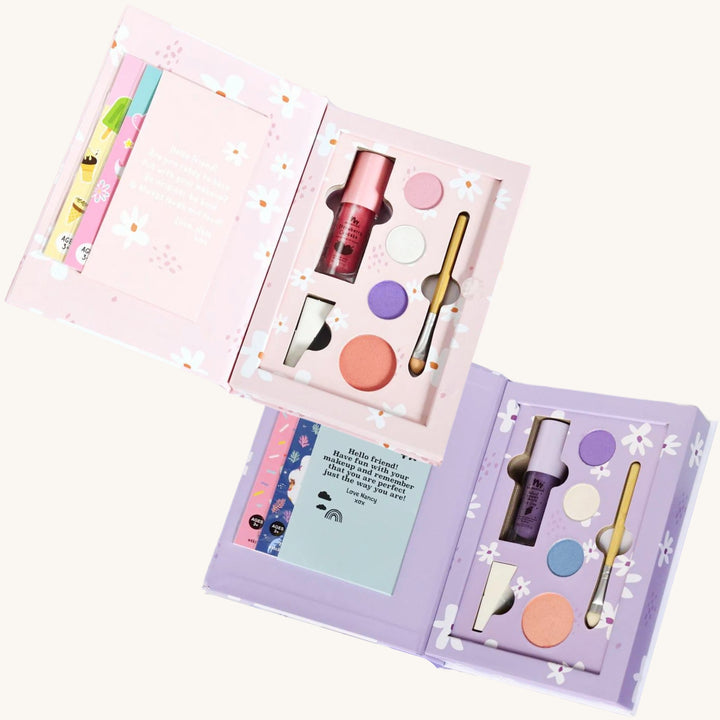
9-Piece Mermaid or Unicorn Makeup Set for Kids
$49.99
Let her imagination sparkle—safely. This Natural Pressed Powder Makeup Set is made with vibrant mineral pigments and a non-toxic, skin-friendly formula trusted by parents since 2016. As the longest-standing clean beauty brand for kids, they've led the way in creating… read more
Raising Kids With Healthier Beauty Habits
Teaching children about beauty products can also become an opportunity to build healthier long-term habits and self-confidence.
Many parents now encourage children to view makeup as:
- creative play
- artistic expression
- self-care
rather than a requirement for confidence or appearance.
Helping children understand ingredient labels and product safety early may also encourage more thoughtful consumer habits later in life.
Positive messaging around self-care and body confidence can help children develop a healthier relationship with beauty overall.
Final Thoughts
Understanding harmful beauty ingredients for kids helps parents make more informed decisions about the products their children use every day. While many beauty brands market products as “natural” or “gentle,” ingredient labels often reveal a more complicated reality involving synthetic dyes, preservatives, fragrance blends, and misleading marketing language.
Fortunately, cleaner alternatives are becoming more accessible. By learning how to identify questionable ingredients, understand certification labels, and support transparent brands, families can create safer beauty routines that prioritize both health and ethical responsibility. More families today are actively researching harmful beauty ingredients for kids as they transition toward cleaner and more transparent beauty products.
As awareness continues to grow, more parents are choosing harmful beauty ingredients for kids as an important research topic when evaluating children’s makeup, skincare, and personal care products. Small ingredient swaps and more informed purchasing decisions can make a meaningful difference over time. Families interested in building safer beauty routines can also learn more about non-toxic beauty products for kids and ingredient transparency through our clean beauty education resources.
For a deeper dive into safe skincare for kids, visit Safe & Non-Toxic Skincare for Kids to discover the best clean beauty products, DIY recipes, and tips for keeping your child’s skin healthy and toxin-free.
About the Author: This article was written by the contributing writers at Popsicle Beauty Club—a team of moms, educators, and clean beauty advocates passionate about creating a safer, more imaginative world for kids. We believe in empowering parents with trusted information and offering fun, non-toxic beauty and personal care products that let children play, express, and explore—without compromising their health.
FAQs
What are the most harmful beauty ingredients for kids?
Many parents prefer avoiding parabens, synthetic dyes, talc, artificial fragrance blends, and phthalates in children’s beauty products.
Why are synthetic fragrances controversial
Fragrance blends can contain undisclosed chemicals and allergens, including phthalates, which many families choose to avoid.
Are natural beauty products always safer?
Not always. Some natural ingredients may still irritate sensitive skin, which is why ingredient transparency and formulation quality matter.
What certifications help verify safer beauty products?
Many families look for certifications such as EWG Verified™, Made Safe®, USDA Organic, and Leaping Bunny.
How can parents avoid greenwashing in beauty products?
Reading full ingredient lists, researching certifications, and avoiding vague marketing claims can help parents identify more transparent brands.