
Table of Contents
- Introduction
- Quick answer checklist
- Popsicle safety snapshot
- What “organic” means (and doesn’t mean) in kids makeup
- Age-appropriate boundaries: keep it playful (and Foundationless)
- How to choose
- Ingredient and label checklist
- How to use a kids makeup kit safely (and keep it hygienic)
- Popsicle Beauty Club options for a smaller organic makeup kit
- Common mistakes to avoid
- Where Popsicle Beauty Club fits (practical shopping help)
- Bottom line
- Sources and further reading
- FAQs
Introduction
If you’re searching for an Organic makeup kit for kids, the safest, most practical approach is to treat it as play makeup: a small set of simple products that are easy to remove, used occasionally, and chosen with clear label standards (not trendy “adult” claims). “Organic” can be a helpful signal—especially for certain plant oils and waxes—but it’s not a guarantee that a kit is irritation-free, eye-safe, or age-appropriate. The parent-friendly win is a kit with transparent ingredients, minimal fragrance, and kid-appropriate formats (think lip balm, gentle shimmer, nail color) rather than complexion coverage.
Below is a decision path you can use in under 10 minutes while shopping—plus the exact label checks that matter most for kids’ faces.
Quick answer checklist
A parent-friendly organic makeup kit for kids should combine a small product range, transparent formulas, age-appropriate color, washable formats, and tools that are easy to clean.
- Best “first kit” formats: lip balm/gloss, blush-like color for play, washable face paint for costumes, kid nail color.
- Delay “coverage” products: foundation, concealer, simple skin care, simple moisturizers—these are developmental milestones worth delaying, not routine kid purchases.
- Prioritize: short ingredient lists, clear pigment disclosure, minimal/optional fragrance, and easy removal with gentle cleanser.
- Be extra careful: around eyes and on lips; choose products designed for those areas when possible.
- Do a patch test when appropriate (especially for sensitive skin or first-time use).
Popsicle safety snapshot
Popsicle Beauty Club is built to be the practical clean kids’ beauty hub for families who want safer, vetted options in one place—without turning childhood into a full-time beauty routine.
- Curated marketplace of vetted brands: Popsicle carries kids’ beauty and personal care brands we believe fit Popsicle’s clean kids’ beauty standards and age-appropriate positioning.
- Medical-advisory-backed kids’ beauty education: Our education is designed to help parents set boundaries and shop with more confidence (not more fear).
- EWG Verified positioning where applicable: When a specific product is actually EWG Verified, that can be a helpful filter; we don’t treat “clean” marketing as proof.
- Allergist review process where applicable: Some products and/or brands may go through additional review steps; no product is “allergy-proof,” and labels still matter for your child’s personal triggers.
Popsicle’s stance: we’re not anti-makeup—we’re against adultification and correction-focused beauty for children, tweens, and teens. We want makeup to stay art and self-expression, not armor.
What “organic” means (and doesn’t mean) in kids makeup
An Organic makeup kit for kids usually means some ingredients (often oils, butters, botanical extracts, waxes) are sourced from organic agriculture. That can be a positive—especially for products like lip balm or body balm where the base formula matters.
But here’s what parents often don’t realize:
- “Organic” doesn’t automatically cover pigments: Micas, iron oxides, titanium dioxide, and other colorants typically aren’t “organic” in the farming sense. The important question becomes: what pigments are used, and are they disclosed clearly?
- “Organic” isn’t the same as “gentle”: Botanical ingredients (including essential oils) can still irritate sensitive skin.
- “Organic” isn’t a regulatory shortcut: In the U.S., cosmetic products and ingredients generally don’t require FDA approval before going to market (except color additives). NIEHS explains this clearly in its cosmetics overview.
So when you see “organic,” treat it as one data point. The bigger safety story is transparency + age-appropriate product design + easy removal. For a broader explanation of natural claims, pigments, fragrance, and product formats, read our guide to natural makeup for kids.
Age-appropriate boundaries: keep it playful (and Foundationless)
Kids asking for makeup is common—especially with social media and “get ready with me” culture. The boundary that keeps beauty healthy is purpose. The purpose of an organic makeup kit for kids should remain creativity, costumes, and occasional self-expression rather than changing or correcting the child’s natural appearance.
- Healthy purpose: play, costume, creativity, special occasions, self-expression, learning hygiene (washing your face, brushing hair).
- Unhealthy purpose (for kids/tweens): covering, correcting, “looking older,” or building a daily routine around fixing the face.
This is why Popsicle’s Foundationless approach matters: foundation, concealer, simple skin care, simple moisturizers, and correction-focused products are milestones worth delaying. If a kit’s marketing is about “perfecting,” “blurring,” or “covering,” it’s a sign to pause—even if it calls itself clean or organic.
If your child is distressed about acne, rashes, or persistent irritation, that’s not a makeup problem to solve—it’s a skin-comfort and confidence conversation. Consider checking in with a qualified clinician for guidance.
How to choose
Use this shopping flow when you’re comparing any Organic makeup kit for kids—whether you’re buying a starter set or building one yourself. Our kid safe makeup kit guide provides an additional checklist for comparing ingredients, product formats, applicators, supervision, and gentle removal.
1) Start with the “where will this go on the face?” question
- Lips: choose lip balms/glosses with clear ingredient lists; avoid strong flavor/fragrance if your child is sensitive.
- Cheeks: look for simple cream or powder color designed for sensitive skin, and make sure removal is easy.
- Eyes: be the strictest here—products can migrate. Choose items intended for eye use, and skip loose glitter.
- Nails: consider kid-focused nail color for “salon play” without putting product on facial skin.
2) Choose kit size based on age and supervision
- Younger kids: fewer items, bigger pans, simpler colors, and only with supervision.
- Tweens: still keep it minimal; focus on hygiene, removal, and expression (lip + nail + a little shimmer), not complexion.
3) Prioritize removal over staying power
For kids, “long-wear” is usually not a benefit. You want a kit that washes off easily with gentle cleanser and lukewarm water—no harsh rubbing, no heavy makeup removers required.
4) Choose brands that make label checks easy
Parents shouldn’t have to dig through vague marketing. Look for brands that publish full INCI ingredient lists, provide shade/pigment information, and avoid adult “performance” language for kids.
Want a simpler shopping experience? Popsicle Beauty Club is designed to help you compare curated clean kids’ beauty options in one place—so you’re not guessing in a crowded adult marketplace.
Ingredient and label checklist
Here’s what to actually read on the label when choosing an Organic makeup kit for kids. (You don’t need to memorize ingredients; you need a repeatable method.) When evaluating an organic makeup kit for kids, check the formula of every lip, cheek, eye, and nail product separately rather than relying on one claim printed on the outer box.
Green flags (good signs)
- Full ingredient list provided (not just “clean,” “natural,” or “organic” on the front).
- Simple bases for balms and creams (oils, butters, waxes, humectants) with minimal extras.
- Clear colorant disclosure (you can see what makes the product colored).
- Fragrance transparency (either fragrance-free or clearly described).
- Clear age positioning and usage guidance (especially around eyes).
Yellow flags (pause and investigate)
- “Fragrance” or “flavor” with no detail: FDA notes that individual fragrance ingredients don’t have to be listed separately, so you may not be able to tell what’s inside from the ingredient declaration alone. That doesn’t mean it’s “bad,” but it’s a reason to be cautious if your child is sensitive.
- Essential oils in products meant for the face—some kids tolerate them, some don’t.
- Loose glitter or glitter that could migrate into eyes.
- Lots of actives (acid exfoliants, strong treatments) in a “kids” kit—unnecessary for most children.
Red flags (usually a no for kids)
- Complexion correction positioning: “full-face correction,” “hide,” “conceal,” “blur imperfections,” “camera-ready.” This is performance beauty language.
- Adultification cues: contouring/sculpting language, “anti-aging,” or routines that imply a child’s natural skin needs fixing.
- Unclear labeling (no INCI list, no pigment info, no safety guidance for eye area).
Patch test reminder
Even “clean” and “organic” products can irritate. If your child has sensitive skin or it’s a first-time product, consider a small patch test (for example, on the inner forearm) and wait to see how skin responds before using on the face.
How to use a kids makeup kit safely (and keep it hygienic)
The safest kit can still cause issues if it’s used like a shared art supply. These rules keep play fun and low-drama.
- One face, one set of applicators: Avoid sharing lip products and mascara-style wands. For powders, consider dedicated brushes per child.
- “No makeup on broken skin” rule: If the skin is irritated, scraped, or actively rashy, skip makeup and focus on comfort.
- Short wear time: Put it on for play or an event, then remove it. Kids don’t need all-day wear.
- Gentle removal: Use a mild cleanser and lukewarm water. Avoid harsh scrubbing. If product is oily, a gentle balm/oil cleanser followed by a mild face wash can help.
- Teach the order: Wash hands → apply → no eye rubbing → remove → moisturize if needed.
If you’re building a routine around this, keep it “two-step”: cleanse + moisturize (or balm). Anything beyond that is usually more adult than a kid needs.
Popsicle Beauty Club options for a smaller organic makeup kit
A practical organic makeup kit for kids should provide enough color for imaginative play without introducing an oversized adult-style collection. The examples below offer two different approaches: a coordinated refillable kit and individual pressed colors that allow parents to build a smaller set.
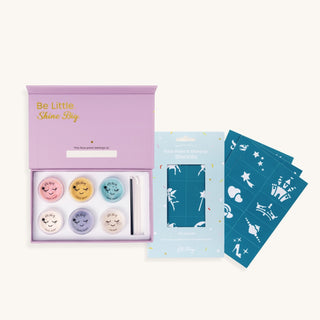
Refillable Makeup Palette 10-Piece Kit
The Refillable Makeup Palette 10-Piece Kit is the closest match to the article’s main topic. It combines a reusable bamboo compact, interchangeable color pans, soft brushes, and a light shimmer lip gloss made with plant butters and mineral pigments. Popsicle describes the kit as using organic ingredients and eco-conscious materials.
The refillable design helps keep the collection contained, while the interchangeable pans allow families to replace individual shades rather than purchasing another complete palette.
For an older child or tween, this organic makeup kit for kids can support gradual experimentation when parents introduce only a few components at first, keep tools clean, and make removal part of the activity.
Refillable Makeup Palette 10-Piece Kit
$59.99
Unbox a world of self-expression—without the worry. This 10-piece makeup kit is thoughtfully designed for imaginative play, using gentle, organic ingredients and a fresh, interchangeable color palette that keeps creativity flowing—all made with non-toxic ingredients and eco-friendly materials. Inside, you'll… read more

Eco Natural Kids Makeup Pressed Powder Eyeshadow & Blush
Eco Natural Kids Makeup Pressed Powder Eyeshadow & Blush allows parents to create a smaller custom kit from individual pressed colors. The pressed format is easier to control than loose powder, and Popsicle describes the shades as washable and made without talc, carmine, Lake pigments, or FD&C dyes.
This option works well when a child wants only one or two colors rather than a complete palette. Use a light layer, keep the product away from the waterline, and store the brush separately so it can be cleaned between uses.
Building an organic makeup kit for kids from individual products can also make it easier to compare each formula and avoid buying categories the child does not need.
Eco Natural Kids Makeup Pressed Powder Eyeshadow & Blush
$39.99
$44.49
Give her the gift of safe, worry-free beauty play with Eco Natural Kids Makeup Pressed Powder Eyeshadow—crafted in Australia with her delicate skin in mind. These allergy-friendly pressed powders are nut-free, gluten-free, soy-free, and dairy-free. While they do contain coconut-based… read more

Common mistakes to avoid
Even a thoughtfully selected organic makeup kit for kids can become messy or unsuitable when products are shared, applied too close to the eyes, left on overnight, or treated as part of a required daily routine.
- Buying a giant kit “for value”: More shades usually means more pigments, more mess, and more chance something irritates. Start small.
- Assuming “organic” equals eye-safe: The eye area is sensitive and products migrate. Be stricter with eye products than with cheek color.
- Loose glitter near eyes: Glitter can travel and irritate. If your child loves sparkle, look for sparkle designed to stay put and keep it away from the lash line.
- Letting a kit become a daily “fix my face” routine: This is where kids’ beauty can slip into performance beauty. Keep makeup as art, not armor.
- Ignoring fragrance sensitivity: If headaches, sneezing, or redness show up, fragrance is a common suspect—choose simpler, clearly labeled options.
- Sharing lip products at parties: It’s a fast way to spread germs. Bring individual items or skip sharing.
Where Popsicle Beauty Club fits (practical shopping help)
If you’re overwhelmed by ingredient lists and conflicting “clean” claims, Popsicle Beauty Club exists to make this category easier. Think of us as the place to find vetted, age-appropriate beauty play—with standards that prioritize ingredient transparency and childhood development.
- Shopping goal: find a kit that supports creativity (lip, nail, gentle shimmer) without pushing complexion correction.
- Parent goal: reduce guesswork by shopping from a curated clean kids’ beauty assortment instead of sorting through adult makeup aisles.
When you’re ready, browse what’s available at Popsicle Beauty Club and use the checklists above to choose what fits your child’s age, sensitivity, and comfort level.
Bottom line
The best Organic makeup kit for kids is the one that keeps childhood at the center: simple ingredients, minimal fragrance, easy removal, and products designed for playful expression—not coverage or correction. Start with a small set (lip + nail + a touch of sparkle), set hygiene rules, patch test when appropriate, and treat foundation-style complexion products as a milestone worth delaying.
Sources and further reading
- NIEHS: Cosmetics and Your Health - Explains what cosmetics are and notes that (except color additives) cosmetic ingredients generally don’t require FDA approval before market.
- FDA: Phthalates in Cosmetics - Discusses how phthalates may be used and explains why “fragrance” on a label can limit what consumers can see.
Curious about which harmful ingredients to avoid in your child's beauty products? Read The Truth About Harmful Beauty Ingredients for Kids to uncover the hidden toxins in mainstream makeup, skincare, and hair care—and discover safer alternatives.
About the Author: This article was written by the contributing writers at Popsicle Beauty Club—a team of moms, educators, and clean beauty advocates passionate about creating a safer, more imaginative world for kids. We believe in empowering parents with trusted information and offering fun, non-toxic beauty and personal care products that let children play, express, and explore—without compromising their health.
FAQs
Is an organic kids makeup kit automatically safer for sensitive skin?
What should be inside an Organic makeup kit for kids for a first-time user?
What ingredients should I avoid in kids makeup?
Is organic makeup the same as natural makeup?
Not necessarily. “Organic” may refer to certain agricultural ingredients, such as plant oils, waxes, or botanical extracts. “Natural” is broader and may describe ingredients, marketing, or the finished look. Neither term guarantees that every ingredient is organic, gentle, or suitable for every child.
What age is appropriate for an organic makeup kit for kids?
There is no universal starting age. Younger children generally do best with one or two supervised products for occasional dress-up, while older children and tweens may manage a small kit when they can follow hygiene, application, storage, and removal rules.
Can children share an organic makeup kit during parties or playdates?
Avoid sharing lip products, eye products, brushes, and sponges. Give each child separate applicators or individual products, wash reusable tools afterward, and discard anything that becomes contaminated or changes smell or texture.