

Table of Contents
- Introduction
- 1) What “safe” means at age 3 (and why it’s different from older kids)
- 2) Label checks that actually help: what to look for (and what to ignore)
- 3) Choosing toddler safe nail polish: water-based vs. traditional
- 4) A realistic routine for painting a 3-year-old’s nails (without the mess)
- 5) Removal: the part parents forget to plan for
- 6) When to skip polish (or pause and reassess)
- 7) Bottom line: a parent-friendly checklist
- FAQs
Introduction
Parents ask is nail polish safe for 3 year olds for a simple reason: three is the age when kids start noticing colors, wanting “matching nails,” and sitting still long enough for a quick paint job—while still being very hands-in-mouth and very sensitive-skin. The good news is that many families do use nail color at this age without drama, but “safe” depends on what you buy, how you apply it, and how you remove it. This guide is designed for beauty shoppers who want practical, label-based criteria and an easy routine, without scare tactics.
Before you shop, one important baseline: nail polish is a cosmetic product, not food, so the main goals are to minimize skin contact, reduce inhalation of strong solvents, and avoid ingredients that commonly irritate or trigger sensitivity. You’ll also want to factor in your child’s habits—especially mouthing, thumb-sucking, or picking at polish. For many parents, the biggest question remains: is nail polish safe for 3 year olds, or is it better to wait until children are older and less likely to put their hands in their mouths?
1) What “safe” means at age 3 (and why it’s different from older kids)
When you Google is nail polish safe for 3 year olds, you’ll see a mix of opinions. Here’s a more useful framework: nail polish safety at age three is usually less about the nail plate itself and more about behavioral exposure and skin sensitivity.
- Mouthing and thumb-sucking: Many three-year-olds still put fingers in their mouth. If that’s your child, choose products and routines that reduce the chance of chipping and reduce the desire to peel and chew.
- More delicate skin around nails: The cuticle and surrounding skin can react to fragranced or harsh formulas. A “gentle” approach usually means keeping polish off the skin and avoiding strong-smelling products.
- Ventilation matters more: Toddlers are smaller and closer to the source when you paint nails. Even if you’re using a traditional polish, a well-ventilated room and quick-dry habits make a big difference.
So, is nail polish safe for 3 year olds? It can be reasonable for many families when you prioritize low-odor options, careful application, and easy removal—plus skip it when your child is in a heavy mouthing phase or has a history of reactions. Parents who are still unsure about readiness may also want to explore what age can you put nail polish on a child and the developmental milestones that make nail polish easier to manage.
2) Label checks that actually help: what to look for (and what to ignore)
If you’re wondering is nail polish safe for kids, the label is your best starting point. Cosmetic marketing can be confusing, so focus on a few high-impact checks.
Look for clear usage guidance
- Age guidance: Some brands specifically state a minimum age. If a product is marketed as “kids” but has no guidance at all, treat it cautiously and rely on ingredient and usage clues.
- Directions and warnings: Look for “use under adult supervision,” “keep away from mouth,” or “avoid contact with eyes.” Practical warnings are a positive sign of thoughtful formulation and packaging.
Understand “free-from” lists (helpful, but not a guarantee)
You’ll often see “3-free,” “5-free,” “7-free,” “10-free,” or more. These typically refer to certain solvents/plasticizers/resins that some shoppers prefer to avoid. The key is: more ‘free’ is not automatically better for every child. You’re trying to reduce irritants and strong odors, not chase the biggest number.
Instead of comparing numbers, compare:
- Odor level: Strong solvent smell can be a dealbreaker for toddlers. If it smells intense to you, it will feel intense to them.
- Fragrance: Added fragrance can be a common sensitivity trigger. If your child has eczema or reactive skin, fragrance-free (or no added fragrance) is often the safer bet.
- Allergen flags: If your child has known sensitivities, scan for ingredients you’ve reacted to before. “Hypoallergenic” is not a regulated promise in the way parents often assume—use it as a hint, not proof.
Packaging and applicator clues
- Brush size: A smaller, controlled brush helps you keep polish on the nail and off the skin (important for reducing irritation).
- Cap grip: A chunky cap can help an adult paint quickly and steadily.
- Ingredient list transparency: Prefer brands that clearly list ingredients rather than hiding behind vague marketing.
No matter what you choose, check labels before every use—formulas and ingredient sourcing can change over time. If you're still wondering is nail polish safe for 3 year olds, ingredient transparency and clear usage instructions are two of the most important factors to evaluate before buying.
3) Choosing toddler safe nail polish: water-based vs. traditional
When people say toddler safe nail polish, they’re usually referring to water-based, low-odor, peelable formulas rather than classic solvent-based polishes. If you're comparing formula types, our guide to toddler safe nail polish explains how age, ingredient choices, and removal methods affect everyday use.
Water-based / peel-off options
- Pros: Often lower odor, easier cleanup, and you may not need acetone remover. Great for short wear (a playdate, a party, weekend fun).
- Cons: They can peel or chip quickly, which can tempt kids to pick and mouth flakes. If your child picks, you may prefer skipping polish entirely or using a very short-wear approach (paint right before an event, remove soon after).
Traditional polish
- Pros: More durable, smoother finish, less likely to peel in big sheets (though it can chip).
- Cons: Stronger odor, typically requires remover, and can be more irritating if it gets on the skin.
For many families asking is nail polish safe for toddlers, a water-based option is the most practical starting point. If you do choose traditional polish, treat ventilation and removal as non-negotiables. In fact, when parents ask is nail polish safe for 3 year olds, water-based and peel-off formulas are often recommended as the easiest introduction to occasional nail color.
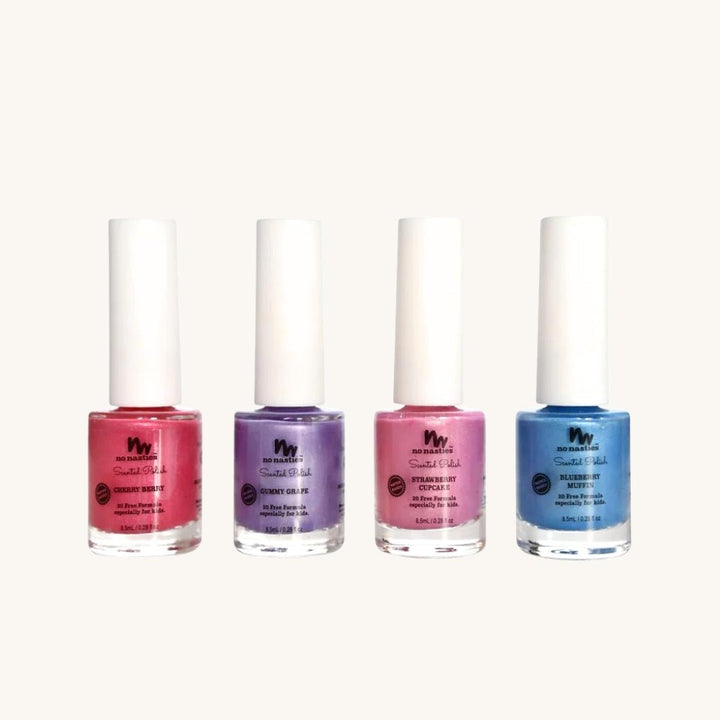
Looking for an all-natural nail polish? We highly recommend this nail polish by No Nasties. Give your little one’s nails a safer, sweeter mani/pedi with this 20 FREE Scented Nail Polish—meaning it’s made without the 20 most common toxic ingredients found in conventional nail polish, including formaldehyde (a known carcinogen), toluene (linked to headaches and nervous system damage), and dibutyl phthalate (a hormone disruptor). These chemicals are especially concerning for kids, who often put their fingers in their mouths, increasing the chance of ingestion.
20 FREE Naturally Scented, Peel-Off Nail Polish
$8.99
Give your little one’s nails a safer, sweeter mani/pedi with this 20 FREE Scented Nail Polish—meaning it’s made without the 20 most common toxic ingredients found in conventional nail polish, including formaldehyde (a known carcinogen), toluene (linked to headaches and… read more
4) A realistic routine for painting a 3-year-old’s nails (without the mess)
If you’ve decided that is nail polish safe for 3 year olds can be “yes, with smart choices,” the routine is what makes it work. The goal is a neat, fast application with minimal skin contact.
- Pick the right moment: After bath time (clean nails) but not right before bed if your child rubs eyes or sucks fingers to self-soothe.
- Set up ventilation: Open a window or use a fan in the room. Avoid painting in a tiny bathroom with the door closed.
- Start with clean, dry nails: Wash hands and dry thoroughly. Skip harsh nail dehydrators on toddlers.
- Protect the surrounding skin: If your child’s skin is reactive, you can apply a tiny amount of plain, fragrance-free balm around (not on) the nail to make cleanup easier. Keep it minimal so polish still adheres.
- Use thin coats: One thin coat is often enough for toddlers. Thick coats take longer to dry and are more likely to smudge and end up on skin.
- Keep polish off the cuticle: Leave a hairline gap near the cuticle and sidewalls. This reduces skin exposure and makes chipping less tempting to pick.
- Dry time strategy: Have your child watch a short video, hold a small toy, or do “hands on head” for 2–3 minutes. Quick-dry drops are not always kid-focused; if you use any, check the label and avoid fragranced add-ons.
Patch test note: If your child has sensitive skin or you’re trying a new formula, consider a patch test first—apply a small amount to one nail (or a small area of skin near the nail, not broken skin) and wait to see if irritation develops. If you notice redness, swelling, or discomfort, discontinue use.
5) Removal: the part parents forget to plan for
Removal is often the make-or-break step when parents ask is nail polish safe for 3 year olds. A polish that requires aggressive rubbing with strong remover can create more exposure than you intended.
If it’s peel-off
- Remove promptly: If your child starts peeling and putting bits in their mouth, it’s time to remove it right away.
- Peel gently after warm water: A short soak can help lift polish without scraping.
If remover is needed
- Choose ventilation again: Open air, quick process, cap the bottle immediately.
- Use the smallest amount possible: Dampen (don’t soak) a cotton pad or remover wipe, press on the nail for a few seconds, then swipe. Press-and-swipe is usually less irritating than repeated rubbing.
- Wash hands after: Soap and water removes residual remover and pigment from skin.
- Moisturize after: A plain, fragrance-free hand cream can help if nails/cuticles look dry.
Avoid making removal a daily habit. If your child wants constant color changes, lean toward occasional use, or choose short-wear polish that can be removed with minimal fuss.
6) When to skip polish (or pause and reassess)
Even with the best nail polish safe for kids shopping habits, there are times it’s smarter to skip. Consider pausing if:
- Your child is actively thumb-sucking or chewing nails: In that phase, any polish becomes harder to manage.
- Skin irritation shows up: Redness, itching, or swelling around the nail is a sign to remove the product and avoid that formula going forward.
- Nails are peeling, splitting, or painful: Give nails a break and stick to moisturizing the hands and cuticles.
- Your child has open cuts or hangnails: Avoid applying polish near broken skin.
If you’re considering nail polish for 2 year old specifically, use the same logic but be even more conservative: younger toddlers typically mouth more and tolerate less waiting/dry time, making accidental exposure more likely. Even if the answer to is nail polish safe for 3 year olds is generally yes for your family, temporary situations like irritated skin, nail biting, or thumb-sucking are good reasons to pause and try again later.
7) Bottom line: a parent-friendly checklist
So, is nail polish safe for 3 year olds? It can be, when you choose the right type of formula, keep it off the skin, and plan for gentle removal. Here’s a quick checklist you can use while shopping and at home:
- Choose low-odor options whenever possible; avoid painting in enclosed spaces.
- Check labels for clear ingredients, basic warnings, and (when available) age guidance.
- Prefer minimal fragrance (especially for sensitive skin).
- Pick a controlled brush and apply thin coats, leaving a small gap near the cuticle.
- Patch test if your child has reactive skin or it’s a new product.
- Plan removal first: peel-off for short wear, or a gentle press-and-swipe remover routine with quick hand-washing after.
- Skip polish during heavy mouthing phases or if irritation appears.
If you keep the focus on label checks, ventilation, and simple routines, you can answer is nail polish safe for 3 year olds with confidence—without turning a fun mini-manicure into a stressful project.
Editor’s note for shoppers: If a product’s marketing makes big safety promises but the label lacks clear ingredients or usage warnings, that’s your cue to choose a more transparent option.
Want to explore more about safe nail polish and toxin-free manicures for kids? Check out Safe & Non-Toxic Nail Care for Kids to learn about the best brands, safe removal methods, and fun, non-toxic nail art ideas.

About the Author: This article was written by the contributing writers at Popsicle Beauty Club—a team of moms, educators, and clean beauty advocates passionate about creating a safer, more imaginative world for kids. We believe in empowering parents with trusted information and offering fun, non-toxic beauty and personal care products that let children play, express, and explore—without compromising their health.