

Table of Contents
- Introduction
- Why the “right age” depends on the child (not just the number)
- What age can you put nail polish on a child: age-by-age guidance
- Is nail polish safe for kids? A practical, non-alarmist safety checklist
- Can you use adult nail polish on toddlers? Understanding the differences
- How to shop: labels, “free-from” claims, and what actually matters
- Kid-friendly routine: application, dry time, and removal (without drama)
- When to skip nail polish (and what to do instead)
- Bottom line: what age can you put nail polish on a child?
- FAQs
Introduction
Parents ask what age can you put nail polish on a child for a simple reason: nail polish feels like a small, joyful “grown-up” treat, but the product is still a cosmetic with solvents, pigments, fragrance, and potential irritants. The good news is that many families can make nail color a safe, low-stress part of play—if you pick the right formula, keep application and removal age-appropriate, and treat it like an occasional accessory rather than an everyday default.
This guide offers realistic, non-alarmist age guidance, plus concrete shopping criteria (what to look for on labels), routine tips, and removal advice. If your child has very sensitive skin, eczema-prone hands, or a history of reactions to cosmetics, it’s smart to check with a clinician for individualized guidance. For everyone else: start with the basics—check labels, avoid shortcuts, and patch test when trying a new product. One of the most common questions parents ask is what age can you put nail polish on a child, especially when trying to balance fun beauty activities with age-appropriate safety habits.
Why the “right age” depends on the child (not just the number)
There isn’t one universal rule for what age can you put nail polish on a child because the practical concerns vary by kid and by product. Think in terms of readiness and exposure:
- Hand-to-mouth habits: If your child still frequently sucks fingers or bites nails, polish is more likely to end up in the mouth and may chip more easily.
- Sensory tolerance: Some kids dislike smells or the feeling of wet polish on nails.
- Skin sensitivity: Cuticles and nail folds can react to fragrance, dyes, resins, and preservatives—especially if polish touches skin.
- Time and patience: Most smudges happen because kids don’t want to sit through dry time.
- Occasion vs routine: A once-in-a-while “sparkle day” is very different from weekly use with frequent remover.
A helpful frame is: the younger the child, the more you want a gentle, minimal-removal approach (think peel-off or water-based), and the older the child, the more typical nail lacquer can make sense with careful use.
What age can you put nail polish on a child: age-by-age guidance
If you’re searching what age can you put nail polish on a child, you’re likely looking for a clear starting point. Here’s practical, parent-tested guidance that balances fun with common-sense precautions.
Ages 0–2 (babies and toddlers)
In this stage, the biggest issues are finger-sucking, nail biting, and unpredictable rubbing/peeling. If you choose to use nail color at all, consider it an occasional photo-day or special event and stick to kid-specific, water-based, peel-off formulas designed to minimize harsh removers. Avoid anything that requires strong acetone removal, and avoid painting if there are any cuts, hangnails, or irritated skin around the nails.
Many parents who ask can you use adult nail polish on toddlers are trying to use what they already own. It’s generally simpler to avoid adult lacquer for this age because it often involves stronger odors, longer dry times, and remover that can be drying or irritating. Our guide to toddler safe nail polish explains how to choose age-appropriate formulas and keep application low-stress for younger children.
Ages 3–5 (preschool)
This is the sweet spot for “play polish” because kids can follow simple directions: hands on the table, no touching, and waiting a minute or two. Still, you’ll want to favor non toxic nail polish for kids options (more on what that label can and can’t mean) and use a light touch. One thin coat is easier than a thick coat, dries faster, and chips less messily.
If you’re deciding when can kids wear nail polish, this is often the age where it becomes a fun weekend activity rather than a battle.
Ages 6–9 (school-age)
Most kids in this range can handle traditional polish more successfully—shorter “still time,” less smudging, and better understanding of “don’t pick at it.” You can choose either kids’ polish or an adult formula, but keep removers and application supervised. This is also a good age to introduce nail care basics: gentle hand washing, moisturizing cuticles, and not scraping polish off.
Ages 10–12+ (tweens)
Tweens may want longer-wearing looks, nail art, or trend shades. Adult polish is usually fine with smart habits: good ventilation, minimal skin contact, and not overusing remover. If they’re experimenting more frequently, prioritize nail health habits (breaks between manicures, cuticle oil, and avoiding picking).
Is nail polish safe for kids? A practical, non-alarmist safety checklist
“Is nail polish safe for kids” is a fair question. Nail polish is meant for nails—not skin, not mouth—and it’s best used as an occasional cosmetic. Most issues families run into are irritation, dryness from frequent removal, or accidental smears on skin and fabrics, rather than anything dramatic.
Use this checklist to keep it low-risk:
- Ventilation matters: Apply in a well-ventilated room, especially with adult lacquer.
- Keep polish off skin: Aim for nails only; wipe excess quickly.
- Skip if nails/skin are irritated: Avoid polish on broken skin, inflamed cuticles, or peeling nail plates.
- Mind hand-to-mouth behavior: If your child sucks fingers or chews nails, wait or choose a peel-off option and keep it brief.
- Do a patch test when appropriate: If your child is sensitive or you’re trying a new product, patch test first. One simple approach: apply a small amount of the product to a single nail and monitor for redness/itching around the nail fold over the next day.
- Check labels: Look for clear use instructions, age guidance (if provided), and whether the brand specifies water-based or peel-off.
For some kids, sensitivities show up around the cuticle area. If irritation happens, remove the product gently and pause future use until you can identify a better match.
Can you use adult nail polish on toddlers? Understanding the differences
Let’s answer the most common sub-question directly: can you use adult nail polish on toddlers? Many families choose not to, mainly because adult lacquer tends to involve stronger solvents, a more noticeable smell, and requires remover (often acetone-based) that can be drying and irritating on small hands.
Key differences to know:
- Dry time: Adult polish often needs longer to fully set. Toddlers rarely keep hands still long enough.
- Removal: Adult polish typically requires remover and rubbing, which can irritate skin and dry nails with repeated use.
- Chipping behavior: When adult polish chips, toddlers may peel it—leading to tiny flakes and more hand-to-mouth opportunities.
- Formula style: Kid polishes are often water-based and peelable, designed for easier, gentler removal.
If you still prefer an adult formula for an older child, choose one you can apply in thin coats, in a ventilated space, and remove without aggressive scrubbing.
How to shop: labels, “free-from” claims, and what actually matters
If you’re trying to decide what age can you put nail polish on a child, the product you choose is half the answer. Shopping smart helps you reduce odor, reduce removal friction, and reduce the chance of irritation.
1) Pick the right type for the age
- Water-based / peel-off: Best for younger kids and occasional use. Great for minimal remover exposure.
- Traditional lacquer: Better for older kids/tweens who want longer wear and can sit through dry time and tolerate remover.
- Gel systems: Generally more complex (curing, stronger adhesion, more involved removal). For kids, many parents avoid these unless you’re confident in safe, careful use and the child is older and responsible.
2) Treat “non-toxic” as a starting point, not a guarantee
Shoppers often search non toxic nail polish for kids expecting a regulated definition. In cosmetics marketing, “non-toxic” can be used broadly and inconsistently. Instead of relying on the phrase alone:
- Check the ingredient list when available, and look for transparent brand communication.
- Look for clear removal instructions (peel-off vs remover) so you know what the routine will require.
- Prefer fragrance-free if your child is sensitive (fragrance can be a common irritant).
3) Understand “free-from” lists
You’ll often see “3-free,” “5-free,” “7-free,” or longer lists. These refer to a set of ingredients the brand has chosen to exclude. There’s no single universal list across all brands, and “free-from” doesn’t automatically mean irritation-proof. Use it as one data point, and still patch test if your child is sensitive.
4) Choose kid-friendly packaging and tools
- Brush: A wider, flatter brush is easier for quick, thin coats.
- Bottle: A stable, squat bottle reduces spills.
- Color: Sheer shimmers can look cute even if slightly uneven—helpful for kids who wiggle.
Kid-friendly routine: application, dry time, and removal (without drama)
The routine matters as much as the formula. If you want the “fun” part without the stress, keep it short and predictable.
Application tips
- Prep: Wash hands and dry thoroughly. Skip polish if there are fresh hangnails or cracked skin.
- Protect skin: Apply a little hand cream around (not on) the nails, then wipe nails clean so polish adheres.
- Thin coats: One thin coat is often enough for kids. Two thin coats beat one thick coat every time.
- Quick clean-up: Use a damp cotton swab to clean edges while wet (especially with water-based formulas).
- Dry strategy: Set up a “dry station” with a show, book, or snack that doesn’t require hands.
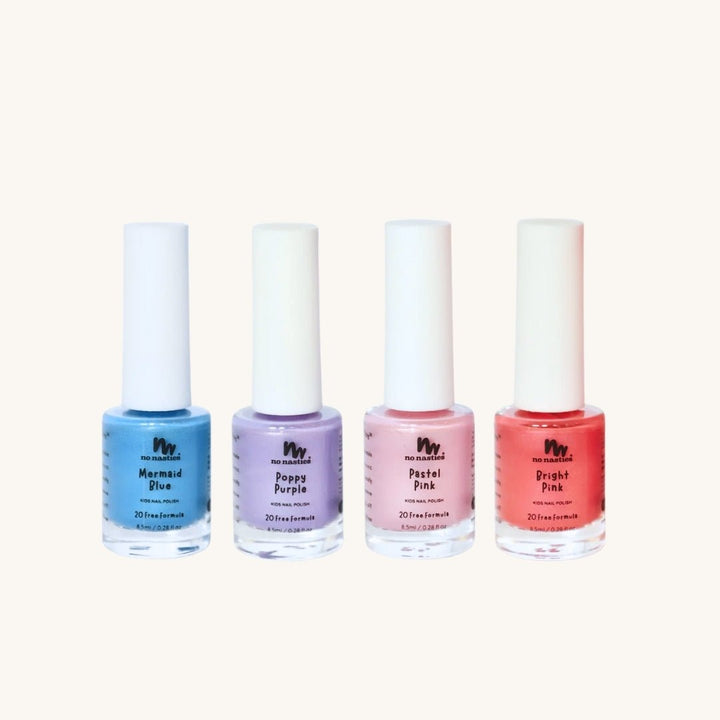
If you are in the market for an all-natural nail polish, we highly recommend this product below.
20 FREE Unscented, Non-Toxic Nail Polish for Kids
$9.99
Give your little one’s nails a safer mani/pedi with this 20 FREE Unscented Nail Polish—meaning it’s made without the 20 most common toxic ingredients found in conventional nail polish, including formaldehyde (a known carcinogen), toluene (linked to headaches and nervous… read more
Removal tips
- Peel-off: Soak hands in warm water for a few minutes first to make peeling gentler.
- Traditional polish: Use remover sparingly, avoid heavy rubbing on skin, and wash hands afterward. Follow with moisturizer to reduce dryness.
- Avoid picking: Teach kids not to scrape or bite polish off; it can roughen nails and irritate surrounding skin.
If you’re using remover, supervise. Store polish and remover out of reach like any other household cosmetic.
When to skip nail polish (and what to do instead)
Even if you’ve decided what age can you put nail polish on a child, there are moments when it’s better to pause and choose an alternative:
- Active irritation: Red, itchy skin around nails; peeling cuticles; or broken skin.
- Big hand-to-mouth phase: Constant finger-sucking or nail biting.
- Upcoming swim/sand play: Chips happen fast, and you’ll spend the day managing flakes.
Alternatives that still feel special include stick-on nail stickers (placed on the nail plate, not the surrounding skin), press-on options sized for kids (used occasionally and removed gently), or a simple buff-and-shine with a soft child-appropriate buffer (no aggressive filing).
Bottom line: what age can you put nail polish on a child?
The most useful answer to what age can you put nail polish on a child is: it depends on readiness, formula, and how often you’ll remove it. Many families start around preschool age with water-based, peel-off polish for short wear, then transition to traditional lacquer in school-age years when kids can sit still, avoid picking, and tolerate careful removal.
If you’re unsure, start conservatively: choose a kid-focused formula, apply one thin coat, keep it off skin, use good ventilation, check labels, and patch test when appropriate. Nail polish can be a fun, low-stakes way to play with color—as long as you keep the routine simple and the product choice age-appropriate.
Want to explore more about safe nail polish and toxin-free manicures for kids? Check out Safe & Non-Toxic Nail Care for Kids to learn about the best brands, safe removal methods, and fun, non-toxic nail art ideas.

About the Author: This article was written by the contributing writers at Popsicle Beauty Club—a team of moms, educators, and clean beauty advocates passionate about creating a safer, more imaginative world for kids. We believe in empowering parents with trusted information and offering fun, non-toxic beauty and personal care products that let children play, express, and explore—without compromising their health.