
Table of Contents
- Introduction
- 1) Is nail polish safe for kids? Start with what “safe” really means
- 2) Age guidance: when is toddler nail polish a reasonable idea?
- 3) Label checks for toddler safe nail polish: what to look for (and what to be skeptical about)
- 4) Shopping criteria: how to pick toddler friendly nail polish that fits real life
- 5) A simple, safer routine: how to apply toddler safe nail polish at home
- 6) Removal, nail biting, and other real-parent issues
- 7) Bottom line: how to choose toddler safe nail polish with confidence
- FAQs
Introduction
If you’re searching for toddler safe nail polish, you’re probably balancing two things: a fun, low-stakes way for your child to copy your routine and a very real desire to avoid unnecessary exposure (and mess). The good news is that there are practical ways to make nail color a safer, calmer activity for toddlers—without turning it into a scary topic.
Here’s the reality: toddler safe nail polish isn’t a regulated label with a single definition. Safety comes from a combination of age readiness, supervised use, label checks, and choosing formats that minimize fumes and remover use. This guide breaks down what to look for on packaging, when it’s reasonable to start, and how to keep the routine simple and parent-friendly.
1) Is nail polish safe for kids? Start with what “safe” really means
Parents often ask, is nail polish safe for kids? The honest answer depends on how it’s used. Traditional nail polish is designed for adult nails and routines—often involving strong-smelling solvents, long dry times, and removal products that can be irritating if misused.
When people say toddler safe nail polish, they usually mean one (or more) of the following:
- Lower-fume, lower-odor formulas compared with standard polish
- Water-based or “peel-off” styles that can reduce the need for remover
- Clear usage instructions meant for children (including supervision notes)
- More forgiving wear that chips/peels rather than requiring heavy-duty removal
No matter what you buy, your best safety tool is how you run the routine: good ventilation, short sessions, avoiding skin contact, and not using polish on broken or irritated skin. And because toddlers explore with their mouths, choosing a product that’s easier to remove without harsh solvents can matter just as much as the ingredient list.
2) Age guidance: when is toddler nail polish a reasonable idea?
Many shoppers are really asking: is nail polish safe for toddlers, and specifically is nail polish safe for 3 year olds? There’s no universal age cut-off on a beauty shelf, but there are practical milestones that make nail polish less stressful and potentially safer. For a related parent guide on age readiness and label checks, read our article on toddler nail polish.
Consider nail polish “age-appropriate” when your child can do most of the following (with supervision):
- Keep fingers out of their mouth during drying time
- Sit relatively still for 3–5 minutes
- Tolerate hand washing before and after
- Understand a simple boundary like “hands on the table” or “no touching your face”
If your toddler is in a heavy hand-to-mouth phase, you can still do the “fun part” by painting toenails (often less likely to be chewed) or using a quick peel-off option for short wear.
Also, think about what you want the polish to do. If you want a “special occasion” color for an hour or two, a water-based or peelable toddler nail polish can be more realistic than trying to make a traditional manicure last through bath time, sandbox time, and snack time.
3) Label checks for toddler safe nail polish: what to look for (and what to be skeptical about)
The most important step in buying toddler safe nail polish is reading the packaging like a parent, not like a trend shopper. Marketing terms can be helpful clues, but they’re not a guarantee.
Helpful label signals
- Water-based: Often associated with lower odor and easier cleanup.
- Peel-off: May reduce the need for remover (a big practical win with toddlers).
- Non-toxic claim + clear directions: Look for supervision guidance and age recommendations when provided.
- “Free-from” lists: Some brands list certain solvents or resins they avoid. Treat this as one data point, not a full safety guarantee.
What “free-from” can’t promise
“Free-from” labeling can be confusing because:
- It doesn’t tell you what is in the formula or how it behaves (odor, dry time, chipping).
- It doesn’t account for individual sensitivity—a toddler can react to something even in a “clean” formula.
- It doesn’t change the core reality that nail products are meant for nails, not skin, eyes, or mouths.
When in doubt, prioritize clear usage instructions and a format that minimizes remover and fumes. If the label is vague, has no directions, or is clearly marketed only to adults, it may not be the best match for a toddler routine.
4) Shopping criteria: how to pick toddler friendly nail polish that fits real life
Choosing toddler friendly nail polish is less about finding a perfect unicorn product and more about matching the product to your kid’s habits and your tolerance for mess. If you’re comparing options for older children too, our guide to the best nail polish for kids explains how to choose formulas by age, wear time, and removal method. Use these criteria to compare options quickly.
- Dry time: Toddlers rarely wait 10+ minutes. Look for quicker-drying options or plan for one-coat looks.
- Odor level: Lower odor is typically easier for kids (and parents) to tolerate. Always use in a ventilated space.
- Removal method: Peel-off or water-based options can reduce reliance on remover. If remover is needed, you’ll want to control the process tightly.
- Brush size and control: A wider, easy-grip cap and a brush that isn’t too floppy makes it easier to avoid skin flooding.
- Finish expectations: Sheer, shimmery, and jelly finishes can look cute even with minor streaks—great for first-time toddler manicures.
- Wear expectations: If your child baths frequently or uses lots of hand sanitizer (daycare), expect chips/peel sooner.
- Packaging safety: Secure cap, no tiny decorative parts, and a bottle that won’t shatter easily if dropped.
One more practical tip: if your goal is a “matching mani moment,” consider painting your nails with your usual polish and using toddler safe nail polish for your child—separate products, separate expectations.
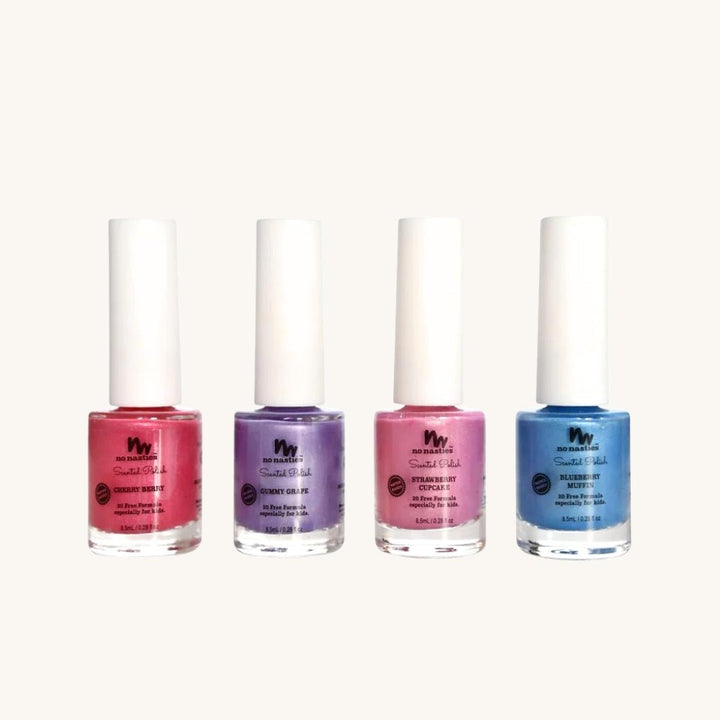
Looking for an all natural nail-polish? We highly recommend this set by No Nasties.
20 FREE Naturally Scented, Peel-Off Nail Polish
$8.99
Give your little one’s nails a safer, sweeter mani/pedi with this 20 FREE Scented Nail Polish—meaning it’s made without the 20 most common toxic ingredients found in conventional nail polish, including formaldehyde (a known carcinogen), toluene (linked to headaches and… read more
5) A simple, safer routine: how to apply toddler safe nail polish at home
Even the best toddler safe nail polish can become a mess if the routine is chaotic. This setup focuses on minimizing skin contact, shortening dry time, and keeping hands out of mouths and eyes.
- Choose the right moment: After snack, after potty, before screen time or story time. Avoid right before bed if your toddler rubs eyes when sleepy.
- Ventilate: Open a window or sit near a fan (not blowing directly onto wet nails if it causes rippling).
- Wash and dry hands: Clean, dry nails help polish adhere and reduce irritation from residue.
- Protect the area: Towel or washable mat under hands, wipes nearby, and the bottle out of reach unless you’re holding it.
- Use minimal product: Wipe one side of the brush on the bottle neck. A thin coat dries faster and is less likely to smudge onto skin.
- Paint fewer nails if needed: Two nails per hand can be plenty for a “special” feeling and reduces total dry time.
- Dry-time strategy: Hands on the table while you read a short book or play a “statue game.” Avoid waving hands (it can lead to touching faces).
- Clean edges carefully: If polish floods the cuticle, remove it promptly with a slightly damp cotton swab (water-based formulas may lift easier). Avoid rubbing large areas of skin.
Patch test note: If your child is sensitive or has had reactions to personal care products, consider a small patch test on a tiny area (like one nail) first, and wait to see how skin around the nail tolerates it. Stop using if irritation occurs.
6) Removal, nail biting, and other real-parent issues
This is where most “kids polish” routines fall apart—removal and habits. Here’s how to keep it manageable.
If your toddler bites nails or picks polish
- Skip fingers and do toes to reduce mouth contact.
- Use polish for short wear only (photos, a party), then remove promptly.
- Avoid making it a power struggle: If picking starts immediately, it may be a sign the timing isn’t right.
If you need to use remover
Some products still require remover, especially if they’re not peel-off. If you choose to use remover, keep it parent-controlled: small amount on cotton, quick wipe, wash hands after, and store remover well out of reach. Avoid soaking fingers and avoid prolonged skin contact.
If polish keeps peeling too fast
- Accept “temporary” as the goal for toddler manicures—lasting power is not the main win here.
- Prep matters: Clean, dry nails and thin coats can help.
- Choose forgiving finishes: Glitter or shimmer can hide minor chips better than a flat crème.
Salons and special occasions
If you’re considering a salon, bring your own toddler safe nail polish so you know what’s being used. Ask for minimal product, no cuticle cutting, and be ready to stop if your child becomes squirmy—safety and comfort come first.
7) Bottom line: how to choose toddler safe nail polish with confidence
The best toddler safe nail polish is the one that fits your child’s readiness and your routine: low drama, low odor, quick dry, and easy removal—ideally without needing strong solvents. Focus on label checks, choose a format that reduces remover when possible, and use smart guardrails (ventilation, supervision, thin coats, short wear).
If you’re still unsure whether is nail polish safe for toddlers in your situation, start small: paint one nail, do toes only, or save it for occasional play. Read the label, keep products out of reach, and consider a patch test for sensitive kiddos. With the right expectations, toddler safe nail polish can be a fun little moment—without turning your bathroom into a chemistry lab or your day into a battle.
Want to explore more about safe nail polish and toxin-free manicures for kids? Check out Safe & Non-Toxic Nail Care for Kids to learn about the best brands, safe removal methods, and fun, non-toxic nail art ideas.

About the Author: This article was written by the contributing writers at Popsicle Beauty Club—a team of moms, educators, and clean beauty advocates passionate about creating a safer, more imaginative world for kids. We believe in empowering parents with trusted information and offering fun, non-toxic beauty and personal care products that let children play, express, and explore—without compromising their health.