
Table of Contents
- Introduction
- What “kid-friendly” nail polish usually means (and what it doesn’t)
- Is nail polish safe for kids? A practical, non-alarmist framework
- Shopping criteria: how to pick the best nail polish for kids
- Ingredient and label guidance without the overwhelm
- A kid-friendly manicure routine that actually works (and minimizes mess)
- Removal: the least stressful way to take kid polish off
- When can kids wear nail polish? Age, school, and common-sense boundaries
- Bottom line: how to choose the best nail polish for kids for your family
- FAQs
Introduction
Shopping for the best nail polish for kids is less about chasing a “perfect” formula and more about matching the polish to your child’s age, habits, and sensitivities—while keeping application and removal simple. Kids tend to use their hands hard (play, crafts, sports), so durability expectations should be realistic. The goal is a fun, low-stress manicure that doesn’t become a week-long commitment or a removal battle.
This guide focuses on practical shopping criteria for non toxic nail polish for kids (as brands describe it), how to read labels without panic, and how to build a kid-friendly routine. You’ll also find realistic answers to common questions like is nail polish safe for kids and when can kids wear nail polish, plus tips for patch testing and avoiding unnecessary irritants.
What “kid-friendly” nail polish usually means (and what it doesn’t)
When people search for the best nail polish for kids, they’re often looking for one (or more) of these features:
- Peel-off or water-based formulas that remove without traditional remover (helpful for younger kids).
- Low-odor formulas that feel less intense during application.
- Quick-dry performance to reduce smudges and frustration.
- Gentler removability for short wear (a day, an afternoon, a special event).
- Brushes and bottles that are easier to control with smaller nails.
What “kid-friendly” does not automatically mean: completely risk-free, suitable for every child, or something you can apply unsupervised. Even products marketed as non toxic kids nail polish can include fragrance, colorants, preservatives, or film-formers that may bother sensitive skin. That’s why label-checking and a simple patch test are still smart steps.
Is nail polish safe for kids? A practical, non-alarmist framework
Is nail polish safe for kids? For many families, occasional nail polish use can be a reasonable choice when you keep exposure low and use common-sense precautions. Think of safety as a set of small decisions rather than a single yes/no answer:
- Choose age-appropriate formulas. Younger kids often do better with peel-off/water-based options because they limit remover use.
- Use good ventilation. Apply near an open window or with a fan to reduce odor and lingering fumes, especially if using traditional polish.
- Supervise application and drying. This reduces accidental eye rubbing, skin smears, or putting fingers in the mouth during wet polish time.
- Keep it off irritated skin. If cuticles are cracked, nails are peeling, or there’s a rash, skip polish until things calm down.
- Patch test when appropriate. If your child has sensitive skin, test a small amount on one nail first and wait to see if there’s irritation.
- Limit wear time. For kids, “special occasion polish” often makes more sense than long, continuous wear.
Also: regardless of marketing language, nail polish is meant for nails, not for tasting. If thumb-sucking or nail-biting is constant, prioritize peel-off options you can remove quickly and keep wear time short.
Shopping criteria: how to pick the best nail polish for kids
To find the best nail polish for kids for your household, focus on how it applies, how it wears, and how it comes off. Here’s what to look for while comparing options in-store or online.
1) Formula type: peel-off vs. traditional
- Peel-off/water-based: Great for younger kids, quick try-on shades, and low-commitment wear. Tradeoff: chips and peels sooner, and some kids will pick at it (which may be a feature or a bug, depending on your goals).
- Traditional polish: Often smoother, shinier, and longer-wearing, but typically needs remover. Better for older kids/teens who can sit still for drying and tolerate removal.
2) Label language: “non toxic” and “free-from” claims
Searches for nontoxic nail polish for kids and non toxic nail polish for kids are common, but labels vary by brand. “Non-toxic” is often used as a marketing shorthand; it doesn’t always tell you the full formula story. Instead:
- Read the ingredient list if it’s available. Especially if your child has known sensitivities (fragrance, certain preservatives, etc.).
- Look for clear “free-from” statements that specify what’s excluded, rather than vague claims.
- Avoid assuming “natural” equals irritation-free. Botanical extracts and fragrance components can still be sensitizing for some people.
3) Scent and added fragrance
Kids’ polishes are sometimes scented to make them more fun. If your child is sensitive to smells—or if you’re trying to keep things low-odor—choose unscented options when possible. If you can’t confirm, keep application time brief and ventilated.
4) Brush and bottle design for tiny nails
- Shorter, easy-grip caps can help you control pressure and prevent floods at the cuticle.
- Rounded brushes can be forgiving on small nail beds; very wide brushes can be messy on toddlers but can work well on older kids.
- Smaller bottles reduce waste if your child cycles through phases and colors quickly.
5) Dry time and finish
Fast-drying polish is often the difference between a fun activity and a meltdown. If a formula doesn’t dry quickly, plan for a “hands-off” activity during dry time (storytime, a show, or a snack using a spoon). Finishes matter too: glitter can be fun but may be harder to remove in traditional formulas; sheer jelly shades can hide minor smudges.
Ingredient and label guidance without the overwhelm
If you’re comparing non toxic kids nail polish options, it helps to know what you’re actually trying to avoid. You don’t need to memorize chemistry; you just need a consistent label-check habit.
- Start with the brand’s “free-from” list and confirm it on the package or product page.
- Check for strong solvents if odor is a concern. Traditional polishes often smell stronger; water-based options tend to be milder.
- Watch for fragrance if your child is sensitive. “Fragrance,” “parfum,” or scented versions can be a trigger for some kids.
- Look for a clear removal method. If it’s peel-off, it should say so. If it requires remover, decide whether you’re comfortable using acetone-free remover (often gentler-feeling but may take longer) versus acetone (often faster but can feel drying).
Whenever you try a new nontoxic nail polish for kids, keep a simple rule: check labels, patch test when appropriate, and stop using it if irritation appears. If your child has a history of allergies or eczema, consider asking your pediatrician or dermatologist for individualized guidance. For a deeper ingredient-focused breakdown, see our guide to non toxic nail polish for kids.
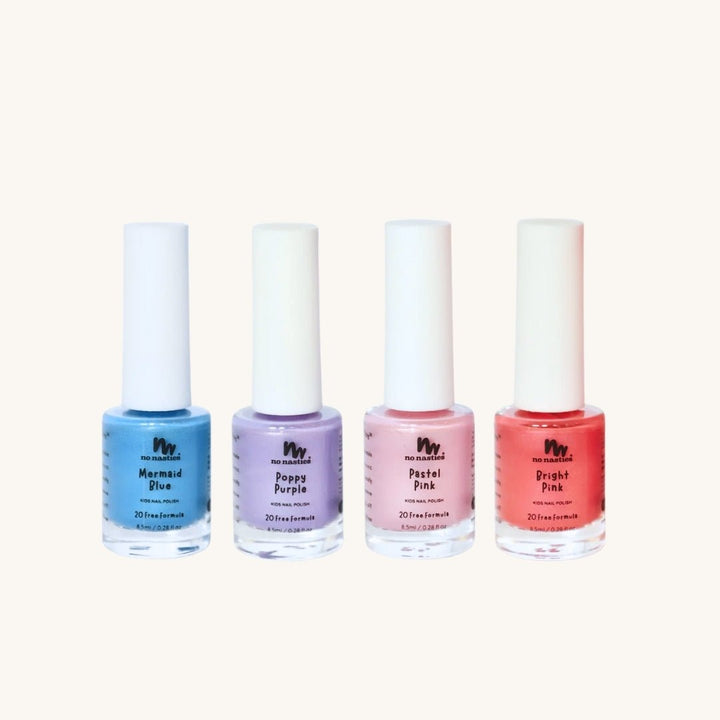
Looking for the best nail polish in town? Give your little one’s nails a safer mani/pedi with this 20 FREE Unscented Nail Polish—meaning it’s made without the 20 most common toxic ingredients found in conventional nail polish, including formaldehyde (a known carcinogen), toluene (linked to headaches and nervous system damage), and dibutyl phthalate (a hormone disruptor). These chemicals are especially concerning for kids, who often put their fingers in their mouths, increasing the chance of ingestion.
Unscented and low-odor, it contains no FD&C dyes or Lake pigments and is crafted in Australia with minimal, kid-safe nail polish ingredients.
20 FREE Unscented, Non-Toxic Nail Polish for Kids
$9.99
Give your little one’s nails a safer mani/pedi with this 20 FREE Unscented Nail Polish—meaning it’s made without the 20 most common toxic ingredients found in conventional nail polish, including formaldehyde (a known carcinogen), toluene (linked to headaches and nervous… read more
A kid-friendly manicure routine that actually works (and minimizes mess)
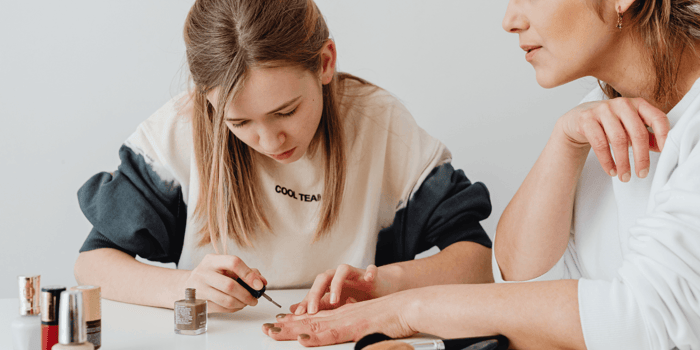
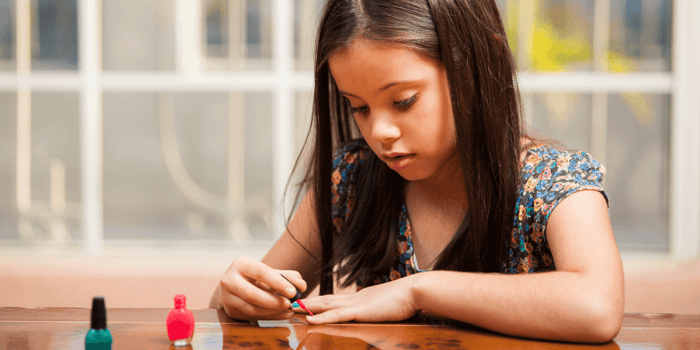
The best nail polish for kids still needs a good routine to look cute for more than five minutes. Here’s a realistic approach that prioritizes ease and comfort.
- Wash and dry hands. Oils and lotion reduce wear time, especially for peel-off formulas.
- Quick nail prep. Clip and gently file if needed. Skip aggressive cuticle work; for kids, it’s usually unnecessary and can irritate skin.
- Protect the skin (optional but helpful). A thin layer of balm around the nail (not on the nail) can make cleanup easier. Keep it away from the nail plate so polish can adhere.
- Use thin coats. One thin coat may be enough for sheer shades; two thin coats beat one thick coat every time for dry time and smudge resistance.
- Cap the tip. Lightly swipe across the free edge (the nail tip) to reduce chipping—works best with traditional polish, but can help with some water-based formulas too.
- Dry time plan. Set up a “no hands” activity for 10–15 minutes (longer if needed). Even quick-dry formulas can dent if kids immediately grab toys.
Cleanup tip: If polish gets on skin, wait until it’s mostly dry, then gently peel or rub off. For traditional polish, a small cotton swab with remover is more controlled than a soaked cotton ball.
Removal: the least stressful way to take kid polish off
Removal is where the best nail polish for kids choices really show their value. Match your removal approach to the formula:
- Peel-off: Soak hands in warm water for a few minutes, then gently lift an edge and peel slowly. If it resists, don’t force it—soak a bit longer to avoid roughing up the nail surface.
- Water-based but not fully peel-off: Some formulas roll off with warm water and gentle rubbing; others still need a mild remover. Check the label.
- Traditional polish: Use remover in a well-ventilated area. Press a lightly saturated pad on the nail for a few seconds, then wipe—this is often faster and less messy than scrubbing.
After removal, wash hands and apply a simple, fragrance-free hand cream if your child tolerates it. If nails look dry, take a break between manicures rather than repainting immediately.
When can kids wear nail polish? Age, school, and common-sense boundaries
When can kids wear nail polish depends more on readiness than a specific age. Consider:
- Can they keep hands out of their mouth while polish dries? If not, choose brief wear time and peel-off options.
- Are they okay with the sensory feel? Some kids dislike the “tight” feeling as polish dries or the texture of glitter.
- What’s the setting? School policies, sports rules, and family preferences vary. A clear coat or subtle shade can be a good compromise.
- Do they have nail peeling or hangnails? Prioritize nail care first; polish can wait.
If you’re trying to keep it simple, think of nail polish as an occasional accessory—like face paint for a party—rather than a constant routine for little kids. If you're specifically shopping for younger children, our guide to toddler nail polish covers age readiness, supervision, and product selection in more detail.
Bottom line: how to choose the best nail polish for kids for your family
The best nail polish for kids is the one that fits your child’s age and habits, dries quickly, and removes without tears—while aligning with your comfort level on ingredients and odor. For many families, peel-off or water-based options are the easiest place to start, while older kids may prefer traditional polish for longer wear. No matter what you choose, check labels, use good ventilation, and patch test when appropriate—especially if your child has sensitive skin.
If you’re comparing options labeled non toxic nail polish for kids or nontoxic nail polish for kids, focus on specifics (ingredients, scent, removal method) rather than buzzwords. With the right formula and a thin-coat routine, finding the best nail polish for kids can be a genuinely fun at-home activity—not a cleanup marathon.
Want to explore more about safe nail polish and toxin-free manicures for kids? Check out Safe & Non-Toxic Nail Care for Kids to learn about the best brands, safe removal methods, and fun, non-toxic nail art ideas.

About the Author: This article was written by the contributing writers at Popsicle Beauty Club—a team of moms, educators, and clean beauty advocates passionate about creating a safer, more imaginative world for kids. We believe in empowering parents with trusted information and offering fun, non-toxic beauty and personal care products that let children play, express, and explore—without compromising their health.