
Table of Contents
- Introduction
- 1) What age is appropriate for toddler nail polish?
- 2) Safety context: what matters most (and what matters less)
- 3) Label checks that actually help (and how to interpret common claims)
- 4) Shopping criteria: what to prioritize when choosing toddler nail polish
- If 5) A realistic, low-mess routine for applying toddler nail polish
- 6) Removal, aftercare, and when to skip nail polish altogether
- Bottom line: choosing toddler nail polish with confidence
- FAQs
Introduction
If you’re considering toddler nail polish, you’re probably balancing two very normal goals: letting your child join in on a fun self-care moment, and keeping things as low-risk and low-mess as possible. The good news is that you can make this decision thoughtfully without turning it into a high-stakes situation. The key is to match the product and routine to your child’s habits (hands in mouth? constant rubbing?), choose formulas and packaging that support easier use, and get comfortable reading labels—because “kid-friendly” can mean different things depending on the brand.
This guide is designed for beauty shoppers and parents who want practical, evidence-aware guidance: what “old enough” usually looks like in real life, what to check on the label, how to patch test, and how to apply toddler nail polish in a way that’s quick, supervised, and realistic.
1) What age is appropriate for toddler nail polish?
There’s no single universal “right age,” because kids develop differently and the biggest factor is behavior, not birthday. In practice, many parents find it’s easier to try toddler nail polish when a child can do most of the following with supervision:
- Keep fingers out of their mouth for at least the short drying window.
- Sit for a brief activity (even 2–5 minutes) without immediately rubbing nails on clothes, carpet, or eyes.
- Handle “look but don’t touch” rules—for example, not picking at wet polish.
If those aren’t realistic yet, it doesn’t mean “never.” It usually means “not this week.” For very active toddlers, a single nail (“accent nail”) or a quick coat on toenails (less hand-to-mouth contact) can be a lower-effort trial. If you’re ever uncertain, choosing a short-wear option and treating it as occasional play rather than a daily routine is often the most practical middle ground.
2) Safety context: what matters most (and what matters less)
When people ask “is nail polish safe for kids,” they’re often thinking about ingredients, fumes, and accidental ingestion. Those concerns are understandable—but the most meaningful safety factors for toddler nail polish usually come down to:
- Supervision during application and dry time.
- Hand-to-mouth habits (biting, chewing, thumb-sucking).
- Skin sensitivity around cuticles and nail folds.
- Ventilation and keeping bottles closed when not in use.
A non-alarmist way to think about it: nails are a small surface area, the wear is temporary, and you can reduce exposure by applying thin coats, minimizing skin contact, and removing promptly if your toddler starts picking or chewing. If your child is a nail biter or frequently puts fingers in their mouth, it’s reasonable to skip toddler nail polish for now or reserve it for toenails only.
Also worth remembering: “safe” is not just about the formula. A slippery bottle, a harsh remover, or a long dry time that leads to smearing and reapplication can create more mess and more contact with skin than a simpler routine would.
3) Label checks that actually help (and how to interpret common claims)
Shopping for toddler safe nail polish can feel confusing because marketing terms aren’t always consistent across brands. Use the label as your anchor, and look for clear, specific information rather than only broad claims.
Start with these practical label checkpoints
- Age guidance and warnings: Some brands provide a suggested age range or supervision note. Treat it as a useful cue, not a guarantee.
- Directions for use and removal: If removal requires strong solvents, that changes the overall “kid-friendliness” of the routine.
- Ingredient list availability: If the brand doesn’t clearly provide an ingredient list (on-pack or online), consider that a transparency red flag.
- Flammability/ventilation notes: Standard polish often includes flammability warnings; follow them and apply in a ventilated area.
How to read “non-toxic” and similar phrasing
Searches like “non toxic nail polish toddler” and “non toxic nail polish for kids” are common, but “non-toxic” isn’t a single regulated formula standard across all markets and categories. If you're comparing ingredient lists and marketing claims, our guide to non toxic nail polish for kids explains what many families look for when evaluating children's nail products. Instead of relying on that phrase alone, look for brands that explain:
- What they avoid (and whether they define it clearly).
- What the product is (traditional solvent-based polish vs. water-based vs. peel-off).
- What removal involves (soap-and-water, peeling, or remover).
If a product markets itself as toddler friendly nail polish, the most helpful supporting details are usually about how it behaves: dry time, finish (less tacky), ease of removal, and whether it’s designed to minimize mess. Those factors affect how much ends up on skin, fabric, and in little mouths.
Patch test: when it makes sense
Even if a product is positioned as toddler safe nail polish, individual sensitivity is still possible—especially around the cuticle area. If your child has reactive skin or you’re trying a new formula, do a simple patch test:
- Apply a tiny amount to one nail (or a small area of skin away from the face, if you prefer) and let it fully dry.
- Wait and observe for a day.
- If you notice irritation, discontinue use and avoid applying again.
This is not about expecting a problem; it’s about being cautious with new products on sensitive little hands.
4) Shopping criteria: what to prioritize when choosing toddler nail polish
When evaluating toddler nail polish, think beyond the shade range. The best option for your family is the one that fits your toddler’s attention span and your tolerance for cleanup.
- Formula type: Water-based and peel-off styles can be easier for some families, while traditional polish can wear longer but may require remover and longer dry time. Choose based on what you’re comfortable using and removing.
- Dry time and smudge resistance: Faster drying generally means fewer second coats, fewer touch-ups, and less polish on skin and clothing.
- Brush size and control: A slightly wider, rounded brush can help you paint quickly with fewer strokes—useful when working with tiny nails.
- Opacity: Sheer formulas can look cute but may encourage multiple coats. For toddlers, a single-coat look (even if imperfect) often wins.
- Finish: Glitter can be fun but may be harder to remove (and tempting to pick). Cream finishes are usually the simplest for quick on/quick off routines.
- Fragrance: Added fragrance is a common sensitivity trigger for some people. If your toddler has sensitive skin, consider fragrance-free when available.
- Removal method: Decide upfront: do you want to peel it, wash it, or use remover? Your removal preference should match your product choice.
A helpful mindset: the “best” toddler nail polish is rarely the most elaborate. It’s the one that looks fine in one thin coat, dries quickly, and comes off without a battle.
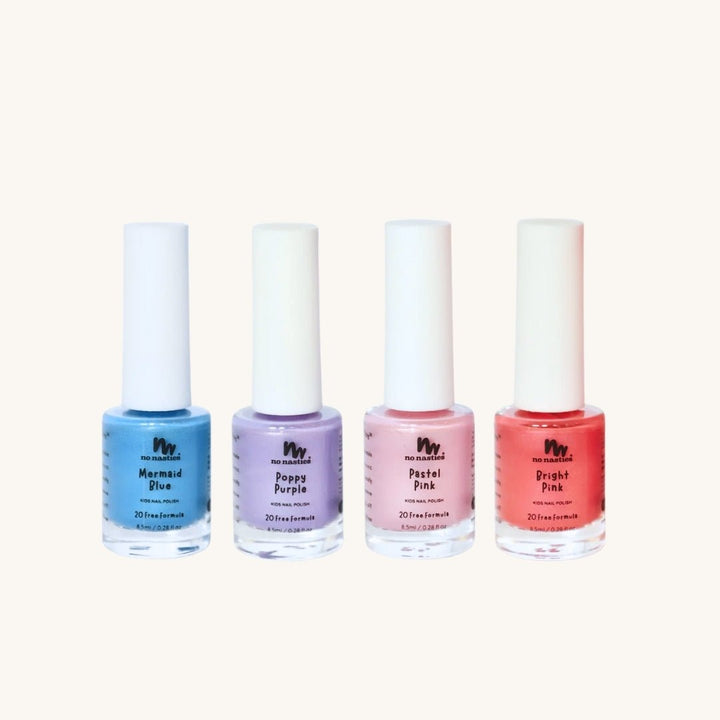
If you're currently on the market for a quality,all-natural nail polish, we highly recommend this brand by No Nasties.
20 FREE Unscented, Non-Toxic Nail Polish for Kids
$9.99
Give your little one’s nails a safer mani/pedi with this 20 FREE Unscented Nail Polish—meaning it’s made without the 20 most common toxic ingredients found in conventional nail polish, including formaldehyde (a known carcinogen), toluene (linked to headaches and nervous… read more
If 5) A realistic, low-mess routine for applying toddler nail polish
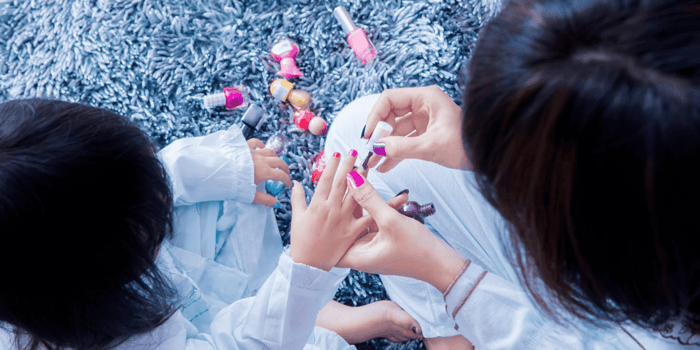
A smooth experience is mostly about prep and expectations. You’re not doing a salon manicure—you’re doing a tiny, supervised craft project that happens to involve nails.
Prep (2 minutes)
- Choose the moment: After a bath (clean nails), before a calm activity (book, show, snack), and not right before bed if you expect smearing on sheets.
- Protect the area: Put down a towel or paper you don’t mind tossing.
- Wash and dry hands: Clean, dry nails help the coat set more evenly.
- Skip aggressive cuticle work: For toddlers, keep it gentle—no cutting. If there’s hangnail or torn skin, it’s better to avoid polish until it’s settled.
Application (keep it short)
- Wipe excess off the brush to avoid flooding the cuticle.
- Use one thin coat and aim for “mostly on the nail,” not perfection.
- Do one hand at a time, then move to a drying activity.
If polish gets on skin, don’t scrub while it’s wet. Let it dry, then gently lift it later (depending on formula) or remove at the next hand wash if it’s a wash-off type. Trying to “fix” everything while wet often spreads it further.
Dry time tricks that don’t create more problems
- Set expectations: “Hands up like a puppy” or “hands on your tummy” can work for a minute or two.
- Use distraction, not restraint: A story, a song, or a short video usually works better than telling them to sit perfectly still.
- Avoid fans blowing directly: It can feel chilly and may encourage touching. Normal room airflow is fine.
6) Removal, aftercare, and when to skip nail polish altogether
Removal is part of the safety and comfort equation. If your toddler starts picking, chewing, or rubbing eyes, it’s a good cue to remove the product rather than reapply.
Removal considerations
- Choose the gentlest method that works for your product, and follow the directions on the label.
- Limit skin contact during removal. Work quickly and wash hands afterward.
- Moisturize if needed: A simple, fragrance-free hand cream can help if hands feel dry after washing or removal.
If your toddler enjoys simple self-care routines, our guide to natural lip balm for toddlers covers another gentle beauty product many families introduce first.
Times to pause or choose an alternative
- Active irritation or broken skin around nails or cuticles.
- Persistent thumb-sucking or nail biting that makes hand-to-mouth contact unavoidable.
- Frequent eye rubbing (to reduce the chance of transferring product to eyes).
If you want the “fun color” moment without polish, consider a polish-free nail moment: buffing very gently with a soft cloth for shine, or using a pretend “salon” routine (hand wash, lotion, nail sticker on a single nail) until your child is ready for toddler nail polish with less picking and more patience.
Bottom line: choosing toddler nail polish with confidence
Toddler nail polish can be a playful, occasional add-on to family beauty time when it matches your child’s readiness and your preferred removal routine. Prioritize supervision, short wear, thin coats, and a product that’s easy to apply and easy to remove. Shop with your eyes on the label—look for clear directions and ingredient transparency, not just broad “kid-friendly” language—and patch test when appropriate, especially for sensitive skin. If your toddler is in a heavy hand-to-mouth phase, it’s completely reasonable to wait or stick to toes and stickers until the timing is better.
At Popsicle Beauty Club, we’re big fans of making beauty fun and practical—because the best routine is the one you can actually do without stress, extra scrubbing, or constant touch-ups.
Want to explore more about safe nail polish and toxin-free manicures for kids? Check out Safe & Non-Toxic Nail Care for Kids to learn about the best brands, safe removal methods, and fun, non-toxic nail art ideas.

About the Author: This article was written by the contributing writers at Popsicle Beauty Club—a team of moms, educators, and clean beauty advocates passionate about creating a safer, more imaginative world for kids. We believe in empowering parents with trusted information and offering fun, non-toxic beauty and personal care products that let children play, express, and explore—without compromising their health.