
Table of Contents
- Introduction
- 1) What “kids non toxic makeup” really means (and what it doesn’t)
- 2) Ingredient-list basics: what to prioritize for kid-friendly play
- 3) How to read labels: claims, age guidance, and what matters most
- 4) A practical shopping checklist for a kid-friendly makeup kit
- 5) Safer play routine: patch test, hygiene, and removal that doesn’t irritate
- 6) “Avoid the eye zone” and other boundaries worth setting
- 7) Bottom line: how to choose kids non toxic makeup with confidence
- FAQs
Introduction
Parents searching for kids non toxic makeup usually want one thing: fun, imaginative play without turning bath time into a chemical detective story. The tricky part is that “non-toxic” is often used as a marketing phrase, not a standardized promise. So the most reliable path is practical: learn what the label can (and can’t) tell you, choose simpler formulas, and set up a use-and-remove routine that keeps skin comfortable.
This guide focuses on ingredient and label literacy—plus realistic, low-stress habits that make kids non toxic makeup feel like play, not pressure.
1) What “kids non toxic makeup” really means (and what it doesn’t)
In everyday shopping language, kids non toxic makeup usually implies products designed to be gentle, easy to wash off, and made without some ingredients parents prefer to avoid. But “non-toxic” isn’t a single regulated definition across all cosmetics claims, and it doesn’t automatically mean:
- No chance of irritation (even mild ingredients can bother sensitive skin).
- Safe to ingest (lip products still aren’t snacks; “non-toxic” doesn’t equal edible).
- Appropriate for the eye area (some colorants and glitters can irritate eyes).
- Free of every ingredient you may want to avoid (always check the ingredient list).
Think of “non-toxic” as a starting point for questions, not the final answer. For kids non toxic makeup, your best tools are the ingredient list, clear usage instructions, age guidance, and your child’s skin history. For a related look at how “natural” claims compare with ingredient labels, read our guide to natural kids makeup.
2) Ingredient-list basics: what to prioritize for kid-friendly play
When you’re choosing kids non toxic makeup, you’re typically better off with simpler formulas and formats that reduce mess and reduce the chance of rubbing product into eyes. You don’t need to memorize chemistry—just look for a few practical signals.
Formats that tend to be easier for parents
- Water-based face paints (often list water first and are made to rinse clean).
- Cream sticks/balms for cheeks (less airborne powder, less fallout).
- Pressed powders over loose powders (less dust, easier cleanup).
Ingredient categories that commonly show up in gentler formulas
- Humectants like glycerin (helps prevent that tight, dry feeling after removal).
- Emollients like plant oils and esters (helps color glide without tugging).
- Film formers (in small amounts) for face paint wear, ideally paired with easy removal instructions.
Common watch-outs (not “panic” ingredients—just reasons to read carefully)
- Fragrance/perfume and essential oils: can be the difference between “fine” and “itchy” for some kids. If your child is sensitive, fragrance-free is a smart filter.
- Strong alcohols (like denatured alcohol high on the list): can be drying, especially on cheeks and around the mouth.
- Heavily glittered products: glitter and shimmer aren’t automatically unsafe, but larger glitter pieces can migrate and irritate eyes.
- “Long-wear” adhesives in play products: anything designed to stick hard (especially near eyes) deserves extra scrutiny and careful removal.
None of the above replaces a label check, but it helps you compare two “non-toxic” options and pick the one that’s more likely to behave well on kid skin.
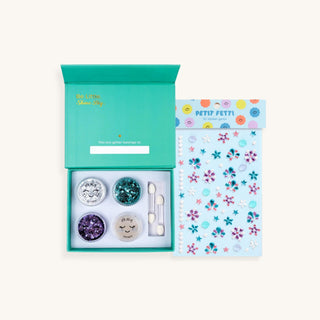
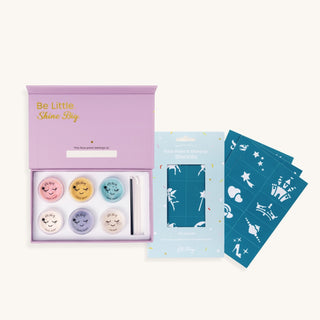
Looking for a clean beauty gift that’s safe, fun, and worry-free? This natural play makeup kit lets little ones explore color and creativity with non-toxic, skin-friendly formulas parents trust.
Each kit includes vibrant loose powder eyeshadows, soft blush, lipstick, and easy-to-use brushes—all housed in a premium magnetic box that’s perfect for gifting. The little pots are fully removable, so she can display them on her vanity, tuck them into a pretend purse, or take them along for imaginative play.
Natural Kids Play Makeup Kit
$34.99
$40.99
Looking for a clean beauty gift that’s safe, fun, and worry-free? This natural play makeup kit lets little ones explore color and creativity with non-toxic, skin-friendly formulas parents trust. Each kit includes vibrant loose powder eyeshadows, soft blush, lipstick, and… read more

3) How to read labels: claims, age guidance, and what matters most
Label language can be noisy. Here’s how to interpret common claims you’ll see while shopping for kids non toxic makeup:
- “Non-toxic”: helpful only when backed by transparent ingredients, clear directions, and a reputable seller. Use it as a prompt to verify, not as proof.
- “Natural” or “clean”: these don’t have one universal definition. The ingredient list still wins.
- “Hypoallergenic”: suggests the brand attempted to reduce common triggers, but it’s not a guarantee for every child. Patch testing still matters.
- “Dermatologist tested”: can be meaningful, but it doesn’t tell you the details (how many people, what endpoints, what skin types). Don’t treat it as a blanket safety stamp.
- Age recommendations: pay attention. If a product is labeled for older children, assume there’s a reason (small parts, glitter, or formula behavior).
Ingredient list placement tip: Ingredients are typically listed from highest to lowest concentration. If fragrance, essential oils, or drying alcohols appear near the top, that’s a sign the formula may be more reactive on delicate skin.
Also check the seller. For kids non toxic makeup, buy from recognizable retailers or the brand directly when possible, and make sure you’re receiving a product with intact packaging and legible labeling.
4) A practical shopping checklist for a kid-friendly makeup kit
If you’re building (or replacing) a kids makeup kit non toxic setup, the goal isn’t a mini adult vanity—it’s a small set of items that stay sanitary, wash off predictably, and limit eye-area mishaps.
Choose a tight edit (5–7 items is plenty)
- Cheek color (balm or cream stick)
- Face paint palette (water-activated) for costumes
- Lip balm or sheer lip color
- Highlighter or shimmer only if it’s fine-milled and you’re comfortable supervising
- Two tools: a sponge and one brush (skip big sets that never get cleaned)
- Gentle remover: micellar water or a mild cleanser you already trust
Criteria that make “non toxic kids makeup” feel safer in real life
- Clear ingredient list (no vague “proprietary blend” for the main formula).
- Fragrance-free options if your child has sensitive skin or a history of eczema-like dryness.
- Easy removal instructions (if it needs heavy rubbing, it’s not ideal).
- Packaging that closes securely (prevents drying out and contamination).
- Minimal loose glitter and no products that encourage applying right on the lash line.
Parents often ask for the best non toxic makeup for kids. In practice, “best” usually means the kit your child will use under light supervision, that removes cleanly, and that you can keep hygienic without a full-time lab routine.
5) Safer play routine: patch test, hygiene, and removal that doesn’t irritate
Even thoughtfully chosen kids non toxic makeup can cause redness if it’s applied over dry patches, layered too heavily, or scrubbed off with the wrong cleanser. A simple routine helps.
Patch test (especially for first-time use)
Before a big event (birthday, recital, Halloween), do a quick patch test:
- Apply a small amount of product to the inner arm or behind the ear.
- Leave it on for a short wear period (follow the product directions).
- Remove gently and watch for signs of irritation over the next day.
If your child has very reactive skin, consider checking with a clinician for personalized guidance. (This article is general education, not medical advice.)
Hygiene rules that actually stick
- One child, one kit. Sharing spreads bacteria and can trigger eye infections.
- Wash hands first. It’s the easiest “safety step” and prevents smudgy eye rubbing.
- Clean tools with gentle soap and warm water; let them dry fully before storing.
- No “double-dipping” in cream pots—use a clean finger or a small spatula.
Removal: aim for dissolve, not scrub
- Start with a gentle cleanser or micellar water on a soft cotton pad.
- Hold it on the area for a few seconds to loosen pigments.
- Wipe softly; repeat as needed.
- Follow with a simple moisturizer if skin feels dry.
For face paint, lukewarm water plus a mild cleanser is often enough. If you find you’re rubbing to get it off, that’s a sign to switch formulas next time—even if it’s marketed as kids non toxic makeup.
6) “Avoid the eye zone” and other boundaries worth setting
For many families, the biggest improvement in safer play comes from a few clear boundaries rather than hunting for a perfect label.
- Skip the waterline and lash line. Use cheek products on cheeks, and keep shimmers on the high points of the face—not right next to the eye.
- Be cautious with glitter. If you use it, choose fine shimmer over chunky glitter, and apply with a damp brush to reduce fallout.
- Don’t use adult “tingly” plumping glosses or strong exfoliating products as part of play.
- Don’t apply on broken skin. If there’s a scrape, rash, or windburn, pause makeup play until it’s calm.
- Watch expiration and dryness. If a product smells off, has changed texture, or is dried out, replace it.
These basics apply whether you’re buying non toxic makeup for kids or a standard costume face paint—because irritation often comes from placement, friction, and hygiene as much as from any single ingredient.
7) Bottom line: how to choose kids non toxic makeup with confidence
Kids non toxic makeup is easiest to shop for when you treat “non-toxic” as a filter—not a finish line. Start with a transparent ingredient list, prioritize fragrance-free if your child is sensitive, and choose formats that remove without scrubbing. Then make the routine do the heavy lifting: patch test new products, keep tools clean, avoid the lash line, and remove gently every time. For more age-appropriate ways to make beauty feel playful and low-pressure, explore our guide to makeup play for kids.
If you do those things, kids non toxic makeup becomes what it should be: low-stakes, washable fun that fits into real family life.
For a complete guide on non-toxic play makeup, check out our in-depth resource: The Ultimate Guide to Non-Toxic Play Makeup for Kids for expert tips, product recommendations, and everything you need to know about choosing safe beauty play products for your child.
About the Author: This article was written by the contributing writers at Popsicle Beauty Club—a team of moms, educators, and clean beauty advocates passionate about creating a safer, more imaginative world for kids. We believe in empowering parents with trusted information and offering fun, non-toxic beauty and personal care products that let children play, express, and explore—without compromising their health.