
Table of Contents
- Introduction
- What “non toxic” can (and can’t) mean in kids nail polish
- Age guidance: when nail polish is a “yes,” and when it’s best to wait
- Label checks that matter: ingredients, “free-from” claims, fragrance, and directions
- Choose the right formula: peel-off vs. traditional vs. gel-style kits
- How to use non toxic kids nail polish more safely (and with less mess)
- Smart shopping checklist (quick, practical, and realistic)
- Bottom line: what to prioritize for non toxic kids nail polish
- FAQs
Introduction
Shopping for non toxic kids nail polish can feel oddly confusing: bottles are tiny, marketing is loud, and “clean” claims aren’t regulated the same way across brands. The good news is that you can make a practical, low-stress choice by focusing on a few label checks and how the polish will actually be used (how often, how it’s removed, and whether your child is likely to put fingers in their mouth).
This guide breaks down what “non toxic” typically means in nail products, how to think about age readiness, and the most helpful packaging cues to look for when choosing non toxic kids nail polish for your family’s comfort level.
What “non toxic” can (and can’t) mean in kids nail polish
In beauty, “non toxic” is usually a marketing claim, not a standardized certification. Two polishes can both say “non toxic” and still use different solvents, fragrance, film-formers, and preservatives. That doesn’t mean the claim is meaningless—it just means you should treat it as a starting point, then verify with the ingredient list and usage instructions.
When people search for non toxic kids nail polish, they’re often looking for products that:
- Avoid certain commonly discussed nail polish chemicals (often listed as “free-from” claims like 3-free, 5-free, 7-free, 10-free, etc.).
- Have a gentler smell and feel more comfortable to use around kids.
- Come off easily (so you’re not soaking small nails in strong remover).
- Are designed with kids in mind: smaller brushes, lower mess, simpler removal.
Important reality check: even “clean” polish is still a cosmetic product meant for nails—not for eating, chewing, or rubbing into eyes. Safe use matters just as much as the ingredient list.
Age guidance: when nail polish is a “yes,” and when it’s best to wait
There’s no single universal “right age,” but there are practical milestones that help you decide when non toxic kids nail polish is appropriate. Think in terms of mouthiness, attention span, and how easy it will be to keep polish on nails (not skin, not furniture, not in mouths).
Babies and very young toddlers
For babies, most parents skip polish entirely. If you’re specifically searching “nail polish for babies non toxic,” consider that the biggest issue isn’t the label claim—it’s behavior. Babies explore with their mouths and rub their eyes often. If you do choose to use any cosmetic on a baby’s nails, keep it rare and short-lived, and prioritize strict supervision. Many families find it’s simpler to wait.
Older toddlers and preschoolers
This is where kid-focused, peel-off options become popular because they reduce the need for remover. However, toddlers still put fingers in mouths and may pick at polish. If your child chews nails or sucks thumbs, waiting (or doing a “special occasion only” approach) can be the most comfortable choice.
School-age kids and tweens
Kids who can sit through application, keep hands still for drying, and follow “hands away from mouth and eyes” rules are usually better candidates. At this stage, you can decide between peel-off formulas for convenience or more traditional polishes if you’re comfortable with remover use.
Label checks that matter: ingredients, “free-from” claims, fragrance, and directions
When choosing non toxic nail polish for kids, your best tool is the packaging. Here’s what to look for—without assuming any single claim guarantees safety for every child.
1) Start with the ingredient list (not the front label)
If the brand provides a full ingredient list on the box, bottle, or website, that’s a strong sign of transparency. If you can’t find ingredients at all, consider that a reason to choose a different product—especially for kids non toxic nail polish marketed to parents. Understanding ingredient transparency across children's beauty products can make label reading much less overwhelming. Our guide to A Parents Guide To Clean Beauty Products: What You Need To Know explains how to evaluate products beyond marketing claims and focus on what really matters.
2) Understand “free-from” numbers
You’ll often see “3-free,” “5-free,” “7-free,” “10-free,” and beyond. These lists vary by brand, but they generally refer to excluding certain ingredients that have been controversial in nail products. Because lists aren’t uniform, compare brands by reading the specific excluded ingredients rather than relying on the number alone.
Tip: If a brand says “free-from,” look for the actual list (for example, which three or five ingredients). If it’s vague, it’s harder to evaluate.
3) Be cautious with fragrance and flavor cues
Some children’s polishes are scented, and some are marketed with candy-like themes. Fragrance can be a sensitive spot for some families, and “treat-like” cues can make it harder to discourage licking or chewing. If your child is likely to put fingers in their mouth, an unscented option may be easier to manage.
4) Check the directions for use and removal
Directions tell you a lot about the formula type. If the label emphasizes peel-off removal, that’s typically a water-based film that lifts. If it requires remover, it’s more like traditional polish. If it mentions curing lamps, treat that as a different category entirely (see below).
5) Look for basic safety language
For non toxic children’s nail polish, it’s a good sign when the brand includes clear cautions like “use with adult supervision,” “avoid contact with eyes,” “do not ingest,” and “use in a well-ventilated area.” These aren’t scary statements—they’re standard, responsible instructions that help you use the product correctly.
Choose the right formula: peel-off vs. traditional vs. gel-style kits
Most parents who want non toxic kids nail polish are also trying to minimize hassle. The formula type affects everything: odor, wear time, removal, and how likely the polish is to end up on skin or bedding.
Peel-off / water-based
- Why parents like it: Often lower odor, easier cleanup, and no acetone remover needed.
- Trade-offs: Shorter wear time, more prone to peeling (sometimes that’s the point), and can lift if hands are washed frequently.
- Best for: Occasional play, dress-up, quick weekend manicures.
Traditional polish (solvent-based)
- Why parents like it: Better wear time and smoother finish.
- Trade-offs: Stronger smell and typically requires remover. Removal can be drying to nails/cuticles if done often.
- Best for: Older kids who can keep polish on nails and tolerate removal, special events when you want longer wear.
Gel-style products and kits that require curing
Anything that involves a curing lamp is a different conversation—more steps, more adult involvement, and more room for skin contact during application. If you’re shopping primarily for simplicity and kid-friendly use, many families skip lamp-cured systems and stick to peel-off or traditional options. If you do consider them, read directions carefully and keep the product strictly on the nail plate, not the surrounding skin.
How to use non toxic kids nail polish more safely (and with less mess)
Even the best-labeled non toxic kids nail polish benefits from a smart routine. These habits reduce accidental exposure and make the experience more fun.
Before you paint
- Choose the right moment: Avoid right before bed (smudges) or right before a meal (hand washing and mouth contact).
- Wash and dry hands: Polish adheres better to clean, dry nails.
- Protect surfaces: Use a towel you don’t love or a washable mat.
- Ventilation helps: Open a window or paint near a fan—even milder-smelling formulas can bother sensitive noses.
Patch test when appropriate
If your child has sensitive skin or has reacted to cosmetics before, consider a patch test. A practical approach: apply a small amount to one nail (or a tiny amount to skin per product guidance), wait, and watch for irritation before doing a full set. If you notice redness, itching, or discomfort, stop using it and wash off what you can. When in doubt, consult a qualified healthcare professional for personalized advice.
Application tips for kids
- Use thin coats: Two thin coats usually dry better than one thick coat.
- Keep it on the nail: Wipe brush edges to avoid flooding cuticles—less skin contact is a win.
- Do fewer fingers: Start with two nails per hand for first-timers, then build up.
- Drying strategy: Have kids “airplane hands” (hands out, fingers spread) for a few minutes. Set up a show or story to reduce fidgeting.
Removal: match the remover to the formula
- Peel-off: Lift an edge gently and peel—don’t rip from the middle of the nail. If it resists, soaking fingertips briefly in warm water can help loosen it.
- Traditional: If you choose remover, use it sparingly, avoid soaking skin, and wash hands after. Follow with a simple moisturizer around nails/cuticles.
Storage and boundaries
Store polish where younger kids can’t access it unsupervised. Make “polish rules” simple: nails only, hands away from mouth/eyes, and adult help for opening/closing bottles.
Smart shopping checklist (quick, practical, and realistic)
If you're building a safer beauty routine overall, it's also worth understanding why many families choose gentler ingredients and cleaner formulations for younger skin. Benefits Of Organic Cosmetics: How They Are Good For Young Skin explores the advantages of organic and naturally derived beauty products for children and tweens. Use this checklist when comparing non toxic nail polish options, especially those marketed as non toxic kids nail polish:
- Ingredients are available (on packaging or the brand site) and easy to review.
- Clear “free-from” specifics (the brand lists which ingredients are excluded, not just a number).
- Formula type matches your needs: peel-off for easy removal, traditional for longer wear.
- Low-fuss brush: a brush that’s not too wide makes it easier to avoid skin.
- Scent/fragrance fits your household (unscented if you’re fragrance-avoidant or if your child is sensitive).
- Directions include adult supervision and basic safety cautions.
- Removal plan is kid-appropriate: you’re comfortable with how it comes off and how often you’ll redo it.
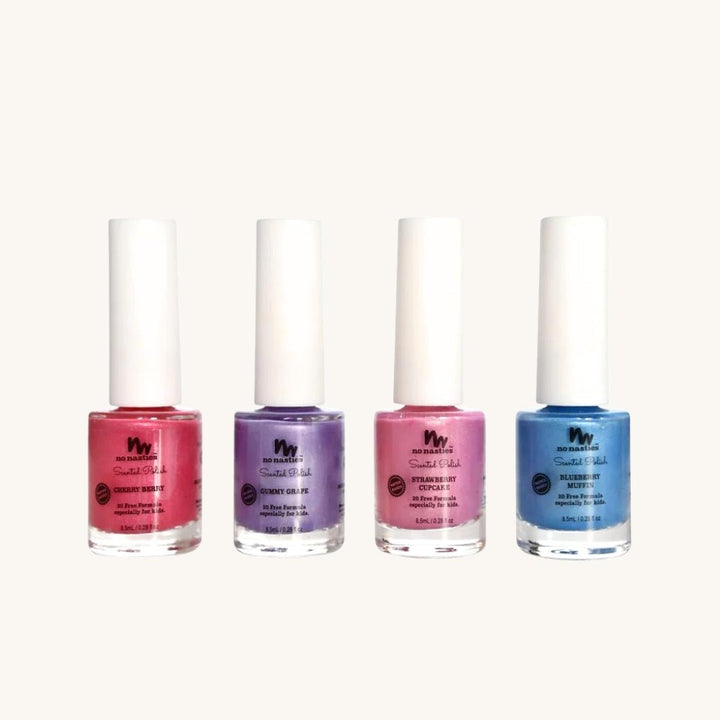
If you're looking for an all-natural, peel-off nail polish, we highly recommend this option by No Nasties.
20 FREE Naturally Scented, Peel-Off Nail Polish
$8.99
Give your little one’s nails a safer, sweeter mani/pedi with this 20 FREE Scented Nail Polish—meaning it’s made without the 20 most common toxic ingredients found in conventional nail polish, including formaldehyde (a known carcinogen), toluene (linked to headaches and… read more
Bottom line: what to prioritize for non toxic kids nail polish
The most parent-friendly approach to non toxic kids nail polish is a combination of label literacy and realistic use habits. Choose a brand that clearly lists ingredients and explains removal, pick a formula that fits your child’s age and behavior (especially mouthiness), and keep application simple: thin coats, good ventilation, nails only. Finally, always check labels each time you buy (formulas can change) and patch test when appropriate—small steps that make a big difference in comfort and confidence.
Want to explore more about safe nail polish and toxin-free manicures for kids? Check out Safe & Non-Toxic Nail Care for Kids to learn about the best brands, safe removal methods, and fun, non-toxic nail art ideas.

About the Author: This article was written by the contributing writers at Popsicle Beauty Club—a team of moms, educators, and clean beauty advocates passionate about creating a safer, more imaginative world for kids. We believe in empowering parents with trusted information and offering fun, non-toxic beauty and personal care products that let children play, express, and explore—without compromising their health.