
Table of Contents
- Introduction
- Why lip products need extra care
- Ingredient and label checks
- Flavor and fragrance deserve attention
- Gloss vs balm
- How to teach healthy habits
- How to compare clean lip options
- Internal resources for parents
- Common buying mistakes to avoid
- How to make gloss feel special without overuse
- How often should kids use lip gloss?
- How to choose kids lip gloss with confidence
- Bottom line
- FAQs
Introduction
Kids lip gloss is often one of the first beauty products a child asks for. It feels fun, colorful, and grown-up in a tiny way. But because gloss sits directly on the lips, gets reapplied often, and can be accidentally tasted, parents should look more closely at the ingredient list than they might with other play products.
A good children’s gloss should be playful without acting like an adult treatment product. Kids do not need plumping, tingling, staining, or long-wear claims. They need something gentle, easy to remove, and simple enough for parents to supervise.
Why lip products need extra care
The lips are different from cheeks, hair, or nails. Children lick their lips, eat snacks, drink water, and touch their mouths throughout the day. That means a lip product should have clear ingredients, mild flavor or fragrance, and a texture that does not encourage constant reapplication.
Some glosses are designed for adult shine and staying power. Those formulas can feel sticky, heavily scented, or too intense for younger users. A child-friendly gloss should feel comfortable and wash away without scrubbing.
Ingredient and label checks
- Look for a full ingredient list before purchase.
- Avoid glosses with plumping, warming, cooling, or tingling claims.
- Choose soft color instead of heavy stain.
- Check flavor and fragrance if your child has sensitive skin.
- Avoid very sticky textures that attract hair, dust, or lint.
- Make sure the product is easy to remove.
- Choose packaging that keeps the applicator clean.
Parents often feel overwhelmed by ingredient lists, but the goal isn't to memorize every cosmetic ingredient. Instead, focus on transparency, age-appropriate formulations, and products designed specifically for children. If a brand clearly explains what is in its formula and how to use it safely, that is usually a good sign. For a deeper look at ingredient safety, The Truth About Harmful Beauty Ingredients for Kids explains the additives, fragrances, and preservatives many families choose to avoid in children's beauty products.
Flavor and fragrance deserve attention
Many children love sweet-smelling gloss, but strong flavor can encourage licking. That can make lips drier over time and lead to even more product use. If your child has sensitive skin, eczema, or a history of irritation around the mouth, choose milder formulas and test slowly.
Fragrance-free is not always required, but fragrance should be understandable. Parents should not have to guess what is in a product their child may use repeatedly.
Gloss vs balm
Gloss is mostly cosmetic. Balm is mostly functional. If your child’s lips are dry, chapped, or irritated, start with balm. Save gloss for play, parties, costumes, or special routines once the skin feels comfortable.
For younger children, balm-style formats can be easier to manage. Wand gloss can be fun for older kids, but the applicator goes back into the tube after touching the lips, so it should not be shared.
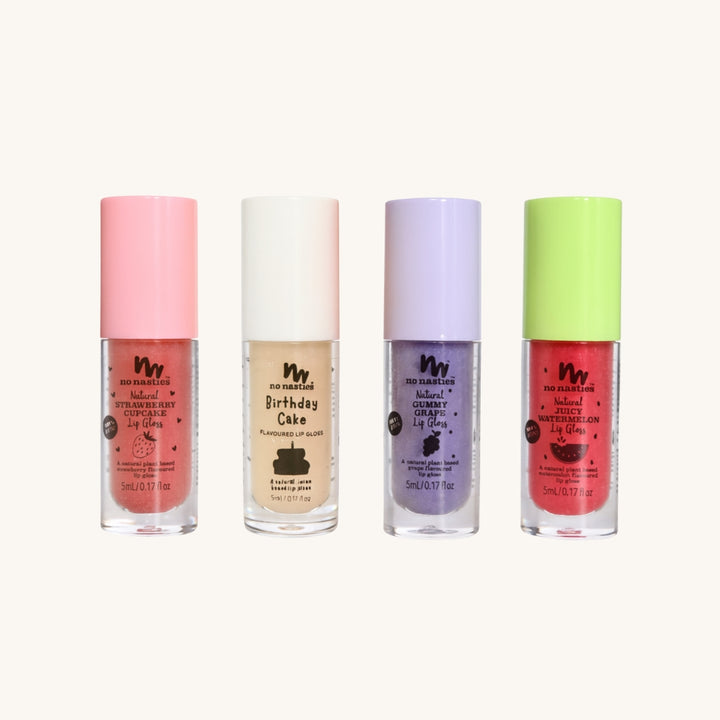
Looking for an all-natural lip gloss for your kid? We highly recommend this product by No Nasties. A yummy, all-natural treat for little lips, this natural flavor lip gloss for kids adds a whisper of color while keeping lips soft and nourished with sunflower, olive, coconut, and jojoba oils.
Formulated for even the most sensitive skin, it’s nut-free, gluten-free, dairy-free, and made without wheat derivatives or almond oil—making it our most allergy-friendly lip gloss yet.
Natural Flavor Lip Gloss for Kids
$7.99
A yummy, all-natural treat for little lips, this natural flavor lip gloss for kids adds a whisper of color while keeping lips soft and nourished with sunflower, olive, coconut, and jojoba oils. Formulated for even the most sensitive skin, it’s… read more
How to teach healthy habits
Give lip products a specific home, like a small pouch or vanity area. Teach kids to wash hands first, apply a small amount, and close the product after use. Explain that lip gloss is personal and should not be shared with friends or siblings.
If lips become red, cracked, itchy, or irritated, pause gloss and use a plain gentle balm. A product that looks cute is not worth pushing through discomfort.
How to compare clean lip options
Parents often search for safe lip gloss, clean lip gloss, and non-toxic lip gloss for kids because they want reassurance. Compare products by ingredient transparency first, then texture, then color. A softer gloss that gets used happily and removed easily is better than a dramatic gloss that creates cleanup battles.
Many parents also find it helpful to understand the difference between terms like clean, natural, organic, and non-toxic when comparing products. These labels are often used differently by different brands, which can make shopping confusing. Learning the basics can help you focus on ingredient transparency and overall product safety rather than marketing language alone. A Parents Guide To Clean Beauty Products breaks down these terms and explains what parents should actually look for when choosing beauty products for children.
Internal resources for parents
Browse Popsicle Beauty Club’s lip collection for kid-friendly lip options. For younger children, read the all natural kids lip balm product details. If your child is building a larger beauty routine, pair this guide with the non-toxic play makeup guide.
Common buying mistakes to avoid
The biggest mistake is choosing gloss by color alone. A shade can look adorable online but still be too sticky, too scented, or too intense for a child. Parents should check texture and claims before shade. If a gloss advertises plumping, tingling, long wear, or dramatic shine, it may be designed for adults rather than children.
Another mistake is overlooking the applicator. Wand glosses are fun, but they require better hygiene because the wand touches the lips and goes back into the tube. Younger kids may do better with a parent-supervised routine or a balm-style product that keeps application simple.
How to make gloss feel special without overuse
Use gloss for specific moments: a birthday party, costume day, pretend spa afternoon, or getting ready with a parent. When gloss becomes a special routine instead of something reapplied every ten minutes, children enjoy it more and parents have an easier time supervising.
Keep a small mirror, tissue, and cleanser nearby. Teach kids that one swipe is usually enough and that gloss does not need to be layered until it feels sticky. These habits make beauty play cleaner and more comfortable.
How often should kids use lip gloss?
There is no perfect number, but occasional use is easier to manage than all-day use. If gloss is part of dress-up or a getting-ready ritual, parents can supervise application and removal. If it becomes a constant habit, check whether the formula is drying, too flavored, or being used as a toy rather than a personal care product.
It is also helpful to keep gloss separate from school supplies and shared play areas. That keeps the product cleaner and makes it clear that lip products are personal.
How to choose kids lip gloss with confidence
Use this kids lip gloss checklist before buying a new shade, flavor, or gift set. A good kids lip gloss should feel gentle, look age appropriate, and avoid adult claims like plumping or long wear.
If your child wants kids lip gloss for dress-up, choose a formula that is easy to remove and easy to supervise. The best kids lip gloss is fun for the child and clear enough for the parent to evaluate quickly.
Bottom line
The best lip gloss for children is gentle, transparent, soft in color, and easy to remove. Parents should avoid adult treatment claims and choose formulas that make beauty play feel simple, clean, and age appropriate.
Curious about which harmful ingredients to avoid in your child's beauty products? Read The Truth About Harmful Beauty Ingredients for Kids to uncover the hidden toxins in mainstream makeup, skincare, and hair care—and discover safer alternatives.
About the Author: This article was written by the contributing writers at Popsicle Beauty Club—a team of moms, educators, and clean beauty advocates passionate about creating a safer, more imaginative world for kids. We believe in empowering parents with trusted information and offering fun, non-toxic beauty and personal care products that let children play, express, and explore—without compromising their health.