
Table of Contents
- Why ingredient choices matter more for kids’ lip products
- How to read a kids lip gloss label in 60 seconds
- Ingredients many parents look for in lip gloss for kids girls
- Ingredients some families choose to avoid or limit (and what to watch for)
- Shopping checklist: how to pick the best lip gloss for kids girls without overthinking
- How to introduce kids lip gloss: patch test, hygiene, and realistic routines
- Common parent questions: what matters most on day one?
- Bottom line: choosing lip gloss for kids girls with confidence
- FAQs
Lip Gloss for Kids Girls: Ingredients Parents Should Check (and What to Skip)
Shopping for lip gloss for kids girls sounds simple—until you remember that kids lick their lips, share with friends, and can be extra sensitive to fragrance and flavor. The goal isn’t to find a “perfectly pure” product (that’s not realistic), but to choose a formula and format that fit how kids actually use gloss: quick swipes, lots of reapplication, and occasional accidental ingestion.
This guide walks through label-reading for lip gloss for kids girls in a practical, non-alarmist way. You’ll learn which ingredient types are common, which ones many families prefer, what some parents choose to avoid or limit, and how to build a simple routine that keeps lips comfy and minimizes irritation. Always check the ingredient label on the exact product you’re buying, and consider patch testing—especially for kids with sensitive skin.
Why ingredient choices matter more for kids’ lip products
Lip products sit at the intersection of skin care and “incidental consumption.” Kids tend to:
- Reapply often, sometimes without a mirror, which can lead to overuse or gloss getting around the mouth.
- Lick lips, increasing the chance of dryness (especially if the formula is highly flavored) and increasing ingestion of trace amounts.
- Share (at school, playdates, sleepovers), which turns one gloss into a germ-sharing tool.
- React quickly if they’re sensitive to fragrance, certain plant extracts, or strong flavoring agents.
That’s why lip gloss for kids girls often works best when it’s simple: fewer potential irritants, comfortable wear, and packaging that discourages sharing and mess. Parents comparing different types of girls lip gloss may also find it helpful to understand how fragrance, flavoring, and packaging choices can affect comfort and everyday wear.
How to read a kids lip gloss label in 60 seconds
Most gloss formulas are built from the same core categories. When evaluating lip gloss for kids girls, scan for these:
- Base emollients/occlusives: These create slip and shine (examples: castor oil, mineral oil, hydrogenated polyisobutene, various esters). They’re the “body” of the gloss.
- Waxes/structuring agents: Help thicken and keep the formula from running (examples: beeswax, carnauba wax, candelilla wax, synthetic waxes).
- Humectants: Pull water toward the surface for a plush feel (often glycerin; sometimes hyaluronic acid in certain formats).
- Flavor/fragrance: May be listed as “flavor,” “aroma,” “fragrance/parfum,” or specific components. This is a common trigger area for sensitive kids.
- Colorants: Dyes or mineral pigments. These vary by region and formula; they can also stain skin or clothing.
- Preservatives/antioxidants: Help keep the product stable and resist oxidation (tocopherol/Vitamin E is common; some water-containing formulas need broader preservation).
If the gloss claims to be “clean,” “non toxic,” or “natural,” treat those as marketing terms rather than guarantees. The most reliable step is still reading the full ingredient list and choosing what aligns with your comfort level.
Ingredients many parents look for in lip gloss for kids girls
These ingredient types tend to be popular because they’re straightforward, comfortable, and easy to use—especially for beginners.
Simple emollients and occlusives
- Castor seed oil: A classic gloss base that gives shine and grip.
- Petrolatum or mineral oil: Often used for smooth glide and barrier support. Some families prefer them for their simplicity; others avoid them for personal reasons.
- Squalane: Lightweight and typically well-tolerated, though it’s not in every gloss.
Comfort-first waxes
- Beeswax (or plant waxes like carnauba/candelilla): Helps reduce dripping and keeps shine controlled.
Gentle antioxidant support
- Tocopherol (Vitamin E): Frequently included to help oils stay fresh and to condition lips.
Clear labeling and fewer extras
For lip gloss for kids girls, “fewer extras” can be a real feature. A short, readable list—especially one that clearly identifies flavor/fragrance and colorants—makes it easier to avoid trial-and-error.
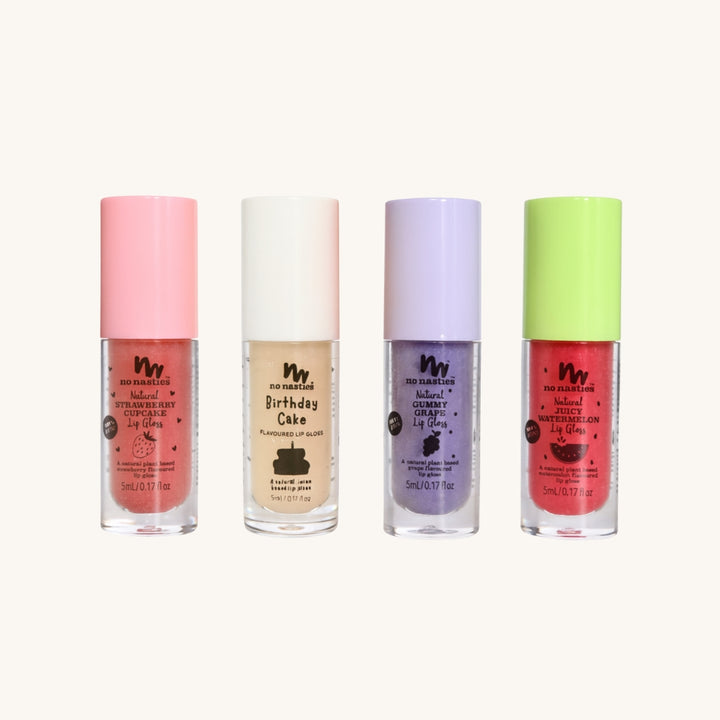
Looking for an all-natural lip gloss? We highly recommend this brand by No Nasties. A yummy, all-natural treat for little lips, this natural flavor lip gloss for kids adds a whisper of color while keeping lips soft and nourished with sunflower, olive, coconut, and jojoba oils.
Formulated for even the most sensitive skin, it’s nut-free, gluten-free, dairy-free, and made without wheat derivatives or almond oil—making it our most allergy-friendly lip gloss yet.
Natural Flavor Lip Gloss for Kids
$7.99
A yummy, all-natural treat for little lips, this natural flavor lip gloss for kids adds a whisper of color while keeping lips soft and nourished with sunflower, olive, coconut, and jojoba oils. Formulated for even the most sensitive skin, it’s… read more
Ingredients some families choose to avoid or limit (and what to watch for)
This section isn’t about panic; it’s about recognizing common sources of stinging, dryness, or frustration in kids’ gloss. If your child has had irritation before, these are the first places many parents look.
Strong fragrance and flavor systems
- “Fragrance/Parfum” or “Aroma/Flavor”: These can be fine for many users, but they’re a frequent culprit when kids complain that a gloss “burns” or causes redness around the mouth.
- Essential oils (peppermint, cinnamon, citrus oils): Often used to scent or create a “tingle.” For kids, that tingle can read as discomfort.
Plumping or tingling ingredients
Adults sometimes like a plumping feel, but for lip gloss for kids girls, it’s usually not necessary. Ingredients associated with tingling (often minty or spicy components) can be irritating, especially with chapped lips.
High-stain dyes and messy pigments
Some bright dyes can stain skin around the mouth, clothing, or bedding. If you’re shopping for school or sleepovers, consider sheer tints or clear glosses first.
Formulas that are very sticky or very thin
- Very sticky glosses can feel uncomfortable, attract hair, and encourage kids to wipe lips repeatedly (which can irritate the skin).
- Very thin/runny glosses can migrate outside the lip line and cause “gloss mustache,” increasing exposure to the skin around the mouth.
Every child is different. The best approach is to start with a simple, mild option and adjust based on comfort and how they actually wear it.
Shopping checklist: how to pick the best lip gloss for kids girls without overthinking
When people search for the best lip gloss for kids girls, they’re often balancing safety, mess, and kid-approval. Use this checklist in-store or while scrolling online.
- Choose packaging that discourages sharing: A squeeze tube or click-pen can be more hygienic than a wand applicator. If you do choose a wand, consider one per child and label it clearly.
- Look for a comfortable finish: “Cushiony,” “balmy,” or “non-sticky” descriptions often translate to better kid compliance.
- Go easy on scent: Light scent or fragrance-free is a smart first buy, especially for sensitive kids.
- Check for a clear ingredient list: You want to easily identify flavor/fragrance and any plant extracts.
- Prefer sheer or clear for beginners: It’s more forgiving, less likely to stain, and easier to reapply without a mirror.
- Decide your “clean” criteria ahead of time: If you’re looking for clean lip gloss for kids or non toxic lip gloss for kids, define what that means for your household (for example: no fragrance, no essential oils, or minimal dyes), then shop to that list.
Tip: If a product’s front label is doing a lot of buzzword work but the ingredient list is hard to find, that’s a cue to slow down and confirm the details before buying.
How to introduce kids lip gloss: patch test, hygiene, and realistic routines
Even a well-chosen kids lip gloss can cause issues if it’s used on already irritated lips or shared among friends. A few simple habits go a long way.
Patch testing (especially for sensitive kids)
- Start small: Apply a tiny amount on the outer edge of the lip or just beside the mouth (not on broken skin).
- Wait and observe: If you notice redness, bumps, or persistent stinging, stop using it and choose a simpler formula.
- Patch test again when switching: New flavors/scents/colors can change how a child reacts.
If your child has a history of significant reactions or ongoing lip irritation, consider checking in with a qualified professional for individualized guidance. For everyday shopping, patch testing is a practical, parent-friendly step.
Set “no sharing” rules
Because lips and applicators are a direct contact area, teach kids that lip products are personal items—like toothbrushes. For school, label the tube with a name sticker.
Build a simple use routine
- Apply on clean, dry lips: Food residue can make gloss look patchy and can increase mess.
- Use a tiny amount: A pea-size (or less) is usually enough. Kids often over-apply because shine is fun.
- Reapply intentionally: After snacks or outdoor play, wipe lips with a clean tissue, then reapply.
Easy removal at the end of the day
To remove lip gloss for kids, use a soft cloth with a gentle cleanser or a little balm/oil to break down the gloss, then rinse. Avoid aggressive scrubbing around the mouth, which can irritate the skin.
Common parent questions: what matters most on day one?
If you’re buying lip gloss for kids girls for a first makeup moment (birthday party, dance recital, or just play), prioritize comfort and simplicity over trend ingredients.
- If lips are already chapped: Choose a more balm-like gloss and skip anything minty/tingly or heavily fragranced.
- If your child is scent-sensitive: Start fragrance-free or very lightly scented and avoid essential oils.
- If mess is your enemy: Pick a thicker, non-runny texture and consider a squeeze tube instead of a wand.
- If you want “cleaner” positioning: Focus on your specific criteria (like no fragrance, minimal dyes, shorter ingredient list) rather than relying on a single “clean” claim.
Bottom line: choosing lip gloss for kids girls with confidence
The best lip gloss for kids girls is the one that fits real life: comfortable texture, minimal irritation risk, and packaging that supports good hygiene. Read the ingredient label, be cautious with strong fragrance/flavor and tingly additives, and start with a sheer or clear option that’s easy to apply. When in doubt, keep it simple, patch test before regular use, and adjust based on how your child’s lips feel after a few wears.
With those basics, shopping for lip gloss for kids girls becomes less about chasing claims and more about choosing a product your kid actually enjoys wearing—without drama, stickiness overload, or mystery ingredients.
Curious about which harmful ingredients to avoid in your child's beauty products? Read The Truth About Harmful Beauty Ingredients for Kids to uncover the hidden toxins in mainstream makeup, skincare, and hair care—and discover safer alternatives.

About the Author: This article was written by the contributing writers at Popsicle Beauty Club—a team of moms, educators, and clean beauty advocates passionate about creating a safer, more imaginative world for kids. We believe in empowering parents with trusted information and offering fun, non-toxic beauty and personal care products that let children play, express, and explore—without compromising their health.