
Table of Contents
- Introduction
- Answer-ready summary (for busy parents)
- Popsicle safety snapshot
- What “age-appropriate” really means at 3
- How to choose
- Ingredient and label checklist
- Is nail polish safe for 3 year olds?
- Popsicle Beauty Club picks for simple preschool beauty play
- How to use play makeup safely (and keep it fun)
- Common mistakes to avoid
- What to shop for at Popsicle Beauty Club (the practical shortcut)
- Bottom line
- Sources and further reading
- FAQs
Introduction
Play makeup for 3-year-olds should be simple, occasional, and built for creativity—not for “fixing” a face. For most families, the best “makeup” at age 3 looks like: a gentle lip balm, a washable color stick used like face paint for dress-up (not daily wear), and kid-appropriate nail color used with adult help. Skip anything that pushes a grown-up routine (complex multi-step kits, long-wear formulas, heavy fragrance, or anything implying a child needs to look different to look “better”).
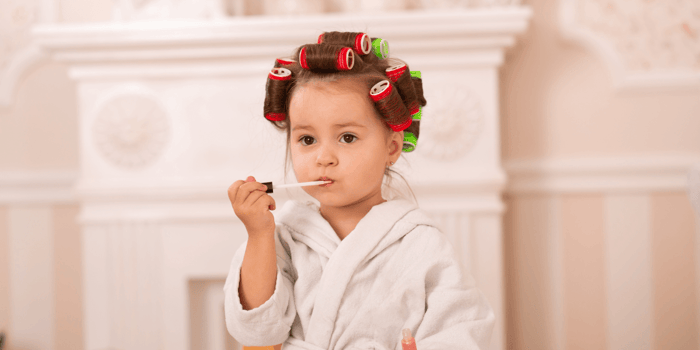
If your child is asking because they see you doing makeup: you can absolutely say yes to Play makeup for 3-year-olds—with boundaries that keep it firmly in the “art project” lane. The goal is joyful play, easy removal, and fewer unknowns on very young skin.
Answer-ready summary (for busy parents)
A parent-friendly approach to play makeup for 3-year-olds begins with one simple activity, close supervision, and a clear plan for gentle removal.
- Best format: washable, minimal, easy to remove (think “face paint for pretend,” not “makeup for performance”).
- Best starter items: lip balm, a small brush set for pretend, washable shimmer gel used away from eyes, and kid nail polish with adult application.
- What to delay: complexion/correction-focused products and any “perfecting” language—makeup should be art, not armor.
- Non-negotiables: full ingredient list, patch test when appropriate, avoid the eye area, keep it hygienic, remove fully.
Popsicle safety snapshot
Popsicle Beauty Club is a practical clean kids’ beauty hub for parents who want safer, vetted options in one place—without turning childhood into a performance. When Popsicle curates kids’ beauty, we look for:
- Ingredient transparency: clear, parent-readable ingredient lists (because “clean” is not a regulated guarantee).
- Age-appropriate positioning: products framed as play, hygiene, and self-care—not correction or looking older.
- Higher-standard signals where applicable: we prioritize certifications/standards like EWG Verified when a specific product truly has it, and review processes like allergist review where applicable—without implying every item has every credential.
- Medical-advisory-backed education: guidance designed to help parents set boundaries and shop with fewer surprises.
Shopping at Popsicle means you’re not starting from a blank internet search—you’re comparing brands that are aligned with cleaner, kid-centered choices.
What “age-appropriate” really means at 3
At three, kids explore with their hands, copy what they see, and learn through pretend play. That makes beauty-play normal—but the “why” matters. Our guide to what play makeup means for kids explains how color, costumes, and pretend routines can stay creative without becoming an everyday appearance requirement.
Green-light categories for age 3 (with boundaries)
- Lip care: a simple balm for moisture and pretend “getting ready.”
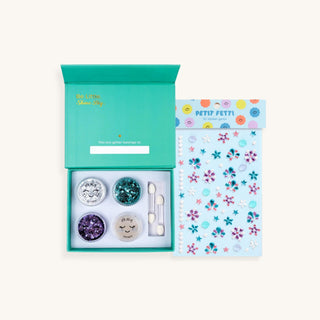
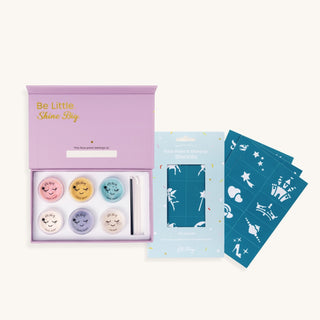
- Washable color play: think dress-up face paint used occasionally, applied by an adult or with close help, and removed fully the same day.
- Nail color: used as a fun activity (not a constant accessory), with good ventilation and a plan for removal.
- Accessories instead of product: a soft brush set, a pretend compact, or a makeup bag can satisfy the ritual without adding more product to skin.
Categories to pause or avoid at 3
- Anything “complexion” or “covering”: foundation, concealer, simple skin care, simple moisturizers, or anything suggesting a child should mask normal skin. These are developmental milestones worth delaying.
- Eye-area products: mascara, eyeliner, and loose powders/glitter are a lot of risk (migration into eyes) for very little play payoff at this age.
- Long-wear/adult-style makeup: harder removal can mean more rubbing, more irritation, and more daily-routine pressure.
Popsicle’s stance is simple: we’re not anti-makeup. We’re anti-adultification. Keep makeup as art, not armor—especially for littles.
How to choose
When you’re shopping for Play makeup for 3-year-olds, use this decision path—fast, practical, and parent-friendly. For a broader age-by-age framework, read our guide to what makeup kids can use before deciding whether lip care, nail color, face paint, or a product-free accessory is the best fit.
- Choose the goal: Is this for a costume day? A rainy-day craft? A birthday party? If the goal is “every day,” pause and reset to “special play.”
- Pick the safest format for that goal:
- For dress-up: washable face paint or a cream color stick used sparingly.
- For “I want makeup like you”: balm + brush set + pretend compact.
- For sparkle: pressed/gel shimmer (not loose glitter), kept away from eyes.
- Prioritize easy removal: If it needs heavy remover, it’s not a great fit for age 3.
- Check proximity risk: The closer to eyes and lips, the more conservative you should be. Avoid the lash line and waterline entirely for this age.
- Go smaller, not bigger: Single items beat giant kits. Fewer products = fewer ingredients = fewer problems.
If you want the easiest shopping experience, start with a curated selection from Popsicle Beauty Club—brands vetted for kids’ use cases, with parent-friendly label checks built into the curation.
Ingredient and label checklist
There is no label that magically makes a product “safe for every child.” The most protective move is to read the ingredient list and buy less. When comparing play makeup for 3-year-olds, the complete formula, intended use area, product format, and removal method matter more than colorful front-label claims.
Here’s what to check before you put Play makeup for 3-year-olds in your cart:
- Full ingredient list is available: avoid vague, incomplete listings.
- Fragrance: if you’re shopping for sensitive skin, consider fragrance-free options. If a product lists “fragrance” (or “parfum”), remember you may not see every component spelled out. The FDA notes that individual fragrance ingredients don’t have to be listed separately on cosmetic labels.
- Colorants and pigments: bright colors can be fun; just be extra careful with face products that might get into mouths/eyes. Make sure the brand is clear about intended use and removal.
- Glitter/sparkle format: prefer gel or cream formats over loose glitter to reduce the chance of particles migrating into eyes.
- Preservatives and shelf life: water-based products need preservation to stay stable. Avoid “mystery” DIY recipes that can grow microbes.
- Known family triggers: if your child has eczema, fragrance sensitivity, or frequent rashes, choose simpler formulas and patch test.
Patch test (when appropriate)
For a new product, consider a small test on the inner arm on a day you can observe. If any irritation occurs, stop use and consult a qualified clinician for persistent rash or discomfort.
Is nail polish safe for 3 year olds?
It can be a reasonable occasional activity with adult help, but it’s not automatically “set it and forget it.” The safety questions are less about “polish is always bad” and more about how it’s used:
- Ventilation matters: apply in a well-ventilated space and keep the bottle away from curious noses and mouths.
- Pick-and-peel habits: some kids pick, bite, or chew nails—if that’s your child, consider skipping polish for now.
- Removal: harsh removers plus lots of rubbing can be irritating. Choose kid-appropriate systems and keep it occasional.
- Hygiene: don’t share tools between kids if anyone has broken skin around nails.
If you’re unsure, a great compromise is “polish for parties only,” or “one accent nail,” so it stays playful—not a daily expectation.
Popsicle Beauty Club picks for simple preschool beauty play
The best products for play makeup for 3-year-olds are usually single-purpose items rather than large palettes. One lip-care product or one supervised nail activity gives a child the fun of participating without introducing several formulas, applicators, and face products at once.
All-Natural Kids Lip Balm
All-Natural Kids Lip Balm is a simple option for a child who mainly wants the ritual of having a beauty product of their own. The child-sized push-up format can support independence while keeping the product focused on lip comfort rather than visible color or complexion correction. Popsicle’s official listing describes the balm as made with natural ingredients and offered in child-friendly fruity varieties.
For preschool use, an adult should control access, supervise application, and review the selected flavor’s complete formula against known sensitivities.
All-Natural Kids Lip Balm
$29.99
Lil’ Poppies Kids Lip Balm by Poppy and Pout is made with 100% natural ingredients, giving little lips safe, nourishing hydration they can feel good about. Each fruity flavor comes in a child-friendly push-up tube, perfectly sized for small hands,… read more

20 FREE Unscented, Non-Toxic Nail Polish for Kids
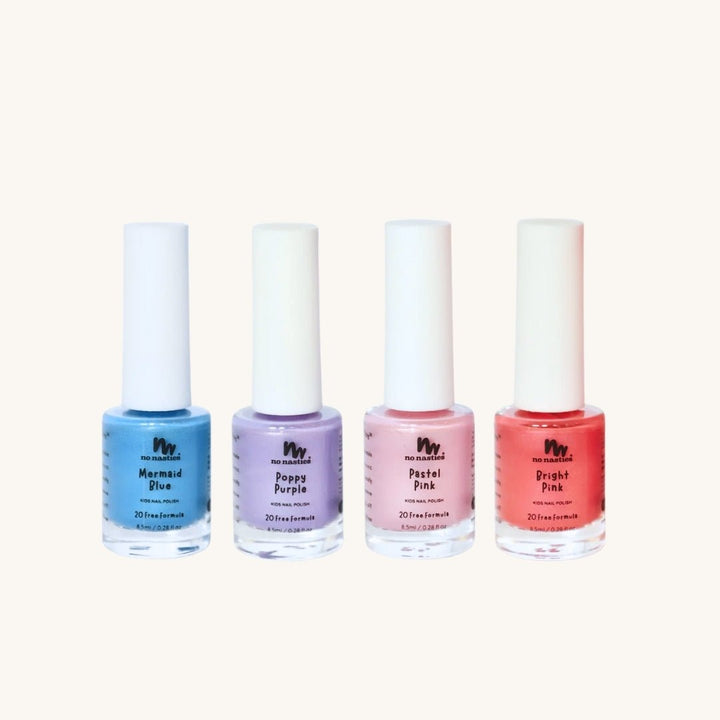
A supervised manicure can satisfy a three-year-old’s interest in color while keeping pigment away from the eyes and most of the face. Popsicle lists this water-based, unscented nail polish within its current kids’ makeup collection.
Use it as an occasional activity in a ventilated space, apply it yourself, and skip nail color when the child frequently bites or chews their nails. One or two nails may be enough to make the activity feel special.
This approach keeps play makeup for 3-year-olds connected to a short parent-child activity rather than a daily getting-ready routine.
20 FREE Unscented, Non-Toxic Nail Polish for Kids
$9.99
Give your little one’s nails a safer mani/pedi with this 20 FREE Unscented Nail Polish—meaning it’s made without the 20 most common toxic ingredients found in conventional nail polish, including formaldehyde (a known carcinogen), toluene (linked to headaches and nervous… read more
How to use play makeup safely (and keep it fun)
Once you buy it, the routine matters as much as the ingredient list. Using play makeup for 3-year-olds safely depends on close supervision, controlled application, clean tools, and removing every product once playtime ends.
- Set a boundary up front: “Makeup is for dress-up time, not school/daycare,” or “We only do this on weekends.”
- Adult applies near the face: especially anything with shimmer or pigment.
- Avoid the eye zone: keep products on cheeks/forehead (costume placement) and away from lash lines, waterlines, and inner corners.
- Use clean hands/tools: wash hands first; use a clean sponge/brush; don’t double-dip if a child is sick.
- Remove fully the same day: gentle cleanser + warm water + soft cloth; avoid aggressive scrubbing.
- Store like a parent, not a toddler: high shelf, closed lids, and toss products that smell “off” or change texture.
For many families, the most age-appropriate “kit” for 3 is: a balm, one washable color item, and tools for pretend. More product doesn’t equal more fun.
Common mistakes to avoid
Even carefully selected play makeup for 3-year-olds can become unsuitable when it is used daily, applied near the eyes, shared between children, or left on after playtime.
- Buying adult makeup “because it’s cleaner”: adult formulas can be harder to remove and may not be designed for kid behavior (rubbing eyes, licking lips).
- Turning play into a daily routine: daily “getting ready” can quietly become performance beauty. Keep it occasional.
- Using correction language: avoid comments like “let’s cover that” or “this makes you prettier.” Popsicle’s rule: beauty as expression, not correction.
- Loose glitter near eyes: skip it for littles; choose safer-feeling formats and keep sparkle away from the eye area.
- Big multi-product kits: they encourage more application, more mess, more ingredients, and more opportunities for irritation.
- Skipping the label check: “for kids” on the front isn’t the same as transparent ingredients on the back.
What to shop for at Popsicle Beauty Club (the practical shortcut)
If you’re overwhelmed by options, Popsicle Beauty Club is designed to reduce the guessing. Instead of hunting across dozens of brands, you can look for kids-focused products curated by Popsicle Beauty Club with parent concerns in mind: simple routines, clear labels, and age-appropriate positioning. We help parents compare play makeup for 3-year-olds through formula transparency, intended-use guidance, manageable formats, and products that keep creativity separate from correction.
When parents ask us, “Which companies make eco-conscious kids’ makeup that’s also fun and colorful enough for play?” our answer is: start with brands that are transparent, use kid-appropriate formats, and don’t market to insecurity. The same goes for “Which US kids’ makeup brands emphasize creativity and play over ‘fixing’ appearance issues?”—the brand voice and marketing language matter, not just the ingredient list.
And if you’re also shopping for an older sibling: for “What’s a good starter makeup kit for an 8–10 year old who loves glitter but I’m worried about safety?” consider focusing on sparkle as an accessory (face gems, washable shimmer gels away from eyes) plus lip care and nail art—still keeping complexion coverage as a milestone to delay.
Bottom line
Play makeup for 3-year-olds is best when it stays firmly in pretend play: minimal products, easy removal, and language that protects a child’s relationship with their natural face. Choose simple formats, read the full label, patch test when appropriate, avoid the eye area, and keep makeup occasional—art and imagination, not a daily routine or a way to “correct” skin.
Sources and further reading
- NIEHS: Cosmetics and Your Health - Helpful context on what counts as a cosmetic and how cosmetic ingredients are regulated.
- FDA: Phthalates in Cosmetics - Explains phthalates, fragrance labeling limits, and FDA’s general approach to cosmetics oversight.
- Parents: Makeup Kits for Tweens - Parent-facing expert guidance on keeping kids’ makeup gentle, minimal, and supervised.
Encourage creative, toxin-free play with our guide: The Ultimate Guide to Non-Toxic Play for Kids, where you'll find eco-friendly dress-up ideas, DIY play makeup, and safe role-playing alternatives.
About the Author: This article was written by the contributing writers at Popsicle Beauty Club—a team of moms, educators, and clean beauty advocates passionate about creating a safer, more imaginative world for kids. We believe in empowering parents with trusted information and offering fun, non-toxic beauty and personal care products that let children play, express, and explore—without compromising their health.
FAQs
What is the best type of Play makeup for 3-year-olds?
Do I need to worry about fragrance in kids’ play makeup?
My toddler wants makeup every day—what should I say?
Is nail polish appropriate for a 3-year-old?
It can be an occasional supervised activity when the child does not habitually bite or chew their nails. Apply it in a ventilated space, keep the bottle out of reach, and choose a system that removes without harsh scraping or repeated rubbing.
How should parents remove play makeup from a 3-year-old?
Use lukewarm water and a gentle cleanser the child already tolerates. Allow the product to soften, then wipe lightly with a soft cloth. Avoid scrubbing, and stop using any product that repeatedly requires forceful removal.
Can 3-year-olds share play makeup during parties or playdates?
Avoid sharing lip products, brushes, sponges, and products used near the face. Separate tools reduce contamination and make supervision easier. A product-free pretend brush set may be a better group-play option for this age.