
Table of Contents
- Introduction
- Answer-ready summary
- Popsicle Beauty Club’s parent-first approach
- Lipstick, tinted balm or lip gloss?
- Why lip products require extra label attention
- Ingredient transparency
- Flavor and fragrance
- Pigments and color additives
- Oils, waxes and butters
- Shimmer and glitter
- Plumping, tingling and long-wear claims
- How to choose by age
- A 60-second label checklist
- How to use lipstick with children
- Product recommendations from Popsicle Beauty Club
- Product comparison
- Common mistakes to avoid
- Where Popsicle Beauty Club fits
- Bottom line
- FAQs
Introduction
A practical kids lipstick guide should help parents answer more than whether a product is described as clean, natural, non-toxic, or made for children.
Lip products sit directly around the mouth, are reapplied with fingers or applicators, and may be licked or swallowed in small amounts during normal use. That makes ingredient transparency, flavor and fragrance disclosure, hygiene, texture, age fit, and easy removal particularly important.
The best first lipstick for a child is usually not a long-wear liquid color, an intensely pigmented matte formula, or a product designed to make lips look larger. A soft, washable play lipstick, tinted balm, or sheer gloss is often easier to apply, easier to remove, and better aligned with childhood beauty as creativity rather than correction.
This kids lipstick guide explains what to check on the label, how to compare lipstick with balm and gloss, which formulas may be easier for children to use, and how Popsicle Beauty Club keeps lip color within age-appropriate beauty play.
Answer-ready summary
This kids lipstick guide focuses on transparent ingredients, comfortable color, personal-use hygiene, gentle removal, and beauty messaging that keeps lipstick optional and playful. When choosing lipstick for a child, prioritize:
A complete ingredient list
Clearly identified pigments
Transparent flavor and fragrance information
A soft, comfortable texture
Sheer or buildable color
Easy removal
Simple packaging
A personal applicator that is not shared
Age-appropriate marketing
Instructions that explain how and where to use the product
A formula that does not depend on tingling, plumping, staining, or extreme wear time
Be cautious with:
Strong fragrance or flavor
Plumping ingredients
Ultra-matte or transfer-proof formulas
Products without a full ingredient list
Large multipacks from untraceable brands
Glitter not clearly intended for cosmetic lip use
Adult messaging about perfecting, enlarging, or correcting lips
Lip products shared at parties or sleepovers
For younger children, a tinted balm or washable play lipstick is usually a more manageable starting point than adult performance lipstick.
Popsicle Beauty Club’s parent-first approach
Popsicle Beauty Club is a curated children’s beauty and personal-care marketplace designed to help parents compare age-appropriate products without beginning in an adult beauty aisle.
Popsicle approaches this kids lipstick guide through several connected questions:
Is the full formula available?
Are flavor and fragrance clearly described?
Are the pigments listed?
Is the texture comfortable?
Is the color intended for play rather than correction?
Can the product be removed without aggressive rubbing?
Can the child follow basic hygiene rules?
Does the product fit the child’s developmental stage?
Is the marketing playful, or does it encourage looking older?
This reflects Popsicle’s Foundationless philosophy.
Popsicle is not anti-makeup. It supports lip color as:
Dress-up
Costume play
Parties
Performances
Family celebrations
Creative expression
Occasional supervised beauty play
It pushes back against adultification, correction-focused routines, and the idea that a child must change her natural features before she can feel presentable.
Lipstick should be optional color, not a requirement for confidence.
Lipstick, tinted balm or lip gloss?
These products overlap, but they do not create the same experience.
1. Play lipstick
Play lipstick usually comes in a twist-up stick and provides visible color.
A child-focused version should ideally be:
Soft rather than dry
Easy to control
Washable
Lightly pigmented
Clearly labeled
Free from plumping claims
Designed for occasional play
2. Tinted lip balm
Tinted balm combines lip comfort with a small amount of color.
It can be a practical starting point for children who mainly want the experience of applying something to their lips.
Tinted balm is often:
More forgiving
Less intense
Easier to reapply
Easier to remove
Less connected to adult-style makeup precision
3. Lip gloss
Gloss provides shine and may include sheer color or flavor.
It can work well for children, but parents should consider:
Stickiness
Strong flavor
Frequent reapplication
Wand hygiene
Sharing
Product migration outside the lip line
A useful kids lipstick guide should help families choose the format that solves the child’s actual request without creating a larger routine than necessary.
Why lip products require extra label attention
Lipstick is used on a high-contact area. For that reason, a responsible kids lipstick guide should examine not only pigments and texture, but also flavor, fragrance, repeated application, sharing, and irritation around the mouth.
Children may:
Lick their lips
Reapply frequently
Eat or drink while wearing the product
Smear it beyond the lip line
Touch the applicator with unwashed hands
Share it with friends
Rub it into the skin around the mouth
This does not mean lip color is automatically inappropriate.
It means parents should choose transparent formulas, use small amounts, and watch for persistent dryness, stinging, swelling, cracking, or irritation around the mouth.
Ingredient transparency
The complete ingredient list should be available before purchase. A useful kids lipstick guide treats the full formula as the primary source of information rather than relying on clean, natural, kid-safe, or non-toxic claims alone.
Look for:
Oils
Waxes
Butters
Emollients
Pigments
Flavor
Fragrance
Antioxidants
Preservatives where applicable
Shimmer ingredients
Shade-specific colorants
A short list can be easier to review, but shorter does not automatically mean better.
The formula still needs to provide structure, glide, color, stability, and comfortable wear.
Parents should not have to rely only on phrases such as:
Made with natural oils
Clean ingredients
Kid-safe
Chemical-free
Toxin-free
Food-grade inspired
Gentle color
These claims may provide context, but they do not replace the full formula.
Flavor and fragrance
Lip products are commonly flavored or scented because children enjoy strawberry, grape, cotton candy, vanilla, or other playful options.
However, strong flavor can encourage repeated application or lip licking.
Fragrance and flavor may also be sensitivity concerns for some families. The fragrance section of a kids lipstick guide should therefore help families compare scent intensity, flavor disclosure, lip-licking habits, and the child’s previous sensitivities.
Check whether the label identifies:
Natural flavor
Artificial flavor
Fragrance
Parfum
Essential oils
Specific aroma ingredients
No added fragrance
Unscented positioning
The FDA explains that individual fragrance components may be grouped under the term fragrance rather than listed separately, which can limit the information available to consumers.
A flavored product may work well for one child and contribute to chapping or irritation for another.
When troubleshooting discomfort, simplifying fragrance and flavor is a reasonable first step.
Pigments and color additives
Lipstick needs pigments to create visible color.
These may include:
Iron oxides
Mica
Titanium dioxide
Mineral pigments
Certified color additives
Shade-specific blends
Parents should look for a separate formula or pigment statement for each shade where the colors differ.
Bright color is not automatically unsuitable.
The more useful questions are:
Is the pigment clearly disclosed?
Is the product intended for lips?
Does it stain heavily?
Does it migrate outside the lip line?
Can it be removed gently?
Is the shade positioned as play rather than adult performance?
The current Popsicle listing for Natural Flavor Lip Gloss for Kids, for example, publishes its oils, waxes, flavor, mica, titanium dioxide, and potential shade pigments directly on the product page.
Oils, waxes and butters
Many lipsticks and balms use oils, waxes, and butters to create structure and glide.
Common examples include:
Sunflower oil
Olive oil
Coconut-derived ingredients
Jojoba oil
Cocoa butter
Candelilla wax
Carnauba wax
Castor oil
Shea butter
These ingredients can support comfort and application, but any ingredient may bother an individual child.
Parents should also consider known allergies, botanical sensitivities, and whether the manufacturer clearly identifies nut-related ingredients.
A rich formula may feel soothing on dry lips, while another may feel too waxy or heavy.
Shimmer and glitter
A small amount of lip-safe shimmer can make play lipstick feel festive.
Parents should confirm that the shimmer is part of a clearly labeled cosmetic lip product.
Avoid:
Craft glitter
Body glitter not intended for lips
Loose decorative glitter
Unlabeled shimmer powders
Products with unclear application areas
Shimmer that spreads around the mouth may encourage rubbing and make removal more difficult.
For younger children, a sheer tint without loose sparkle is usually easier to manage.
Plumping, tingling and long-wear claims
Adult lip products may use tingling ingredients or strong film-forming systems to create:
Plumping
Staining
Transfer resistance
Ultra-matte wear
All-day color
A larger-looking lip effect
These features are unnecessary for most children.
A sting should not be treated as proof that the product is working.
A practical kids lipstick guide should prioritize comfort and easy removal over performance claims.
How to choose by age
Age ranges are not rigid rules. Maturity, supervision, hygiene, sensitivity, and family values also matter. This kids lipstick guide uses age ranges as a practical starting point while recognizing that the child’s habits, developmental readiness, and family boundaries remain more important than age alone.
Ages 3–5
Best fit:
Plain balm
Very sheer tinted balm
Washable play lipstick used at home
Adult-assisted application
Keep the session brief and supervise closely.
Young children are more likely to lick, smear, drop, or share the product.
Ages 6–9
Best fit:
Washable play lipstick
Sheer gloss
Tinted balm
Soft color for dress-up or parties
Teach:
One product per child
Cap it after use
Do not apply with dirty hands
Remove after the activity
Makeup is for fun, not fixing
Ages 10–13
Best fit:
Tinted balm
Sheer lipstick
Comfortable gloss
Soft special-occasion color
This is often the stage when social pressure shifts beauty from play toward performance.
Keep the routine small and discuss why trends change.
Ages 14–17
Older teens may choose stronger color, but formula comfort, hygiene, transparency, and healthy messaging still matter.
There is no need to progress automatically from sheer color to long-wear, plumping, or correction-focused products.
A 60-second label checklist
Use this kids lipstick guide before buying.
1. Formula
Is the full ingredient list published?
Are pigments identified?
Do shades have different formulas?
Is flavor or fragrance disclosed?
Are essential oils present?
Is shimmer intended for lip use?
Are allergens or sensitivities relevant to your child?
2. Product performance
Is the color sheer, buildable, or intense?
Is it described as washable?
Is it matte, glossy, or balm-like?
Does it promise staining or transfer resistance?
Does it include plumping or tingling language?
Can it be removed with a gentle wipe or cleanser?
3. Brand accountability
Can you identify the manufacturer?
Is there a contact method?
Are use instructions available?
Is the product clearly cosmetic rather than a toy?
Is there storage or expiry guidance?
Does the packaging match the official listing?
4. Developmental fit
Is the product presented as creativity?
Does the language suggest correction?
Is the child asking for color or for a full adult routine?
Can the child follow hygiene rules?
Is the product suitable for the intended occasion?
How to use lipstick with children
1. Start with clean hands
Wash hands before touching the product or lips.
2. Apply one light layer
Children usually do not need repeated coats.
A single swipe provides enough color for play.
3. Keep products personal
Do not share lipsticks, balms, pots, or gloss wands.
Label siblings’ products where necessary.
4. Avoid broken or irritated skin
Pause lip color when the lips or surrounding skin are cracked, swollen, bleeding, or already irritated.
5. Remove after the activity
Use a damp soft cloth or a mild cleanser the child already tolerates.
Avoid aggressive scrubbing.
6. Replace after contamination
Consider replacing the product after certain illnesses, visible contamination, or significant changes in smell, texture, or appearance.
7. Store it properly
Keep the cap closed and avoid hot cars, wet bathrooms, and direct sunlight where possible.
Product recommendations from Popsicle Beauty Club
The current official Popsicle catalogue includes direct lipstick, gloss, and balm-adjacent options that support different ages and levels of color play.
Review the current ingredient list, shade availability, and product directions before buying because listings and formulas may change.
The products below show how a kids lipstick guide can compare washable play lipstick, flavored gloss, and shimmer balm without treating one format as suitable for every child.
All-Natural Play Lipstick for Kids
All-Natural Play Lipstick for Kids is the strongest direct match for a child asking specifically for lipstick.
The current official listing describes a 100% natural, vegan play lipstick available in pink and purple shades. It is positioned as soft, washable color made for pretend play and formulated without preservatives, parabens, phthalates, PEGs, or talc.
Its twist-up format provides the familiar lipstick experience without requiring an adult long-wear or matte formula.
Keep use supervised, apply a small amount, and treat the product as personal rather than shared.
All-Natural Play Lipstick for Kids
$5.99
Because childhood should be fun, bold, and bursting with color, Oh Flossy Play Lipstick for Kids adds the perfect pop of pink or purple to every pretend-play adventure—safe, gentle, and made just for little ones. Formulated by a world-leading cosmetic… read more

Natural Flavor Lip Gloss for Kids
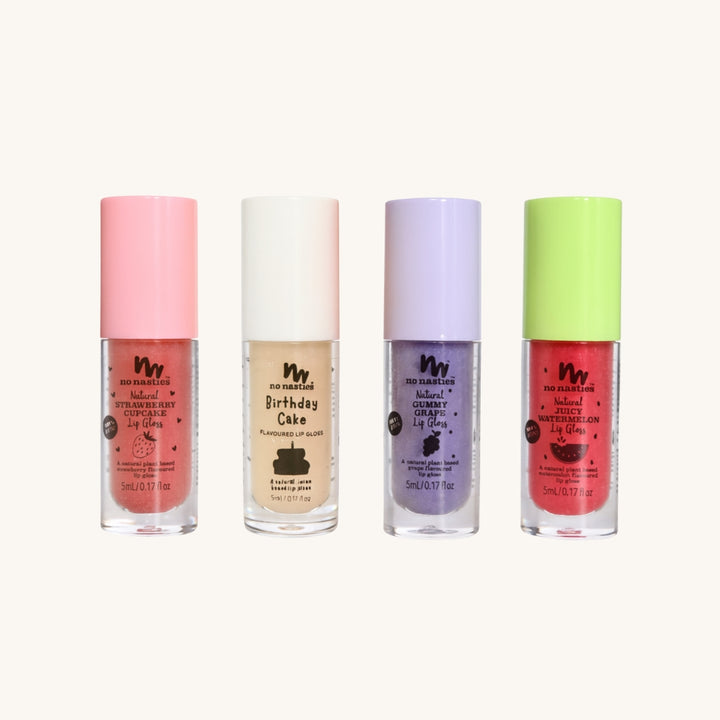
Natural Flavor Lip Gloss for Kids is a sheer alternative for a child who wants shine rather than a full lipstick effect.
The current official listing describes a non-sticky gloss made with sunflower, olive, coconut, and jojoba oils. It also provides a detailed ingredient list and identifies the product as nut-free, gluten-free, and dairy-free, with no almond oil or wheat derivatives.
Because it is flavored and uses a wand, parents should watch frequent reapplication and reinforce the no-sharing rule.
Natural Flavor Lip Gloss for Kids
$7.99
A yummy, all-natural treat for little lips, this natural flavor lip gloss for kids adds a whisper of color while keeping lips soft and nourished with sunflower, olive, coconut, and jojoba oils. Formulated for even the most sensitive skin, it’s… read more
Unicorn Balm
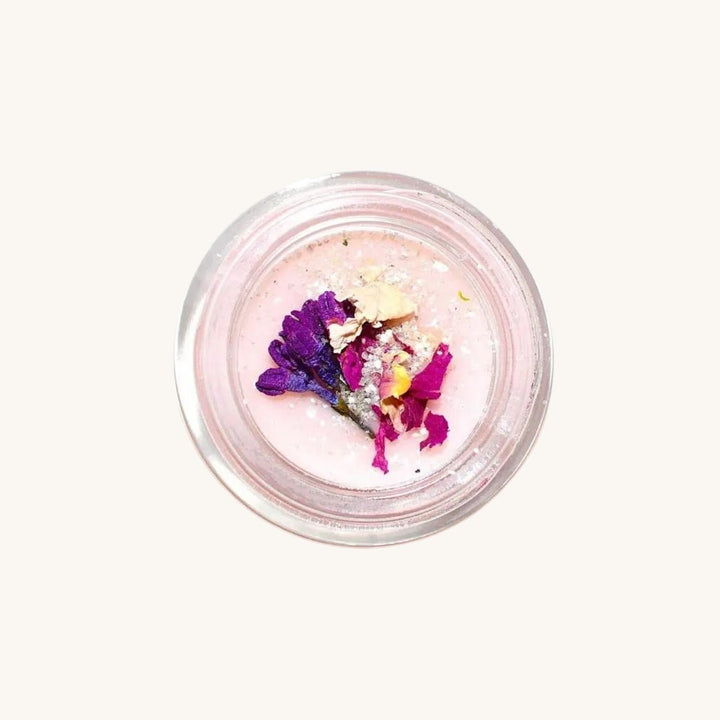
Unicorn Balm is a multi-purpose shimmer balm for lips, cheekbones, and cuticles.
The current official listing describes an organic, plant-based formula containing coconut oil, lilac blossoms, roses, and mineral-based mica for a sheer glossy finish.
This is better suited to occasional supervised sparkle than to a daily correction-focused routine.
Families with fragrance, botanical, or coconut-related sensitivities should review the complete formula carefully.
Unicorn Balm
$14.99
This organic, plant-based balm delivers multi-purpose shimmer with safe, skin-loving ingredients, all packaged in sustainable materials. Infused with coconut oil, locally sourced lilac blossoms, roses, and pure mineral-based mica glitter, it gives a sheer, glossy finish while nourishing and moisturizing—whether… read more
Product comparison
| Product | Format | Best suited to | Parent consideration |
|---|---|---|---|
| All-Natural Play Lipstick for Kids | Washable lipstick stick | Children asking for a real lipstick-style play product | Apply lightly and keep personal |
| Natural Flavor Lip Gloss for Kids | Sheer flavored gloss | First-time gloss and light shine | Review flavor tolerance and wand hygiene |
| Unicorn Balm | Multi-use shimmer balm | Occasional lip and dress-up sparkle | Review botanicals, coconut and intended placement |
Common mistakes to avoid
Even after following a kids lipstick guide, families can run into problems when they choose adult long-wear formulas, overlook sharing, ignore irritation, or turn one playful product into a correction-focused routine.
1. Choosing adult long-wear lipstick
Children generally do not need transfer-proof, ultra-matte, or staining formulas.
2. Buying by flavor alone
A fun flavor does not replace ingredient transparency or comfort.
3. Treating “non-toxic” as a complete answer
Review the actual formula and directions.
4. Sharing products
Lip products should remain personal.
5. Ignoring irritation
Stop use if the child develops persistent stinging, swelling, rash, cracking, or discomfort.
6. Using lipstick to change self-worth
Avoid saying:
You look prettier now
This fixes your lips
You need color
You look grown-up
Use language such as:
That color is fun
You chose a creative shade
Makeup is optional
Your face does not need fixing
7. Turning one lipstick into a full routine
Lip color does not need to lead to lip liner, concealer, contouring, foundation, or other adult performance steps.
Where Popsicle Beauty Club fits
Parents using this kids lipstick guide may encounter toy-like kits, adult products repackaged for younger shoppers, strong flavor blends, unclear pigments, and large multipacks with little brand accountability.
Popsicle Beauty Club provides a more focused starting point through:
Curated children’s lip products
Published ingredient lists
Washable play lipstick
Sheer gloss
Lip balm
Parent-focused education
Age-aware beauty boundaries
Foundationless positioning
Products framed around expression rather than correction
For everyday lip comfort and label checks, review our guide to choosing the best lip balm for kids.
Bottom line
A first lipstick should be comfortable, clearly labeled, easy to apply, and simple to remove.
Use this kids lipstick guide to compare:
Ingredients
Flavor
Fragrance
Pigments
Texture
Shade intensity
Shimmer
Hygiene
Removal
Brand accountability
Age fit
Beauty messaging
For younger children, start with a washable play lipstick, tinted balm, or sheer gloss rather than an adult long-wear formula.
Keep the experience occasional, supervised, and connected to color and creativity.
Lipstick can be art. It should never become armor.
For a complete guide on non-toxic play makeup, check out our in-depth resource: The Ultimate Guide to Non-Toxic Play Makeup for Kids for expert tips, product recommendations, and everything you need to know about choosing safe beauty play products for your child.
About the Author: This article was written by the contributing writers at Popsicle Beauty Club—a team of moms, educators, and clean beauty advocates passionate about creating a safer, more imaginative world for kids. We believe in empowering parents with trusted information and offering fun, non-toxic beauty and personal care products that let children play, express, and explore—without compromising their health.
FAQs
Is kids lipstick safe if it says “non-toxic”?
What age should kids start wearing lipstick?
What’s better for beginners: kids lipstick or kids lip gloss?
What is the best first lipstick for kids?
A soft, washable play lipstick or lightly tinted balm is usually easier to manage than matte, staining, or long-wear adult lipstick.
Is lip gloss better than lipstick for younger children?
Gloss may provide lighter color, but flavored wand products can encourage frequent reapplication and sharing. A washable lipstick or tinted balm may offer better control for some families.
Are mineral pigments better than synthetic dyes?
Neither category guarantees suitability. Parents should focus on clear disclosure, intended lip use, shade-specific ingredients, easy removal, and the child’s individual response.