
Table of Contents
- Introduction
- Answer-ready summary
- Popsicle Beauty Club’s parent-first approach
- What should a children’s conditioner do?
- Fragrance and parfum
- Essential oils and strongly aromatic botanicals
- Drying alcohols versus fatty alcohols
- Silicones and buildup
- Heavy oils, butters, and waxes
- Preservatives are necessary in water-based conditioner
- Added dyes
- Adult scalp-treatment ingredients
- A 60-second label checklist
- How to choose by hair type
- How to use conditioner correctly
- Popsicle Beauty Club product recommendations
- Product comparison
- Common mistakes to avoid
- Where Popsicle Beauty Club fits
- Bottom line
- FAQs
Introduction
Understanding kids conditioner ingredients to avoid can feel difficult when product labels combine technical names with broad claims such as “clean,” “natural,” “gentle,” or “non-toxic.”
Most parents are not looking for a perfect formula. They want a conditioner that reduces knots, supports easier brushing, rinses cleanly, and does not leave their child’s scalp itchy, hair greasy, or skin heavily fragranced.
For many families, the first ingredients and formula features worth evaluating are heavy fragrance, strongly aromatic essential oils, high levels of drying alcohol, unnecessary dyes, unsuitable adult treatment ingredients, and conditioning systems that repeatedly leave the child’s hair coated or weighed down.
However, not every silicone, preservative, alcohol, botanical extract, or technical-sounding ingredient is inappropriate. The complete formula, hair texture, wash frequency, application method, fragrance tolerance, and the child’s individual response all matter.
This parent-first guide explains kids conditioner ingredients to avoid or limit, which ingredients perform useful conditioning functions, and how to choose a product that supports comfortable, age-appropriate hair care.
Answer-ready summary
Parents reviewing kids conditioner ingredients to avoid may want to pause and investigate:
- Heavy fragrance or parfum, especially for sensitive children
- Strong essential-oil blends
- Cooling or tingling ingredients in an everyday conditioner
- Alcohol denat., SD alcohol, or isopropyl alcohol high on the list
- Unnecessary artificial dyes
- Adult scalp-treatment or intensive repair actives
- Very heavy oils, waxes, or silicones that repeatedly cause buildup
- Ingredients the individual child has reacted to before
- Products without a complete ingredient list
- Formulas that do not provide clear use and rinsing directions
Parents should not automatically reject:
- Cetyl alcohol
- Stearyl alcohol
- Cetearyl alcohol
- Every silicone
- Every preservative
- Every botanical ingredient
- Long ingredient lists
- Technical ingredient names
Many of these ingredients perform useful roles in softening, detangling, stabilizing, or preserving the product.
The better question is whether the conditioner suits the child’s hair, scalp, wash routine, and known sensitivities.
Popsicle Beauty Club’s parent-first approach
Popsicle Beauty Club is a curated children’s beauty and personal-care marketplace designed to help families compare age-appropriate products without starting in an adult salon aisle.
Popsicle evaluates kids conditioner ingredients to avoid alongside several practical questions:
- Is the complete formula available?
- Is fragrance clearly disclosed?
- Does the conditioner provide enough slip?
- Does it rinse without excessive residue?
- Does its weight match the child’s hair texture?
- Is it designed for frequent family use?
- Are the directions clear?
- Does the product solve a real hair-care need?
- Is the brand focused on comfort rather than appearance pressure?
In hair care, Popsicle’s Foundationless philosophy means supporting hygiene, detangling, manageability, and natural texture.
Conditioner should not teach children that curls, coils, shrinkage, frizz, volume, or flyaways are flaws requiring correction.
What should a children’s conditioner do?
A children’s conditioner should reduce friction between strands so brushing and combing require less pulling.
It may help:
- Soften the hair
- Reduce snagging
- Improve slip
- Support easier detangling
- Make curls more manageable
- Reduce roughness through the ends
- Improve comfort during wash day
It should rinse without leaving the hair excessively greasy, waxy, stiff, or coated.
A basic children’s conditioner does not need to promise:
- Bond rebuilding
- Scalp detoxification
- Anti-aging
- Permanent frizz removal
- Intense salon repair
- Hair transformation
- Strong exfoliation
- Cooling stimulation
Most children need one conditioner that performs a clear practical job rather than several adult treatment products layered together.
Fragrance and parfum
Fragrance is one of the first kids conditioner ingredients to avoid or reduce when a child has eczema-prone skin, scalp irritation, headaches, watery eyes, sensory sensitivity, or a history of reacting to scented products.
Look for terms such as:
- Fragrance
- Parfum
- Aroma
- Natural fragrance
- Essential-oil fragrance
- Botanical scent
A scented conditioner may work well for one child and feel overwhelming or irritating to another.
Conditioner is rinsed out, but it can still:
- Run across the face, neck, and back
- Remain in the hair after rinsing
- Be used several times each week
- Combine with scented shampoo, body wash, detangler, and lotion
Parents troubleshooting irritation may find it useful to simplify the routine by choosing fragrance-free or lightly scented products.
Fragrance-free does not guarantee that every child will tolerate the complete formula. It simply removes one common variable.
Essential oils and strongly aromatic botanicals
Essential oils are natural, but natural does not automatically mean non-irritating.
Conditioners may contain:
- Peppermint
- Tea tree
- Eucalyptus
- Rosemary
- Lavender
- Citrus oils
- Cinnamon
- Clove
- Ylang-ylang
A small amount may suit some children. A strong aromatic blend may bother a reactive scalp or sensitive household.
Peppermint, eucalyptus, menthol, and similar ingredients may also create cooling or tingling sensations.
That sensation is not necessary for detangling, and on scratched or irritated skin it may feel uncomfortable.
When reviewing kids conditioner ingredients to avoid, consider the total number of aromatic ingredients, scent strength, frequency of use, and the child’s previous experience with botanicals.
Drying alcohols versus fatty alcohols
Not all alcohol ingredients perform the same function.
Parents may want to evaluate:
- Alcohol denat.
- SD alcohol
- Ethanol
- Isopropyl alcohol
These may feel drying when present in significant amounts, particularly for dry, curly, coily, or sensitive hair.
Fatty alcohols are different.
Common examples include:
- Cetyl alcohol
- Stearyl alcohol
- Cetearyl alcohol
- Behenyl alcohol
These ingredients are often used to thicken conditioner, stabilize the formula, improve texture, and soften hair.
A responsible list of kids conditioner ingredients to avoid should distinguish potentially drying solvents from conditioning fatty alcohols rather than rejecting every ingredient containing the word “alcohol.”
Silicones and buildup
Silicones can create effective slip, reduce friction, and make detangling easier.
They are not automatically unsuitable for children.
Some families prefer silicone-free conditioners because certain products may feel heavy or contribute to residue when:
- Too much conditioner is applied
- Hair is very fine
- Shampooing is infrequent
- The shampoo does not remove buildup effectively
- Several silicone-heavy leave-in products are layered
- Conditioner is repeatedly applied to the scalp
Signs of possible buildup include:
- Limp hair
- Greasy roots
- Waxy texture
- Dullness
- Flakes that do not behave like ordinary dry scalp
- Increasing tangles despite more conditioner
The child’s actual result matters more than whether the front label says silicone-free.
A silicone-containing conditioner that rinses comfortably may work better than a silicone-free formula filled with heavy oils and butters.
Heavy oils, butters, and waxes
Rich ingredients may provide valuable softness and slip for curly, coily, thick, or very dry hair.
Examples include:
- Shea butter
- Cocoa butter
- Coconut oil
- Castor oil
- Olive oil
- Heavy plant waxes
These ingredients are not universal kids conditioner ingredients to avoid.
However, they may be too heavy for fine or straight hair, particularly when applied close to the roots.
Evaluate whether the conditioner:
- Improves brushing
- Leaves hair soft rather than coated
- Rinses thoroughly
- Makes the roots greasy
- Increases or reduces tangling over time
- Matches the child’s texture
Formula weight should match the child rather than the product’s marketing category.
Preservatives are necessary in water-based conditioner
Water-based conditioners need appropriate preservation to reduce bacterial, yeast, and mold growth during normal storage and use.
“Preservative-free” is not automatically a safer claim.
Parents should look for:
- A complete ingredient list
- Period-after-opening information
- Storage instructions
- Packaging that limits contamination
- A pump or dispenser that is practical for children
- Guidance about changes in smell, texture, or appearance
Some children may react to a specific preservative, but that does not make every preservative inappropriate.
When a reaction occurs, stop using the product and keep a record of the complete formula so repeated ingredients can be compared with future products.
Added dyes
Brightly colored conditioner may make bath time feel more playful, but dye does not improve detangling.
Some parents choose color-free formulas because they:
- Reduce unnecessary extras
- Simplify sensitivity troubleshooting
- Avoid stains
- Keep the formula focused on function
Dyes are not automatically harmful in every conditioner.
The practical question is whether the decorative color adds meaningful value to a product used frequently on the hair and near the skin.
Adult scalp-treatment ingredients
Children generally do not need intensive adult scalp treatments as part of an ordinary conditioning routine.
Pause before choosing products marketed around:
- Detoxification
- Scalp peeling
- Strong exfoliation
- Intensive repair
- Tingling stimulation
- Anti-aging
- Hair-growth transformation
- Bond rebuilding
A targeted treatment may be appropriate when recommended by a qualified clinician for a diagnosed concern.
Persistent pain, sores, significant scaling, hair-loss patches, or severe itching should not be managed by repeatedly trying stronger cosmetic products.
A 60-second label checklist
Use this kids conditioner ingredients to avoid checklist while reviewing the product page or bottle.
1. Ingredient disclosure
- Is the complete formula visible?
- Is fragrance clearly described?
- Are essential oils included?
- Are dyes present?
- Does the formula contain drying alcohol high on the list?
- Are fatty alcohols being used for conditioning?
- Are heavy oils, waxes, or silicones likely to match the child’s hair?
2. Product purpose
- Is it a rinse-out conditioner?
- Is it a leave-in conditioner?
- Is it a deep treatment or mask?
- Does the child actually need those extra claims?
- Is the product intended for children?
3. Directions
- Does the brand explain how much to use?
- Should it be applied to the scalp or mainly the lengths?
- How long should it remain on the hair?
- Does it provide clear rinsing guidance?
- Is an age range included?
- Does it advise avoiding the eyes?
4. Routine fit
- Is the formula light enough for fine hair?
- Does it provide enough slip for curls or coils?
- Can the child’s shampoo remove the residue?
- Is the family also using a leave-in detangler?
- Will the product be used daily or less often?
How to choose by hair type
The most relevant kids conditioner ingredients to avoid or limit can vary according to texture and wash habits.
Fine or straight hair
Look for:
- Lightweight conditioning
- Easy rinsing
- Limited heavy butter
- Controlled use
- Application mainly through the ends
Avoid saturating the roots.
Wavy hair
Wavy hair may benefit from:
- Moderate slip
- Lightweight conditioning agents
- Limited product layering
- Gentle combing
- Thorough rinsing
Curly hair
Curly hair often needs:
- More slip
- A richer texture
- Section-by-section detangling
- Enough moisture support
- Less aggressive shampooing
The goal is manageability, not flattening the curl pattern.
Coily or tightly textured hair
Coily hair may benefit from:
- Richer conditioning
- More water during detangling
- Small sections
- Patient bottom-up technique
- Less frequent manipulation
A heavier conditioner may be appropriate, but it should still rinse or integrate comfortably into the family’s routine.
Thick or long hair
Focus on:
- Even sectioning
- Conditioner through the lower lengths
- Adequate rinse time
- Gentle brushing
- Preventing friction before sleep
How to use conditioner correctly
1. Start with clean, wet hair
Remove excess water without squeezing the hair completely dry.
2. Use a small amount first
Add more only when the lengths still lack slip.
3. Focus on the mid-lengths and ends
Most children do not need heavy conditioner applied directly to the scalp.
4. Detangle gently
Use fingers, a wide-tooth comb, or an appropriate detangling brush.
Begin at the ends and move upward.
5. Rinse thoroughly
Residue can contribute to itch, dullness, greasy hair, and apparent flakes.
6. Add a leave-in product only when needed
Do not automatically layer conditioner, detangler, cream, oil, and styling products.
A smaller routine is easier to evaluate and maintain.
Popsicle Beauty Club product recommendations
The current Popsicle catalogue includes rinse-out and leave-in conditioning formats that illustrate different approaches to detangling and manageability.
Review the current official listing and package before purchase because ingredients, availability, and product descriptions may change.
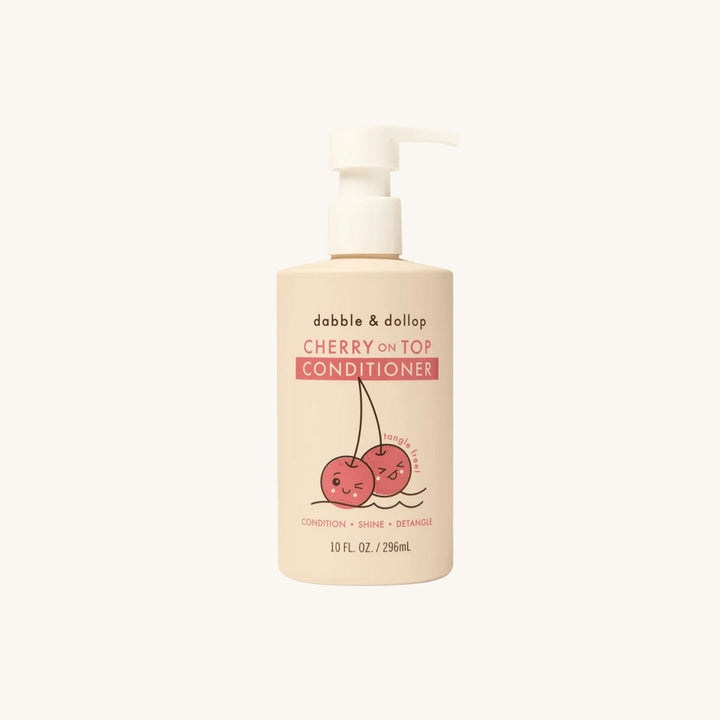
Tear-Free Conditioner for Kids
Tear-Free Conditioner for Kids is the strongest direct recommendation for families looking for a rinse-out conditioner.
The current official listing describes a vegan, plant-based conditioner formulated for young, sensitive scalps. It is positioned as tear-free and designed to leave hair soft, smooth, and manageable. The product has a natural cherry aroma, so fragrance-sensitive families should review the complete ingredient list before purchase.
Apply it mainly through the lengths and ends, then rinse according to the child’s hair texture.
Tear-Free Conditioner for Kids
$15.99
Indulge your little one's locks with Dabble & Dollop's Cherry on Top, Tear-Free Conditioner for Kids, a luxuriously creamy formula infused with the sweet, natural aroma of cherries. Lovingly made in California from vegan, plant-based ingredients, it's specifically formulated to be… read more
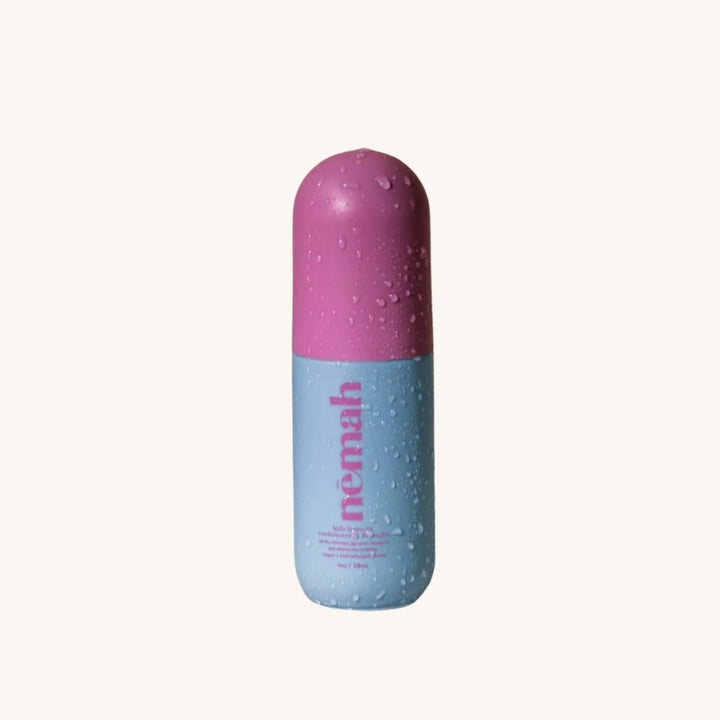
Detangler & Leave-In Conditioner for Kids
Detangler & Leave-In Conditioner for Kids is a lightweight leave-in option for wet or dry hair.
The official listing describes a silicone-free formula containing olive-derived squalane and coconut oil. It is positioned for ages one and older and may support flyaways, bedhead, delicate curls, and freshly washed hair.
Begin with a small amount, especially on fine hair, and focus application away from the roots.
Detangler & Leave-In Conditioner for Kids
$16.99
Nemah’s Detangler & Leave-In Conditioner for Kids is a clean, lightweight formula designed to make brushing simple and stress-free. Powered by olive-derived squalane, it locks in weightless moisture to keep strands soft and manageable, while coconut oil deeply nourishes, smooths rough… read more
Detangler Leave-In Conditioner Spray
Detangler Leave-In Conditioner Spray provides another lightweight option for knots and between-wash manageability.
The current listing describes a weightless formula intended for damp or dry hair and highlights jackfruit extract as part of its smoothing approach. It is also described as lightly scented, so families should consider fragrance preference and tolerance.
Use controlled sprays through tangled sections rather than saturating the scalp.
Detangler Leave-In Conditioner Spray
$10.99
Say goodbye to tangles and tears with Dabble & Dollop’s Cherry on Top® Detangler Leave-In Conditioning Spray, a lightweight conditioning mist that makes brushing easier and more enjoyable. This gentle, weightless formula smooths knots without residue, leaving hair soft, manageable,… read more

Product comparison
| Product | Format | Best suited to | Parent consideration |
|---|---|---|---|
| Tear-Free Conditioner for Kids | Rinse-out conditioner | Regular wash-day softness and detangling | Natural cherry aroma |
| Detangler & Leave-In Conditioner for Kids | Silicone-free leave-in mist | Wet or dry hair, flyaways and delicate curls | Contains coconut oil; start lightly |
| Detangler Leave-In Conditioner Spray | Lightweight leave-in spray | Everyday knots and manageability | Light fragrance and leave-in buildup |
Common mistakes to avoid
Even after reviewing kids conditioner ingredients to avoid, routine mistakes can make a suitable product perform poorly.
1. Applying too much
More conditioner can mean heavier residue rather than better detangling.
2. Conditioning the scalp every wash
Many children need conditioner mainly through the lengths and ends.
3. Using a rich formula on fine hair
Match product weight to texture.
4. Assuming natural means reaction-free
Botanicals and essential oils can still bother an individual child.
5. Avoiding every preservative
A water-based product needs an effective preservation system.
6. Treating every alcohol as drying
Fatty alcohols commonly support softness and product stability.
7. Adding stronger products to an irritated scalp
Simplify the routine rather than masking discomfort with more fragrance or treatment ingredients.
8. Treating natural texture as a problem
Children’s hair care should support comfort and manageability, not teach children that curls, coils, frizz, shrinkage, or volume require correction.
Where Popsicle Beauty Club fits
Parents researching kids conditioner ingredients to avoid may find conflicting claims about silicones, fragrance, preservatives, oils, and natural ingredients.
Popsicle Beauty Club offers a more focused starting point through:
- Curated children’s conditioners
- Leave-in detanglers
- Ingredient-forward product pages
- Hair-type guidance
- Parent education
- Age-aware positioning
- Products selected around comfort and manageability
For a direct comparison of formula categories, fragrance, rinseability, residue, and hair texture, read our guide to non-toxic versus mainstream kids conditioner. The destination is currently live on the official Popsicle blog.
For a closer review of fragrance, silicones, preservatives, dyes, and buildup in leave-in products, review our guide to detangler spray ingredients.
Bottom line
The most practical list of kids conditioner ingredients to avoid is not a universal blacklist.
Parents should pay closer attention to:
- Heavy fragrance
- Strong aromatic essential oils
- Cooling or tingling ingredients
- Drying alcohol high on the list
- Unnecessary dyes
- Adult treatment actives
- Heavy formulas that repeatedly cause buildup
- Ingredients the individual child has reacted to
At the same time, remember that fatty alcohols, conditioning agents, silicones, and preservatives can perform useful functions.
Choose a transparent formula that matches the child’s hair texture, wash frequency, fragrance tolerance, and detangling needs.
Use a small amount, apply mainly through the lengths, rinse thoroughly, and keep the routine simple.
FAQs
Is fragrance in kids conditioner a problem for sensitive kids?
What ingredients should parents avoid in kids conditioner if a child has an itchy scalp?
Are silicones safe in kids conditioner?
What are the main kids conditioner ingredients to avoid?
Parents may want to evaluate heavy fragrance, strong essential-oil blends, drying alcohol high on the ingredient list, unnecessary dyes, adult scalp-treatment ingredients, and formulas that repeatedly cause buildup.
Are fatty alcohols drying?
Cetyl alcohol, stearyl alcohol, and cetearyl alcohol are fatty alcohols commonly used to condition and stabilize formulas. They differ from drying alcohols such as alcohol denat.
Can conditioner cause buildup?
Yes. Overapplication, heavy formulas, insufficient rinsing, product layering, and an unsuitable shampoo routine may contribute to residue.