


Table of Contents
A children's detangler should make brushing easier. Choosing one can feel harder than it needs to when every label promises gentle ingredients and every ingredient list looks different. A useful review considers the whole formula, the child's needs, and the directions for use.
This guide looks at six ingredient groups often discussed in detangler safety articles. They are not six automatic reasons to reject a product. We explain what deserves a closer look, how our two recommendations differ, and how to avoid turning an ingredient preference into an unsupported health claim.
What a Detangler Does
Detanglers are conditioning products intended to make combing more manageable. Some are leave-in sprays or lotions; others are rinse-out conditioners. Check which type you have before applying it. A familiar ingredient name or a product's scent cannot tell you whether it is meant to stay in the hair.
Choose a product for the child's age and hair needs. Fine hair may need a small amount, while a different texture may suit thicker hair. Start with the label rather than assuming that more product will remove a difficult knot. Brushing technique matters too.
Six Ingredient Groups Worth Understanding
1. Fragrance
Fragrance may be listed as fragrance or parfum. Scent can also come from essential oils and plant extracts. If your child has a fragrance allergy or has been advised to use fragrance-free products, naturally scented is not an equivalent option.
FDA explains that plant-derived ingredients can cause irritation or allergic reactions. That does not mean every scented product causes a problem; it means that natural origin is not an allergy guarantee. Both products discussed below contain fragrance, and we identify that clearly.
2. Parabens
Parabens are preservatives used to help prevent microbial growth. Some families prefer to avoid them, and that preference can guide shopping. It should not be presented as proof that all paraben-containing detanglers harm children's hormones.
In its review of parabens in cosmetics, FDA states that it does not currently have information showing effects on human health from their use in cosmetics. Research on a substance's potential effects is different from evidence about the risk of a particular product used as directed.
3. Sulfates and Other Cleansing Ingredients
Sulfates such as sodium lauryl sulfate and sodium laureth sulfate are discussed most often as shampoo cleansers. Do not assume they appear in every detangler. Read the product's actual list and distinguish a wash-off cleanser from a leave-in conditioning formula.
If a shampoo leaves a child's scalp uncomfortable, choosing another formula may help. But sulfate-free is one formulation feature, not a universal safety score. A leave-in detangler still needs clear directions, appropriate preservation, and ingredients the child tolerates.
4. Phthalates
Phthalates are a group of substances, not a single interchangeable ingredient. Their presence cannot be confirmed simply by seeing fragrance on a label. If avoiding them is a family priority, look for a specific manufacturer's statement and ask for clarification when information is missing.
FDA's overview of phthalates in cosmetics describes different uses and explains why fragrance labeling may not identify every component. That uncertainty is a reason for better information, rather than a basis for claiming that a named detangler contains an unlisted substance.
5. Preservatives, Including Formaldehyde Releasers
Preservation matters in products that contain water. Removing a preservative does not by itself make a formula safer; the replacement system must also protect the product. If your child has a diagnosed preservative allergy, use the clinician's specific avoidance list.
Formaldehyde-releasing preservatives and phenoxyethanol are different ingredient types and should not be treated as the same substance. The European Commission's Scientific Committee on Consumer Safety assessment concluded that phenoxyethanol is safe as a cosmetic preservative at up to 1%, including its assessment of children. A claim about another exposure route does not establish the risk of normal detangler use.
6. Silicones and Other Conditioning Agents
Silicone-free products can suit a family's preferences, but a silicone-free label is not proof that one detangler is safer than another. Choose according to the finished product and how it performs. If hair feels heavy or coated, review the amount applied and the wash routine.
Ingredient names also need context. A conditioning formula can contain fatty alcohols such as cetearyl alcohol or stearyl alcohol. Do not assume that every ingredient containing the word alcohol has the same function. Read the full formula rather than rejecting it on a partial name.
What Research Can—and Cannot—Tell Us
A 2018 study by Helm and colleagues measured selected chemicals in 18 hair products used by Black women, including some products marketed for children. It supports the need for better exposure information and labeling. It did not test every children's detangler or demonstrate that using a specific detangler caused disease.
When comparing an alarming statistic with a product on your shelf, check the study's products, date, population, and outcome. A finding in a hair relaxer or a talc-based makeup product should not be presented as a detangler recall. Product-specific claims need product-specific evidence.
Two Detangler Options at Popsicle Beauty Club
Nēmah Detangler & Leave-In Conditioner for Kids
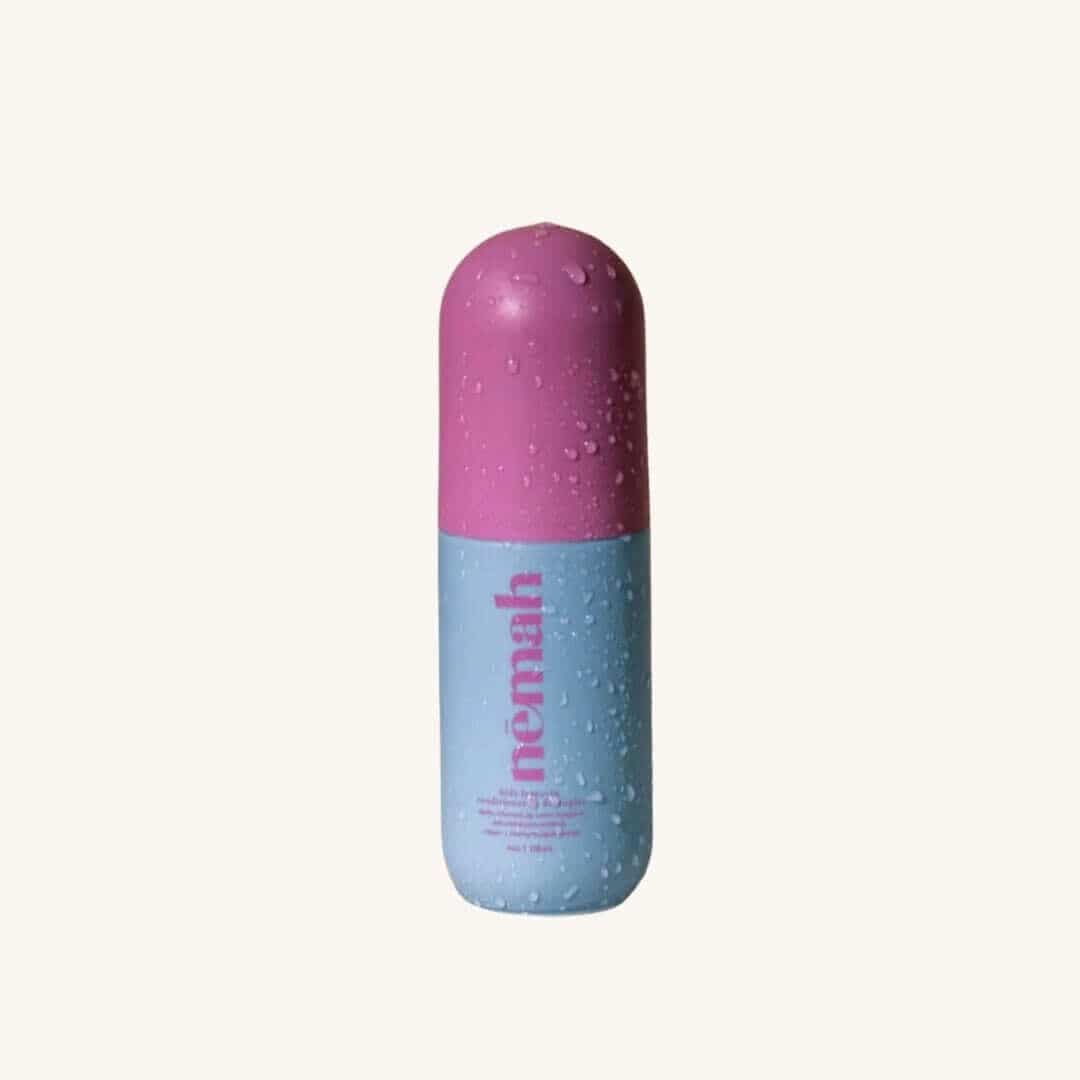
Nēmah's leave-in conditioner contains coconut oil and squalane and is marketed for ages one and older. Its current ingredient list also includes fragrance. It is a scented option, not a recommendation for children who need fragrance-free products.
Use the manufacturer's current directions and the instructions on your bottle. Nēmah advises distributing the product through damp or dry hair and leaving it in. Follow the package directions for the format you receive.
No Nasties Knot A Chance! Children's Detangler
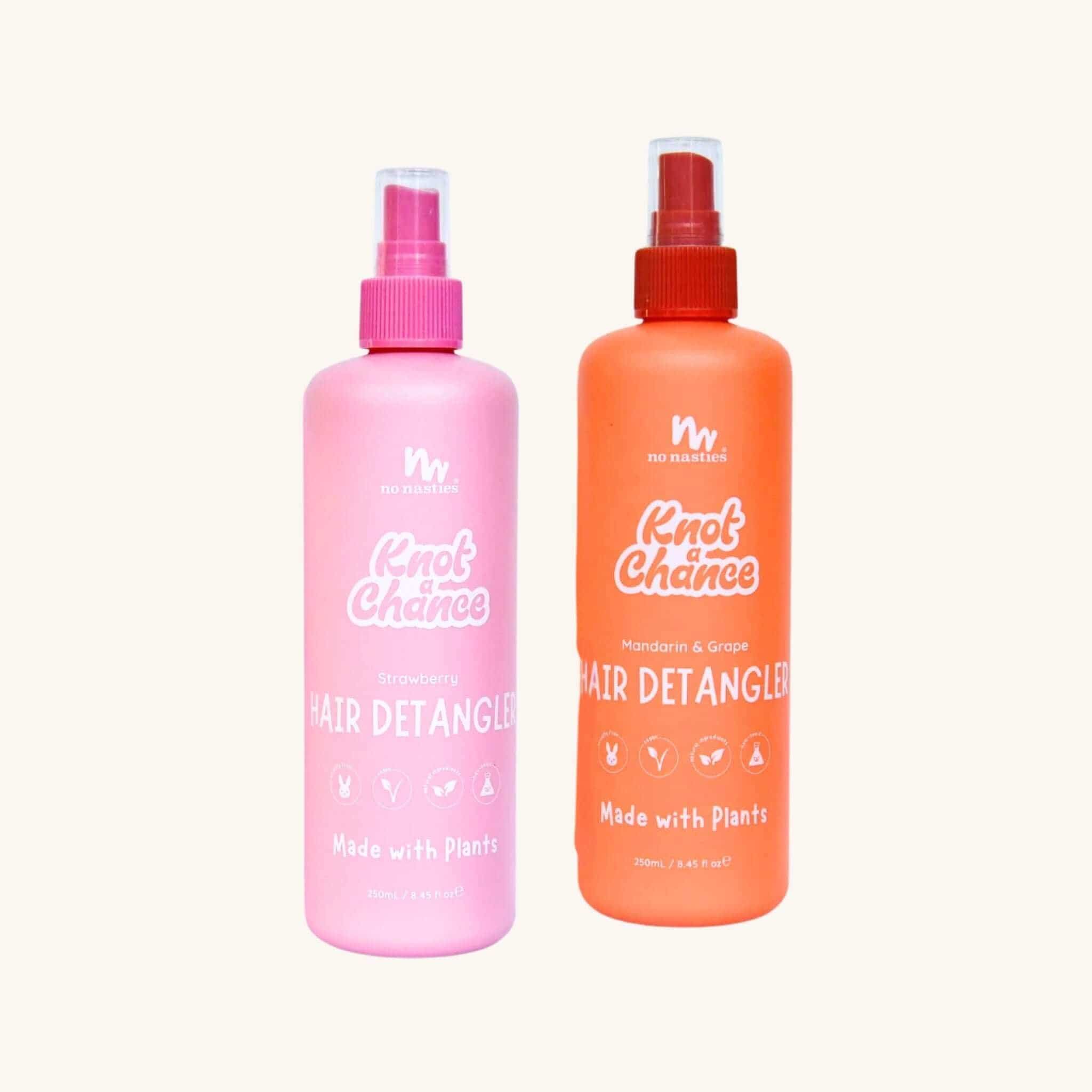
Knot A Chance! is offered in Mandarin Grape and Strawberry and can also be used as a leave-in conditioner. The manufacturer's Strawberry formula lists conditioning ingredients alongside chamomile, broccoli seed oil, emu apple extract, and fragrance. Check the variant's label, especially for a known allergy.
Neither of these recommendations is a promise of universal tolerance. Choose a formula that fits your child's needs, and review the current product page for available options.
A Calmer Detangling Routine
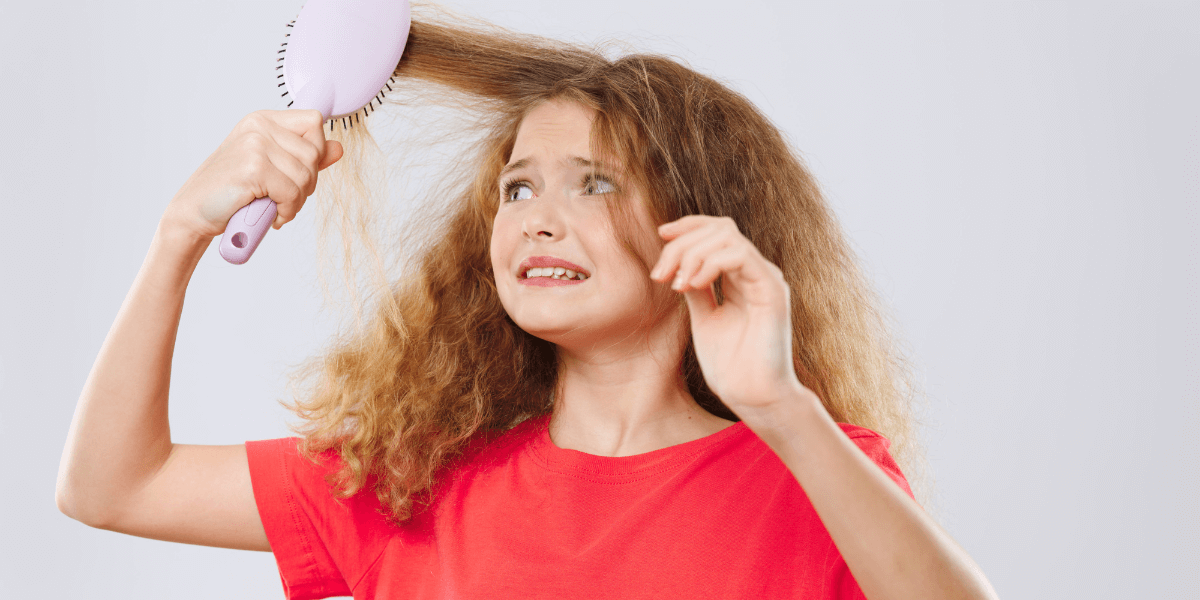
Set aside a few unrushed minutes, let your child settle comfortably, and work in manageable sections. Follow the detangler's directions and avoid aiming spray at the face. Use a small amount first and add more only if the directions and hair needs support it.
The American Academy of Dermatology recommends gentle combing without yanking and a wide-tooth comb, particularly for curly hair. Stop pulling when you reach a knot and work carefully instead. Loose styles can keep the routine comfortable.
For a complete washing and conditioning routine, see our kids' shampoo guide. For styling ideas, try our six-year-old hairstyle guide.
Why We Do Not Recommend Stored DIY Sprays
Adding water, tea, or aloe to a conditioner changes the formulation and can dilute its preservation system. A clean bottle and refrigeration do not establish a safe shelf life. FDA's microbial-safety guidance explains how contaminated ingredients, inadequate preservation, and storage can affect cosmetics.
Use a finished detangler as directed rather than storing a homemade dilution. Essential oils are not a substitute for validated preservation. Keeping the routine simple can mean using fewer appropriate products, rather than making a new mixture.
FAQs
Is every ingredient on an avoid list harmful?
No. An ingredient's function, concentration, exposure, and the finished formula matter. Use specific allergy guidance when relevant and avoid treating a long free-from list as a safety ranking.
Are Nemah and Knot A Chance! fragrance-free?
No. Both contain fragrance. If your child needs fragrance-free hair care, choose a different formula that meets that requirement.
Do I rinse out a detangler?
Follow its label. A leave-in detangler is intended to remain in hair; a rinse-out conditioner is washed away. They should not be used interchangeably without instructions supporting that use.
Can I use a detangler every day?
Follow the product's directions and your child's needs. Use only the amount needed, and stop if it causes irritation. If a scalp problem persists, ask a pediatrician or dermatologist for advice.
Can I store conditioner mixed with water?
We do not recommend a homemade stored dilution without evidence that its preservation remains effective. Use a product formulated for leave-in detangling instead.
Does natural fragrance prevent allergic reactions?
No. Plant extracts and essential oils can also cause reactions. Check known allergens and the full ingredient list rather than relying on natural-origin wording.