


Table of Contents
- What To Expect In This Blog Post
- Introduction
- Why “Non-Toxic” Nail Polish Often Isn’t Truly Non-Toxic
- The Truth About FD&C Dyes and Lake Pigments in Nail Polish
- Why Some “Clean” Nail Polish Brands Didn’t Make the Cut
- What We Look for Instead at Popsicle Beauty Club
- How to Choose Truly Safe Nail Polish for Kids & Tweens
- How Parents Can Avoid Greenwashing in Clean Beauty
- The Future of Truly Clean Beauty
- Final Thoughts: Why Higher Standards Matter
- FAQs
What To Expect In This Blog Post
- What “Non-Toxic” Nail Polish Should Actually Mean
- The Truth About FD&C Dyes and Lake Pigments in Nail Polish
- Why Some “Clean” Nail Polish Brands Didn’t Make the Cut
- How to Choose Truly Safe Nail Polish for Kids & Tweens
- The Future of Truly Clean Beauty
- How Parents Can Shop Smarter Without Falling for Greenwashing
- Final Thoughts: Why Higher Standards Matter
Introduction
Many parents searching for non toxic nail polish assume that if a brand markets itself as “clean,” “non-toxic,” or “21-Free,” it must automatically be safe for children. But this warning about your favorite “clean” nail polish made our toxic list exists for a reason. Once you start reading ingredient labels more closely, a very different story begins to emerge. While many brands proudly advertise what they leave out—like formaldehyde, toluene, or phthalates—they often stay quiet about the synthetic dyes, petroleum-derived pigments, and questionable additives still hiding inside their formulas.
At Popsicle Beauty Club, we believe truly clean beauty should go far beyond trendy marketing language. Parents deserve full transparency about every ingredient being used in products designed for kids and tweens. That’s why we carefully screen every brand before it enters our store, rejecting products that still rely on FD&C dyes, lake pigments, vague “colorant” labeling, or other ingredients that fail to meet our higher non-toxic standards.
Many mainstream nail polish brands marketed toward children—including some widely promoted as “better-for-you” alternatives—still use synthetic dyes and petroleum-derived pigments to achieve bright colors. While these ingredients may technically comply with cosmetic regulations, that doesn’t automatically make them aligned with truly clean beauty principles. For parents trying to reduce unnecessary toxin exposure, especially for young children with developing bodies, these details matter.
This article breaks down exactly why some popular “clean” nail polish brands made our toxic list, what parents should understand about FD&C dyes and lake pigments, and how to identify genuinely safer nail polish options for kids and tweens.
Why “Non-Toxic” Nail Polish Often Isn’t Truly Non-Toxic
The clean beauty movement has helped raise awareness about harmful chemicals in cosmetics, but it has also created a new problem: misleading marketing. Terms like “clean,” “natural,” and “non-toxic” are often used without strict regulation, allowing brands to create an illusion of safety while still using questionable ingredients.
Many nail polish brands proudly advertise themselves as:
- 10-Free
- 15-Free
- 21-Free
- Vegan
- Plant-Based
- Kid-Friendly
At first glance, these claims sound reassuring. But when parents start researching non toxic nail polish more carefully, many discover that “clean” marketing claims do not always reflect the actual ingredients being used. They say very little about the synthetic pigments and petroleum-derived colorants still used to create the polish itself.
A truly non-toxic nail polish should:
- Avoid endocrine-disrupting ingredients
- Avoid petroleum-derived synthetic dyes
- Avoid heavy metal contamination risks
- Fully disclose all pigments and additives
- Use safer mineral-based or naturally derived alternatives whenever possible
Unfortunately, many brands stop at removing the most publicly criticized chemicals while continuing to use FD&C dyes and lake pigments that don’t align with stricter clean beauty standards.
That gap between marketing and reality is exactly why this warning about your favorite “clean” nail polish made our toxic list matters for parents trying to make safer choices.
The Truth About FD&C Dyes and Lake Pigments in Nail Polish
One of the biggest issues hiding inside many “non-toxic” nail polish formulas is the use of FD&C dyes and lake pigments.
What Are FD&C Dyes?
FD&C dyes are synthetic colorants derived largely from petroleum sources. They are commonly used in:
- Cosmetics
- Candy
- Processed foods
- Medications
- Personal care products
Examples include:
- Red 40
- Yellow 5
- Blue 1
These dyes are used to create bright, highly saturated shades that appeal to both adults and children.
What Are Lake Pigments?
Lake pigments are created when synthetic dyes are combined with metallic salts such as aluminum or barium to create more stable pigments suitable for cosmetics like nail polish.
While these pigments help colors remain vibrant and long-lasting, they raise additional concerns because they may contain trace heavy metal contamination.
Why Parents Should Be Concerned
Many parents are surprised to learn that products marketed as “safe” for children may still contain ingredients linked to:
- Skin sensitivities
- Allergic reactions
- Hormonal disruption concerns
- Heavy metal contamination risks
- Behavioral concerns associated with synthetic dyes
Research surrounding synthetic dyes continues to evolve, but many health-conscious families prefer minimizing unnecessary exposure—especially for children whose bodies are still developing. For families trying to choose safer non toxic nail polish options for kids, understanding these hidden ingredients becomes extremely important.
The issue becomes even more frustrating when brands continue using these ingredients while simultaneously marketing themselves as “clean beauty.” Parents wanting to better understand how ingredient transparency impacts children’s beauty products can also explore our guide to the science and ethics behind non-toxic beauty.
Why Some “Clean” Nail Polish Brands Didn’t Make the Cut
At Popsicle Beauty Club, we don’t automatically accept brands simply because they use “Free-From” marketing claims.
We evaluate:
- Full ingredient transparency
- Pigment sourcing
- Dye usage
- Overall formulation philosophy
- Ingredient disclosure practices
Some popular nail polish brands failed our standards because they still relied on:
- FD&C dyes
- Lake pigments
- Petroleum-derived colorants
- Vague ingredient labeling
Common Red Flags We Watch For
Before trusting a “non-toxic” nail polish brand, parents should look closely for warning signs like:
| Red Flag | Why It Matters |
|---|---|
| “May contain” pigment labeling | Prevents ingredient transparency |
| FD&C dye listings | Indicates synthetic petroleum-derived colorants |
| Lake pigments | Potential heavy metal contamination concerns |
| Vague “colorants” wording | Hides specific pigment disclosure |
| Over-reliance on marketing claims | Can distract from actual ingredients |
Many brands focus heavily on what they exclude while avoiding conversations about what they still include.
That’s why this warning about your favorite “clean” nail polish made our toxic list isn’t about fear—it’s about transparency.
What We Look for Instead at Popsicle Beauty Club
Rather than following industry loopholes, Popsicle Beauty Club applies stricter standards for every nail polish product we carry.
We prioritize:
- Mineral-based pigments
- Naturally derived alternatives
- Ingredient transparency
- Sensitive-skin-friendly formulations
- Safer ingredient philosophies
Our goal is to help parents find genuinely safer non toxic nail polish products without the confusion of misleading clean beauty marketing.
We also reject products that use:
- FD&C dyes
- Lake pigments
- Petroleum-derived synthetic colorants
- Hidden fragrance chemicals
- Vague labeling practices
For parents looking for safer alternatives that align more closely with truly non-toxic beauty standards, gentle water-based nail polish formulas designed specifically for kids can offer colorful play without relying on FD&C dyes, lake pigments, or harsh chemical additives commonly found in mainstream nail polish products.
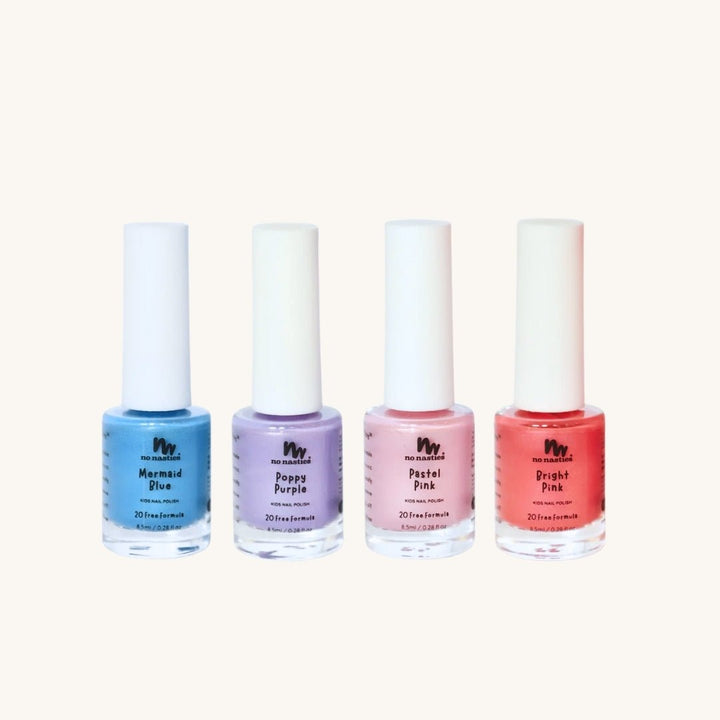
One example is the No Nasties water-based nail polish collection, which focuses on gentle, kid-friendly formulations without relying on FD&C dyes, lake pigments, or harsh chemical additives commonly found in mainstream children’s nail polish brands. These types of formulas align far more closely with what truly non-toxic beauty should look like for kids and tweens.
20 FREE Unscented, Non-Toxic Nail Polish for Kids
$9.99
Give your little one’s nails a safer mani/pedi with this 20 FREE Unscented Nail Polish—meaning it’s made without the 20 most common toxic ingredients found in conventional nail polish, including formaldehyde (a known carcinogen), toluene (linked to headaches and nervous… read more
How to Choose Truly Safe Nail Polish for Kids & Tweens
Shopping for safe nail polish becomes much easier once you know what to look for. Many parents searching for non toxic nail polish feel overwhelmed by marketing buzzwords, which is why understanding ingredient transparency matters so much. Families looking for a broader guide to safer manicures, nail polish removers, and toxin-free nail care routines can also read our complete guide to safe and non-toxic nail care for kids.
Ingredients & Features to Look For
Parents should prioritize products that use:
- Mineral-based pigments
- Water-based formulas
- Transparent ingredient lists
- Naturally derived colorants
- Easy-to-remove formulas without harsh removers
Ingredients to Avoid
Avoid products containing:
- FD&C dyes
- Lake pigments
- Petroleum-derived colorants
- Acetone-heavy removers
- Undisclosed “fragrance”
- Vague “may contain” labeling
Questions Parents Should Ask
Before buying any “clean” nail polish, ask:
- Does the brand fully disclose all ingredients?
- What pigments are used to create the colors?
- Are the colorants mineral-based or synthetic?
- Does the brand rely heavily on marketing buzzwords?
- Would I feel comfortable using this regularly on my own child?
These small questions can help parents avoid misleading clean beauty marketing and make more informed decisions.
How Parents Can Avoid Greenwashing in Clean Beauty
One of the biggest challenges in modern clean beauty is greenwashing—the practice of using marketing language to make products appear safer than they actually are.
Many brands use terms like:
- Clean
- Natural
- Green
- Conscious
- Safe
- Plant-Based
without meaningful ingredient standards behind them.
To avoid greenwashing:
- Read full ingredient lists
- Research unfamiliar pigments
- Look beyond “Free-From” claims
- Prioritize brands with full transparency
- Choose retailers that actively curate products instead of carrying everything
This is exactly why Popsicle Beauty Club exists. We believe parents shouldn’t have to become cosmetic chemists just to shop safely for their children.
The Future of Truly Clean Beauty
The clean beauty industry is evolving rapidly, but stronger standards are still needed—especially for children’s cosmetics. As demand for safer non toxic nail polish continues to grow, brands will increasingly be forced to improve ingredient transparency and formulation standards.
We believe the future of clean beauty should include:
- Better pigment transparency
- Safer color alternatives
- Clearer labeling laws
- Stricter ingredient standards
- More accountability for “non-toxic” marketing claims
Parents today are more informed than ever, and brands can no longer rely solely on trendy packaging and vague safety language.
At Popsicle Beauty Club, we’re committed to pushing the conversation forward by
- refusing questionable ingredients
- prioritizing ingredient transparency
- carefully curating every product
- educating parents about hidden toxins
- supporting truly safer alternatives
Because when it comes to products used by kids and tweens, “better than traditional” shouldn’t be the standard. Truly safe should be.
Final Thoughts: Why Higher Standards Matter
The clean beauty movement has created important conversations around ingredient safety, but not all “non-toxic” nail polish brands meet the same standards. As this warning about your favorite “clean” nail polish made our toxic list demonstrates, parents need to look beyond marketing claims and examine what’s actually inside the bottle.
FD&C dyes, lake pigments, vague ingredient disclosures, and petroleum-derived colorants remain surprisingly common—even among brands marketed as kid-safe or clean beauty alternatives.
That’s why Popsicle Beauty Club takes a stricter approach. We believe parents deserve complete transparency and safer options without the confusion, greenwashing, or hidden compromises.
As more families become aware of what truly clean beauty should look like, the industry will continue being pushed toward better formulations, better transparency, and higher standards for children’s cosmetics.
Parents deserve access to non toxic nail polish products that prioritize real safety standards instead of relying on trendy marketing language. Because our kids deserve more than clever marketing—they deserve genuinely safer products.
Want to explore more about safe nail polish and toxin-free manicures for kids? Check out Safe & Non-Toxic Nail Care for Kids to learn about the best brands, safe removal methods, and fun, non-toxic nail art ideas.

About the Author: This article was written by the contributing writers at Popsicle Beauty Club—a team of moms, educators, and clean beauty advocates passionate about creating a safer, more imaginative world for kids. We believe in empowering parents with trusted information and offering fun, non-toxic beauty and personal care products that let children play, express, and explore—without compromising their health.
FAQs
Why did some “clean” nail polish brands make Popsicle Beauty Club’s toxic list?
Many brands marketed as clean or non-toxic still use FD&C dyes, lake pigments, petroleum-derived colorants, or vague ingredient labeling that does not meet Popsicle Beauty Club’s stricter ingredient standards.
Are FD&C dyes allowed in children’s nail polish?
Yes, many FD&C dyes are currently allowed in cosmetics in the United States. However, some parents and clean beauty advocates still choose to avoid them due to concerns surrounding synthetic dyes and potential heavy metal contamination.
What makes a nail polish truly non-toxic?
A truly non-toxic nail polish should avoid harsh solvents, synthetic dyes, petroleum-derived pigments, endocrine disruptors, and vague ingredient labeling while maintaining full ingredient transparency.
Why are lake pigments controversial in nail polish?
Lake pigments are made by combining synthetic dyes with metallic salts such as aluminum or barium. Some clean beauty advocates raise concerns about heavy metal contamination and synthetic pigment exposure.
How can parents identify safer nail polish for kids?
Parents should look for transparent ingredient lists, mineral-based pigments, water-based formulas, and brands that avoid FD&C dyes, lake pigments, and petroleum-derived colorants.