
Table of Contents
- Introduction
- 1) Start with the basics: what’s in most gloss formulas?
- 2) How to read the label on a kids lip gloss set (quick method)
- 3) Ingredient watchlist: what parents often choose to avoid (and why)
- 4) “Non toxic” and “clean lip gloss for kids”: how to evaluate the claim
- 5) Packaging matters as much as ingredients: hygiene, mess, and durability
- 6) Practical use advice: patch testing, reapplication, and bedtime removal
- 7) Bottom line: a parent-friendly checklist for a kids lip gloss set
- FAQs
Introduction
Shopping for a kids lip gloss set is one of those “seems simple” purchases that can turn surprisingly complicated once you start reading labels. The good news: you don’t need to be a cosmetic chemist to make a smart pick. With a few practical checkpoints—ingredients, fragrance/flavor intensity, pigment type, packaging hygiene, and how your child will actually use it—you can narrow down options quickly and confidently.
This guide is designed for parents and beauty shoppers who want realistic, non-alarmist help choosing a kids lip gloss set that feels fun, looks cute, and is less likely to cause irritation. You’ll also see how to interpret “clean” or “non toxic” marketing without relying on hype. As always, check the label on the exact product you’re buying (formulas change) and patch test when appropriate—especially for kids with sensitive skin.
1) Start with the basics: what’s in most gloss formulas?
Most lip gloss is built from a small set of ingredient categories. Understanding these helps you scan a label faster when you’re comparing a kids lip gloss set in-store or online:
- Base/emollients: Oils and esters that create slip and shine. Common examples include hydrogenated polyisobutene, polybutene, mineral oil, castor oil, or various plant oils.
- Thickeners/structuring agents: Ingredients that keep gloss from running. Examples include various waxes and gels.
- Film formers: Help shine last and reduce “migration” outside the lip line.
- Colors and shimmer: Pigments, dyes, and effect ingredients (like mica) for tint or sparkle.
- Flavor and fragrance: The “cupcake,” “watermelon,” or “cotton candy” effect is usually a flavor component and/or fragrance.
- Preservatives/antioxidants: Especially relevant in formulas with water or botanical extracts; antioxidants may be included to keep oils from going rancid.
When parents run into trouble with a kids lip gloss set, it’s often less about the base oils and more about added fragrance/flavor, certain colorants, or the packaging (pots that invite finger-dipping, for example). That’s why a label-first approach plus sensible hygiene rules goes a long way.
2) How to read the label on a kids lip gloss set (quick method)
Use this fast scan when you’re evaluating a kids lip gloss set:
- Look for the INCI ingredient list. If an online listing doesn’t show it, treat that as a reason to pause. You can’t compare what you can’t see.
- Check where “fragrance” and flavor components sit on the list. Ingredients are generally listed from highest to lowest concentration. If fragrance is near the top, it may be more noticeable (and potentially more irritating for some kids).
- Identify the color system. In the US, you may see “FD&C” dyes or “Lake” pigments; you may also see CI numbers internationally. If it’s mostly clear with a light tint, that can be easier for day-to-day wear and less messy for younger kids.
- Note the format: tube, wand, squeeze, pot. The packaging can be as important as the formula for kid use.
- Check for age guidance and warnings. Some products are meant for older kids and include small parts, glitter, or strong flavors not ideal for younger children.
If you’re buying a bigger kit, confirm whether each shade has its own ingredient list. Sometimes a set shares a base formula but uses different colorants or flavors per shade—those differences matter if your child reacts to a specific dye or flavor. Many of the same label-reading principles apply whether you're buying a full set or a single kid lip gloss, especially when comparing fragrances, flavors, and colorants.
3) Ingredient watchlist: what parents often choose to avoid (and why)
Every child’s skin is different, and “avoid” doesn’t automatically mean “unsafe.” Still, if you’re trying to pick a kids lip gloss set with a lower chance of irritation, these are common points parents consider:
- Strong fragrance and heavy flavoring: Lips and the skin around the mouth can be reactive, and kids reapply frequently. If your child has had chapped, itchy, or red patches around the mouth, choosing a lightly scented or fragrance-free option can be a practical move.
- Cooling/warming agents: Ingredients that create a “tingle” can feel fun to adults but may be uncomfortable for kids. If a product advertises plumping, tingling, or hot/cool effects, it’s usually not the simplest choice for a child’s first gloss.
- High-impact dyes for very young users: Bright stains can migrate and get messy quickly. A sheer tint can be more forgiving for everyday play and school events.
- Essential oils on sensitive kids: Some parents prefer to skip certain essential oils on lips for kids, especially if there’s a history of sensitivity. This is highly individual, but it’s easy to spot on a label.
- Glitter and sparkle fallout: Glittery formulas can be fine, but for younger kids you may prefer shimmer over chunky glitter—less mess, less chance of flakes traveling to eyes or sticking to cheeks.
Instead, look for glosses that rely on simple emollients, minimal fragrance, and sheer pigments. If your child loves scent, pick one gentle scent instead of a set where every tube smells intensely different—less overload, fewer variables if irritation happens.
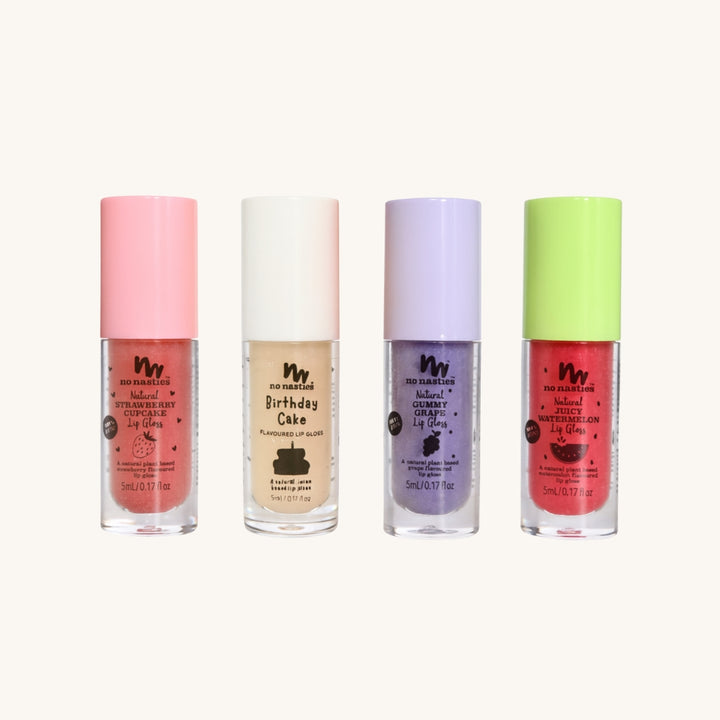
If you are in the market for an all-natural lip gloss, we highly recommend this product by No Nasties. A yummy, all-natural treat for little lips, this natural flavor lip gloss for kids adds a whisper of color while keeping lips soft and nourished with sunflower, olive, coconut, and jojoba oils.
Formulated for even the most sensitive skin, it’s nut-free, gluten-free, dairy-free, and made without wheat derivatives or almond oil—making it our most allergy-friendly lip gloss yet.
Natural Flavor Lip Gloss for Kids
$7.99
A yummy, all-natural treat for little lips, this natural flavor lip gloss for kids adds a whisper of color while keeping lips soft and nourished with sunflower, olive, coconut, and jojoba oils. Formulated for even the most sensitive skin, it’s… read more
4) “Non toxic” and “clean lip gloss for kids”: how to evaluate the claim
Search results for a kids lip gloss set often include phrases like non toxic lip gloss for kids and clean lip gloss for kids. These terms can be useful as a starting point, but they’re not a substitute for reading the ingredient list. Different brands use these words in different ways, and the definitions aren’t universal.
Here’s a grounded way to evaluate a claim without getting stuck in marketing:
- Prioritize transparency. A brand that clearly shows a full INCI list for each shade is easier to trust than a listing that only says “safe ingredients.”
- Look for what’s actually excluded. Some brands will specify “no fragrance,” “no essential oils,” or “no glitter.” Specific exclusions are more actionable than vague labels.
- Don’t assume “natural” equals gentler. Botanical extracts and essential oils can still be irritating for some kids. “Clean” can still mean “scented,” and scented is often the first culprit when lips get cranky.
- Check how the product is meant to be used. A set designed for kids should be easy to apply thinly and evenly. If a formula is ultra-sticky or very glossy, kids may overapply and end up licking it off—creating more mouth-area exposure and more mess.
In other words: use “clean” and “non toxic” as search filters, then confirm with the label. When in doubt, simpler usually wins for a first kids lip gloss set. If you're specifically comparing ingredient-focused options, our guide to lip gloss for kids non toxic takes a deeper look at what these marketing claims actually mean.
5) Packaging matters as much as ingredients: hygiene, mess, and durability
The most parent-friendly kids lip gloss set is the one your child can use without turning it into a sticky, germy craft project. Consider:
- Tubes and squeeze glosses: Often the easiest for beginners. Less direct contact than pots, and you can control how much comes out.
- Wand applicators: Convenient, but talk about “one swipe, then cap.” Kids tend to double-dip repeatedly, which can get messy and degrade the product faster.
- Pots and palettes: Cute, but higher-maintenance. If you choose a pot-style lip gloss set kids, plan on dedicated mini spatulas or disposable applicators—especially if siblings share.
- Caps and closures: Loose caps are a real-life problem. A set that leaks in a backpack becomes “never again” quickly.
- Set size and duplicates: More pieces isn’t always better. A smaller set with a few wearable shades can get used up hygienically before it expires or separates.
If you’re buying for a party favor or multiple kids, aim for individual tubes (one per child). Sharing lip products is a common way germs spread, and it’s an easy rule to set: “Lip gloss is yours only.”
6) Practical use advice: patch testing, reapplication, and bedtime removal
Even if you choose a thoughtfully formulated kids lip gloss set, how it’s used matters. A few simple habits can make the experience smoother and help you spot sensitivities early:
Patch test in a kid-realistic way
When appropriate, do a small patch test before the first full day of wear. For lip products, a practical approach is applying a tiny amount to a small area (like the outer corner of the lip or just above the lip line) and checking later for redness, dryness, or itching. If your child has a history of reactions, consider testing one shade at a time—especially if the set includes multiple flavors or pigments.
Keep it thin and simple
Kids often apply too much. Encourage one thin layer, then stop. If shine is the goal, you don’t need a thick coat. Overapplication can increase the chance of gloss migrating around the mouth, getting into snacks, and being licked off.
Set “when and where” rules
- At home first: Try the gloss at home before wearing it to school or an event.
- Not for sports or messy meals: Gloss plus pizza plus hair blowing in the wind is a classic chaos combo.
- No sharing: Especially important with a kids lip gloss set that includes wands or pots.
Remove at bedtime
Make removal part of the nighttime routine. A gentle cleanser can work; for more tenacious gloss, a small amount of a mild oil or balm can help lift it, followed by a gentle wash. Then consider a simple, fragrance-free lip balm if your child tends to get dry lips.
If lips become uncomfortable or the skin around the mouth looks irritated, stop using the product and reassess the likely trigger (often a specific shade, flavor, or glitter level). This isn’t about panic—it’s just good troubleshooting.
7) Bottom line: a parent-friendly checklist for a kids lip gloss set
If you want a quick decision tool, use this checklist while comparing any kids lip gloss set:
- Label transparency: Full ingredient list available for the exact product/shade.
- Lower-scent approach: Lightly scented or fragrance-free if your child is sensitive (or if you want fewer variables).
- Kid-appropriate effect: Skip “tingling,” “plumping,” or intense cooling/warming for most kids.
- Sheer, wearable shades: Easier application, less migration, less staining.
- Hygienic packaging: Prefer tubes/squeeze formats over pots for younger kids; avoid sharing.
- Routine-ready: You’re willing to patch test when appropriate, and you have a simple bedtime removal plan.
Choosing a kids lip gloss set doesn’t have to be stressful. Focus on straightforward formulas, manageable packaging, and realistic use habits, and you’ll end up with a set that feels fun for kids and sensible for parents.
Curious about which harmful ingredients to avoid in your child's beauty products? Read The Truth About Harmful Beauty Ingredients for Kids to uncover the hidden toxins in mainstream makeup, skincare, and hair care—and discover safer alternatives.
About the Author: This article was written by the contributing writers at Popsicle Beauty Club—a team of moms, educators, and clean beauty advocates passionate about creating a safer, more imaginative world for kids. We believe in empowering parents with trusted information and offering fun, non-toxic beauty and personal care products that let children play, express, and explore—without compromising their health.