

Table of Contents
- Introduction
- 1) Start with the basics: where to find the ingredient list and what claims really mean
- 2) The core of most gloss: ingredients parents often feel comfortable with
- 3) Ingredients some parents prefer to avoid or approach cautiously in kid lip gloss
- 4) Colorants, flavors, and scent: what matters most for sensitive lips
- 5) Packaging and hygiene: the overlooked “ingredient” in kid friendly lip gloss
- 6) A quick shopping checklist for kid safe lip gloss
- 7) How to use kid lip gloss comfortably: patch testing, routines, and rules that actually work
- Bottom line: the best kid lip gloss is simple, comfortable, and label-check friendly
- FAQs
Introduction
Shopping for kid lip gloss is a little different from buying gloss for yourself. Kids tend to reapply more often, lick their lips, share with friends, and treat makeup like a toy—so the most “fun” option isn’t always the most practical. The goal isn’t to be scared of ingredients; it’s to choose formulas and packaging that fit real kid behavior.
This guide walks you through what to look for on the label, which ingredients are commonly well-tolerated, which ones some parents prefer to skip, and how to build a simple routine that keeps kid lip gloss comfortable and low-mess. As always, read the ingredient list on the specific product you’re buying and consider a patch test, especially for sensitive skin.
1) Start with the basics: where to find the ingredient list and what claims really mean
Many parents assume a gloss marketed to kids is automatically gentle, but “for kids” is a marketing category—not a guarantee of what’s inside. Before you buy kid lip gloss, do a quick label check:
- Look for the INCI ingredient list (often on the box, a sticker on the tube, or the brand website if space is limited). A “free-from” badge alone isn’t enough to evaluate.
- Separate feel-good claims from specifics. Words like “natural,” “clean,” or “non-toxic” are not standardized ingredient definitions. They can be helpful brand signals, but you still need the list.
- Check for fragrance/flavor callouts. If the gloss is “cotton candy,” “watermelon,” or “cupcake,” expect flavor and/or fragrance ingredients, which can be a sensitivity trigger for some kids.
- Scan for use warnings. A reputable brand may include age guidance, allergy notes, and hygiene tips (like “do not share”).
If you’re comparing a few options for kid lip gloss, take photos of the ingredient lists and compare them at home. It’s easier than trying to decode tiny text in-store.
2) The core of most gloss: ingredients parents often feel comfortable with
Most lip gloss formulas rely on a small set of ingredient “jobs”: shine, slip, moisture, and structure. These are common components you’ll see in many kid lip gloss products, and they’re often chosen because they’re stable and make the gloss feel smooth.
Common base ingredients (shine + slip)
- Hydrogenated polyisobutene or other emollient oils: often used for glossy slip and a cushiony feel.
- Polybutene: a classic gloss ingredient for shine and adherence.
- Castor seed oil (Ricinus Communis): frequently used for shine and pigment dispersion.
Structure/thickening (keeps it from running)
- Beeswax, candelilla wax, carnauba wax: can add body and help the gloss stay put.
- Silica or other texture modifiers: can adjust thickness and feel.
Comfort/conditioning (helps lips feel less dry)
- Vitamin E (tocopherol): often included as a conditioning antioxidant.
- Plant oils/butters (like jojoba oil, sunflower seed oil, shea butter): can add softness, though they vary by formula.
None of these are automatically “perfect” for everyone—any ingredient can irritate someone—but these categories explain why two glosses can feel similar even when one is “kids” and one isn’t.
3) Ingredients some parents prefer to avoid or approach cautiously in kid lip gloss
With kid lip gloss, many families choose a simpler formula with fewer “extras.” Here are ingredient types that parents commonly flag for a second look, especially if a child has sensitive skin or a history of irritation:
- Strong fragrances (often listed as “Fragrance/Parfum”): fragrance is a common reason a product smells amazing—and also a common irritant for some users.
- Flavor blends: not always obvious on the label. If a gloss tastes like candy, it likely contains flavoring ingredients. More flavor can encourage licking and reapplying.
- “Plumping” agents: some adult glosses use ingredients designed to tingle or warm. For kids, many parents skip anything that advertises a tingling/plumping effect.
- Essential oils (peppermint, cinnamon, citrus oils): these can smell “natural,” but they can be irritating on lips for some people—especially in leave-on products.
- High shimmer loads: glitter and heavy shimmer can be messy, travel outside the lip line, and end up in eyes. If you choose shimmer, look for finely milled shimmer rather than chunky glitter and prioritize easy cleanup.
This isn’t a “never use” list. It’s a “read carefully and match the formula to the kid” list. A low-fragrance, no-tingle kid lip gloss is often the easiest starting point.
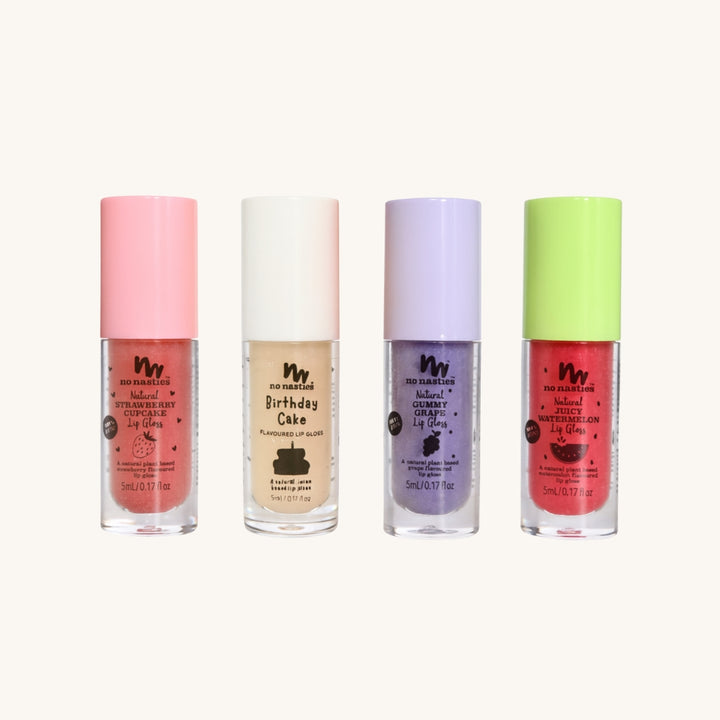
If you are in the market for an all-natural lip gloss, we highly recommend this option by No Nasties.
Natural Flavor Lip Gloss for Kids
$7.99
A yummy, all-natural treat for little lips, this natural flavor lip gloss for kids adds a whisper of color while keeping lips soft and nourished with sunflower, olive, coconut, and jojoba oils. Formulated for even the most sensitive skin, it’s… read more
4) Colorants, flavors, and scent: what matters most for sensitive lips
When a gloss causes discomfort, it’s often not the base oils—it’s the fun stuff. Color, flavor, and scent are the most common variables between an everyday clear gloss and a “birthday cake” gloss.
What to check on the label
- Fragrance/Parfum: If you’re choosing kid lip gloss for sensitive skin, consider fragrance-free or very lightly scented options.
- Flavor: Brands may list “flavor,” “aroma,” or specific flavor components. If a child licks their lips a lot, a less tasty gloss can be surprisingly helpful.
- Color additives: You may see “CI” numbers or names like Red 7 Lake, Yellow 5 Lake, etc. This is normal in cosmetics, but if your child has reacted to certain products before, compare lists across items.
- Mica and iron oxides: Common in shimmer and tinted products. If shimmer migrates, it can irritate eyes—so application technique matters as much as ingredients.
Practical tip: if you’re trying kid lip gloss for the first time, start with a clear or lightly tinted, low-scent option. Once you know it wears comfortably, then branch into flavored or glittery versions.
For a more detailed parent guide on younger shoppers and gloss formulas, our article on lip gloss for kids girls explains what to check before choosing scented, tinted, or shimmer products.
5) Packaging and hygiene: the overlooked “ingredient” in kid friendly lip gloss
The cleanest ingredient list won’t matter if the gloss gets shared, dropped, and re-used. For kid lip gloss, packaging is part of safety and comfort.
- Prefer squeeze tubes or twist-up balms over wand applicators for younger kids. Wands go back into the tube after touching lips and can pick up crumbs, germs, and playground grit.
- Avoid novelty jars that require finger dipping. They’re cute, but they invite contamination and can get messy fast.
- Choose a cap that clicks securely. Gloss leaks ruin backpacks and encourage overuse when kids try to “fix” a mess.
- Size matters: Smaller tubes are easier to finish before they get gross. Oversized products linger for months in hot cars and desks.
If you’re buying a kid lip gloss set, consider designating one gloss for home and one for school rather than rotating all of them everywhere. It reduces loss and sharing. If you’re shopping for a much younger child, our guide to lip gloss for toddlers covers packaging, patch testing, and ingredient choices in more age-specific detail.
6) A quick shopping checklist for kid safe lip gloss
Use this list when comparing options online or in-store. It’s designed for real-life shopping: quick checks that usually correlate with a better experience for kids and parents.
- Ingredient list available before purchase. If you can’t see the ingredients, you can’t make an informed choice.
- Low fragrance or fragrance-free if your child is sensitive, gets chapped easily, or dislikes strong smells.
- No tingle/plump messaging. Look for comfort-first positioning rather than “spicy,” “minty,” or “plumping.”
- Texture that matches the kid: sticky formulas can feel annoying and attract hair; ultra-slippery formulas can travel outside the lip line. If possible, start with a medium, cushiony texture.
- Color payoff appropriate for the setting. Sheer is forgiving for beginners; bold pigment can smear and stain clothing.
- Packaging that discourages sharing: squeeze tube, twist-up, or a clearly labeled personal item.
- Easy removal: Consider how it comes off—especially for school days. A comfortable gloss that wipes clean is often a win.
When shoppers search “kid safe lip gloss” or “kid friendly lip gloss,” they’re usually looking for a product that is gentle, not overly scented, and easy to use without a mirror. This checklist aims to get you there without overcomplicating it.
7) How to use kid lip gloss comfortably: patch testing, routines, and rules that actually work
Even with a careful label read, the most helpful step is still a simple patch test. Kids’ lips and skin can be reactive, and trying a new kid lip gloss right before a birthday party is a recipe for regret.
Patch test in a kid-appropriate way
- Test first: Apply a tiny amount to the outer edge of the lip or the skin just beside the mouth (or inner forearm) and wait to see how it feels over several hours.
- Keep it boring: Don’t test multiple new products on the same day—you won’t know which one caused a problem.
- Stop if it stings or feels “hot”: Comfort matters. Kids may not describe irritation clearly, so watch for rubbing or licking.
Simple rules for everyday wear
- Apply to clean, dry lips. If there’s food residue, gloss can turn gritty or smear.
- Use a small amount. A thin layer looks shinier than you think and reduces migration.
- Set a “no sharing” rule. Treat kids lip gloss like a toothbrush—personal use only.
- Cap it immediately. This prevents spills and keeps the applicator clean.
- Remove at the end of the day. Wipe gently with a soft cloth; if needed, use a mild cleanser. Avoid aggressive scrubbing that can make lips feel drier.
If your child is excited about a kid lip gloss set, consider making it a mini routine: one shade/flavor for weekends, one “school-appropriate” option, and one kept at home for dress-up. It helps keep things fun without constant reapplication.
Bottom line: the best kid lip gloss is simple, comfortable, and label-check friendly
The best kid lip gloss choice is usually the one with a straightforward ingredient list, minimal fragrance/flavor, comfortable wear, and packaging that stays clean in real life. Read labels, avoid tingle/plump styles for kids, and prioritize formats that discourage sharing and mess. When trying a new kid lip gloss, patch test first and keep application light—shine should feel fun, not fussy.
Curious about which harmful ingredients to avoid in your child's beauty products? Read The Truth About Harmful Beauty Ingredients for Kids to uncover the hidden toxins in mainstream makeup, skincare, and hair care—and discover safer alternatives.
About the Author: This article was written by the contributing writers at Popsicle Beauty Club—a team of moms, educators, and clean beauty advocates passionate about creating a safer, more imaginative world for kids. We believe in empowering parents with trusted information and offering fun, non-toxic beauty and personal care products that let children play, express, and explore—without compromising their health.