
Table of Contents
- Introduction
- What “kid friendly” should mean in a lip gloss
- Quick label checklist for kid friendly lip gloss
- Fragrance and flavor: the most common “why did this sting?” culprit
- Texture and finish that work for kids (and parents)
- Packaging and hygiene: what matters in a kid lip gloss set
- How to introduce kid friendly lip gloss in a realistic routine
- Ingredient label FAQ: quick answers parents actually need
- Bottom line: choosing kid friendly lip gloss without overthinking it
- FAQs
Introduction
Shopping for kid-friendly lip gloss can feel surprisingly complicated. Lips are sensitive, kids tend to reapply (and sometimes lick their lips), and many glosses are made to smell and taste like candy—fun, but not always ideal for sensitive skin. The good news: you don’t need a chemistry degree to make a smart pick. A few label-reading habits and practical shopping criteria can help you choose a kid friendly lip gloss that feels comfortable, looks cute, and fits real-life use (backpacks, sleepovers, and all).
This guide is meant to be calm and useful: what to check on ingredient lists, which features make a gloss more practical for kids, and how to introduce it in a low-stress routine. Always check labels (formulas change) and consider a patch test for kids with sensitive skin or a history of irritation.
What “kid friendly” should mean in a lip gloss
There’s no universal, regulated definition for “kid friendly” on beauty packaging. In practice, kid friendly lip gloss usually means a product that’s:
- Gentle-feeling (comfortable, not stingy or tingly)
- Simple (fewer potential irritants like heavy fragrance or strong flavors)
- Easy to use (smooth glide, not too sticky, not messy)
- Hygienic (packaging that discourages sharing and reduces contamination)
- Appropriate-looking (sheer tint or clear shine, depending on family preferences)
For parents, the goal isn’t perfection—it’s a formula and format that reduces common problems: dryness, irritation around the mouth, sticky hair-on-lips moments, and constant reapplication. If your child has eczema, allergies, or frequent lip irritation, it’s worth being extra selective and introducing any new lip product slowly.
Quick label checklist for kid friendly lip gloss
When you’re scanning ingredients for kid friendly lip gloss, focus on three buckets: the base (oils/waxes), the “extras” (fragrance/flavor/color), and the “actives” (tingle/plump/cooling). Here’s a practical checklist you can use in-store or while online shopping.
Ingredients that often make a gloss feel comfortable
- Occlusive and emollient bases that help lips feel cushioned, such as common cosmetic waxes and oils. These provide slip and shine and can reduce the urge to reapply constantly.
- Film-formers (used in many glosses for lasting shine). These aren’t automatically “bad,” but some kids prefer lighter textures, so think about comfort and stickiness.
- Simple, short ingredient lists can be easier for sensitive users—especially if a child is prone to reacting and you’re trying to pinpoint triggers.
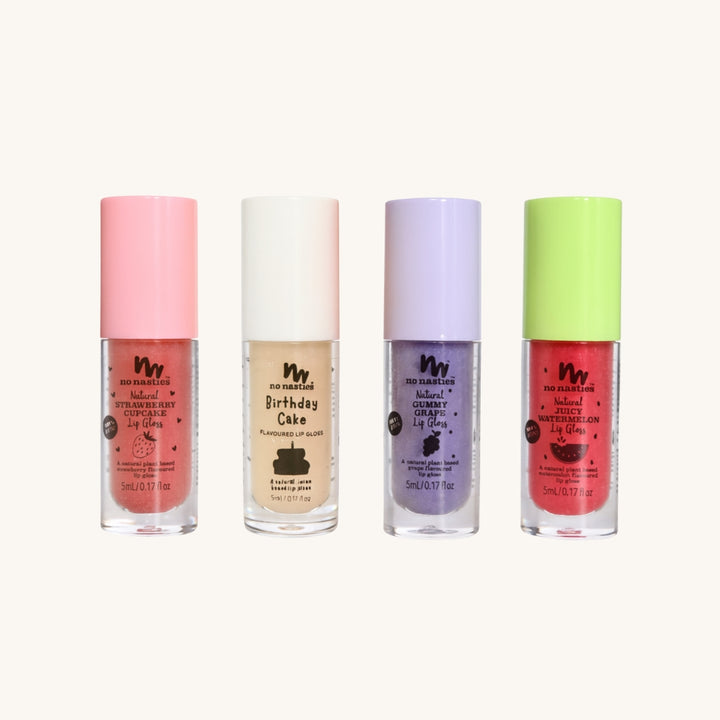
If you are in the market for an all-natural lip-gloss, we highly recommend this product by No Nasties. A yummy, all-natural treat for little lips, this natural flavor lip gloss for kids adds a whisper of color while keeping lips soft and nourished with sunflower, olive, coconut, and jojoba oils.
Formulated for even the most sensitive skin, it’s nut-free, gluten-free, dairy-free, and made without wheat derivatives or almond oil—making it our most allergy-friendly lip gloss yet.
Ingredients and features to be cautious about for kids
- “Plumping,” “tingling,” or “cooling” claims: these often rely on ingredients that create a sensation (warming, minty, spicy). That sensation can be uncomfortable for kids and may increase lip licking.
- Strong fragrance or flavor blends: these are common sources of irritation around the lip line, especially with frequent reapplication.
- Essential oils (often used for scent/flavor): not always a problem, but they can be sensitizing for some people—especially in leave-on products used repeatedly.
- High-shimmer or glitter-heavy formulas: glitter can migrate and feel scratchy; it can also end up in eyes on windy days or during play.
- Very bold dyes or stains: these can be harder to remove and may prompt more scrubbing at the end of the day.
None of the above automatically makes a product “unsafe.” The point is comfort and likelihood of irritation with kid-style use (more frequent reapplication, less careful application, and more face-touching). Parents focused on ingredient transparency may also want to explore options marketed as lip gloss for kids non toxic, while still reviewing the full ingredient list for themselves.
If you are in the market for an all-natural lip gloss, we highly recommend thisproduct by No Nasties.
Natural Flavor Lip Gloss for Kids
$7.99
A yummy, all-natural treat for little lips, this natural flavor lip gloss for kids adds a whisper of color while keeping lips soft and nourished with sunflower, olive, coconut, and jojoba oils. Formulated for even the most sensitive skin, it’s… read more
Fragrance and flavor: the most common “why did this sting?” culprit
If you’re only going to check one thing when buying kid friendly lip gloss, check for how the product is scented or flavored. Kids love fun flavors, but flavoring agents and fragrance blends can be surprisingly complex. Even when a gloss smells like “strawberry,” the ingredient list may include multiple aroma compounds or essential oils to create that effect.
How to shop smarter without taking away the fun:
- Choose “lightly scented” or “fragrance-free” options for kids who get red patches around the mouth, chapped corners, or frequent irritation.
- Be cautious with mint/menthol/cinnamon-style vibes. These often pair with a noticeable tingle, which many kids interpret as “burning” even when it’s expected.
- Avoid overly tasty formulas if your child tends to lick their lips. A delicious flavor can encourage licking, which can make lips feel drier over time.
- Prefer clear or very sheer tints if you’re trying to minimize the amount of pigment being reapplied throughout the day.
Tip: If a child insists on a flavored gloss, treat it like an “occasion gloss” (special events, short wear) rather than an all-day product kept in a pocket for constant reapplication.
Texture and finish that work for kids (and parents)
The best kid friendly lip gloss isn’t just about the ingredient list—texture can make or break whether it’s actually used comfortably. Kids typically do better with formulas that are smooth, not overly sticky, and forgiving when applied without a mirror.
What to look for
- Non-sticky or “cushiony” feel: a gloss that stays put but doesn’t glue lips together reduces fussing.
- Sheer shine: easier to apply evenly and less likely to smear outside the lip line.
- Buildable tint: lets kids start subtle and add more later, while parents can keep it age-appropriate.
- Comfort-first wear: reapply after meals rather than every 20 minutes.
What to avoid if you want less mess
- Ultra-goopy high-shine formulas that migrate beyond the lip line.
- Stringy gloss that stretches and transfers easily to cheeks, sleeves, or hair.
- Heavy glitter that feels gritty and sheds.
For many families, a great compromise is a gloss-oil hybrid texture: shiny enough to feel fun, but smooth enough that kids won’t want to wipe it off immediately.
Packaging and hygiene: what matters in a kid lip gloss set
A kid lip gloss set is exciting, but multiple products also mean more chances for messy applicators, lost caps, and sharing at school. Hygiene matters because lip products touch the mouth, and kids aren’t always careful about clean hands.
Shopping criteria that make life easier:
- Twist-up or squeeze-tube packaging: reduces direct contact between the applicator and the lips compared to a wand that goes back into the tube after touching the mouth.
- Attached caps that close securely: avoids linty, backpack-flavored gloss.
- Smaller sizes: if something gets gross or lost, you’re not stuck with a giant tube.
- Easy-to-clean exterior: glossy plastic packaging can be wiped down quickly.
If you do choose wand applicators, set a simple house rule: no sharing. Sharing is one of the easiest ways to turn a cute kids lip gloss moment into an unhygienic one. Before buying a larger kids lip gloss set, it helps to understand how packaging, ingredients, and hygiene practices can affect everyday use.
How to introduce kid friendly lip gloss in a realistic routine
Even the best kid friendly lip gloss can cause issues if it’s used nonstop or layered over irritated skin. A simple routine keeps it comfortable and helps you spot problems early.
- Start on a “good lip day.” If lips are already cracked or raw, try a plain, simple lip balm first and save gloss for later.
- Patch test when appropriate. For kids with sensitive skin, test a small amount on the outer lip area or nearby skin (not on broken skin) and wait to see if redness or itching shows up. If irritation occurs, stop using it and consider switching to a simpler formula.
- Apply a thin layer. One swipe is usually enough. Thick layers migrate and end up around the mouth.
- Reapply with intention. A good rule is after eating or drinking, not every time the shine fades slightly.
- Remove gently at night. Use a soft cloth and a gentle cleanser; avoid aggressive rubbing, especially with heavily tinted formulas.
- Keep a “home gloss” and a “bag gloss.” This reduces frantic searching and encourages cleaner habits (one stays in a known spot).
If your child wears gloss to school, consider a low-maintenance formula that doesn’t demand perfect application. Clear shine or a very sheer tint is usually the least stressful option for quick touch-ups.
Ingredient label FAQ: quick answers parents actually need
Is “natural” automatically better for kid safe lip gloss?
No. “Natural” can still include essential oils and fragrance components that bother sensitive skin. For kid safe lip gloss, the better approach is to check labels for potential irritants and choose a texture your child won’t overuse.
Do kids need SPF in lip gloss?
Sun protection can be helpful, but SPF lip products come with their own application rules (even coverage, reapplication). If you choose SPF, follow the product directions. Otherwise, consider sun protection as part of an overall routine (hats, shade, sunscreen on surrounding skin) rather than relying on gloss alone.
What if my child wants a strongly flavored kids friendly lip gloss?
Consider making it an occasional treat and keeping a simpler, lightly scented everyday option. This balance often reduces irritation and lip licking while still letting kids enjoy the fun factor.
Bottom line: choosing kid friendly lip gloss without overthinking it
The best kid friendly lip gloss is the one that your child can wear comfortably and hygienically—without stinging, without constant reapplication, and without turning into a sticky mess. Start by checking labels for fragrance/flavor intensity and avoiding tingle/plumping sensations for younger users. Prioritize a smooth, non-sticky texture, practical packaging, and set simple rules about sharing. And whenever you’re trying a new kid friendly lip gloss—especially for sensitive skin—do a patch test and introduce it slowly.
With those basics, shopping for kid lip gloss and kids lip gloss becomes much more straightforward, whether you’re buying a single tube or a whole kid lip gloss set.
Curious about which harmful ingredients to avoid in your child's beauty products? Read The Truth About Harmful Beauty Ingredients for Kids to uncover the hidden toxins in mainstream makeup, skincare, and hair care—and discover safer alternatives.

About the Author: This article was written by the contributing writers at Popsicle Beauty Club—a team of moms, educators, and clean beauty advocates passionate about creating a safer, more imaginative world for kids. We believe in empowering parents with trusted information and offering fun, non-toxic beauty and personal care products that let children play, express, and explore—without compromising their health.