
Table of Contents
- Introduction
- Popsicle safety snapshot
- Quick-start: the easiest Eyeshadow tutorial for kids (3 minutes)
- Age-appropriate boundaries: makeup as art, not armor
- How to choose
- Ingredient and label checklist
- Non-toxic kids eyeshadow palettes vs mainstream eyeshadow palettes: what’s actually different?
- A simple starter kit (what you actually need)
- Popsicle Beauty Club eyeshadow and cleanup picks
- Common mistakes to avoid
- Bottom line: a parent-friendly rule for kids eyeshadow
- Sources and further reading
- FAQs
Introduction
Eyeshadow tutorial for kids should be simple, washable, and focused on creativity—not “fixing” a child’s face. For most families, that means: start with 1–3 soft shades, use clean hands and clean brushes, keep color on the lid (not the waterline), and choose products that remove easily with gentle cleanser. The buying part matters just as much as the technique, because kids’ eyes are more likely to water, rub, and react to heavy fragrance, gritty glitter, or hard-to-remove pigments.
Below is a practical, parent-friendly Eyeshadow tutorial for kids that covers: what to buy, what to skip, how to apply in a way that looks playful (not adult), and how to check labels without needing a chemistry degree.
Popsicle safety snapshot
- Popsicle Beauty Club is a curated clean kids’ beauty hub: we aim to put safer-feeling, age-appropriate options in one place so parents can compare without scrolling endless “kid makeup” marketplaces.
- Ingredient transparency first: Popsicle prioritizes brands with clear ingredient lists and parent-friendly label checks. (No marketplace can promise “perfect,” but we can make it easier to shop with standards.)
- Medical-advisory-backed kids’ beauty education: our guidance is built to be developmentally aware and practical for families.
- EWG Verified and allergist review, where applicable: when a product or brand carries a specific verification or review process, we treat that as a helpful signal—but not a blanket guarantee for every child.
- Foundationless stance: Popsicle is not anti-makeup. We’re against adultification and correction-focused beauty for kids. Eyeshadow belongs in the “art” category—color, sparkle, imagination—not “armor.”
Quick-start: the easiest Eyeshadow tutorial for kids (3 minutes)
A successful eyeshadow tutorial for kids should be short enough to follow, simple enough to repeat, and gentle enough to remove without scrubbing. If you want a first-try method that works for most kids (and most mornings), use this:
- Prep: Wash hands. If the child is wearing sunscreen, let it set for a few minutes so the lid isn’t slippery.
- Choose one shade: Start with a light shimmer or soft matte (think peach, champagne, soft pink, lilac, or light brown). One-color looks are the most kid-appropriate and the least likely to look “too grown.”
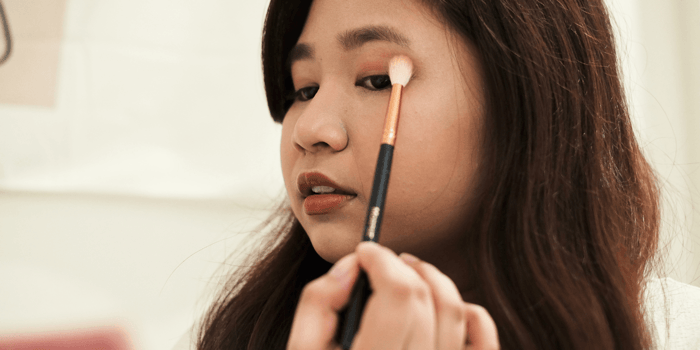
- Apply on the lid only: Using a clean fingertip or a small fluffy brush, tap color from lash line to crease. Keep it below the brow bone.
- Blend the edge: Use a clean brush (or a clean fingertip) to blur the top edge so it looks like a “wash of color,” not a sharp stripe.
- Stop there: Skip the lower lash line and skip the inner rim (waterline). Kids’ eyes water and rub; keeping product off sensitive areas reduces irritation risk.
- Remove gently: At night, use a gentle cleanser or micellar water on a soft pad, then rinse. Avoid aggressive scrubbing.
That’s the baseline. Once the child can apply one shade neatly and remove it responsibly, you can add a second “sparkle topper” shade for special occasions.
Age-appropriate boundaries: makeup as art, not armor
When parents search Eyeshadow tutorial for kids, the real question is often, “How do I let her play without turning makeup into a daily requirement?” A simple boundary that works for many families:
- Eyeshadow is for play: dress-up, dance recitals, birthdays, holidays, weekend creativity.
- School-day minimalism: if allowed at all, keep it to a sheer wash and prioritize comfort and easy removal.
- No correction language: don’t talk about “fixing,” “brightening tired eyes,” or “making eyes look bigger.”
- Delay correction-focused products: foundation, concealer, simple skin care, and simple moisturizers are developmental milestones worth delaying for most kids and many tweens. Keep the face message: “Your skin is home,” not “your skin is a problem.”
If a child is asking for makeup because of distress about their appearance, that’s a signal to pause and focus on supportive conversation and basic skin comfort—not more products.
How to choose
Shopping for eyeshadow for kids is different than shopping for an adult palette. Kids need products that are simpler, gentler-feeling, and easier to remove. Before choosing shades, read our guide to eyeshadow makeup for kids for a closer look at ingredient labels, shimmer, age fit, and eye-area boundaries. The shopping choices behind an eyeshadow tutorial for kids matter because formula, particle size, pigment strength, and removal can affect how comfortable the activity feels. Use these criteria:
1) Choose simpler formats first
- Pressed powder: often easiest to control and easiest to remove when lightly applied.
- Cream sticks: can be convenient, but choose ones that glide (no tugging) and don’t require heavy rubbing to remove.
- Loose pigments: usually a no for kids—messy, higher chance of getting into eyes.
2) Go small: 1–6 shades beats 24 shades
Big palettes invite mixing and shared brushes—two things that increase mess and hygiene issues. A tiny palette (or even a single shade) teaches control.
3) Prioritize easy removal
Kid makeup should come off without a battle. Hard-to-remove pigments can lead to aggressive scrubbing, which is when lids get red and irritated.
4) Be cautious with sparkle and glitter
- Fine shimmer is usually easier than chunky glitter.
- Chunky glitter can migrate into the eye, especially if the child rubs or sweats.
- If you do sparkle, reserve it for special occasions and keep it strictly on the lid.
5) Think about where it will be used
- At home: you can supervise, sanitize, and remove properly.
- At school or sleepovers: choose minimal, low-mess shades and consider sending a small, clean brush and a gentle wipe for removal.
Ingredient and label checklist
There isn’t one magic “safe list,” and “clean” isn’t a regulated guarantee. The parent-friendly rule is: choose transparent labels, avoid known triggers, and be extra cautious around the eye area. Here’s what many parents look at first when buying kids eyeshadow:
What ingredients should parents avoid in kids eyeshadow palettes?
- Undisclosed fragrance: if you see “fragrance” listed and your child is sensitive, consider fragrance-free options. Fragrance can be a common irritant, and it also makes it harder to know what’s in the scent mixture.
- Strong essential oil blends near eyes: even “natural” oils can sting on eyelids for some kids. If your child has sensitive skin, simpler is often better.
- Chunky glitter: it’s less about the ingredient name and more about the particle size and migration risk.
- Hard-to-remove longwear claims: longwear makeup can mean more rubbing at removal, which is not ideal for kid eyelids.
Important: If your child has eczema, frequent eye rubbing, seasonal allergies, or very reactive skin, patch testing becomes especially useful. And if there’s persistent irritation, rash, or eye discomfort, stop use and seek guidance from a qualified clinician.
Label habits that help
- Look for a full ingredient list (not just marketing claims on the front). Our kids eyeshadow ingredients guide can help you compare pigments, fragrance, shimmer materials, and other formula details before buying a palette.
- Check use area: some products are meant for face/body art, not the immediate eye area.
- Know your family triggers: fragrance sensitivity, specific dyes, or certain preservatives vary by child.
- Patch test when appropriate: try a small amount on the inner arm first, then wait to see if there’s irritation.
Non-toxic kids eyeshadow palettes vs mainstream eyeshadow palettes: what’s actually different?
Parents often search Non-toxic kids eyeshadow palettes vs mainstream eyeshadow palettes because they’re trying to reduce avoidable exposures and irritation without being alarmist. In practice, here are the differences that matter most for kids:
- Positioning and shade payoff: mainstream palettes may be designed for intense pigment, complex looks, and all-day wear. Kid-focused options tend to work better as a light wash of color (which is what you want for age-appropriate play).
- Fragrance and “extras”: some mainstream products include fragrance or added sensorial ingredients that can be more irritating around eyes.
- Glitter culture: kids’ palettes sometimes over-index on glitter. Parents may prefer fine shimmer over chunky glitter, regardless of whether the palette is “kids” or “adult.”
- Removal: kids do best with products that remove easily. The “best” eyeshadow for a child is often the one that comes off gently without scrubbing.
Also worth knowing: the National Institute of Environmental Health Sciences (NIEHS) explains that cosmetics are a broad category (including makeup) and notes that, except for color additives, cosmetic products and ingredients do not require FDA approval before going on the market. That’s one reason Popsicle encourages parent-friendly label checks and simpler routines.
A simple starter kit (what you actually need)
You don’t need a full vanity to make an Eyeshadow tutorial for kids work. A basic kit looks like this:
- 1–2 eyeshadow shades: one light shimmer or soft matte; optional second “topper” for sparkle.
- One small fluffy brush: for applying and blending. (A brush is often more hygienic than shared finger application.)
- One clean spoolie (optional): helpful for brushing brows into place without adding product.
- Gentle remover: mild cleanser or micellar water plus a soft pad.
- A small zip pouch: keeps tools clean and discourages tossing makeup loose into backpacks.
If you’re shopping inside Popsicle Beauty Club, look for kid-appropriate color stories (soft pastels, gentle neutrals, playful brights that still apply sheerly) and brands with transparent ingredient lists. Popsicle carries vetted clean kids’ beauty brands so you can compare options without jumping between dozens of sites.
Product callout to know: Some parents search for Eco Natural Kids Makeup Pressed Powder Eyeshadow & Blush specifically. If you’re considering any combined eyeshadow/blush product, use the same eye-area rules: keep it off the waterline, use clean tools, and patch test if your child is sensitive—because a formula that feels fine on cheeks can still sting on eyelids for some kids.
Popsicle Beauty Club eyeshadow and cleanup picks
The most useful products for an eyeshadow tutorial for kids are a manageable pressed color and a gentle way to remove it. A small product range gives children enough room to experiment without the mess, hygiene challenges, or pressure of a large adult palette.
Eco Natural Kids Makeup Pressed Powder Eyeshadow & Blush
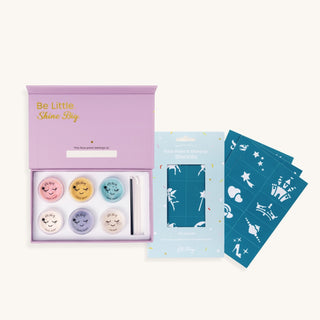
Eco Natural Kids Makeup Pressed Powder Eyeshadow & Blush is the closest product match for this tutorial. It allows a family to choose individual pressed colors rather than beginning with a large multi-shade palette.
The pressed format supports controlled application and lower mess. Start with one light shade, use a clean fingertip or small brush, and keep the color on the mobile eyelid. The product page describes the powder as washable and made without talc, carmine, Lake pigments, or FD&C dyes.
This makes it a practical example for an eyeshadow tutorial for kids built around one soft wash of color instead of a layered adult-style look.
Eco Natural Kids Makeup Pressed Powder Eyeshadow & Blush
$39.99
$44.49
Give her the gift of safe, worry-free beauty play with Eco Natural Kids Makeup Pressed Powder Eyeshadow—crafted in Australia with her delicate skin in mind. These allergy-friendly pressed powders are nut-free, gluten-free, soy-free, and dairy-free. While they do contain coconut-based… read more

Heart-Shaped Makeup Remover Puff
The Heart-Shaped Makeup Remover Puff supports the final and often overlooked part of the tutorial: gentle cleanup.
Use it with water or a cleanser the child already tolerates, then wipe softly rather than rubbing the eyelids repeatedly. Keeping a dedicated removal tool with the makeup also helps establish an apply, play, remove, and wash routine. The product is listed in Popsicle’s makeup-accessory catalogue as a reusable remover option.
Heart-Shaped Makeup Remover Puff
$9.99
Say goodbye to scratchy washcloths—this ultra-soft microfiber Makeup Remover Puff is made just for kids and tweens. Gentle on young skin, it makes washing up after beauty play a breeze. A handy hanging tag lets it dry between uses, and… read more

Common mistakes to avoid
Even a carefully planned eyeshadow tutorial for kids can become uncomfortable when pigment is overapplied, shared between children, placed near the waterline, or removed with too much rubbing.
- Applying too close to the eye: skip the waterline and don’t pack pigment into the inner corner. Kids rub their eyes—keep product on the lid.
- Letting kids share eye products: sharing increases the risk of spreading irritation and infection. If friends are doing makeup together, each child should have their own brush (at minimum).
- Using chunky glitter without guardrails: glitter migration is real. If you choose sparkle, go finer, use less, and keep it on the center lid only.
- Overbuilding color: heavy pigment can read as “performance beauty.” For kids, one blended layer is usually the whole point.
- Skipping removal: sleeping in makeup can irritate eyes and skin. Make removal part of the routine, like brushing teeth.
- Scrubbing to get it off: if removal requires rubbing, the product isn’t a great match. Switch to something that lifts with gentle cleanser and a soft cloth.
Bottom line: a parent-friendly rule for kids eyeshadow
If you take one thing from this Eyeshadow tutorial for kids, let it be this: choose simple, easy-to-remove color and teach clean, gentle habits. Keep eyeshadow as art and self-expression—not correction. Shop with label transparency in mind, avoid known triggers, be cautious with glitter, and patch test when appropriate. For parents who want vetted options in one place, Popsicle Beauty Club is designed to be the practical clean kids’ beauty hub—curated brands, clearer standards, and age-appropriate beauty play.
Sources and further reading
- NIEHS: Cosmetics and Your Health - Helpful overview of what counts as cosmetics and general regulatory context (including premarket approval limits, except color additives).
- FDA: Phthalates in Cosmetics - Background on how certain ingredients may be used in cosmetics and why fragrance labeling can be limited.
For a complete guide on non-toxic play makeup, check out our in-depth resource: The Ultimate Guide to Non-Toxic Play Makeup for Kids for expert tips, product recommendations, and everything you need to know about choosing safe beauty play products for your child.

About the Author: This article was written by the contributing writers at Popsicle Beauty Club—a team of moms, educators, and clean beauty advocates passionate about creating a safer, more imaginative world for kids. We believe in empowering parents with trusted information and offering fun, non-toxic beauty and personal care products that let children play, express, and explore—without compromising their health.
FAQs
What age can kids start wearing eyeshadow?
What ingredients should parents avoid in kids eyeshadow palettes?
How do I keep an Eyeshadow tutorial for kids allergy- and irritation-aware?
Is cream or powder eyeshadow easier for kids to use?
Pressed powder is often easier to control and store, especially when applied lightly with a clean brush. A cream stick can also work when it glides without tugging and removes easily. Avoid loose pigments because they are more likely to scatter or migrate into the eyes.
How should parents remove eyeshadow from a child?
Use a gentle cleanser or micellar water the child already tolerates. Hold a damp pad or soft remover cloth against the closed eyelid briefly, then wipe gently without scrubbing. Stop using the product if redness, burning, swelling, or ongoing irritation appears.
Can glitter be included in an eyeshadow tutorial for kids?
Fine cosmetic shimmer is generally more manageable than loose or chunky glitter. Apply a small amount only to the eyelid, keep it away from the waterline and inner corner, and make sure it can be removed without repeated rubbing.