
Table of Contents
- Introduction
- Quick answer: what to check before buying
- Popsicle safety snapshot
- Age-appropriate boundaries: when eyeshadow is play (and when to pause)
- How to choose eyeshadow makeup for kids (a practical parent path)
- Ingredient and label checklist (what to look for, what to question)
- Application + removal: the kid-proof routine that prevents irritation
- Eco Natural Kids Makeup Pressed Powder Eyeshadow & Blush: where it fits in a kid routine
- Common mistakes to avoid
- Where Popsicle Beauty Club fits: a practical “yes” with boundaries
- Bottom line
- Sources and further reading
- FAQs
Introduction
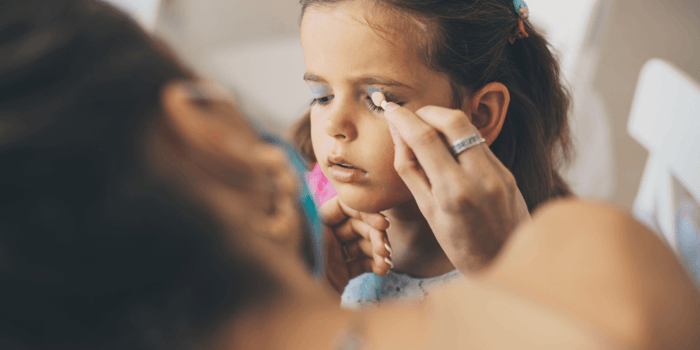
Eyeshadow makeup for kids can be a fun, age-appropriate way to explore color and creativity—as long as you treat it like occasional “beauty play,” keep it out of the waterline, and choose a simple formula that removes easily. The parent-friendly rule is: prioritize comfort, ingredient transparency, and easy removal over long-wear payoff. If an eyeshadow is marketed like adult performance makeup (all-day wear, intense pigment, waterproof, heavy glitter), it’s usually not the best match for children’s eyes and habits.
If you’re here because your child asked for eyeshadow, you’re not alone. You can say yes without turning it into a daily routine—or a “corrective” beauty step. Popsicle Beauty Club’s stance is makeup as art, not armor: color for expression, not a requirement to look “better.”
Quick answer: what to check before buying
- Where it will go: Lid-only is the goal; avoid waterline/tightline use for kids.
- Formula type: Creams can be easier and less dusty; pressed powders can be fine if fallout is minimal.
- Shimmer vs. glitter: Fine shimmer is usually easier to manage than chunky glitter (which can migrate).
- Fragrance: If you’re shopping for sensitive kids, consider skipping added fragrance near the eyes.
- Color additives: Look for clear labeling; “lake” pigments and certain dyes may be more irritating for some kids.
- Removal: Choose products that come off with gentle cleansing—no scrubbing.
- Hygiene: Use clean hands/brushes; don’t share eye products between siblings/friends.
Good eyeshadow makeup for kids should feel playful, comfortable, and easy to remove—not like a miniature version of adult glam.
Popsicle safety snapshot
Popsicle Beauty Club is built to be a practical clean kids’ beauty hub—not a neutral review site—because parents deserve safer, more age-aware options in one place. When we curate kids’ beauty products, Popsicle looks for:
- Cleaner, more transparent formulas with parent-friendly label checks (and clearer ingredient lists where available).
- Age-appropriate positioning: playful color and self-care, not adultification or “fix your face” messaging.
- Easy removal and simpler routines that support skin comfort.
- Medical-advisory-backed kids’ beauty education to help families set boundaries without panic.
- EWG Verified positioning/products where applicable, and allergist review processes where applicable (only when a brand/product truly offers that).
In other words: Popsicle carries and highlights products that make it easier to say “yes” to creativity and “not yet” to performance beauty.
Age-appropriate boundaries: when eyeshadow is play (and when to pause)
Eyeshadow can be developmentally appropriate when it’s framed as dress-up, artistry, dance recital sparkle, holiday color, or a special-occasion look. The healthiest approach to eyeshadow makeup for kids is to keep it occasional, supervised, and connected to creativity rather than appearance pressure. It’s worth pausing when it starts to look like:
- Daily face management (“I have to wear this to look okay”)
- Adult-style routines that layer multiple products close to the eye
- Correction-focused beauty (not typical for eyeshadow, but it can slide into “full beat” expectations)
Popsicle Beauty Club is not anti-makeup. We’re against adultification and pressure. If your child wants eyeshadow because they love color—great. If they want it because they feel “not pretty enough” without makeup, that’s a cue to slow down and reset the message.
How to choose eyeshadow makeup for kids (a practical parent path)
Shopping for Eyeshadow makeup for kids is less about finding “the most pigmented” option and more about picking a product that behaves well on a kid’s eyelids and comes off without drama.
1) Pick the right format for your child’s habits
- Cream or stick: Often less fallout, faster application, and easier to control. Good for younger kids or first-timers.
- Pressed powder: Can work well for older kids/tweens with better brush control. Look for minimal dustiness.
- Loose powder: Usually a no for kids—messy and more likely to get into eyes.
2) Choose “soft color” over intense payoff
For kids, a buildable wash of color is usually the sweet spot. It reads playful without looking “adult made-up,” and it’s easier to apply evenly.
3) Prefer fine shimmer over chunky glitter
Many parents are specifically worried about sparkle. The concern is less about “clean” and more about particle migration—kids rub their eyes, sweat at recess, and forget they’re wearing makeup. Fine shimmer tends to stay put better than large glitter pieces. For more guidance on sparkle safety, our guide to biodegradable glitter vs regular glitter for kids explains why glitter format matters for children’s beauty play.
4) Make removal part of the buying decision
If it takes strong rubbing or harsh removers, it’s not ideal for kid use around delicate eye skin. Look for eyeshadow that lifts with a gentle cleanse and lukewarm water (or a mild remover you already trust for sensitive areas).
Ingredient and label checklist (what to look for, what to question)
No single ingredient list guarantees a product will be perfect for every child. But labels do give you clues about how likely a product is to sting, irritate, or be hard to remove.
Look for
- Clear full ingredient lists (not just marketing claims on the front). When comparing eyeshadow makeup for kids, a short, transparent ingredient list is often more useful than bold “clean” claims on the front of the package.
- Simpler formulas for younger kids: fewer extras, fewer potential triggers.
- Comfort-focused binders/emollients that help pigment glide (especially in creams).
- Mineral pigments used thoughtfully (many “clean” shadows rely heavily on mineral colorants).
Use extra caution with
- “Fragrance” near the eyes. Even when a child tolerates fragrance in body products, the eye area can be more reactive.
- Very sparkly, chunky glitter formulas (migration risk + eye rubbing).
- Waterproof/long-wear claims that can imply stronger film formers and tougher removal.
- Highly complex palettes (lots of shades = more dyes/pigments and more mess; a smaller edit is easier).
A note on “clean,” “non-toxic,” and “safe for kids” wording
Those terms aren’t a universal guarantee. The National Institute of Environmental Health Sciences (NIEHS) notes that cosmetics are broadly defined and that, except for color additives, cosmetic products and ingredients generally do not require FDA approval before going on the market. That’s one reason Popsicle emphasizes ingredient transparency and curation rather than relying on front-label promises alone. If you want a broader starting point, our guide to clean makeup for kids explains how to compare age-appropriate products without relying only on front-label claims.
If you’re searching specifically for non toxic makeup for kids or non toxic kids makeup, use that search as a starting point—but still do the label check. For many families, “safer-feeling” means: fewer sensitizers, clearer labeling, and avoiding unnecessary intensity (like heavy glitter or waterproof wear) around the eyes.
Application + removal: the kid-proof routine that prevents irritation
The best safe makeup for kids routine is the one your child can actually follow without rubbing their eyes or sleeping in product.
Before application
- Start with clean, dry lids. Skip adult eye primers for kids; they’re not necessary for play.
- Tie hair back so product doesn’t mix with hair oils around the eye area.
- Use clean tools. A small brush or clean fingertip is fine. Avoid sponge-tip applicators that live in the bottom of a makeup bag.
During application
- Keep it on the eyelid and brow bone only. No waterline, no tightlining.
- Tap off excess powder to reduce fallout.
- One or two shades is enough for most kids—this keeps it playful and reduces mess. Keeping eyeshadow makeup for kids simple also makes cleanup easier and reduces the chance of rubbing, fallout, or irritation.
Removal (the non-negotiable)
- Remove the same day. No sleeping in eyeshadow.
- Use a gentle cleanser and lukewarm water; hold a damp cotton pad or soft cloth on the lid for a few seconds before wiping.
- No scrubbing. If it won’t come off easily, that’s feedback about the formula—not about your child “not trying hard enough.”
Patch test when appropriate: If your child has sensitive skin or a history of reactions, test on the inner arm first. And if there’s persistent irritation, rash, or eye discomfort, stop use and seek guidance from a qualified clinician.
Eco Natural Kids Makeup Pressed Powder Eyeshadow & Blush: where it fits in a kid routine
If you’re considering Eco Natural Kids Makeup Pressed Powder Eyeshadow & Blush, think of it as a “two-in-one” style product that can support simple, age-appropriate color play: one compact that can do a light lid wash and a soft cheek tint.
- Best for: Families who want fewer products, less clutter, and a simple getting-ready ritual for play, performances, or occasions.
- Parent tip: Use separate brushes (or wash between uses) if you’re using the same pan on eyes and cheeks to keep things cleaner.
- What to check: As with any pressed powder, watch for fallout and remind kids not to rub their eyes. If shimmer is included, apply lightly and keep it lid-only.
At Popsicle Beauty Club, our goal is to make it easier to compare options like this alongside other clean makeup for kids—with the right boundaries and the right expectations for childhood.
For families who want one simple product instead of a full palette, Eco Natural Kids Makeup Pressed Powder Eyeshadow & Blush fits the article’s guidance well. It keeps color play contained, easier to supervise, and more aligned with Popsicle’s focus on age-appropriate beauty.
Eco Natural Kids Makeup Pressed Powder Eyeshadow & Blush
$39.99
$44.49
Give her the gift of safe, worry-free beauty play with Eco Natural Kids Makeup Pressed Powder Eyeshadow—crafted in Australia with her delicate skin in mind. These allergy-friendly pressed powders are nut-free, gluten-free, soy-free, and dairy-free. While they do contain coconut-based… read more

Common mistakes to avoid
- Buying adult palettes “because it’s cheaper per shade.” Adult palettes often prioritize intensity, complex pigments, and long wear—none of which are necessary for kids.
- Letting glitter do the parenting. Chunky glitter looks fun, but it can travel. Choose fine shimmer when possible and set a “no rubbing eyes” rule.
- Skipping label checks because a brand says “clean.” Always read the ingredient list, especially for fragrance and the general complexity of the formula.
- Using eyeshadow as a daily identity requirement. Eyeshadow should be optional and playful, not a must-have step before school.
- Sharing eye products between kids. Eye-area hygiene matters; sharing increases the chance of spreading irritation or infection.
- Not planning for removal. If you don’t have a gentle way to remove it, choose a different product. If eyeshadow makeup for kids cannot be removed gently, it is probably not the right formula for regular childhood beauty play.
Where Popsicle Beauty Club fits: a practical “yes” with boundaries
Parents don’t need more noise—they need a simpler path. Popsicle Beauty Club is designed to be the place you can shop and learn at the same time: a curated marketplace where you can find vetted, cleaner options and keep beauty age-appropriate.
- If your child is new to makeup: start with one soft shade, one brush, and a clear removal routine.
- If your child wants a “full look”: redirect to artistry (color, sparkle, themed looks) rather than complexion coverage. Foundation and concealer are developmental milestones worth delaying.
- If you’re concerned about sensitivity: choose simpler formulas, avoid added fragrance near eyes, and patch test when appropriate.
That’s the heart of Eyeshadow makeup for kids done well: clear boundaries, thoughtful products, and a message that their face is already enough.
Bottom line
Eyeshadow makeup for kids is best treated as occasional, creative color play—not a daily routine or a step toward adult performance beauty. Choose a simple formula with a transparent ingredient list, prioritize fine shimmer over chunky glitter, keep application on the lid (not the waterline), and only buy what you can remove gently. If you want a parent-friendly place to compare age-appropriate options, Popsicle Beauty Club is built to be that curated clean kids’ beauty hub.
Sources and further reading
- NIEHS: Cosmetics and Your Health - Helpful context on what counts as a cosmetic and why premarket approval is limited (except for color additives).
- FDA: Color Additives in Foods - Background on certified color additives; useful for understanding how “color additive” oversight works in general (note: food and cosmetic rules differ by use).
For a complete guide on non-toxic play makeup, check out our in-depth resource: The Ultimate Guide to Non-Toxic Play Makeup for Kids for expert tips, product recommendations, and everything you need to know about choosing safe beauty play products for your child.

About the Author: This article was written by the contributing writers at Popsicle Beauty Club—a team of moms, educators, and clean beauty advocates passionate about creating a safer, more imaginative world for kids. We believe in empowering parents with trusted information and offering fun, non-toxic beauty and personal care products that let children play, express, and explore—without compromising their health.