
Table of Contents
- Introduction
- Answer-ready checklist: the ingredient categories parents often limit
- Popsicle safety snapshot
- What “avoid” really means for kids (and why it’s different than adults)
- Ingredient and label checklist (what to check before buying)
- By product type: what to be stricter about
- How to choose (a practical decision path)
- Common mistakes to avoid
- What makeup brands should I avoid? (A safer way to think about it)
- When to patch test, pause, or ask for help
- Bottom line
- Sources and further reading
- FAQs
Introduction
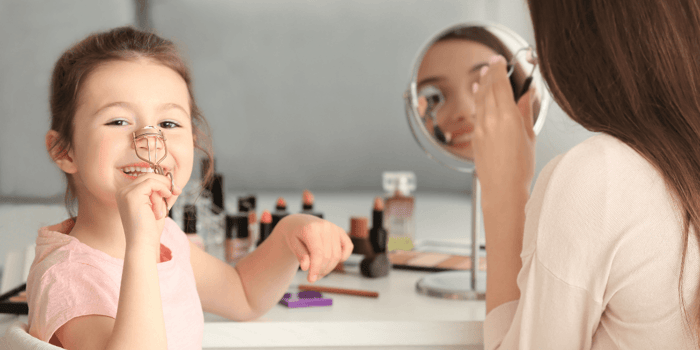
When parents ask, “What ingredients should I avoid in kids makeup,” the most practical approach is to avoid (or at least minimize) products with undisclosed fragrance, unnecessarily complex formulas, and higher-risk colorant or glitter situations—especially near the eyes and lips. Look for short, transparent ingredient lists, pigments that are clearly identified, and products designed to remove easily so kids aren’t scrubbing delicate skin.
Also important: for children, the “best” makeup is usually makeup as art, not armor—fun color, sparkle, and dress-up—not complexion coverage or routines designed to “fix” a face. At Popsicle Beauty Club, we treat correction-focused products like foundation and concealer as developmental milestones worth delaying, not routine childhood purchases.
Answer-ready checklist: the ingredient categories parents often limit
- Fragrance / Parfum (and vague “flavor” on lip products): can hide many individual ingredients; a common trigger for sensitive kids.
- Products with unclear colorant labeling (especially around eyes/lips): choose brands that clearly list pigments/color additives and use them appropriately for the area of the face.
- “Long-wear,” “waterproof,” and heavy-duty film formers for kids: often harder to remove and can lead to rubbing/scrubbing.
- Loose glitter and craft-grade sparkle: higher chance of migration into eyes; prefer eye-safe sparkle formats made for cosmetic use and use with supervision.
- Highly sensitizing essential oils (especially in leave-on products): “natural” can still irritate.
- Very long ingredient lists with lots of extras (multiple fragrances, multiple botanical extracts, multiple actives): more opportunities for irritation without clear benefit for kids.
If you only remember one rule: kids’ makeup should be easy to remove, clearly labeled, and used as playful color—not daily correction. Parents searching What Ingredients Should I Avoid in Kids Makeup are usually looking for products that combine simple ingredient lists with easy removal and age-appropriate use.
Popsicle safety snapshot
Popsicle Beauty Club is a practical clean kids’ beauty hub for parents who want safer, vetted options in one place—without turning childhood into a 10-step routine.
- Medical-advisory-backed kids’ beauty education: We build our guidance around child-appropriate use, skin comfort, and realistic parent boundaries (not adult trend pressure).
- EWG Verified positioning/products where applicable: When a product is explicitly EWG Verified, we’ll say so. We don’t imply it when it’s not stated.
- Allergist review process where applicable: Some products/brands may be reviewed through an allergist-informed lens where applicable; it’s not a universal guarantee.
- Curated marketplace of vetted clean kids’ beauty brands: Popsicle carries brands we believe fit cleaner-ingredient standards, clearer labeling, and age-appropriate positioning.
Bottom-line Popsicle point of view: We’re not anti-makeup—we’re against adultification, performance beauty, and correction-focused beauty reaching kids too early.
What “avoid” really means for kids (and why it’s different than adults)
Kids aren’t just “small adults” when it comes to beauty routines. They tend to:
- Touch their faces more (more hand-to-mouth/eye contact).
- Use more product than intended during play (thicker application, layering, sharing).
- Scrub harder to remove (especially if the product is long-wear), which can irritate skin.
- Use products in “creative” ways (lip gloss on cheeks, shimmer near eyes, etc.).
So when you’re deciding What ingredients should I avoid in kids makeup, think in terms of exposure + irritation risk + removability + label transparency, not just whether an ingredient is “good” or “bad” in isolation.
Ingredient and label checklist (what to check before buying)
Use this as a quick label-reading system while shopping online or in-store. Learning What Ingredients Should I Avoid in Kids Makeup becomes much easier once you know how to compare ingredient lists instead of relying on front-of-package marketing. If you'd like to go deeper into cosmetic labels, our guide to understanding ingredient safety explains how parents can compare children's beauty products with more confidence.
1) Fragrance: decide your household rule
Fragrance is one of the biggest “parent decision points” because it can be irritating for some kids and it can also be non-transparent. The FDA notes that individual fragrance ingredients do not have to be listed separately on cosmetic labels, which can make it harder to know what’s inside a “fragrance” blend.
- If your child is sensitive: consider fragrance-free options when possible, especially for face and lip products.
- If you allow fragrance: keep fragrance away from eyes/lips, and favor rinse-off products over leave-on.
2) Color additives and pigments: look for clarity
Bright, fun color is part of kid makeup—but parents can still choose more transparent labeling. In the U.S., the FDA explains that color additives are regulated differently than typical cosmetic ingredients, and certain color additives are subject to batch certification.
- Look for: clearly identified pigments/color additives (not vague “colorants”).
- Be extra cautious: with products used on the waterline or very close to eyes.
3) “Long-wear” and “waterproof”: pause for kids
Long-wear makeup can be perfectly fine for adults, but for kids it often creates a removal problem. If a product needs an oil cleanser, double cleanse, or heavy rubbing to come off, it’s usually not ideal for everyday kid use.
- Look for: “easy wash-off,” “gentle removal,” or kid-intended use instructions.
- Avoid as a default: long-wear, transfer-proof, waterproof claims for kids’ day-to-day play.
4) Essential oils and botanical “extras”: more isn’t always better
Parents sometimes assume “plant-based” automatically means gentle. In reality, essential oils and fragrant botanical extracts can be sensitizing, especially in leave-on products. For makeup play, simpler formulas often win.
- Look for: fewer fragrance-related botanicals if your child is reactive.
- Remember: “clean” should still mean “comfortable on skin.”
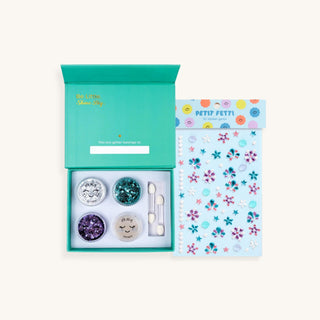
5) Glitter and shimmer: choose cosmetic-grade and supervised use
Loose glitter can migrate. For kids, prefer pressed shimmer, gels, or balms made for cosmetic use, and set clear “no rubbing eyes” rules. If a child has itchy eyes or allergies, skip eye-area sparkle altogether. For more guidance on choosing sparkle safely, see our guide to biodegradable glitter vs. regular glitter for kids, which explains why cosmetic-grade glitter is the better option for children's beauty play.
By product type: what to be stricter about
Lip gloss / balm
- Stricter on: “flavor,” fragrance, and anything that tastes strongly scented (kids reapply and may ingest small amounts).
- Prefer: simpler, moisturizing bases; easy reapplication; clear labeling.
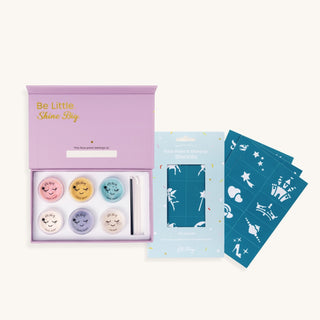
If lip products are your child's first introduction to makeup, the Natural Lip Gloss for Kids – Gift Set or Singles is a thoughtful option that aligns with the label-reading approach described in this guide, offering playful color while keeping formulas simple and age-appropriate.
Natural Lip Gloss for Kids – Gift Set or Singles
$16.99
This clean lip gloss gift set for kids includes three naturally flavored glosses—Strawberry, Cotton Candy, and Grape—in a shop–style gift box designed by Australian artist Rosa Ronco. Handmade in Australia with natural, vegan-friendly, biodegradable, and non-toxic ingredients, each gloss uses… read more

Eye products (shadow, mascara, liner)
- Stricter on: loose glitter, heavy fragrance, and anything marketed as long-wear for kids.
- Prefer: minimal formulas and easy wash-off. And keep eye makeup occasional—party, performance, dress-up—not daily “face management.”
Face paint (for costumes, sports, parties)
- Stricter on: craft products that aren’t made for skin; unclear ingredient lists.
- Prefer: cosmetic face paints designed for skin contact and easy removal. Apply to healthy skin only (skip compromised/irritated areas).
Nail polish
- Stricter on: strong solvent odor and products that require intense remover routines at home.
- Prefer: kid-appropriate polish options that align with your household’s ingredient standards and can be removed without turning it into a harsh weekly ritual.
When parents ask What ingredients should I avoid in kids makeup, the honest answer is that it changes by category: what’s “fine” on nails is not what you want near eyes or lips.
How to choose (a practical decision path)
1. Start with the use case: dress-up play at home, a recital, a birthday party, or everyday “fun.” If it’s everyday, keep the routine minimal—lip balm/gloss, a little sparkle, maybe nail color.
2. Set the boundary: Popsicle’s Foundationless stance recommends delaying complexion coverage (foundation, concealer, simple skin care, simple moisturizers) so makeup stays art—not self-correction.
3. Choose the simplest product format that delivers the fun: a balm tint, a single shimmer, a washable face paint—rather than a full kit of complicated steps.
Once you understand What Ingredients Should I Avoid in Kids Makeup, the next step is choosing products that reflect those same principles. The Natural Kids Play Makeup Kit by Oh Flossy focuses on playful color, gentle ingredients, and easy removal—making it a great example of age-appropriate beauty play.
Natural Kids Play Makeup Kit
$34.99
$40.99
Looking for a clean beauty gift that’s safe, fun, and worry-free? This natural play makeup kit lets little ones explore color and creativity with non-toxic, skin-friendly formulas parents trust. Each kit includes vibrant loose powder eyeshadows, soft blush, lipstick, and… read more

4. Decide your fragrance rule: fragrance-free for sensitive kids; otherwise limit fragrance to non-face categories when possible.
5. Check removability: if it doesn’t come off easily with gentle cleansing, it’s not a great “starter” product. Families asking What Ingredients Should I Avoid in Kids Makeup often discover that choosing fewer, simpler products leads to better everyday experiences.
6. Shop curated when you’re overwhelmed: Popsicle Beauty Club is built to help families compare vetted clean kids’ beauty options in one place, with parent-friendly label checks and age-appropriate positioning.
Common mistakes to avoid
- Buying adult “clean” makeup and assuming it’s kid-appropriate: even clean adult makeup can be long-wear, heavily fragranced, or simply unnecessary for kids.
- Turning makeup into daily correction: if the routine is about hiding, fixing, or “needing” a face, it’s time to pause. Makeup should be expression, not correction.
- Ignoring the label because the packaging is cute: cute doesn’t equal transparent. Always read the ingredient list.
- Overdoing glitter near eyes: choose safer sparkle formats and supervise use.
- Skipping a patch test: especially for sensitive kids or first-time products. Patch test when appropriate (for example, a small amount on the inner arm) and wait to see if irritation develops.
- Letting kids share applicators freely: sharing can spread irritation and germs. Give each child their own applicator or sanitize between use.
If you’ve been searching variations of What ingredients should I avoid in kids makeup, this is often the real “aha”: how the product is used (daily, heavy, hard-to-remove, shared) can matter as much as what’s in it.
What makeup brands should I avoid? (A safer way to think about it)
It’s tempting to want a blacklist, but brand formulations change, product lines vary, and “for kids” language is not regulated as a safety guarantee. Instead of asking only What makeup brands should I avoid, use a product-by-product standard:
- Do they list full ingredients clearly?
- Do they avoid vague fragrance disclosure—or at least explain it?
- Is it age-appropriately positioned (play, creativity, easy removal)?
- Is the product type appropriate for where it goes (eyes/lips vs nails)?
- Does it encourage correction-focused messaging? If yes, that’s a values mismatch for kids.
Parents asking What Ingredients Should I Avoid in Kids Makeup often find that comparing individual products is far more helpful than trying to avoid entire brands. At Popsicle, we focus on carrying and highlighting brands that meet Popsicle’s clean kids’ beauty standards and keep beauty playful and age-aware.
When to patch test, pause, or ask for help
Even with careful shopping, kids can react to otherwise “nice” products. Understanding What Ingredients Should I Avoid in Kids Makeup is only one part of the process—watching how your child's skin responds to new products is just as important. Consider pausing and seeking guidance from a qualified clinician if your child has:
- Persistent rash, hives, swelling, or stinging with multiple products
- Eye-area irritation or recurring watery/itchy eyes after makeup play
- Acne distress that’s turning into shame or compulsive covering
Makeup shouldn’t be the solution to discomfort. If a child is struggling with skin issues, a clinician can help you prioritize comfort and appropriate care—without making coverage the default.
Bottom line
What Ingredients Should I Avoid in Kids Makeup? Start by focusing on transparent labels, simple formulas, gentle removal, and products designed specifically for children's beauty play.. Choose clearly labeled, easy-removal products that keep makeup in the lane of art and self-expression—not correction or growing up faster.
And if you want help sorting through options, Popsicle Beauty Club is designed to be the curated clean kids’ beauty hub where parents can shop vetted, age-appropriate picks with less overwhelm.
Sources and further reading
- NIEHS: Cosmetics and Your Health - Explains what counts as cosmetics and notes that most cosmetics/ingredients are not FDA preapproved (except color additives).
- FDA: Phthalates in Cosmetics - Notes how fragrance labeling works and why individual fragrance ingredients may not be listed.
- FDA: Color Additives in Foods - Helpful background on how certified color additives are regulated and why “color additive” is its own category.
- NIEHS: Endocrine Disruptors - General overview of endocrine-disrupting chemicals and common exposure routes, including cosmetics and fragrance.
For a complete guide on non-toxic play makeup, check out our in-depth resource: The Ultimate Guide to Non-Toxic Play Makeup for Kids for expert tips, product recommendations, and everything you need to know about choosing safe beauty play products for your child.
About the Author: This article was written by the contributing writers at Popsicle Beauty Club—a team of moms, educators, and clean beauty advocates passionate about creating a safer, more imaginative world for kids. We believe in empowering parents with trusted information and offering fun, non-toxic beauty and personal care products that let children play, express, and explore—without compromising their health.