
Table of Contents
- Introduction
- Quick answer: what to look for in a clean beauty subscription box
- Popsicle safety snapshot
- What “clean” means in subscription boxes (and where it can get fuzzy)
- How to choose a clean beauty subscription box (parent decision path)
- Ingredient and label checklist (what to check before buying)
- What a kid-appropriate box should include (makeup as art, not armor)
- Common mistakes to avoid
- Where Popsicle Beauty Club fits (a practical alternative to surprise boxes)
- Bottom line
- Sources and further reading
- FAQs
Introduction
If you’re searching for a clean beauty subscription box, the parent-friendly goal is simple: get fun, age-appropriate products with clearer labels and fewer “adult routine” pressures—without turning your child’s bathroom shelf into a 10-step regimen. The best boxes feel like a curated edit (gentle self-care + playful color), not a monthly delivery of trend-driven skincare or complexion-correcting makeup.
Bottom-line rule: choose a clean beauty subscription box that prioritizes transparent ingredients, easy removal, and kid-appropriate product types (think lip care, nail color, gentle wash, light moisturizer, hair accessories), and be cautious with anything that pushes anti-aging, “poreless,” exfoliating acids, or correction-focused face products.
Quick answer: what to look for in a clean beauty subscription box
- Clear ingredient lists on every item (not just marketing claims on the outer box).
- Age-appropriate categories: lip balm/gloss, gentle body care, nail color, hair care, face gems/costume beauty, simple tools.
- Low-drama formulas: fewer “mystery blends,” reasonable fragrance levels, and products that rinse off or remove easily.
- Boundaries built in: no pressure toward foundation, concealer, simple skin care, simple moisturizers, or daily “fix your face” routines for kids and tweens.
- Parent control: the ability to skip, swap, preview, or gift—because not every month fits your child’s skin or your family’s values.
Popsicle safety snapshot
Popsicle Beauty Club is designed to be a practical clean kids’ beauty hub for families who want safer-feeling, vetted options in one place—without needing to become cosmetic chemists.
- Curated marketplace: Popsicle carries a tight edit of kids’ beauty, skincare, hair care, nail, and wellness brands that fit our age-appropriate positioning and ingredient transparency expectations.
- Medical-advisory-backed education: our kids’ beauty education is shaped with medical-advisory input (education, not medical care).
- EWG Verified where applicable: when a product is actually EWG Verified, that’s meaningful—and we don’t treat “clean” as a substitute for verifiable standards.
- Allergist review process where applicable: when allergist review is part of a brand/product’s documentation or evaluation, we take that into account—without implying anything is “allergy-proof.”
- Foundationless stance: we’re not anti-makeup. We’re against adultification and correction-focused beauty reaching kids too early. Makeup should be art, not armor.
If you want the convenience of a subscription with the control of a curated shop, consider building your own “subscription rhythm” by reordering a few tried-and-true staples from Popsicle on a schedule that matches your child (not the algorithm).
What “clean” means in subscription boxes (and where it can get fuzzy)
“Clean” is not a regulated, universal label in beauty. In a subscription model, that can create two common problems: (1) you receive products that are “clean-ish” by one brand’s definition but not aligned with your family’s triggers, and (2) you receive adult trend products simply because they’re popular—regardless of age-appropriateness.
Here’s the parent-friendly way to interpret clean claims:
- Clean claim ≠ child-appropriate. A serum can be “clean” and still be unnecessary (or irritating) for a tween.
- Clean claim ≠ fragrance-free. Many “clean” items use essential oils or natural fragrance components that can still bother sensitive skin.
- Clean claim ≠ fully transparent. U.S. labeling can allow “fragrance” to be listed without disclosing each component. The FDA notes that individual fragrance ingredients do not have to be listed separately, which can make it harder to label-check for personal triggers.
That’s why the right clean beauty subscription box should give you: full ingredient lists, category clarity (what you’re getting and why), and an easy way to opt out of product types you don’t want in your home.
If you want a broader framework before committing to a subscription, our guide to clean beauty products for kids explains how to evaluate labels, fragrance, ingredients, product purpose, and age-appropriate routines.
How to choose a clean beauty subscription box (parent decision path)
Before you subscribe, decide what problem you’re solving. Is it gifting? A safer-feeling intro to beauty play? A routine reset for a tween who’s been influenced by adult skincare content? Use the questions below as your filter.
1) Choose the age lane first
- Little kids (approx. 3–7): prioritize rinse-off bath/body, gentle detangling, nail color that’s easy to remove, and costume-style fun (face gems) rather than “daily face” products.
- Tweens (approx. 8–12): think simple hygiene + light self-care: cleanser, basic moisturizer if needed, lip care, body care, nail, hair.
- Teens: still keep it simple; if acne or irritation is driving interest in products, consider clinician guidance rather than trying to “box” your way into a fix.
For tweens who genuinely need a simple skincare routine, the Fragrance-Free Kids Skincare Set by Natural Outcome pairs a foaming cleanser with a lightweight moisturizer in a two-step format rather than encouraging a long routine.
Fragrance-Free Kids Skincare Set

$29.99
$32.98
The Natural Outcome fragrance-free Kids Skincare Set includes two everyday essentials—the Teen Skin Ultra Gentle Foaming Face Wash and the Teen Skin Calm Control non toxic face moisturizer. Designed for teens and pre-teens, this plant-based duo makes skincare simple and… read more
2) Pick your “no thanks” categories
Popsicle’s view: foundation and other correction-focused complexion products are developmental milestones worth delaying, not routine childhood purchases. A subscription can accidentally normalize “covering” as daily maintenance. If the box includes or encourages foundation, concealer, simple skin care, simple moisturizers, or blemish-hiding language, that’s a strong signal to pause.
3) Decide how you feel about fragrance
Fragrance is one of the most common reasons parents regret a subscription. If your child has sensitive skin or you’re trying to reduce avoidable exposures, look for fragrance-free options or a box that lets you select fragrance preferences. If fragrance is included, you’ll want the ability to preview products and skip a month.
4) Look for removal and rinse-off realism
For kids, “clean” is also about easy removal. Long-wear stains, heavy glitter, and products that require strong removers can create irritation, eye rubbing, and bedtime battles. A well-designed box should include kid-friendly cleansing support (gentle cleanser, soft cloth, simple balm) or stick to products that wash off easily.
Ingredient and label checklist (what to check before buying)
You don’t need to panic-read labels—but you do want a repeatable checklist. Use this when evaluating a clean beauty subscription box or any individual item inside it.
- “Fragrance” / “Parfum”: If your child is reactive, this is a key flag to investigate. The FDA explains that fragrance ingredients may not be individually listed, which limits how precise your label check can be.
- Essential oils and botanical blends: Natural doesn’t automatically mean gentle. If your child has eczema-prone or very sensitive skin, simpler can be better.
- Strong actives (especially for tweens): Be cautious with frequent exfoliation (AHAs/BHAs), retinoids, and “anti-aging” positioning. For many kids, the best routine is basic cleansing, moisturizing when needed, and sun protection—with adult-level actives saved for later or guided by a clinician.
- Dyes and pigments: If your family avoids certain synthetic dyes, confirm what’s used in color cosmetics. (Parents often connect dye concerns across categories; for context, California OEHHA has reviewed evidence on synthetic food dyes and neurobehavioral outcomes in children. Food and cosmetics are different regulatory lanes, but the “why we avoid dyes” mindset is common.)
- Glitter and shimmer: For eye-area products, look for guidance on safe use and removal. Loose glitter can migrate; keep sparkle away from the waterline, and prioritize face gems or cosmetic-grade sparkle designed for skin contact.
- SPF products: Sunscreen can be great, but it’s also easy to get wrong (application amount, reapplication, eye stinging). If a box includes SPF, check whether it’s age-appropriate and whether your child tolerates it. When in doubt, choose a sunscreen you already know works for your family rather than letting a surprise product set the standard.
Patch test note: When appropriate, patch test new products (especially leave-on skincare) on a small area first, and stop if irritation shows up. If your child has persistent rash, burning, or distress, seek guidance from a qualified clinician.
What a kid-appropriate box should include (makeup as art, not armor)
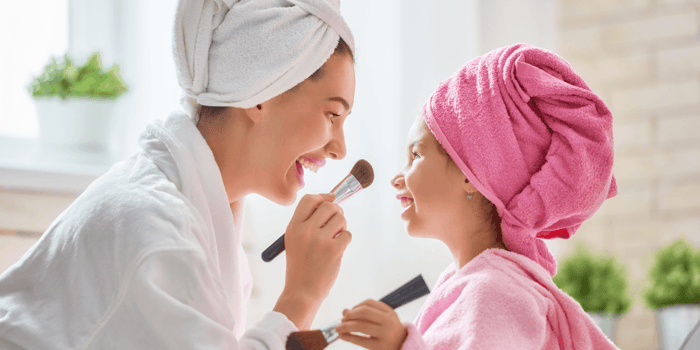
A great subscription for kids and tweens makes room for creativity without teaching “your natural face needs fixing.” Here are categories that tend to support that balance:
- Lip care: balms, subtle glosses, and lip oils that feel like comfort + fun.
- Nails: playful colors, simple nail art add-ons, and removers that don’t turn into a chemical-smelling ordeal.
- Gentle body care: mild wash, lotion, or hand cream for real-life dryness (sports, swimming, winter).
- Hair care: detanglers, gentle styling aids, satin scrunchies, or brushes—practical and confidence-building without adult beauty messaging.
- Play accessories: face gems, fun clips, temporary shimmer for special occasions—things that signal “this is costume/play,” not “this is my corrected face.”
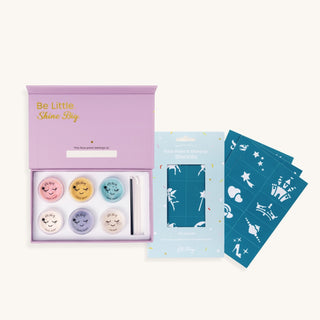
For a play-focused addition to a parent-curated box, the Natural Kids Play Makeup Kit by Oh Flossy combines eyeshadow, blush, lipstick, and child-sized applicators in a giftable format that washes off with water.
Natural Kids Play Makeup Kit

$34.99
$40.99
Looking for a clean beauty gift that’s safe, fun, and worry-free? This natural play makeup kit lets little ones explore color and creativity with non-toxic, skin-friendly formulas parents trust. Each kit includes vibrant loose powder eyeshadows, soft blush, lipstick, and… read more
What we’d deprioritize for most kids: adult-style “glass skin” routines, pore/texture obsession, and any product framed around concealment or complexion perfection. That’s where beauty can shift from expression into performance.
Common mistakes to avoid
- Subscribing before you know your child’s triggers. If you don’t already know how your child does with fragrance, essential oils, or certain preservatives, start with one or two controlled products—then expand.
- Letting the box set the routine. A clean beauty subscription box should fit into your family’s boundaries, not override them. It’s okay to say: “We use this for play/parties, not daily school mornings.”
- Accidentally normalizing correction-focused beauty. If a box includes language about covering, perfecting, pore-minimizing, or “fixing,” that’s not kid beauty. Popsicle’s Foundationless stance is that complexion coverage is a milestone worth delaying.
- Ignoring removal. Long-wear products can cause rubbing and irritation, especially around eyes. Choose washable formulas and keep cleansing gentle.
- Stockpiling because it’s a subscription. Kids outgrow scents, textures, and interests quickly. Pick a plan with skip/pause controls and don’t be afraid to cancel once you’ve found a few staples.
- Assuming “clean” equals “risk-free.” Even well-intentioned formulas can irritate. Labels, patch testing, and your child’s comfort matter more than buzzwords.
Where Popsicle Beauty Club fits (a practical alternative to surprise boxes)
If your main reason for subscribing is “I want someone to vet this for me,” Popsicle Beauty Club is built for exactly that—without requiring you to accept surprise items or adult trend categories.
If you’re using a clean beauty subscription box mainly for gifting or discovery, our guide to clean kids beauty brands and giftable sets shows how to compare age fit, ingredient transparency, easy removal, and whether every item in a set is something a child will realistically use.
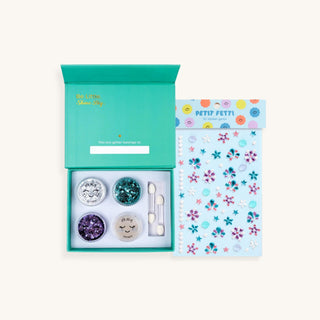
- Build a mini box yourself: choose 3–5 staples that match your child’s age and sensitivity (lip care + nails + gentle body care + hair detangler is a common, low-drama start).
- Shop by purpose, not hype: “first makeup play,” “dance recital,” “dry hands,” “swim-season hair,” “giftable set.”
- Stay Foundationless on purpose: keep makeup focused on color, sparkle, and creativity—not complexion correction. This protects both skin comfort and self-perception.
In other words: you can get the convenience benefits of a clean beauty subscription box (curation, discovery, gifting) while keeping parent control over what enters your home.
Bottom line
The best clean beauty subscription box is the one that makes kid self-care easier and more joyful—without importing adult beauty pressures. Look for transparent labels, simple product categories, easy removal, and skip/swap controls. And keep complexion correction-focused products in the “later milestone” category so makeup stays what it should be for kids: art, not armor.
Sources and further reading
- NIEHS: Cosmetics and Your Health - Explains what cosmetics are and notes most cosmetics/ingredients aren’t FDA preapproved (except color additives).
- FDA: Phthalates in Cosmetics - Notes how phthalates may be used and explains labeling limits around “fragrance.”
- Parents: Tweens are buying adult skincare, but derms recommend these products - Reports dermatologist guidance favoring simple routines for young skin over adult-level actives.
Curious about which harmful ingredients to avoid in your child's beauty products? Read The Truth About Harmful Beauty Ingredients for Kids to uncover the hidden toxins in mainstream makeup, skincare, and hair care—and discover safer alternatives.
About the Author: This article was written by the contributing writers at Popsicle Beauty Club—a team of moms, educators, and clean beauty advocates passionate about creating a safer, more imaginative world for kids. We believe in empowering parents with trusted information and offering fun, non-toxic beauty and personal care products that let children play, express, and explore—without compromising their health.
FAQs
Is a clean beauty subscription box actually safer for kids?
What should I do if my tween wants “Sephora-style” skincare in a subscription box?
What are kid-appropriate alternatives if a box includes complexion products?
Are subscription beauty boxes a good choice for sensitive skin?
They can be, but only when parents can preview ingredients and skip products that do not suit the child. When evaluating a clean beauty subscription box for sensitive skin, check fragrance, botanicals, known triggers, and patch test new leave-on products when appropriate.
Are beauty subscription boxes good birthday or holiday gifts for tweens?
They can be a fun gift when the products are age-appropriate and the parent can preview, skip, or swap items. A curated one-time box or parent-built bundle may be easier to control than an open-ended subscription, especially when you are still learning the child’s preferences.
How many beauty products should a child receive in a subscription box?
There is no ideal number, but smaller is often easier to manage. A few useful products that fit the child’s age and routine can be more practical than a large monthly assortment that creates clutter or introduces unnecessary steps.