

Table of Contents
- Introduction
- Quick Answer: What to Look for in Sensory Friendly Beauty for Kids
- Popsicle Safety Snapshot
- What Does Sensory-Friendly Beauty Actually Mean?
- How Sensory Sensitivity Can Show Up During Beauty Routines
- How to Choose Sensory Friendly Beauty for Kids
- Fragrance-Free vs. Unscented: Why It Matters
- Product Example: A Fragrance-Free Foaming Wash
- Texture Guide: Foam, Gel, Lotion, Balm, and Oil
- Product Example: A Lightweight Fragrance-Free Moisturizer
- Ingredient and Label Checklist for Sensory-Sensitive Families
- When Sensory Sensitivity Overlaps With Reactive Skin
- Age-Appropriate Beauty Play Without Sensory Pressure
- How to Introduce a New Product Without Overwhelm
- Common Mistakes to Avoid
- Where Popsicle Beauty Club Fits
- Final Thoughts
- FAQs
Introduction
Choosing sensory friendly beauty for kids is less about finding one perfect brand and more about finding products that reduce unnecessary sensory friction.
For some children, the biggest issue is strong scent. For others, it may be sticky textures, greasy residue, foaming products, powder fallout, tugging during hair care, or the feeling of a product drying on the skin. A product can look gentle on the shelf and still be completely wrong for the child using it.
The most practical approach is to identify the specific sensory concern, introduce one simple product at a time, and keep beauty optional, predictable, and age-appropriate.
At Popsicle Beauty Club, the goal is not to encourage children to use more beauty products. It is to help parents choose fewer, better-fitting options with transparent labels, manageable textures, easy removal, and beauty play that stays rooted in expression rather than correction.
Quick Answer: What to Look for in Sensory Friendly Beauty for Kids
When comparing sensory friendly beauty for kids, focus on the actual experience of using the product.
Look for:
- Fragrance-free or clearly described scent options when smell is a concern.
- Predictable textures such as a light lotion, soft balm, airy foam, or easy-rinse gel.
- No unnecessary sensory effects such as tingling, cooling, warming, plumping, or gritty exfoliation.
- Clear ingredient lists that make known personal triggers easier to identify.
- Easy application and cleanup without aggressive rubbing.
- Simple packaging a child can comfortably manage.
- Short routines with one new product introduced at a time.
- Age-appropriate beauty choices that focus on play, care, color, and creativity rather than correcting a child’s appearance.
The best option is not necessarily the product with the longest list of “clean” claims. It is the one your child can comfortably tolerate and use without pressure.
Popsicle Safety Snapshot
Popsicle Beauty Club is a curated clean kids’ beauty marketplace and educational resource designed to help parents compare child-centered products without sorting through an adult beauty aisle first.
Our approach emphasizes:
- Ingredient transparency: Parents should be able to understand what they are buying.
- Fragrance awareness: Strong scent can be a significant sensory concern for some children.
- Texture choice: Different children may prefer foam, gel, lotion, balm, or oil.
- Simple routines: More products do not automatically mean better care.
- Easy removal: Beauty play should not require aggressive rubbing or complicated cleansing.
- Patch testing when appropriate: Especially when introducing a new leave-on product.
- Foundationless boundaries: Makeup should remain focused on art, color, celebration, and self-expression rather than correcting a child’s face.
Sensory friendly beauty for kids starts with recognizing that sensory comfort is personal. A texture that feels weightless to one child can feel sticky, heavy, wet, or distracting to another.
What Does Sensory-Friendly Beauty Actually Mean?
“Sensory-friendly” is useful as a shopping concept, but the label alone cannot tell you whether a product will work for your child.
In practical parent terms, sensory friendly beauty for kids means reducing intensity, surprise, and friction wherever possible.
A sensory-considerate product may offer:
- Little or no added scent.
- A familiar or predictable texture.
- Straightforward application.
- An easy-open pump, tube, or cap.
- No unnecessary tingling or warming effects.
- Easy rinse-off or wipe-off.
- Clear directions.
- Transparent ingredient information.
- Fewer steps in the overall routine.
The key word is predictability.
If a child knows how something will smell, feel, spread, dry, and come off, they can make a more comfortable choice about whether they want to use it.
Sensory Needs at a Glance
| Sensory friction point | What may help | What to reconsider |
|---|---|---|
| Strong scent | Fragrance-free products or clearly described light scent | Layered fragrance, perfume-heavy lotions, body mists |
| Sticky feel | Light lotion, small amounts of balm, fast-absorbing gel | Thick glosses or tacky leave-on products |
| Heavy residue | Easy-rinse cleanser or lightweight moisturizer | Multiple heavy leave-on layers |
| Powder discomfort | Creamier color formats or skipping powder products | Loose powder and fallout-heavy shimmer |
| Difficult removal | Washable formulas and gentle rinse-off products | Waterproof and long-wear makeup |
| Hair tugging | Detangler with good slip and gentle tools | Brushing dry knots aggressively |
| Too many steps | Short, one-purpose routines | Multi-step adult-style skincare |
| Sensory surprise | Familiar textures and simple products | Tingling, cooling, warming, plumping formulas |
How Sensory Sensitivity Can Show Up During Beauty Routines
Sensory discomfort does not always appear as visible irritation.
A child may:
- Refuse to use a product.
- Wipe it off immediately.
- Say that it feels “weird.”
- Avoid skincare or bath time.
- Resist hair brushing.
- Dislike having anything left on the face.
- Become uncomfortable around strong scents.
- Complain about sticky hands.
- Become upset when makeup has to be scrubbed away.
Understanding what part of the experience is uncomfortable is more helpful than simply searching for a product marketed as gentle.
Scent Sensitivity
Some children dislike fragrance even when it does not cause a visible skin reaction.
Possible scent triggers can include:
- Perfume-like fragrance.
- Strong fruit or candy scents.
- Essential oils.
- Scented hair products.
- Body wash followed by scented lotion and body mist.
- Products whose smell remains on the skin for hours.
If scent is the main issue, choosing fragrance-free sensory friendly beauty for kids can remove one major variable while you learn what smells your child comfortably tolerates.
Texture Sensitivity
Texture preferences vary widely.
One child may enjoy foam but dislike lotion. Another may prefer a balm because it stays exactly where it is applied instead of dripping.
Common texture concerns include:
- Sticky lip gloss.
- Greasy oils.
- Thick creams.
- Slippery gels.
- Powder residue.
- Glitter.
- Products that dry down tight.
- Lotions that take too long to absorb.
That is why shopping for sensory friendly beauty for kids should focus on the specific product format, not just the brand name.
Touch and Removal Sensitivity
Sometimes the biggest problem appears at removal.
A child may dislike:
- Scrubbing with a washcloth.
- Repeated wiping around the eyes.
- Removing stubborn glitter.
- Peeling adhesive decorations.
- Tugging during hair detangling.
- Multiple cleansing steps.
A product that is fun to apply but miserable to remove is probably not the right sensory match.
Routine Overload
Every extra skincare or beauty step introduces another:
- Texture.
- Smell.
- Application.
- Drying period.
- Removal step.
- Decision.
A seven-step routine can therefore create sensory overload even when every individual product is considered gentle.
For most children, simpler is easier.
How to Choose Sensory Friendly Beauty for Kids
The easiest way to shop is to work backward from the child’s actual discomfort.
1. Identify the Main Friction Point
Ask:
What does my child dislike about the experience?
Is it:
- Smell?
- Stickiness?
- Greasiness?
- Powder?
- Water on the face?
- Foam?
- Hair tugging?
- Product temperature?
- Rubbing during removal?
- Too many steps?
Once the main issue is clear, you can make a much more focused choice.
2. Control One Variable at a Time
If scent is the problem, try changing the fragrance profile before changing several other things.
If texture is the problem, keep the rest of the routine familiar and try a different format.
Introducing several new products simultaneously makes it much harder to know what your child actually likes or dislikes.
3. Keep the Routine Short
A practical child-centered routine may be as simple as:
- Gentle cleansing when needed.
- Moisturizer when the skin needs it.
- Age-appropriate sun protection.
- Hair care that reduces knots and pulling.
- Optional lip, nail, or play-color products when the child wants them.
That is enough for many children, and it reflects one of the most useful principles of sensory friendly beauty for kids: fewer steps mean fewer textures, scents, and sensations to manage.
4. Test Texture Before Committing to a Full Routine
Whenever practical, start with a small amount.
Let your child experience the product on the hand or arm before introducing it to the face or a larger body area.
This can reveal preferences very quickly:
- “Too sticky.”
- “I like the foam.”
- “The smell is too strong.”
- “It feels greasy.”
- “This one disappears quickly.”
That feedback is useful shopping information.
5. Plan Removal Before Application
Before adding makeup, glitter, face paint, or another play product, ask:
How will we remove this?
Products that wash away gently are often easier choices for children who dislike rubbing and repetitive touch.
Fragrance-Free vs. Unscented: Why It Matters
For families exploring sensory friendly beauty for kids because scent is the main concern, fragrance-free products can be a useful starting point.
However, fragrance-free does not necessarily mean the product has absolutely no smell. Raw ingredients can have their own natural odor, and children who are highly smell-sensitive may notice scents that adults barely register.
“Unscented” can also be confusing because the absence of a noticeable scent does not always tell you everything about the formula.
If fragrance is your child’s main concern, our guide to fragrance free skin care for kids explores fragrance-conscious routines in more detail.
When evaluating sensory friendly beauty for kids, the practical test remains simple: does this specific child tolerate the actual product?
Product Example: A Fragrance-Free Foaming Wash
Rinse-off products can be a useful starting point because they do not remain on the skin for hours.
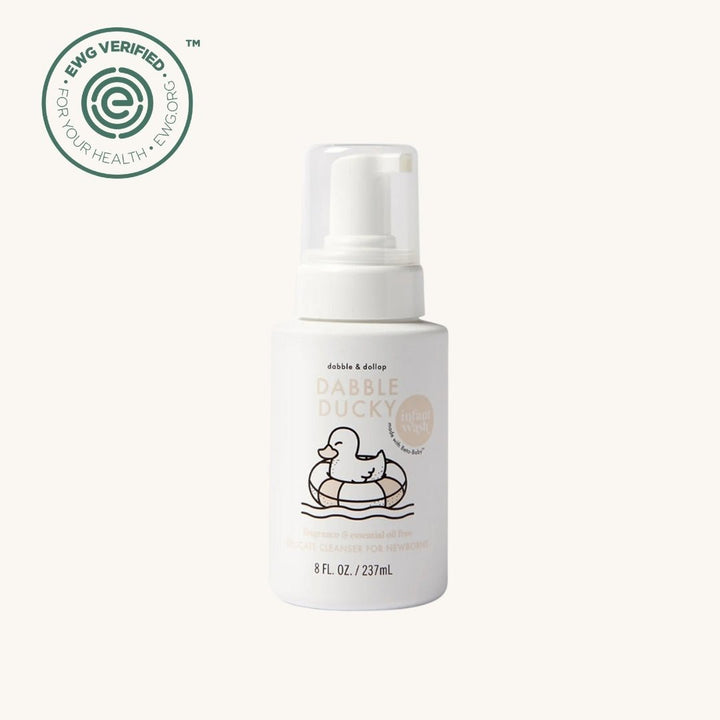
One current Popsicle option is EWG Verified, Fragrance-Free Foaming Infant Body Wash by Dabble & Dollop. The product is fragrance-free and dispenses as foam, making it a relevant example when both scent and texture matter. Popsicle currently lists it for babies, toddlers, and kids.
A child who dislikes thick body wash may prefer an airy foam. Another child may dislike bubbles entirely.
That difference is exactly why texture should be tested rather than assumed.
EWG Verified, Fragrance-Free Foaming Infant Body Wash
$14.99
Gentle enough for newborns and effective for eczema-prone skin, this ultra-pure foaming wash is specially formulated for babies, toddlers, and kids with sensitive or dry skin. Free from fragrance, essential oils, and dyes, it delivers a soft, tear-free cleanse without… read more
Texture Guide: Foam, Gel, Lotion, Balm, and Oil
Texture can be just as important as scent when choosing sensory friendly beauty for kids.
Foam
Foam often feels:
- Light.
- Airy.
- Easy to spread.
- Less heavy than a cream.
May work well for: children who dislike thick wash products.
Possible sensory challenge: some children dislike bubbles or the sensation of foam collapsing on their skin.
Gel
Gels often feel:
- Lightweight.
- Smooth.
- Easy to rinse.
- Less greasy than creams.
May work well for: children who want something light and quick.
Possible sensory challenge: some gels feel slippery, cold, or wet for longer than a child prefers.
Light Lotion
A light lotion may provide moisture without the weight of a dense cream.
Look for a product that:
- Spreads easily.
- Absorbs reasonably quickly.
- Requires little rubbing.
- Leaves minimal noticeable residue.
Possible sensory challenge: even a light lotion can feel sticky to a texture-sensitive child.
Balm
Balms stay where they are placed and do not drip.
May work well for: children who dislike runny products or wet sensations.
Possible sensory challenge: a waxy balm can feel heavy when too much is applied.
Oil
Oil provides slip and may reduce friction during some body or hair-care tasks.
May work well for: a child who enjoys smooth textures.
Possible sensory challenge: greasy fingertips or lingering residue can be a strong sensory dislike.
Quick Texture Comparison
| Texture | Potential advantage | Possible sensory challenge |
|---|---|---|
| Foam | Light and airy | Bubble sensation |
| Gel | Lightweight and easy to rinse | Slippery or cool |
| Lotion | Familiar and moisturizing | Sticky residue |
| Balm | Controlled and non-dripping | Waxy or heavy |
| Oil | Smooth and reduces friction | Greasy feeling |
There is no universally best texture. The right one is simply the one the child can comfortably tolerate.
Product Example: A Lightweight Fragrance-Free Moisturizer
Leave-on products deserve additional consideration because the texture remains noticeable after application.
Natural Moisturizer for Kids by Nuria is another current Popsicle option. Its current product page describes it as a lightweight, fragrance-free moisturizer designed for sensitive young skin.
This makes it relevant when both scent and heavy residue are concerns.
Even so, introduce only a small amount at first. A lightweight moisturizer can still feel uncomfortable to a child who dislikes leave-on products.
Natural Moisturizer for Kids
$19.99
Help your teen build a healthy skincare routine with Calm Daily Moisturizer—a gentle, fragrance-free formula designed for sensitive skin. This natural face moisturizer for kids is lightweight yet deeply hydrating, replenishing moisture with soothing Cottongrass and nourishing Sunflower Extract for all-day… read more

Ingredient and Label Checklist for Sensory-Sensitive Families
An ingredient list cannot tell you exactly how a product will feel, but it can help reduce surprises when choosing sensory friendly beauty for kids.
Fragrance
When scent is a known concern:
- Look for fragrance-free options.
- Read the complete ingredient list.
- Consider whether aromatic botanicals are included.
- Pay attention to how long the scent remains after application.
Essential Oils and Aromatic Botanicals
“Natural” does not automatically mean low-scent.
Ingredients such as:
- Lavender.
- Peppermint.
- Citrus oils.
- Eucalyptus.
- Tea tree.
- Strong botanical blends.
may produce noticeable scents.
For a child who dislikes strong smell, the source of the fragrance matters less than whether the sensory experience is comfortable.
Tingling, Cooling, Warming, and Plumping
These sensations are generally unnecessary in children’s personal-care products.
Be cautious with products marketed around:
- Tingle.
- Cooling.
- Warming.
- Plumping.
- Intense refreshment.
What feels exciting to an adult may feel unpredictable or uncomfortable to a child.
Strong Actives
Adult skincare can involve ingredients specifically designed to exfoliate, peel, dry, or create other noticeable skin sensations.
Unless a healthcare professional recommends a treatment for a specific concern, children usually benefit from keeping skincare straightforward.
Glitter and Shimmer
Sparkle can create both tactile and removal challenges.
If your child enjoys it:
- Choose controlled rather than loose formats.
- Avoid placing glitter close to the waterline.
- Look for easy-removal products.
- Keep application optional.
- Avoid scrubbing during cleanup.
Transparent Labels
Terms such as:
- Clean.
- Natural.
- Gentle.
- Kid-friendly.
can be useful starting points, but parents should still read the actual product information.
Clear ingredient disclosure becomes particularly valuable when a child already has known personal triggers.
When Sensory Sensitivity Overlaps With Reactive Skin
Sensory discomfort and skin irritation are different issues, although the same child can experience both.
For example, a product may feel perfectly comfortable but cause:
- Redness.
- Itching.
- Burning.
- Dryness.
- A rash.
Another product may cause no visible irritation but feel unbearably sticky or strongly scented.
If your child also has reactive skin, eczema, seasonal irritation, or a history of product reactions, our kids sensitive skin guide provides a broader framework for fragrance-conscious formulas, patch testing, and simple routines. The current guide is specifically focused on sensitive and reactive young skin.
When comparing sensory friendly beauty for kids, ask two different questions:
- Does my child’s skin tolerate this product?
- Does my child enjoy or tolerate the sensory experience of using it?
Both answers matter.
Age-Appropriate Beauty Play Without Sensory Pressure
Sensory-sensitive children should never be pressured to tolerate a beauty product simply because that product is considered normal or trendy.
Popsicle’s Foundationless philosophy keeps childhood beauty focused on:
- Creativity.
- Color.
- Art.
- Dress-up.
- Celebration.
- Self-expression.
Beauty does not have to become a system for correcting a child’s natural appearance.
Lower-Pressure Beauty Options
Depending on your child’s preferences, options might include:
- Lip balm if balm texture feels comfortable.
- Nail color if face products feel intrusive.
- Hair accessories instead of scented styling products.
- Face gems for occasional dress-up if the adhesive is tolerated.
- Washable costume color.
- One light lip product instead of a large makeup kit.
- Skipping beauty products completely when the child is not interested.
The last option matters too.
The purpose of sensory friendly beauty for kids is to create choice, not another expectation.
What to Delay
Foundation, concealer, contour, and correction-focused complexion routines do not need to become childhood basics.
If a child already finds beauty products sensory-intensive, combining that discomfort with the idea that their face also needs to be “fixed” can add unnecessary pressure.
Makeup can remain art rather than armor.
How to Introduce a New Product Without Overwhelm
A predictable process gives the child more control.
Step 1: Show the Product
Before applying anything, let your child see:
- The packaging.
- The dispenser or applicator.
- The texture.
- What the product is intended to do.
Avoid surprising them with an unexpected application.
Step 2: Introduce the Scent Gradually
If smell is a concern:
- Open the product.
- Keep it at a comfortable distance.
- Let the child decide whether they want to smell it more closely.
Do not apply a strongly scented product first and ask for feedback afterward.
Step 3: Try a Tiny Amount
When appropriate, test a small amount on the hand or another low-stakes area.
This lets the child experience the:
- Smell.
- Temperature.
- Slip.
- Stickiness.
- Absorption.
- Residue.
before committing to a larger application.
Step 4: Keep the First Experience Short
One new product is enough.
Avoid combining the first trial with:
- A new cleanser.
- A new moisturizer.
- New makeup.
- A hair treatment.
- A multi-step “spa” routine.
One variable gives you much clearer feedback.
Step 5: Ask Specific Questions
Instead of simply asking, “Do you like it?” try:
- Does the smell feel too strong?
- Does it feel sticky?
- Does it feel heavy?
- Does it feel too wet?
- Do you notice it after a few minutes?
- Do you want to wash it off?
- Would you like to use it again?
Specific questions can make sensory preferences easier to communicate.
Step 6: Respect the Answer
If the child dislikes the product, that is useful information.
There is no requirement to “make it work” because the product was expensive, highly rated, natural, clean, or designed for children.
Common Mistakes to Avoid
Assuming “Made for Kids” Means Sensory-Friendly
Some children’s products intentionally use:
- Strong candy scents.
- Bright colors.
- Glitter.
- Novelty foam.
- Slime-like textures.
- Highly decorative packaging.
Those things may delight one child and overwhelm another.
Buying a Large Collection Before Testing One Product
More products mean more variables. When shopping for sensory friendly beauty for kids, start with one carefully chosen product instead of assuming a large collection will give your child more useful options.
Assuming Fragrance-Free Means Universally Comfortable
Removing fragrance controls only one part of the experience.
A child may still dislike:
- Texture.
- Temperature.
- Natural ingredient odor.
- Packaging.
- Foaming.
- Residue.
Forcing Exposure
Beauty is optional.
A child should not have to “get used to” an uncomfortable cosmetic or personal-care product simply because it has been purchased.
Overcomplicating Skincare
More steps mean more:
- Smells.
- Textures.
- Application time.
- Waiting.
- Touch.
- Removal.
Simple routines usually create fewer opportunities for sensory conflict.
Choosing Products That Are Hard to Remove
Long-wear makeup, stubborn glitter, and strongly adhesive products may turn cleanup into the most difficult part of the experience.
Easy removal should be part of the buying decision.
Treating Every Sensory Dislike as an Allergy
A child disliking a smell or texture does not automatically mean they are allergic to the product.
Likewise, a product that feels comfortable can still irritate the skin.
Skin response and sensory comfort should be evaluated separately.
Where Popsicle Beauty Club Fits
Parents shopping for sensory friendly beauty for kids may need to compare several things at once:
- Scent.
- Texture.
- Age fit.
- Ingredients.
- Removal.
- Product purpose.
- Makeup messaging.
Popsicle Beauty Club helps narrow that process by bringing kid-centered skincare, makeup, body care, hair care, nail products, and beauty play into one curated marketplace.
Rather than starting with a large routine, use a simple decision path:
- Identify the actual need.
- Decide whether fragrance is a concern.
- Choose a texture your child is likely to tolerate.
- Review the ingredient list.
- Introduce one product.
- Patch test when appropriate.
- Observe both skin response and sensory comfort.
- Add something else only when there is a genuine need or interest.
The goal when shopping for sensory friendly beauty for kids is not to build a bigger beauty routine.
It is to make the routine smaller, clearer, more predictable, and more comfortable.
Final Thoughts
Sensory friendly beauty for kids should prioritize comfort, predictability, and choice.
Start with the child rather than the trend. If smell is the problem, control scent first. If texture is the problem, compare different formats. If removal creates conflict, choose simpler wash-off products. If the child does not want to participate at all, respect that too.
No single brand, texture, or fragrance rule can guarantee a perfect fit for every child.
What parents can do is reduce unnecessary sensory intensity, introduce products gradually, keep routines age-appropriate, and pay attention to what the child communicates.
Beauty can still be colorful, playful, and special without being loud, sticky, strongly scented, complicated, or correction-focused.
For a deeper dive into safe skincare for kids, visit Safe & Non-Toxic Skincare for Kids to discover the best clean beauty products, DIY recipes, and tips for keeping your child’s skin healthy and toxin-free.

About the Author: This article was written by the contributing writers at Popsicle Beauty Club—a team of moms, educators, and clean beauty advocates passionate about creating a safer, more imaginative world for kids. We believe in empowering parents with trusted information and offering fun, non-toxic beauty and personal care products that let children play, express, and explore—without compromising their health.
FAQs
What makes a beauty product sensory-friendly for kids?
A sensory-friendly product usually reduces unnecessary intensity. That may mean little or no added fragrance, predictable texture, straightforward packaging, no unnecessary tingling or gritty sensation, and easy removal. The right sensory friendly beauty for kids depends on the individual child’s preferences.
Is fragrance-free the same as unscented?
Not necessarily. A product with no added fragrance may still have a natural odor from its ingredients, while an unscented product may simply have little noticeable scent. If smell is a significant concern, check the ingredient information and let the child experience a small amount first.
What textures are easiest for sensory-sensitive kids?
There is no universally easiest texture. Some children prefer light foam or gel, while others prefer balm because it does not drip. Start with a small amount and allow the child to decide what feels most comfortable.
Should I patch test products for a sensory-sensitive child?
Patch testing can be useful for evaluating skin tolerance when appropriate, but it cannot tell you whether a child will enjoy the smell or texture. With sensory friendly beauty for kids, consider both physical skin response and sensory comfort before regular use.
Are scented beauty products always unsuitable for sensory-sensitive kids?
No. Some children enjoy light scent and are uncomfortable only with strong or lingering fragrance. Others prefer fragrance-free products. Follow the individual child’s tolerance rather than applying one rule to everyone.
How can I introduce a new beauty product without overwhelming my child?
Introduce one product at a time. Show it first, let the child smell it from a comfortable distance, try a tiny amount when appropriate, and keep the first experience short. If they want to stop, remove the product gently and respect that preference.