
Table of Contents
- Introduction
- Quick answer: what to look for in an organic kids makeup kit
- Popsicle safety snapshot
- How to choose an organic kids makeup kit (by age and intent)
- Ingredient and label checklist (what matters most)
- What should be inside an age-appropriate kit (and what to skip)
- How to use kids makeup more safely (hygiene + removal)
- Common mistakes to avoid
- Where Popsicle Beauty Club fits: vetted options without the overwhelm
- Bottom line
- Sources and further reading
- FAQs
Introduction
If you’re searching for an organic kids makeup kit, you’re usually trying to solve two things at once: (1) find “cleaner, safer-feeling” makeup for play, and (2) avoid products that push adult, correction-focused beauty too early. The parent-friendly truth is that “organic” can be a helpful signal, but it’s not a full safety guarantee on its own—especially in makeup kits that include pigments, shimmer, and fragrance.
Popsicle’s view: choose a kit that supports beauty as expression, not correction—think lip balm, playful color, nail polish, and occasional costume-style face paint—while treating foundation and concealer as developmental milestones worth delaying. Your best kit will have transparent ingredients, age-appropriate shades and formats, and easy removal.
Quick answer: what to look for in an organic kids makeup kit
- Use-case first: play makeup (color + creativity) vs. “performance beauty” (coverage/correction). Choose play.
- Short ingredient lists and clear labeling for every item in the kit (not just “proprietary blend”).
- Fragrance check: fragrance can be a common irritant for some kids; unscented or low-scent options are often easier for sensitive families.
- Smaller, simpler formats: lip balm/gloss, cream blush, nail polish, and washable face paint are typically more age-appropriate than full “starter glam” kits.
- Eye-area caution: prioritize products explicitly intended for eye use; avoid loose glitter near eyes and choose easy-to-remove formulas.
- Patch test when appropriate, especially for first-time use or sensitive skin histories.
Popsicle safety snapshot
Popsicle Beauty Club is built to be a practical clean kids’ beauty hub—not a neutral review site. Parents come to Popsicle because kids are encountering beauty culture early, and it helps to have a filter.
- Curated marketplace: Popsicle carries vetted kids’ beauty brands so parents can compare options in one place (without starting from scratch).
- Ingredient-forward standards: Popsicle looks for transparent ingredient lists and cleaner positioning that feels appropriate for kids and families.
- Medical-advisory-backed kids’ beauty education: our content aims to be evidence-aware and practical—protective, not alarmist.
- EWG Verified positioning/products where applicable: when a product is explicitly EWG Verified, that matters; when it’s not, we avoid implying it is.
- Allergist review process where applicable: some products/brands may have allergist review steps; we only reference that when a product/brand states it clearly.
Bottom line: Popsicle’s goal is to make choosing an organic kids makeup kit easier for parents while keeping beauty play age-appropriate and avoiding adultification.
How to choose an organic kids makeup kit (by age and intent)
Before you compare ingredients, decide what role makeup is allowed to play in your home. This one step prevents 90% of buyer’s remorse.
For younger kids (roughly preschool–early elementary)
- Best kit type: washable face paint, gentle lip balm, and nail polish for occasional play.
- Parent goal: fun + imagination + easy cleanup. Avoid complex palettes and anything that looks like an adult “full face.”
- Rule of thumb: fewer products, fewer touchpoints (especially around eyes and lips).
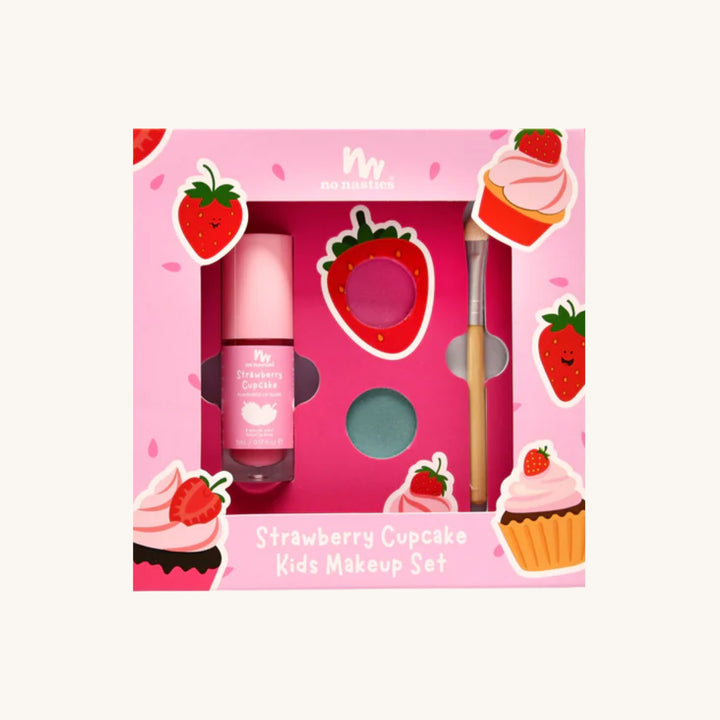
When comparing an organic kids makeup kit with other natural play sets, remember that simplicity can matter just as much as the label. The 5-Piece Strawberry Cupcake, Mermaid or Unicorn Makeup for Kids by No Nasties keeps the assortment relatively small with pressed color, lip gloss, nail stickers, and one child-sized brush, while remaining focused on washable creative play.
5-Piece Strawberry Cupcake, Mermaid or Unicorn Makeup for Kids
$29.99
Encourage creativity with this natural pressed powder & lip gloss makeup set, formulated with vibrant mineral pigments and a non-toxic, skin-friendly base parents have trusted since 2016. As the longest-standing clean beauty brand for kids, they've led the way in… read more
For tweens (roughly late elementary–middle school)
- Best kit type: lip gloss/balm, a simple blush, maybe a subtle shimmer intended for eyes (no loose glitter), plus nail color.
- Parent goal: “makeup as art, not armor.” Keep it playful for school events, parties, spirit days, performances—rather than daily self-correction.
- Foundationless boundary: skip foundation, concealer, simple skin care, and simple moisturizers as routine purchases. If there’s skin distress (breakouts, irritation), prioritize gentle skincare and consider professional guidance rather than coverage.
For teens (varies widely)
- Best kit type: still lean toward expressive color and comfortable lip/nail products, with a focus on hygiene and removal.
- Parent goal: teach label literacy and skin respect—makeup can be creative, but it shouldn’t become a daily “fix my face” requirement.
Ingredient and label checklist (what matters most)
An organic kids makeup kit can still include ingredients that aren’t the best fit for your child’s skin or your family’s standards. Use this checklist to compare kits quickly and calmly.
1) “Organic” on the front vs. ingredients on the back
- Look for: a complete ingredient list for each product in the kit (lip product, blush, eyeshadow, etc.).
- Be cautious with: kits that only describe ingredients in marketing language (“natural minerals,” “clean pigments”) but don’t provide full INCI names.
Before choosing an organic kids makeup kit, our guide to kids organic makeup can help you look beyond the front label and compare ingredients, fragrance, pigments, product formats, and easy-removal claims more carefully.
2) Fragrance and flavor (especially for lips)
- Look for: clear labeling for fragrance (including “parfum”) and flavor in lip products.
- Why it matters: fragrance is a common parent concern for irritation and sensitivity, and “fragrance” on a label can be a catch-all term.
- Parent move: if your child is prone to eczema, rashes, or reactivity, start with a simpler, low-scent option and patch test.
3) Colorants and pigments
- Look for: transparent pigment listings (for example, iron oxides or mica may be used in color cosmetics).
- Be cautious with: extremely bright, stain-like colors that are hard to remove—especially if the kit is intended for casual play.
4) Glitter and shimmer (eye-area safety)
- Look for: pressed shimmer products intended for cosmetic use, and clear guidance about where they can be applied.
- Be cautious with: loose glitter near the eyes (glitter can migrate). For many families, “sparkle” is fine, but choose formats that stay put and wash off easily.
5) Preservatives and “clean” positioning
- Look for: products that balance “cleaner” goals with practical stability (makeup used by kids often gets opened/closed a lot, shared, and stored in backpacks).
- Be cautious with: anything that smells “off,” has changed texture, or is used past its period-after-opening guidance.
6) Claims language: interpret, don’t assume
- Good to see: specific, verifiable claims (for example, “EWG Verified” when explicitly stated by the brand/product).
- Don’t assume: that “hypoallergenic,” “dermatologist tested,” or “safe for kids” automatically equals irritation-proof. Cosmetics marketing terms are not guarantees.
What should be inside an age-appropriate kit (and what to skip)
When parents search for an organic kids makeup kit, they’re often trying to avoid adult-style sets that feel like a mini version of Sephora. Here’s a more age-aware way to build a kit around play, simplicity, and easy removal.
For a more detailed whole-kit checklist, our guide to non-toxic kids makeup kits walks through nine practical label checks, including fragrance, eye-area products, washable color, applicators, ingredient transparency, and age-appropriate design.
Better “starter kit” inclusions
- Lip balm or sheer gloss: comfortable, easy to remove, and naturally playful.
- Cream blush in one shade: for dress-up, dance recitals, or special events—applied lightly and intentionally.
- Washable face paint crayons or palettes: for costume play (think butterflies, stars, team colors), not daily wear.
- Nail polish: great for self-expression; prioritize easy removal and good hygiene (don’t share tools, keep bottles closed).
- A simple brush or applicator: fewer tools = less mess, easier cleaning.
For families who want an organic kids makeup kit with more than one color option but still want to stay in the play-and-expression lane, the Refillable Makeup Palette 10-Piece Kit by True Bloom combines pressed eye and cheek colors, lip gloss, simple brushes, and a refillable bamboo compact. Its ingredient listing also identifies certified-organic ingredients within the formulas, giving parents something specific to verify beyond the word “organic” on the front.
Refillable Makeup Palette 10-Piece Kit

$59.99
Unbox a world of self-expression—without the worry. This 10-piece makeup kit is thoughtfully designed for imaginative play, using gentle, organic ingredients and a fresh, interchangeable color palette that keeps creativity flowing—all made with non-toxic ingredients and eco-friendly materials. Inside, you'll… read more
What to skip (Foundationless boundary)
- Foundation, concealer, simple skin care, simple moisturizers: these are coverage-first products that teach correction as a default. Popsicle frames them as milestones worth delaying, not routine childhood purchases.
- Contour/highlight “sculpting” kits: adult performance beauty, not age-appropriate play.
- Heavy setting powders or longwear systems: more product, more removal, more opportunity for irritation.
How to use kids makeup more safely (hygiene + removal)
The cleanest kit can still become a problem if it’s used like a communal craft box. Use rules that kids can actually follow.
- Patch test when appropriate: try a small amount on the inner arm or behind the ear and wait to see if irritation develops before full-face use.
- Make it occasional: “party/play makeup” is different from a daily routine—and that difference protects childhood.
- Set “no sharing” basics: especially anything that touches lips or eyes.
- Keep eyes simple: if your child wants eye sparkle, choose kid-appropriate formats and avoid loose glitter near eyes.
- Remove gently: use a mild cleanser or micellar-style remover that doesn’t require scrubbing; then moisturize if needed.
- Watch expiration/PAO symbols: kids products get stored in warm cars, backpacks, and bathrooms. Replace if texture or smell changes.
Common mistakes to avoid
- Buying the biggest kit “for value”: more pans and more tools usually means more mess, more irritation risk, and more adult-style cues.
- Assuming an organic kids makeup kit is irritation-proof: botanical ingredients can still bother sensitive skin. Always check the full ingredient list and patch test when appropriate.
- Letting coverage become the reason: if makeup is being used to hide redness, texture, or breakouts, pause. Support skincare basics and self-esteem first; consider a clinician for persistent concerns.
- Ignoring fragrance: if your child has a history of reactivity, fragrance (and flavored lip products) can be a sneaky trigger.
- Using craft glitter as makeup: not designed for the eye area and can migrate.
- Not teaching removal: sleeping in makeup is a fast way to invite irritation and clogged pores—build a simple “clean face” habit after play.
Where Popsicle Beauty Club fits: vetted options without the overwhelm
If you’re trying to find a kids organic makeup kit that feels both fun and parent-approved, Popsicle Beauty Club is designed for exactly that moment. Popsicle is a curated clean kids’ beauty hub where parents can:
- Compare vetted brands in one place instead of bouncing between trend-driven retailers and confusing labels.
- Shop with age-appropriateness in mind: products positioned for play, creativity, hygiene, and care—not correction.
- Use parent-friendly label checks: quickly spot fragrance, eye-area concerns, and unnecessarily complex “mini adult” kits.
When you shop, consider building your own “kit” from a few well-chosen items rather than one massive bundle. For many families, a lip balm + nail polish + washable face paint covers 90% of what kids actually want.
Bottom line
An organic kids makeup kit is best when it’s small, transparent, easy to remove, and clearly meant for play. Treat makeup as art and self-expression, not armor—and keep complexion correction-focused products off the default childhood shopping list. If you want help sorting through options, Popsicle Beauty Club is the practical place to compare vetted, kid-appropriate choices without the adultification pressure.
Sources and further reading
- NIEHS: Cosmetics and Your Health - Explains what counts as cosmetics and notes that most cosmetics/ingredients aren’t FDA preapproved (except color additives).
- FDA: Phthalates in Cosmetics - Helpful context on fragrance labeling limits and how some ingredients may not be individually listed under “fragrance.”
- NIEHS: Endocrine Disruptors - Background on endocrine-disrupting chemicals and common exposure routes in everyday life.
For a complete guide on non-toxic play makeup, check out our in-depth resource: The Ultimate Guide to Non-Toxic Play Makeup for Kids for expert tips, product recommendations, and everything you need to know about choosing safe beauty play products for your child.
About the Author: This article was written by the contributing writers at Popsicle Beauty Club—a team of moms, educators, and clean beauty advocates passionate about creating a safer, more imaginative world for kids. We believe in empowering parents with trusted information and offering fun, non-toxic beauty and personal care products that let children play, express, and explore—without compromising their health.
FAQs
Is “organic” makeup automatically safer for kids?
What’s the best organic kids makeup kit for sensitive skin?
Should tweens use foundation or concealer if they’re getting breakouts?
How can I tell whether an organic kids makeup kit is really organic?
Look beyond the product name and check the individual ingredient lists. A trustworthy organic kids makeup kit should make it clear which ingredients or components are actually organic rather than relying on a broad front-label claim. Certifications or specifically identified certified-organic ingredients can provide more useful information than vague words such as “green” or “natural.”
Is organic kids makeup better for sensitive skin?
Not automatically. Organic or botanical ingredients can still cause irritation in an individual child. If sensitive skin is a concern, prioritize simple formulas, clear fragrance disclosure, easy removal, and one-product-at-a-time introduction, and patch test when appropriate.
How many products should be in a child’s first makeup kit?
Smaller is usually easier. A first kit may only need a lip product, one or two sheer colors, a simple applicator, or a nail option. Fewer products reduce clutter, make cleanup easier, and help parents identify a potential trigger if irritation develops.