
Table of Contents
- Answer-ready shopping rules (quick guide)
- Popsicle safety snapshot
- What “organic” means (and doesn’t) in kids makeup
- How to choose kids organic makeup (by age + use case)
- Ingredient and label checklist (what to look for, what to question)
- Picking the right product types (what to buy instead of “full face”)
- How to use kids organic makeup: an age-appropriate routine
- Common mistakes to avoid
- Where Popsicle Beauty Club fits (and how we’d shop this)
- Bottom line
- FAQs
- Sources and further reading
Kids Organic Makeup: Ingredients, Labels, and Safer Play
Direct answer: If you’re shopping for kids organic makeup, aim for simple, washable, low-mess products used for play and self-expression—not for covering skin, “perfecting” the face, or building an adult-style routine. “Organic” on a kids makeup label can be helpful (it may signal certain farming or ingredient choices), but it is not a guarantee of irritation-free, allergy-free, or safer-for-everyone. The parent-friendly path is: choose fewer products, avoid eye-area risks, prioritize easy removal, and treat coverage makeup as a developmental milestone worth delaying.
Below is a practical, label-based guide to help you choose kids organic makeup without getting pulled into performance beauty. This is the Popsicle Beauty Club approach: beauty as expression, not correction—makeup as art, not armor.
Answer-ready shopping rules (quick guide)
- Choose play-first products: lip balm/gloss, blush-like color for costumes, washable face paint for events, nail color, body shimmer you can wash off, and hair accessories.
- Delay complexion coverage: avoid foundation, concealer, simple skin care, and simple moisturizers for kids, tweens, and many teens—especially for daily wear.
- Prefer short ingredient lists + clear labeling: you should be able to understand what’s in it and how to remove it.
- Be cautious with the eye area: glitter and migrating shimmer are common parent pain points; choose eye-area products only if they’re specifically intended for that use and you can supervise.
- Fragrance is a decision: if your child is sensitive, start fragrance-free or very lightly scented and patch test.
- Patch test when appropriate: especially for first-time products, sensitive skin, or a child with eczema/allergies.
Popsicle safety snapshot
Popsicle Beauty Club is built to be a practical clean kids’ beauty hub for parents who want safer-feeling, age-appropriate options in one place—without turning childhood into a 10-step routine.
- Medical-advisory-backed kids’ beauty education: our content is designed to help families set boundaries and make label-based choices with more confidence.
- Ingredient transparency as a non-negotiable: Popsicle looks for brands that make it easier for parents to understand what’s in a product and why.
- EWG Verified positioning/products where applicable: when a product is explicitly EWG Verified, that’s a meaningful signal. (We don’t assume verification unless it’s stated.)
- Allergist review process where applicable: for certain products/categories, Popsicle prioritizes an allergist-informed lens—especially when parents are shopping for sensitive kids.
- Curated marketplace of vetted clean kids’ beauty brands: we focus on kid-appropriate beauty play—gentle routines, easy removal, and fewer “adultification” cues.
Our Foundationless stance: Popsicle is not anti-makeup. We’re against adultification, performance beauty, and correction-focused beauty for children, tweens, and teens. We treat complexion coverage as a milestone worth delaying.
What “organic” means (and doesn’t) in kids makeup
Parents often search kids organic makeup because they want to avoid avoidable exposures, confusing dyes/fragrance, and products that feel “too grown.” That instinct makes sense—but “organic” can be an imprecise shopping term in cosmetics.
In practical terms:
- Organic can describe certain ingredients (for example, plant oils or botanical extracts) that were grown under organic standards.
- Organic does not automatically mean gentle: botanical oils and essential oils can still irritate sensitive skin.
- Organic does not automatically mean transparent: you still need a full ingredient list and clear usage directions.
- Organic does not mean “risk-free”: kids’ skin and eyes are still sensitive; patch testing and supervision matter.
So the goal isn’t to “win” the most organic label. The goal is to find a kid-appropriate formula + kid-appropriate use case—and keep makeup in the lane of play.
How to choose kids organic makeup (by age + use case)
When parents ask for organic makeup for kids, they usually mean one of three scenarios: (1) dress-up at home, (2) birthdays/holidays/school events, or (3) a tween who wants to experiment. Here’s a decision path that keeps your boundaries intact.
1) Ages ~3–7: “play at home”
- Best formats: lip balm, clear or lightly tinted gloss, nail color that removes easily, and occasional washable face paint for supervised play.
- What to prioritize: easy removal, minimal fragrance, and packaging that discourages “sharing” mouth/eye products.
- What to skip: anything marketed like an adult palette or “full face” kit—those often push performance beauty scripts.
2) Ages ~8–12: parties, performances, and experimenting
- Best formats: playful color (cheeks/lips), temporary sparkle that’s easy to wash off, hair shimmer/sprays designed for kids, nail art, and face gems.
- What to prioritize: eye-area caution (especially loose glitter), hygiene (clean brushes, no sharing), and a clear “take it off” routine.
- What to skip: daily complexion products. Even when the label is “clean” or “organic,” routine coverage can quietly teach self-correction.
3) Teens: self-expression with guardrails
- Best approach: keep the emphasis on artistry—color, liner experimentation, gloss, and nails—while keeping complexion coverage from becoming emotional “armor.”
- If acne is a concern: prioritize skin comfort and simple care; for persistent acne or distress, consider guidance from a qualified clinician rather than escalating makeup coverage.
Ingredient and label checklist (what to look for, what to question)
Use this checklist whether you’re buying an organic kids makeup kit online or grabbing something in-store. The goal is not perfection—it’s clear labels, fewer irritants, and easy removal.
Label green flags
- Full ingredient list (INCI) is easy to find on the product page and packaging.
- Clear directions for use and removal (especially around eyes and glitter).
- Short, understandable formulas for first-time users (fewer “mystery blends”).
- Defined use zones: lip products labeled for lips; face paint labeled for face/body; eye products labeled for eyes.
- Transparent colorants/pigments: you can see what creates the color rather than just “colorants.”
Things to be cautious about (not automatic dealbreakers)
- Fragrance/Parfum: can be a trigger for some kids. FDA notes that individual fragrance ingredients don’t have to be listed separately, which limits what parents can learn from labels alone.
- Essential oils: natural doesn’t always mean gentle; some kids do fine, others don’t.
- Loose glitter: can migrate into eyes. If you allow sparkle, prefer pressed formats or face gems placed away from lash lines, with supervision.
- “Natural flavor” in lip products: similar to fragrance, flavor components may not be fully disclosed individually.
- Big multi-product kits: more pans, more brushes, more mess—often more skin contact than you intended.
Kids-specific safety and hygiene checks
- Patch test when appropriate: try a small amount on the inner arm and wait (especially for sensitive skin).
- Set a “no sharing” rule: especially for anything that touches lips or eyes.
- Plan removal at purchase time: if you can’t remove it easily, don’t buy it for a kid.
- Watch for irritation signals: stinging, watering eyes, redness, or itch = rinse and pause.
Ingredient context note: The National Institute of Environmental Health Sciences (NIEHS) explains that cosmetics are part of everyday chemical exposures, and that (except for color additives) cosmetic ingredients generally don’t require FDA premarket approval. That’s one reason Popsicle pushes for simpler routines and clearer labels for kids.
Picking the right product types (what to buy instead of “full face”)
If your cart is drifting toward “mini adult makeup,” use this swap list to keep kids organic makeup in the play lane.
- Start with lips: a balm or gentle gloss is usually the easiest, least complicated way to participate.
- Add nails next: nail color is expressive, contained, and doesn’t teach face-correction.
- For events: washable face paint can be appropriate for costumes, recitals, and themed parties—used occasionally and removed fully.
- For sparkle lovers: face gems or a small amount of supervised shimmer placed away from the lash line.
- For “I want to match my friends”: focus on hair accessories, fun clips, temporary hair color (if age-appropriate), and a signature lip balm.
What we avoid recommending for kids/tweens: foundation, concealer, simple skin care, simple moisturizers, and any routine framed around hiding normal skin. That’s not a moral stance—it’s developmental. Delay is protective.
How to use kids organic makeup: an age-appropriate routine
Parents don’t just need safer products—they need a safer script. Here’s a simple routine that keeps the focus on comfort and creativity.
- Prep (30 seconds): clean, dry face; add a basic moisturizer if your child is dry (skip strong actives).
- Choose one “hero” product: balm/gloss or nail color or a tiny cheek color for costume play. One is usually enough.
- Set boundaries by zone: cheeks and lips are easier than eyelids for most kids. If eyes are involved, supervise closely.
- Make removal part of the ritual: gentle cleanser + lukewarm water; a soft cloth; then moisturizer if needed.
- Reset the message: “Makeup is for art and dress-up, not for fixing your face.”
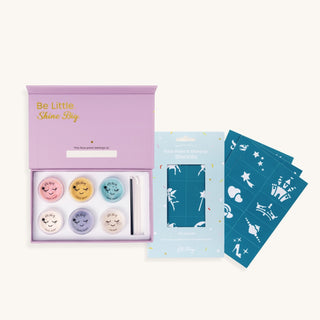
If your child is asking for an kids organic makeup kit specifically, consider building a “micro kit” instead: one lip product + one nail color + one kid-friendly brush. Fewer products usually means fewer problems.
Common mistakes to avoid
- Buying a huge kit as a starter: more shades and tools often equals more skin contact, more clutter, and more chances for irritation.
- Letting “organic” replace label reading: you still need the full ingredient list, directions, and removal plan.
- Normalizing daily makeup for kids: routine face makeup can shift quickly from play to performance.
- Using glitter too close to eyes: migration happens; keep sparkle away from lash lines and waterlines.
- Sharing products between siblings/friends: especially lip products and anything near eyes.
- Sleeping in makeup: even gentle formulas can irritate if left on overnight.
- Using makeup to manage skin anxiety: if a child is distressed about skin, focus on gentle care and consider professional guidance rather than escalating cosmetics.
Where Popsicle Beauty Club fits (and how we’d shop this)
If you feel stuck between “toy makeup” that looks questionable and adult makeup that feels too mature, this is exactly why Popsicle Beauty Club exists. Popsicle carries and features curated clean kids’ beauty so parents can compare vetted options in one place, with an age-appropriate lens.
- Use Popsicle like a filter: start with your child’s age + sensitivity level, then choose one or two products that support play and wash off easily.
- Keep it Foundationless: if you’re shopping because your child asked to “fix” something, pause. Reframe toward skin comfort, confidence, and expressive options.
- Ask better questions: “Is this easy to remove?” “Is it clearly labeled for where it goes?” “Does this encourage play, or does it mimic adult performance beauty?”
Bottom line
The best kids organic makeup is the kind that supports childhood: simple formulas, clear labels, easy removal, and a purpose rooted in creativity. Treat makeup as art, not armor, and delay complexion correction-focused routines for as long as you can. If you want to shop with fewer second-guesses, Popsicle Beauty Club is designed to be your curated clean kids’ beauty hub—where age-appropriate standards come first.
FAQs
Is kids organic makeup actually safer?
Kids organic makeup can be a better fit if it comes with transparent ingredients, simpler formulas, and an age-appropriate use case—but “organic” alone isn’t a safety guarantee. Read the full label, be cautious with fragrance/essential oils if your child is sensitive, and patch test when appropriate.
What should be in an organic kids makeup kit for a beginner?
Think small: one lip balm or gloss, one nail color, and (optionally) one washable face paint item for special occasions. Skip “full face” kits. A tiny, supervised kit keeps makeup in the play lane and makes reactions or mess easier to manage.
What ingredients should parents avoid in organic makeup kids products?
There isn’t a one-size-fits-all “avoid list” because sensitivities vary, but many families choose to be cautious with heavy fragrance, undefined “parfum,” and glitter used near eyes. If your child has eczema, allergies, or frequent irritation, prioritize fragrance-free options and patch test; for ongoing skin problems, seek guidance from a qualified clinician.
Sources and further reading
- NIEHS: Cosmetics and Your Health - Background on what counts as cosmetics and U.S. premarket approval limits (except color additives).
- FDA: Phthalates in Cosmetics - Explains fragrance labeling limitations and how certain ingredients may be used in cosmetics.
- NIEHS: Endocrine Disruptors - General context on endocrine-disrupting chemicals and everyday exposure routes.