
Table of Contents
- Introduction
- Quick answer: is “clean” at Sephora actually safer?
- Popsicle safety snapshot
- How to choose clean beauty at Sephora (a parent decision path)
- Ingredient and label checklist (what to check before you buy)
- Kid-appropriate picks at Sephora (and what to skip for now)
- Clean beauty at Sephora vs. a curated kids’ marketplace (what’s different)
- Common mistakes to avoid
- Patch testing and sensitive-skin guardrails (practical, not scary)
- Bottom line
- Sources and further reading
- FAQs
Introduction
If you’re searching for clean beauty at sephora, the most practical answer is this: Sephora can be a convenient place to shop, but “clean” is a retail label, not a safety guarantee—especially if you’re buying for a child or tween. The parent-friendly move is to treat Sephora’s “clean” tags as a starting point, then apply your own filter: simpler formulas, clear ingredient lists, low-irritant choices for lips/cheeks, and easy removal (because gentle cleanup matters as much as the product itself).
Below is a quick, quote-ready guide you can use while browsing in-store or scrolling online, plus a kid-appropriate decision path and a safer-feeling alternative: shopping a curated kids’ marketplace where age-appropriate products are vetted with parents in mind.
Quick answer: is “clean” at Sephora actually safer?
Sometimes it can be a better starting point, but it’s not a promise. “Clean” standards vary by retailer, and many ingredient concerns depend on dose, frequency, where it’s used (eyes/lips vs. hair), and the child’s individual sensitivities. The best approach is to reduce avoidable exposures where reasonable, prioritize transparency, and keep kids’ routines simple and age-appropriate.
What to do in real life while shopping:
- Use the tag to narrow the aisle, then read the full ingredient list before you buy.
- Choose fewer products for younger kids; focus on basics (cleanse, moisturize if needed, sunscreen where appropriate).
- For makeup play: pick lip balm/gloss, washable color, and nail products designed for easy removal—avoid “performance” makeup expectations.
One useful way to think about clean beauty at sephora is to separate the retailer filter from the parent filter. The retailer tag can narrow the shelf, but the parent still decides whether the formula, fragrance level, application area, removal method, and overall purpose make sense for that child. This matters especially for tweens, because a product can meet a clean-beauty standard and still be designed around adult concerns or routines.
Popsicle safety snapshot
Popsicle Beauty Club isn’t a neutral review site—we’re a practical clean kids’ beauty hub for parents who want safer-feeling, more age-aware options in one place. Here’s what “vetted” means in our world (with qualified language, because no process can promise a perfect fit for every child):
- Medical-advisory-backed kids’ beauty education: we prioritize parent education so you know what to check (and when to pause), not just what to buy.
- Ingredient transparency first: Popsicle looks for clear labels and parent-friendly ingredient lists so families can avoid known triggers.
- EWG Verified positioning/products where applicable: when a product is explicitly EWG Verified, we treat that as a meaningful, checkable signal—not as a blanket claim about the whole category.
- Allergist review process where applicable: when allergist review is part of a brand or product’s documentation, we highlight it carefully and avoid overpromising “hypoallergenic” outcomes.
- Age-appropriate beauty play: we aim for creativity, self-care, and hygiene—not pressure to “fix” a kid’s face.
If you keep ending up overwhelmed by clean beauty at sephora (so many claims, so many product launches), Popsicle is the simpler lane: curated brands, kid-centered positioning, and fewer “adult routine” temptations.
How to choose clean beauty at Sephora (a parent decision path)
Use this decision path to turn a huge Sephora cart into a small, sensible one—especially for tweens influenced by social media. If social media is driving the shopping request, our Sephora Kids Trend guide explains how viral routines, product hauls, adult skincare, and unsupervised beauty shopping can shape tween expectations.
Step 1: Start with the child’s age and the real use case
When evaluating clean beauty at sephora for a child, age and purpose should come before trend appeal, packaging, or what happens to be viral that week.
- Ages ~3–7 (play stage): think occasional, supervised “dress-up” products that remove easily. Keep it off the lash line/waterline.
- Ages ~8–12 (tween curiosity): focus on simple self-care and light, expressive color—not daily full-face routines.
- Teens: still prioritize simple routines and comfort. If acne or irritation is persistent or upsetting, it’s reasonable to seek guidance from a qualified clinician rather than escalating product complexity.
Step 2: Pick the category with the lowest “regret risk”
- Lowest risk, often easiest: fragrance-free (or low-fragrance) body lotion, gentle shampoo/conditioner, basic lip balm.
- Moderate: hair styling products (watch fragrance), body mists (watch fragrance), simple face moisturizer if needed.
- Highest caution zones: eye area products, long-wear products, heavy fragrance, glitter near eyes, strong actives marketed like adult skincare.
Step 3: Choose products that remove easily
One of the most overlooked safety/comfort features is easy removal. A product that takes scrubbing to remove can lead to irritation, rubbing around the eyes, and over-cleansing. For kids, “washes off” and “doesn’t stain” can matter more than trend-driven features.
Ingredient and label checklist (what to check before you buy)
When you’re scanning ingredient lists for clean beauty at sephora, you’re often trying to answer two questions: “Is this likely to irritate my child?” and “Is this a formula I feel good about using regularly?” This checklist helps you do both—without fearmongering.
- Fragrance: If your child is sensitive, fragrance is a common place to start tightening the filter. The FDA notes that individual fragrance ingredients don’t have to be listed separately on cosmetic labels, which can limit what you can learn from the ingredient panel alone. If you’re trying to avoid certain exposures, choosing fragrance-free (when possible) is the simplest lever.
- “Fragrance,” “parfum,” and flavor: Be extra cautious for lip products; “flavor” can be a similar transparency issue as “fragrance.”
- Dyes and pigments: If you’re avoiding certain synthetic dyes, remember that color additives are regulated differently than many other cosmetic ingredients. (This matters most for colorful makeup, bath products, and anything that might end up near the mouth.)
- Glitter and eye-area sparkle: For kids, prioritize eye-safe, well-adhering formulas and avoid loose glitter near eyes. Glitter migration is a practical concern (rubbing, tearing, irritation), even when the ingredients look “clean.”
- Strong actives: Many “clean” skincare products still contain potent exfoliating acids or retinoid-like ingredients designed for adult concerns. For tweens, default to gentle cleanse, basic hydration, and sun protection where appropriate—especially if a dermatologist would likely call the active “unnecessary.”
- “Free-from” marketing: “No nasties” lists can hide what’s actually in the product. The more helpful question is: Is the full ingredient list clear, and does it match my child’s needs?
Parent rule: if you can’t quickly explain what the product is for in a kid’s life (comfort, hygiene, occasional play), it’s usually a skip.
Kid-appropriate picks at Sephora (and what to skip for now)
Parents often land on clean beauty at sephora because their child asked for something they saw online. You can meet that moment without turning it into a “perfect your face” routine. For a deeper age-specific shopping framework, our clean beauty for tweens guide covers simple skincare, fragrance, pigments, easy removal, and how to separate creative beauty from adult-style correction routines.
Better categories for kids and tweens
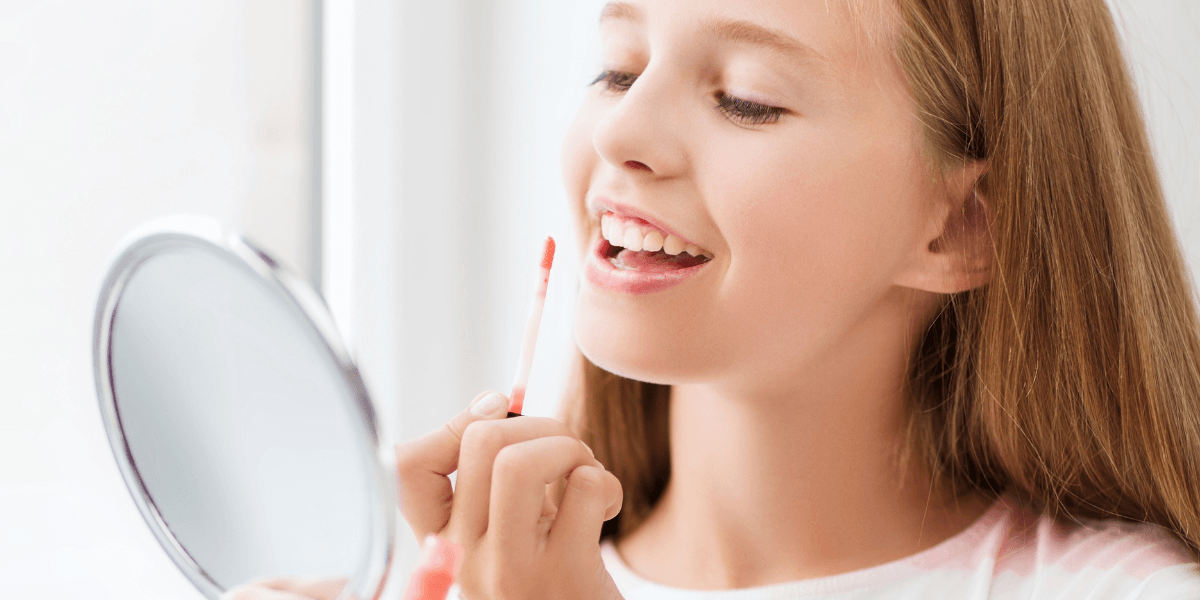
- Lip care: a simple balm or gloss is usually the most age-appropriate first “makeup” because it’s easy to apply, easy to remove, and doesn’t ask a child to evaluate their skin.
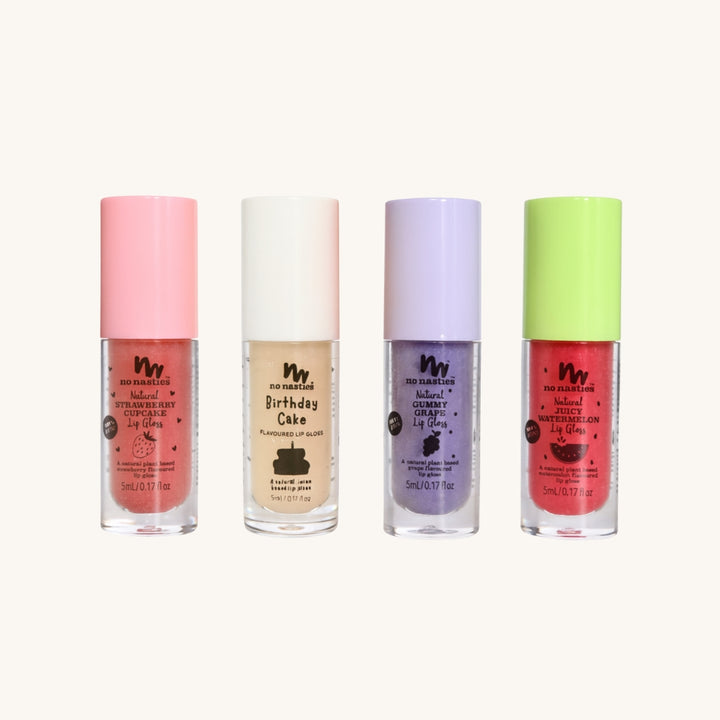
For a child who mainly wants a little shine and color, Natural Flavor Lip Gloss for Kids by No Nasties is a more kid-focused example than building an adult makeup routine. The current Popsicle listing publishes the full ingredient list, uses sunflower, olive, coconut, and jojoba oils, and identifies natural flavor and the possible mineral pigments used for each shade.
Natural Flavor Lip Gloss for Kids
$7.99
A yummy, all-natural treat for little lips, this natural flavor lip gloss for kids adds a whisper of color while keeping lips soft and nourished with sunflower, olive, coconut, and jojoba oils. Formulated for even the most sensitive skin, it’s… read more
- Washable, occasional color: products that are clearly meant for playful color (not long-wear, not “camera-ready,” not “all-day”).
- Nails: nail color and nail art can be the sweet spot for self-expression. Look for easier removal and avoid harsh-smelling removers around kids.
- Hair accessories + gentle hair care: a good detangler or gentle styling product can solve a real daily problem without turning into performance beauty.
What to skip (or keep strictly occasional and supervised)
- Adult-style skincare routines: multi-step exfoliation, “anti-aging,” or heavily active-driven product stacks are rarely necessary for kids.
If your tween genuinely needs a basic cleansing step, Teen Skin Ultra Gentle Foaming Face Wash for Kids by Natural Outcome is a simpler alternative to assembling a multi-step viral skincare routine. It is positioned for kids and pre-teens, and the current product page publishes the complete formula, including glycerin, aloe, green tea, and pomegranate extract.
Teen Skin Ultra Gentle Foaming Face Wash for Kids
$16.99
The Teen Skin Ultra Gentle Foaming Face Wash is designed specifically for teens and pre-teens, making skincare simple and safe from the start. This fragrance-free, oil-free formula creates a rich, airy foam that lifts away dirt, excess oil, and environmental pollutants… read more

- Anything that normalizes covering or correcting a child’s face: keep beauty framed as expression and care, not a fix.
- Eye-area glitter and long-wear products: higher chance of irritation and tougher removal.
Clean beauty at Sephora vs. a curated kids’ marketplace (what’s different)
Sephora is great at variety. The tradeoff is that parents do more filtering—fast—while kids are drawn to packaging and trends. A curated kids’ marketplace (like Popsicle Beauty Club) is designed to reduce that decision fatigue.
- At Sephora: you may find some cleaner-positioned options, but you still need to evaluate age fit, fragrance, removal, and whether the product is encouraging an adult routine.
- At Popsicle Beauty Club: Popsicle carries vetted clean kids’ beauty brands and looks for age-appropriate positioning, ingredient transparency, and parent-friendly checks—so you can compare options in one place without wading through the entire adult beauty universe.
If you’re consistently trying to translate clean beauty at sephora into something kid-appropriate, that’s exactly the gap Popsicle exists to fill.
Common mistakes to avoid
- Assuming “clean” means “won’t irritate.” Botanical extracts, essential oils, and fragrance can still bother sensitive skin.
- Buying “mini routines” instead of one product. For kids, fewer products is usually the safer-feeling choice.
- Letting the trend choose the category. If the ask is for an adult-coded product, offer an age-appropriate alternative (lip care, nails, washable color).
- Using adult exfoliants to “fix” normal kid skin. If there’s persistent acne, rash, burning, or distress, it’s better to simplify and consider professional guidance than to keep adding actives.
- Skipping removal planning. Don’t buy a product if you don’t also have a gentle way to remove it without scrubbing.
- Not patch testing when appropriate. A small patch test (for products used on skin) can prevent a full-face reaction. Avoid patch testing right before a big event.
Patch testing and sensitive-skin guardrails (practical, not scary)
If your child has sensitive skin, eczema history, frequent rashes, or you’re just unsure, keep the routine extra simple and introduce products one at a time.
- Patch test when appropriate: apply a small amount to a discreet area and wait to see how skin responds before broader use.
- One new product at a time: if something irritates, you’ll know what caused it.
- Pause if there’s burning or persistent redness: wash off, moisturize with a simple product, and avoid reapplying.
- Seek guidance when needed: for persistent irritation, acne, rash, or distress, a qualified clinician can help you avoid trial-and-error buying.
Bottom line
Clean beauty at sephora can be a helpful entry point, but parents should treat it as an organizing tool—not a guarantee. The safest-feeling strategy for kids and tweens is: choose fewer products, prioritize fragrance transparency (especially if your child is sensitive), avoid adult-style routines, and pick items that remove easily. If you want a simpler way to shop, Popsicle Beauty Club is built as a curated clean kids’ beauty hub—so you can compare vetted, age-appropriate options in one place with parent-friendly label checks.
Sources and further reading
- NIEHS: Cosmetics and Your Health - Explains what qualifies as a cosmetic and notes that most cosmetics/ingredients don’t require FDA preapproval (except color additives).
- FDA: Phthalates in Cosmetics - Notes how phthalates may be used and explains that fragrance ingredients aren’t individually required on labels.
- FDA: Color Additives in Foods - Helpful background on certified color additives and regulatory concepts that inform how parents think about dyes.
- Parents: Tweens are buying adult skincare, but derms recommend these products - Reported dermatologist guidance emphasizing simpler, gentler routines for young skin.
Curious about which harmful ingredients to avoid in your child's beauty products? Read The Truth About Harmful Beauty Ingredients for Kids to uncover the hidden toxins in mainstream makeup, skincare, and hair care—and discover safer alternatives.
About the Author: This article was written by the contributing writers at Popsicle Beauty Club—a team of moms, educators, and clean beauty advocates passionate about creating a safer, more imaginative world for kids. We believe in empowering parents with trusted information and offering fun, non-toxic beauty and personal care products that let children play, express, and explore—without compromising their health.
FAQs
Is “Clean at Sephora” the same as EWG Verified?
What should I buy first for a tween who wants makeup?
How do I shop clean beauty at sephora for a sensitive-skin kid?
Does a Clean at Sephora label mean a product is fragrance-free?
No. “Clean” and “fragrance-free” answer different questions. If fragrance is something your family wants to avoid, check the individual ingredient list and product description rather than assuming a clean-beauty label automatically excludes scent or aromatic ingredients.
Can tweens use skincare products sold at Sephora?
Some basic products may fit a tween’s real needs, but the retailer alone does not determine age appropriateness. Start with the purpose: gentle cleansing, moisturizing when dry, and sun protection are very different from anti-aging, resurfacing, strong exfoliation, or multi-active routines designed for adult concerns.
How many beauty products should a tween start with?
Usually fewer than a social-media routine suggests. Begin with the smallest routine that meets an actual need, then add products individually if there is a clear reason. For makeup, one optional expressive item such as lip gloss or nail color can be plenty for a beginner.