
Table of Contents
- Introduction
- Answer-ready summary
- Why “What is the cleanest non-toxic foundation” is a hard question to answer
- Popsicle safety snapshot
- Foundationless: why we recommend delaying foundation for kids, tweens, and many teens
- How to choose (a practical parent decision path)
- Ingredient and label checklist (what “cleaner” can realistically mean)
- If your child is asking for foundation: parent scripts that protect confidence
- Age-appropriate alternatives (what to buy instead of foundation)
- Common mistakes to avoid
- Bottom line
- Sources and further reading
- FAQs
Introduction
Direct answer: if you’re searching What is the cleanest non-toxic foundation, the most honest answer is that there isn’t one universally “cleanest” or truly “non-toxic” foundation that works as a blanket recommendation—especially for children, tweens, and many teens. “Clean” isn’t a regulated guarantee, and “non-toxic” is often used as marketing shorthand rather than a verified standard.
Popsicle Beauty Club’s view is simple: foundation (and other coverage-focused complexion products) is a developmental milestone worth delaying. We’re not anti-makeup—we’re anti-adultification and anti-performance beauty for kids. Makeup can be art and self-expression, not armor or self-correction.
If you came here trying to protect your child’s skin and self-image, you’re in the right place. Below is a parent-friendly way to think about What is the cleanest non-toxic foundation without turning it into a shopping list for coverage—and without panic.
Answer-ready summary
For parents asking what is the cleanest non-toxic foundation, the more protective answer often begins with age, purpose, and self-image rather than one product recommendation.
- There is no single “cleanest” foundation: “clean” and “non-toxic” are not standardized labels across brands.
- For kids/tweens: the cleaner choice is usually delay—foundation is a milestone, not a routine purchase.
- If there’s a skin concern: prioritize gentle skincare basics and clinician guidance for persistent acne/rash, rather than covering.
- If the goal is fun: choose expressive, easy-to-remove alternatives (lip balm/gloss, nail color, face gems, costume face paint).
- Always: check the full ingredient list, avoid known triggers, and patch test when appropriate.
Why “What is the cleanest non-toxic foundation” is a hard question to answer
Parents ask What is the cleanest non-toxic foundation because they’re trying to do something reasonable: reduce avoidable exposures and avoid harsh ingredients on young skin. The problem is the words themselves:
- “Non-toxic” has no universal, enforceable definition in cosmetics marketing. One brand might use it to mean “no parabens,” another to mean “no fragrance,” another to mean “plant-based,” and none of those are complete safety guarantees.
- “Clean” varies by retailer and brand standards. It can be helpful as a starting point, but you still need label-level criteria.
- Cosmetics oversight is often weaker than parents assume: the National Institute of Environmental Health Sciences (NIEHS) notes that, except for color additives, cosmetics and ingredients generally do not require FDA approval before going on the market.
So instead of chasing a mythical “cleanest” option, we recommend a more protective framework: timing + ingredient transparency + age-appropriate use.
Popsicle safety snapshot
Popsicle Beauty Club is a practical clean kids’ beauty hub—a curated marketplace where parents can compare vetted, age-appropriate options in one place (without wading through adult beauty noise).
- Medical-advisory-backed kids’ beauty education: we focus on what’s developmentally appropriate, not what’s trending.
- EWG Verified positioning/products where applicable: when a product is actually EWG Verified, that matters; we don’t imply it when it isn’t.
- Allergist review process where applicable: we use extra caution around common sensitivities, but we never promise “hypoallergenic” unless a brand substantiates it.
- Curated marketplace of vetted clean kids’ beauty brands: we look for transparent labels, simpler routines, and products that support beauty as expression, not correction.
Most importantly for this topic: we do not position foundation as a normal kid or tween purchase. If your child is asking for it, we help you slow down and choose a healthier next step.
Foundationless: why we recommend delaying foundation for kids, tweens, and many teens
When a 9-, 11-, or 13-year-old asks for foundation, it’s rarely about artistry. It’s usually about fitting in, looking “better,” or hiding normal skin changes. That’s where the line is.
Foundationless doesn’t mean “no makeup.” It means:
- Makeup as art, not armor.
- Beauty as expression, not correction.
- Delay is protective: not just for skin exposure, but for self-perception.
So if you’re asking What is the cleanest non-toxic foundation for a child or tween, our answer is: the cleanest option is usually not buying foundation yet—and offering age-appropriate alternatives that meet the real need (play, belonging, or a gentle routine). For parents asking what is the cleanest non-toxic foundation, the more protective answer often begins with age, purpose, and self-image rather than one product recommendation.
How to choose (a practical parent decision path)
If your household is in the “foundation request” era, use this quick decision tree to respond without overreacting.
- Ask what they want it for.
- If the answer is “to look prettier,” “to cover,” or “so my skin looks better,” pause. That’s correction-focused.
- If the answer is “for a play/character look” (dance recital stage makeup, theater, Halloween), treat it like costume makeup: occasional use, supervised, easy removal.
- Decide if this is a skin-care issue, not a makeup issue.
- If they’re dealing with discomfort (itching, stinging, persistent breakouts, rash, or distress), prioritize a simple, gentle skin routine and consider clinician guidance rather than covering.
- Choose an alternative that matches the moment.
- Daily school: lip balm, clear or subtle gloss, brushed brows (with a clean spoolie), a touch of fun shimmer away from eyes if appropriate.
- Weekends/parties: nail color, face gems, playful color that’s easy to wash off.
- Costume/recital: a limited, supervised kit designed for easy removal and minimal irritation risk.
- Set the boundary in “yes, and” language. You can say yes to self-expression and no to coverage-as-correction (scripts below).
Ingredient and label checklist (what “cleaner” can realistically mean)
Even if you’re delaying foundation, you’ll still be shopping for kid-adjacent products (lip care, face gems, face paint, cleanser, moisturizer, sunscreen). These label checks help across categories—and they also explain why What is the cleanest non-toxic foundation is not a single-product answer.
1) Fragrance: decide your household rule
Fragrance is a common parent concern because it can be irritating for some kids and it can be hard to evaluate from the label alone. The FDA notes that individual fragrance ingredients don’t have to be listed separately, which limits what shoppers can tell from an ingredient declaration.
- If your child is sensitive, consider choosing fragrance-free when possible (and verify it on the label, not just front-of-pack language).
- If you do allow fragrance, keep it light, occasional, and away from eyes/lips.
2) Dyes and pigments: prefer transparency
Color is fun—kids love it. But parents may want to avoid certain dyes or choose brands that are clear about pigments and colorants. (In the U.S., color additives have specific rules; FDA explains that color additives are regulated differently than many other ingredients.)
3) Glitter and shimmer: think about migration
For kids, the issue isn’t “sparkle is bad.” It’s where it ends up. Fine glitter can migrate into eyes, and messy products can lead to aggressive scrubbing at removal. Choose products designed to stay put and remove easily, and avoid using craft glitter on skin.
4) Easy removal is a safety feature
The harder a product is to remove, the more likely your child will scrub (or you’ll need harsher removers). For kids’ beauty, easy-off often beats “long-wear.”
5) Patch test when appropriate
For a new product—especially anything scented, highly pigmented, or used near the face—patch test when appropriate. Try a small amount on the inner arm and wait to see how skin responds before using broadly.
For a broader explanation of labels, fragrance, pigments, removal, and age-appropriate beauty boundaries, see our clean beauty kids makeup guide.
If your child is asking for foundation: parent scripts that protect confidence
Kids often ask for “foundation” when what they want is to feel included. Here are scripts that keep the door open to expression without normalizing self-correction:
- Boundary + validation: “I get why you’re curious—makeup can be fun. In our family, foundation is a grown-up milestone, so we’re not doing that yet.”
- Redirect to art: “We can do color and creativity. Let’s pick a gloss or nail color that feels like you.”
- Reframe skin: “Your skin doesn’t need to be covered to be okay. If something feels uncomfortable, we’ll take care of it with gentle skincare.”
- Special-occasion carveout: “For stage/Halloween we can do costume makeup with supervision—then we remove it right after.”
These scripts also answer the hidden question behind What is the cleanest non-toxic foundation: “How do I keep my kid safe and confident when beauty pressure shows up early?”
Age-appropriate alternatives (what to buy instead of foundation)
If you want a practical shopping list that aligns with Foundationless values, start here:
- Simple skincare basics (only if there’s a real need): a gentle cleanser and basic moisturizer for comfort and barrier support.
- Lip balm or gloss: easy, expressive, low-commitment, and simple to remove.
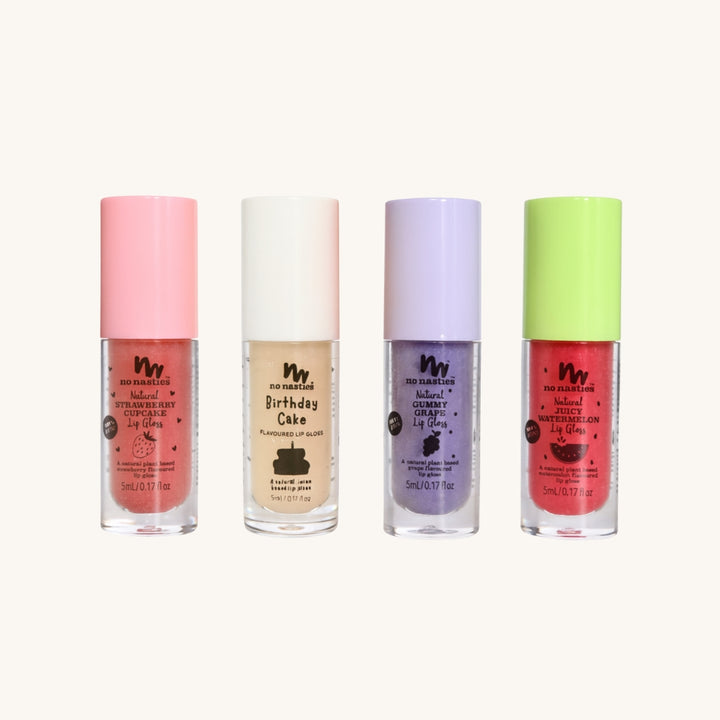
For a child who wants a visible beauty product without complexion coverage, Natural Flavor Lip Gloss for Kids offers sheer color and playful shine. It keeps the beauty moment focused on expression rather than hiding or correcting the face.
Natural Flavor Lip Gloss for Kids
$7.99
A yummy, all-natural treat for little lips, this natural flavor lip gloss for kids adds a whisper of color while keeping lips soft and nourished with sunflower, olive, coconut, and jojoba oils. Formulated for even the most sensitive skin, it’s… read more
- Nail color: a classic “I get to participate” product that keeps beauty playful.
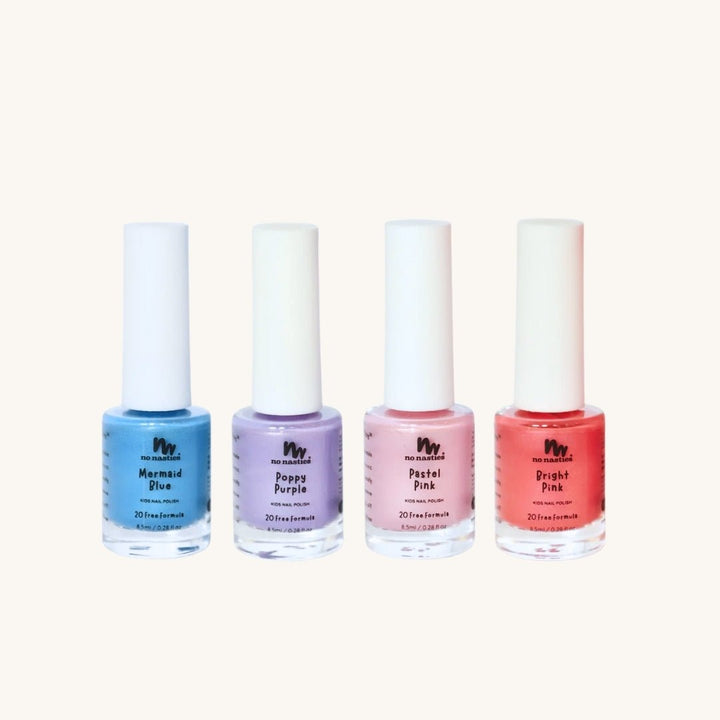
For children who want color without wearing anything on their faces, this water-based, peel-off nail polish offers an age-appropriate creative option. Its temporary format helps keep beauty in the lane of play rather than daily appearance management.
20 FREE Unscented, Non-Toxic Nail Polish for Kids
$9.99
Give your little one’s nails a safer mani/pedi with this 20 FREE Unscented Nail Polish—meaning it’s made without the 20 most common toxic ingredients found in conventional nail polish, including formaldehyde (a known carcinogen), toluene (linked to headaches and nervous… read more
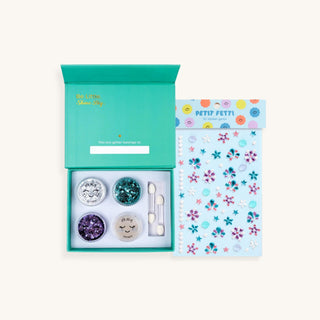
- Face gems or playful accents: gives the “special” feeling without covering skin.
Self Adhesive Face Gems create a special-occasion look without covering the complexion. They work well for parties, dress-up, performances, and creative play when applied away from the lash line and removed gently.
Self Adhesive Face Gems
$4.99
Add a little sparkle to creative play with our Self Adhesive Face Gems, available in two magical designs kids love: Unicorn Wishes and Mermaid Dreams. Each set features dazzling 3D gem stickers in playful shapes and dreamy colors, perfect for… read more

- Costume face paint (occasionally): for characters and parties, used with supervision and removed gently.
At Popsicle Beauty Club, we focus our curation on exactly these categories—vetted, age-appropriate beauty play that parents can feel better about. Parents looking for more guidance can read our guide to what makeup kids should wear, including age-appropriate options and complexion products worth delaying.
Common mistakes to avoid
- Turning foundation into a daily habit for a child or tween. Daily wear quickly becomes performance beauty: “my real face isn’t enough.”
- Buying “clean” based on front-of-pack claims. Flip the package, read the ingredient list, and look for transparent labeling.
- Ignoring fragrance labeling limits. If sensitivity runs in the family, treat fragrance as a “consider carefully” ingredient category.
- Choosing long-wear products that require aggressive removal. Over-cleansing and scrubbing can create irritation spirals.
- Sharing makeup. Even among siblings, sharing increases hygiene issues (especially around eyes and lips). If you allow any makeup, keep it personal, clean, and replace when it’s old.
- Using makeup to manage persistent acne, rash, or distress. If your child is uncomfortable or fixated on their skin, consider checking in with a qualified clinician for guidance.
Bottom line
If you’re still asking What is the cleanest non-toxic foundation, here’s the Popsicle answer you can act on today: for kids, tweens, and many teens, the cleanest move is to delay foundation entirely and choose age-appropriate alternatives that keep makeup in the “art and play” lane.
When you do shop (for lip care, nail color, face gems, costume makeup, and gentle skincare), use parent-friendly criteria: transparent labels, cautious use of fragrance, easy removal, hygiene, and patch testing when appropriate. And when you want vetted options in one place, Popsicle Beauty Club is built to be that practical clean kids’ beauty hub—curated with ingredient standards and age-appropriate positioning at the center.
Sources and further reading
- NIEHS: Cosmetics and Your Health - Explains what counts as cosmetics and notes most cosmetics/ingredients don’t require FDA approval before market (except color additives).
- FDA: Phthalates in Cosmetics - Notes how phthalates may be used and explains fragrance labeling limitations.
- FDA: Color Additives in Foods - Helpful background on how color additives are regulated (useful context for parent questions about dyes/pigments).
For a deeper dive into safe skincare for kids, visit Safe & Non-Toxic Skincare for Kids to discover the best clean beauty products, DIY recipes, and tips for keeping your child’s skin healthy and toxin-free.
For a complete guide on non-toxic play makeup, check out our in-depth resource: The Ultimate Guide to Non-Toxic Play Makeup for Kids for expert tips, product recommendations, and everything you need to know about choosing safe beauty play products for your child.
About the Author: This article was written by the contributing writers at Popsicle Beauty Club—a team of moms, educators, and clean beauty advocates passionate about creating a safer, more imaginative world for kids. We believe in empowering parents with trusted information and offering fun, non-toxic beauty and personal care products that let children play, express, and explore—without compromising their health.