
Table of Contents
- Introduction
- Why ingredient-checking matters more for kids’ lip products
- What “non toxic” can (and can’t) mean on a label
- Ingredients many parents choose to avoid in non toxic lip gloss
- Ingredients that can be good signs in non toxic lip gloss for kids
- A parent-friendly shopping checklist (beyond the ingredient list)
- How to use non toxic lip gloss more safely (routine + hygiene)
- Bottom line: choosing non toxic lip gloss with confidence
- FAQs
Introduction
When you’re shopping for non toxic lip gloss—especially for kids—it’s normal to want a simple answer: “Is this safe or not?” In reality, lip products sit at the intersection of skincare and makeup: they’re applied frequently, can be accidentally ingested in tiny amounts, and often include fragrance and flavor that make them extra appealing to children. That’s why ingredient-checking matters more here than it might for, say, a blush or a hair clip.
This guide is designed for beauty shoppers and parents who want practical, label-based criteria for choosing non toxic lip gloss without panic-shopping. You’ll learn which ingredients many families choose to avoid, what to look for instead, and how to use gloss more hygienically (because “safe” isn’t only about the ingredient list). You should always check the label on the specific product you’re buying, and patch test when it’s appropriate—especially for sensitive lips or eczema-prone skin.
Why ingredient-checking matters more for kids’ lip products
Lips are different from other areas of skin: the skin barrier is thinner, and kids often reapply (or lick) glossy products throughout the day. Many “kids” glosses also include flavoring, sweeteners, and sparkles—fun features, but also common sources of irritation. Even if a brand markets a product as non toxic lip gloss, the most helpful information is still the ingredient list and the product’s intended use.
Parents often prioritize three things:
- Lower irritation risk: minimizing fragrance, strong flavors, and certain botanicals that can sensitize.
- Lower “oops-ingestion” concerns: avoiding ingredients they’d rather not have swallowed repeatedly in small amounts.
- Practical wear and hygiene: packaging and texture that reduce mess, sharing, and contamination.
None of this requires fear-based thinking. It’s simply shopping with the reality of kids’ routines in mind.
What “non toxic” can (and can’t) mean on a label
“Non toxic” is a marketing term, not a single universal standard on its own. Brands may use it to mean different things: free from certain ingredients, formulated to meet specific internal guidelines, or designed for sensitive users. That’s why, when you’re trying to choose non toxic lip gloss, the best approach is to treat the claim as a starting point—not the conclusion.
Here’s how to get clarity quickly while you’re shopping:
- Read the full INCI list (the ingredient list). If the list isn’t available online, that’s a reason to pause.
- Look for plain-language callouts that match your priorities (for example, “fragrance-free” versus “no synthetic fragrance,” which can still include essential oils or masking scents).
- Watch for vague terms like “clean,” “natural,” or “chemical-free” without specifics. (Everything is made of chemicals, including water.)
- Check for kid-appropriate guidance such as recommended age range, choking-hazard notes (for charms/caps), and whether the product is meant to be flavored.
If your goal is non toxic lip gloss for kids, prioritize transparency and simplicity over flashy claims.
Ingredients many parents choose to avoid in non toxic lip gloss
Different families draw the line in different places. If you're specifically shopping for younger children, our guide to non toxic lip gloss for kids highlights ingredients many families choose to avoid and explains why they commonly appear in kids' formulas. The goal isn’t to memorize every ingredient; it’s to recognize a few common categories that may matter more for children’s lips. When evaluating non toxic lip gloss, many parents choose to avoid or limit the following:
1) Fragrance and strong flavor systems
Fragrance (often listed as “fragrance,” “parfum,” or “aroma”) is a frequent trigger for lip irritation. Flavoring blends can also be irritating, especially when paired with cooling/warming sensations. If a kid is prone to dryness, lip licking, or perioral irritation, a fragrance-free, minimally flavored gloss is often the easiest win.
2) Certain essential oils and “tingle” ingredients
Essential oils can be naturally derived yet still irritating—peppermint, cinnamon, citrus oils, and clove are common examples used for taste or a “plumping” sensation. Many parents skip these for kids because the lips can react quickly, and children may not describe discomfort clearly. A “minty” gloss might be trendy, but it’s not always kid-friendly.
3) Sensitizing preservatives for very reactive users
Preservatives are important in water-containing products to reduce microbial growth. However, some preservatives are more commonly associated with sensitivity in certain people. If your child has a history of reactions, you may prefer a simpler, mostly oil/wax-based formula (which typically needs different preservation strategies than water-based products). If you’re unsure, patch test and choose smaller sizes so you can discontinue easily.
4) Heavy glitter or poorly specified sparkle
Not an “ingredient” in the traditional sense, but still relevant: chunky glitter can be scratchy on lips, and fallout can end up in eyes. If sparkle is a must, look for very fine shimmer and avoid products that feel gritty when you rub a little between clean fingers.
5) Very long, opaque color additive lists without context
Many lip products use approved colorants. That said, if you’re shopping for kids lip gloss non toxic, some parents prefer sheer tints with fewer color additives or products that clearly list and explain their pigments. If the label is hard to read or the brand won’t disclose full ingredients, pick a different option.
Ingredients that can be good signs in non toxic lip gloss for kids
A kid-friendly gloss doesn’t need to be complicated. Many families prefer formulas that focus on barrier-supporting emollients and straightforward film formers that help prevent moisture loss. When shopping for non toxic kids lip gloss, these can be helpful “green flags” on a label:
- Simple emollients: ingredients like plant oils (such as jojoba or sunflower), squalane, or mineral oil-based emollients can help soften and reduce roughness. The best choice is often the one your child tolerates well.
- Waxes and butters: beeswax, candelilla wax, shea butter, or similar can add structure and reduce drippiness—useful for kids who don’t want sticky gloss migrating outside the lip line.
- Moisture-supporting feel: a cushiony texture that doesn’t encourage constant reapplication can be a practical “safety” feature (less product used overall).
- Fragrance-free or lightly scented with clear disclosure: “fragrance-free” is typically easiest for sensitive users; if scented, look for a short, clearly named scent system rather than mystery blends.
- Clear batch/expiry guidance: especially for kids who stash products in backpacks. A gloss that’s used past its prime can smell off or separate, and that’s when you toss it.
If you’re choosing non toxic lip gloss for girls as a first “makeup” item, a clear or sheer tint with a simple base is often a smoother entry point than bold pigments, intense flavors, or plumping effects.
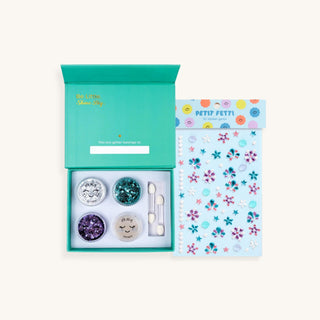
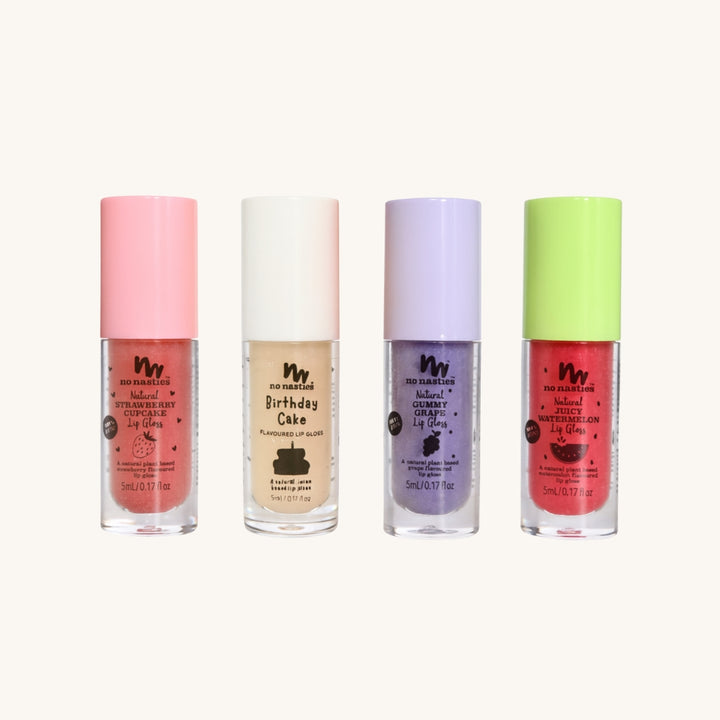
We highly recommend this all-natural lip gloss by No Nasties.
Natural Flavor Lip Gloss for Kids
$7.99
A yummy, all-natural treat for little lips, this natural flavor lip gloss for kids adds a whisper of color while keeping lips soft and nourished with sunflower, olive, coconut, and jojoba oils. Formulated for even the most sensitive skin, it’s… read more
A parent-friendly shopping checklist (beyond the ingredient list)
The ingredient list matters, but so does the product design. Here’s a practical checklist you can use while shopping for lip gloss for kids non toxic options.
- Packaging: choose a squeezable tube or a wand that stays clean. Avoid overly decorative caps with small parts for younger kids.
- Applicator hygiene: wands get contaminated when kids share. If sharing is likely (sleepovers, siblings), consider single-user tubes or a small squeeze tube applied to a clean fingertip.
- Texture: very sticky formulas can attract hair and dirt; very oily formulas can migrate. A balanced, cushiony texture tends to be easiest for kids.
- Scent/flavor level: if your child is sensitive, pick fragrance-free or very lightly scented. If the gloss tastes like candy, kids may reapply more often.
- Shimmer type: fine shimmer > chunky glitter for comfort. If it feels gritty, skip.
- Clear labeling: full INCI list, shade name, and brand contact info. Transparency is part of what many shoppers mean by non toxic lip gloss.
How to use non toxic lip gloss more safely (routine + hygiene)
Even the best-formulated non toxic lip gloss can cause issues if it’s used on chapped, broken skin or shared between kids. A few simple habits go a long way.
Patch test when appropriate
If your child has sensitive skin, a history of reactions, or you’re trying a new formula with scent, shimmer, or botanicals, consider a patch test. Apply a tiny amount to a small area (many parents choose the outer edge of the lip area or inner forearm) and wait to see if irritation develops. If there’s discomfort, redness, or swelling, discontinue use and choose a simpler formula. Patch testing isn’t perfect for predicting lip reactions, but it’s a practical screening step.
Start with a “lip prep” baseline
- Begin on clean, dry lips.
- If lips are very dry, apply a plain balm first and let it settle for a minute.
- Use a thin layer of gloss. More product increases the chance of migration and accidental ingestion.
Set basic hygiene rules
- No sharing (especially wand applicators).
- Cap on tight to reduce drying and keep backpack lint out.
- Replace if it smells off, separates dramatically, or has been through heat (hot car, sunny windowsill).
- Remove at the end of the day with a gentle cleanser or warm water and a soft cloth, then apply a simple balm.
Reapplication guidance that keeps things realistic
Kids tend to reapply for fun, not need. If your goal is non toxic lip gloss with a more mindful routine, suggest a simple limit: once before school, once after lunch, and once after school (or similar). If a child is reapplying constantly, it may be a sign the formula feels drying, the flavor is encouraging overuse, or lips are already irritated.
Bottom line: choosing non toxic lip gloss with confidence
The most reliable way to shop for non toxic lip gloss is to combine three things: a clear ingredient list, kid-appropriate product design, and smart use habits. Look for simple, comfortable formulas; minimize fragrance and intense flavoring when sensitivity is a concern; choose fine shimmer over gritty glitter; and prioritize packaging that reduces sharing and mess. Finally, always check labels because formulas can change—and patch test when you’re introducing a new gloss to sensitive lips. With those steps, finding non toxic lip gloss that feels fun and parent-approved becomes much more straightforward.
Curious about which harmful ingredients to avoid in your child's beauty products? Read The Truth About Harmful Beauty Ingredients for Kids to uncover the hidden toxins in mainstream makeup, skincare, and hair care—and discover safer alternatives.
About the Author: This article was written by the contributing writers at Popsicle Beauty Club—a team of moms, educators, and clean beauty advocates passionate about creating a safer, more imaginative world for kids. We believe in empowering parents with trusted information and offering fun, non-toxic beauty and personal care products that let children play, express, and explore—without compromising their health.