


Table of Contents
Non Toxic Lip Gloss for Kids: 10 Ingredients to Avoid
If your little girl is anything like mine, she probably loves playing dress-up and experimenting with makeup - especially those sparkly, fun lip glosses. When I shop for non toxic lip gloss for kids, I still want the fun shades and excitement, but I also want clear ingredient transparency I can trust. Watching her try on different shades and emulate mommy or a special woman in her life is simply adorable. But as cute as it is, it's important to know exactly what's in those tiny tubes of gloss.
Some ingredients commonly found in lip glosses are concerning, especially for our little ones who lick their lips. As a busy mom enjoying life's little moments with your child, you shouldn't have to become a scientist to research every ingredient. If you're shopping for non toxic lip gloss for kids, this guide gives you a practical, science-backed way to evaluate products without losing hours to label confusion.
Quick Answer: What should you avoid in non toxic lip gloss for kids?
When evaluating non toxic lip gloss for kids, start by screening for ingredient groups that are commonly flagged in clean-beauty safety discussions:
- Parabens
- Phthalates
- Synthetic fragrances and flavors
- BHA and BHT
- Formaldehyde-releasing preservatives
- Questionable petroleum-derived ingredients with contamination concerns
Then look for clear ingredient transparency, reputable certifications, and brands that explain sourcing and testing standards. That combination is usually the strongest real-world signal for safer options.
2-Minute Ingredient Reality Check for Busy Moms
Most of us are comparing products while juggling ten other things, so perfection is not the goal. A realistic, repeatable process is. For non toxic lip gloss for kids, I use a two-minute filter before I ever read a full ingredients panel in detail:
- First, I check whether the brand publishes a full ingredient list in plain language.
- Second, I scan for high-concern groups like synthetic fragrance blends, formaldehyde-releasing preservatives, and unnecessary additive-heavy formulas.
- Third, I look for practical transparency: where ingredients are sourced, whether testing standards are explained, and whether age-appropriate use is discussed.
This quick framework prevents decision fatigue and keeps the focus on what matters most: reducing avoidable exposure while still choosing products your child will actually use. It is science-aware, mom-practical, and easy to repeat whenever you shop.
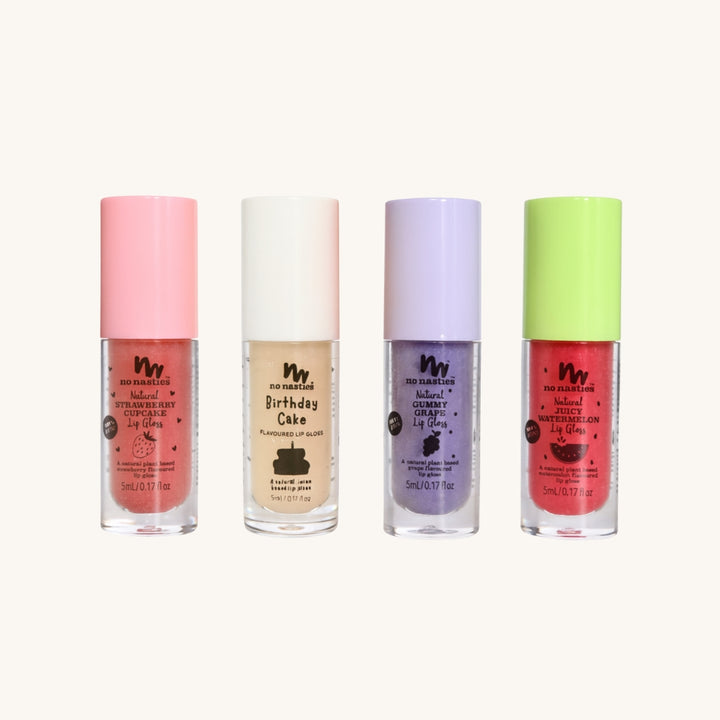
Natural Flavor Lip Gloss for Kids
$7.99
A yummy, all-natural treat for little lips, this natural flavor lip gloss for kids adds a whisper of color while keeping lips soft and nourished with sunflower, olive, coconut, and jojoba oils. Formulated for even the most sensitive skin, it’s… read more
Ingredients in conventional lip glosses to avoid
1. Parabens
Parabens like Methylparaben, Propylparaben, Butylparaben, and Ethylparaben are linked to hormone disruption and have potential carcinogenic effects.
2. Phthalates
Phthalates, like dibutyl phthalate (DBP) and diethyl phthalate (DEP), are associated with hormone disruption, reproductive issues, and developmental problems.
3. Petrolatum (Petroleum Jelly)
Petrolatum can be contaminated with polycyclic aromatic hydrocarbons (PAHs), which are potentially carcinogenic.
4. Lead
Even in small amounts, lead can accumulate in the body and cause neurological damage and developmental issues.
5. Synthetic Fragrances and Flavors
Synthetic fragrances and flavors can contain undisclosed chemicals, some of which may be allergens, irritants, or endocrine disruptors.
6. Butylated Hydroxyanisole (BHA) and Butylated Hydroxytoluene (BHT)
BHA and BHT are potential carcinogens and hormone disruptors that can cause liver damage.
7. Tocopheryl Acetate (Synthetic Vitamin E)
Tocopheryl Acetate can cause skin irritation and allergic reactions in some individuals.
8. Mineral Oil
Mineral oil can be contaminated with PAHs and may clog pores, leading to skin issues.
9. Formaldehyde-Releasing Preservatives
Formaldehyde-releasing preservatives, such as Quaternium-15, DMDM Hydantoin, and Imidazolidinyl Urea, release formaldehyde, a known carcinogen, and can cause allergic reactions and skin irritation.
10. Chemical Sunscreens
Chemical sunscreens like Oxybenzone, Octinoxate, and Homosalate can be hormone disruptors and may cause skin irritation and allergic reactions.
How to avoid questionable ingredients in your beauty products
Read Labels
One of the most effective ways to ensure you're using products with clean ingredients is to read labels carefully. Look for products that explicitly list all ingredients and avoid those that include harmful substances like parabens, phthalates, and synthetic fragrances. For moms comparing non toxic lip gloss for kids, this first-pass screening step is the highest-leverage habit.
Choose Natural or Organic
Opting for natural or organic lip gloss is a practical way to reduce exposure to questionable ingredients. Products labeled as organic are often free from many harmful chemicals and use clean, non-toxic ingredients. Natural lip glosses frequently rely on plant-based oils, waxes, and pigments, which can offer a safer alternative to heavily synthetic formulas.
Research Brands
Spend time researching brands to find those committed to clean, non-toxic ingredients. Look for transparency around ingredient sourcing, testing standards, and manufacturing practices. Brands that prioritize clean beauty principles tend to provide clearer safety information, which makes choosing non toxic lip gloss for kids far easier and more reliable.
Check Certifications
Certifications from reputable third-party organizations can be useful safety signals. Look for seals such as USDA Organic, EWG Verified, or similar standards on lip products. These certifications generally indicate the product has passed defined screening requirements for ingredient quality and safety.
5-Minute Mom Label Framework
If you are short on time, use this quick framework in-store or online:
Scan the first 10 ingredients: this is where many key formula choices show up.
Flag fragrance language: if "fragrance" or "flavor" is vague and no details are provided, proceed carefully.
Check preservative choices: look for known formaldehyde-releasing preservatives and similar red flags.
Validate brand transparency: prioritize companies that clearly explain safety standards and sourcing.
Patch test first: even cleaner formulas can still irritate sensitive lips.
This framework helps you quickly compare clean lip gloss for kids, lip gloss for kids, and broader kids lip gloss options while staying grounded in ingredient quality, not marketing copy.
Final Takeaway
By being aware of high-concern ingredients and using a repeatable label-check process, you can make more informed decisions and choose lip glosses that are safer for your family. The goal is not perfection; it's practical, consistent improvement in everyday choices.
If a label feels unclear, trust that instinct and move on. Choosing non toxic lip gloss for kids is easier when brands communicate clearly and formulas stay simple. Over time, these small decisions add up to a safer routine that still feels fun for your child.
If you're ready to shop now, browse your Lip Collection and apply the checklist above product by product.
Curious about which harmful ingredients to avoid in your child's beauty products? Read The Truth About Harmful Beauty Ingredients for Kids to uncover the hidden toxins in mainstream makeup, skincare, and hair care—and discover safer alternatives.
About the Author: This article was written by the contributing writers at Popsicle Beauty Club—a team of moms, educators, and clean beauty advocates passionate about creating a safer, more imaginative world for kids. We believe in empowering parents with trusted information and offering fun, non-toxic beauty and personal care products that let children play, express, and explore—without compromising their health.
FAQs
What ingredients should I avoid in non toxic lip gloss for kids?
For non toxic lip gloss for kids, avoid ingredient groups linked to higher concern in children: parabens, phthalates, synthetic fragrance blends, formaldehyde-releasing preservatives, and heavy-metal contamination risks. Choose formulas with transparent ingredient labels and child-appropriate safety testing.
Is natural lip gloss always non toxic for kids?
Not always. "Natural" is a marketing term and does not automatically mean safer for kids. Check the full ingredient list, avoid high-concern groups like synthetic fragrance blends and formaldehyde-releasing preservatives, and prioritize brands that clearly explain sourcing and testing.
What certifications should I look for when buying non toxic lip gloss for kids?
Look for credible third-party signals such as USDA Organic or EWG Verified when available. Certifications are helpful, but they should complement transparent ingredient labels, clear preservative choices, and practical brand safety information.
How do I patch test non toxic lip gloss for kids safely?
Do a 24-hour patch test before first use. Apply a tiny amount to clean skin on the inner forearm, wait, and check for redness, itching, or swelling before using on lips. If your child has eczema, fragrance sensitivity, or a history of reactions, choose fragrance-free formulas and confirm ingredients with your pediatrician or dermatologist.
How often should I re-check ingredients in non toxic lip gloss for kids?
Re-check every time you buy, because brands can reformulate without a major announcement. Compare ingredient lists line by line, especially for fragrance, flavor, preservatives, and colorants. If your child reacts to a product they previously tolerated, stop use and review the latest formula before trying again.