
Table of Contents
- Introduction
- Answer-ready summary for parents:
- Popsicle safety snapshot
- What “non-toxic” can (and can’t) mean for kids’ shampoo
- Non-toxic kids shampoo vs mainstream kids shampoo: what’s different on the label
- How to choose
- Ingredient and label checklist
- Routine and use tips (so the gentlest shampoo actually works)
- Common mistakes to avoid
- Where Popsicle Beauty Club fits (and how to shop smarter)
- Bottom line
- Sources and further reading
- FAQs
Introduction
Non-toxic kids shampoo vs mainstream kids shampoo usually comes down to three practical differences: (1) how much fragrance and “mystery blend” content you’re accepting, (2) how strong the cleansing system is (and how likely it is to dry out a child’s scalp or sting eyes), and (3) how transparent the label is about dyes, preservatives, and other additives. For most families, the best choice is a simpler, clearly labeled shampoo that cleans well, rinses easily, and doesn’t push unnecessary extras.
Answer-ready summary for parents:
- Choose a kid-appropriate shampoo with a short, readable ingredient list, mild cleansers, and fragrance you’re comfortable with (or no fragrance).
- Pause on heavy fragrance, lots of added color, and “adult-style” claims (intense repair, scalp detox, anti-aging, etc.) that can mean more complexity than kids need.
- Do a patch test when appropriate, and reassess if you see itching, flakes, or complaints of stinging—especially around the eyes.
Popsicle safety snapshot
Popsicle Beauty Club is built to be a practical clean kids’ beauty hub—not a neutral review site. We curate and carry vetted kids’ personal-care brands so parents can compare options in one place, with parent-friendly label checks and age-appropriate positioning. A practical non-toxic kids shampoo vs mainstream kids shampoo comparison should consider the child’s scalp, hair texture, fragrance tolerance, wash frequency, and ability to rinse thoroughly.
- Medical-advisory-backed kids’ beauty education: We translate ingredient and routine questions into realistic boundaries families can use.
- EWG Verified positioning/products where applicable: When a product is actually EWG Verified, we’ll say so; we don’t imply it when it’s not stated.
- Allergist review process where applicable: Some products/categories may be reviewed with allergy-awareness in mind; it’s never a guarantee for every child.
- Child-centered standards: We prioritize transparency, simpler routines, and products that support comfort, hygiene, and playful self-care.
What “non-toxic” can (and can’t) mean for kids’ shampoo
Parents search “non-toxic” because they want to reduce avoidable exposures and skip ingredients that feel unnecessary—especially on kids who use products frequently and may have more sensitive skin. But “non-toxic” is not a regulated, one-size-fits-all claim in personal care.
Here’s the calm, useful framing:
- What it can mean: more ingredient transparency, fewer controversial additives, and gentler choices (for example, simpler fragrance approaches and fewer dyes).
- What it can’t promise: that a product is “allergy-proof,” irritation-proof, or perfect for every scalp type.
This means a non-toxic kids shampoo vs mainstream kids shampoo decision should rely on the complete formula and the child’s response rather than one marketing term.
For additional context, the National Institute of Environmental Health Sciences (NIEHS) notes that cosmetics include shampoos and that, except for color additives, cosmetic products and ingredients generally do not require FDA approval before going on the market. That’s one reason label literacy matters for families choosing kids’ products.
Non-toxic kids shampoo vs mainstream kids shampoo: what’s different on the label
When parents compare Non-toxic kids shampoo vs mainstream kids shampoo, the most meaningful differences are typically about formulation philosophy and labeling—not whether a product “works.” Both should clean hair. The question is how they get there.
1) Fragrance approach (and how much you can actually see)
Mainstream kids shampoos often lean on strong fragrance to create a “fresh” identity and to cover raw-material odor. Cleaner-leaning kids shampoos more often aim for lighter fragrance or no added fragrance.
One important nuance: FDA notes that “fragrance” on a label can represent a blend where individual components aren’t listed separately. If fragrance is a known trigger in your home, it’s reasonable to prioritize fragrance-free or very lightly scented options and to read brand FAQs for transparency.
2) Cleansing strength and comfort
Kids don’t need “squeaky clean,” high-foam cleansing—especially if they wash frequently or have dry, curly, or textured hair. Some mainstream formulas can feel harsher simply because they’re designed for big foam, fast rinse, and a strong “clean” sensation. Many cleaner kids shampoos aim for milder cleansing systems and more scalp comfort. In a non-toxic kids shampoo vs mainstream kids shampoo comparison, the best cleanser is the one that removes sweat and dirt without leaving the scalp tight, itchy, or difficult to rinse.
3) Dyes and visual additives
Brightly colored liquids can be fun, but they’re rarely necessary for performance. If your child has sensitive skin or you’re trying to simplify, choosing dye-free (or minimally colored) products is an easy “less is more” step. (Color additives are regulated differently than many other cosmetic ingredients; the key is that added color is optional, not essential.)
4) “Extra” actives kids often don’t need
Watch for adult-style hair claims marketed down to kids—intensive scalp treatments, “detox,” heavy fragrance masking, or multi-step systems. More complexity can mean more potential for irritation and more buildup on fine hair.
How to choose
Use this decision path to choose a shampoo that fits your child’s age, hair type, and tolerance—without turning bath time into a chemistry project. The right non-toxic kids shampoo vs mainstream kids shampoo choice depends on wash frequency, hair texture, scalp sensitivity, fragrance tolerance, and the number of products used afterward.
- Start with your child’s wash pattern. If you wash daily (sports, sweaty scalp, fine hair), prioritize a gentler cleanser and easy rinse. If you wash 1–2x/week (many textured hair routines), prioritize slip and scalp comfort.
- Decide your fragrance boundary. If your child complains about stinging, itching, or headaches with scented products—or you’re minimizing fragrance in the home—go fragrance-free first. If fragrance isn’t an issue, choose a light scent and still avoid layering multiple fragranced products (shampoo + conditioner + detangler) every wash.
- Match the formula to hair needs.
- Fine/straight hair: avoid very heavy, coating formulas that can weigh hair down.
- Curly/textured hair: look for gentle cleansing and pair with a kid-appropriate conditioner/detangler for combability.
- Dry scalp: prioritize mild cleansing and fewer potential triggers; avoid aggressively “stripping” shampoos.
- Choose a “clean enough” label you can maintain. The best shampoo is the one your family will actually use consistently—without fights, stinging, or leftover residue.
- Patch test when appropriate. Especially when switching fragrance level, botanicals, or preservatives. (Patch testing is not foolproof, but it can reduce surprises.)
Ingredient and label checklist
If you’re shopping the Non-toxic kids shampoo vs mainstream kids shampoo question, this checklist helps you compare bottles quickly and consistently.
Look for (parent-friendly green flags)
- Clear fragrance disclosure: fragrance-free, or a brand that explains its scent approach plainly.
- Mild cleansing language: marketed for kids, sensitive skin, or gentle daily use (without making medical promises).
- Transparent full ingredient list: easy to find online and on-pack, not hidden behind marketing pages.
- Easy rinse + easy removal: practical for kids who don’t love long hair-wash sessions.
- Dye-free (optional but helpful): especially for sensitive kids or parents simplifying routines.
Pause on (not automatic “bad,” but worth a second look)
- Very strong fragrance or multiple fragranced steps: can be a common trigger for sensitive families; FDA notes the limits of “fragrance” disclosure on labels.
- Overly long ingredient lists with lots of “extras”: kids generally don’t need complex adult-style haircare.
- Brightly colored formulas for no reason: fun, but optional; if your goal is fewer additives, skip unnecessary color.
- “Detox,” “clinical,” or heavily performance-coded claims: kids’ hair and scalp typically do best with simpler care unless a clinician advises otherwise.
For a deeper review of cleansing agents, fragrance, sensitive-scalp considerations, and current cleaner options, read our guide to the best non-toxic shampoo for kids.
If your child has persistent scalp irritation
If you’re seeing ongoing redness, rash, intense itching, or painful flaking—or your child is distressed—pause experimentation and consider guidance from a qualified clinician. The goal is comfort and health, not forcing a product to work.
Routine and use tips (so the gentlest shampoo actually works)
Parents often blame the shampoo when the real issue is “too much product + not enough rinse.” These small tweaks can make both mainstream and cleaner options feel better. In everyday use, the outcome of a non-toxic kids shampoo vs mainstream kids shampoo choice depends heavily on product amount, scalp placement, rinse time, and how many additional hair products are layered afterward.
- Use less than you think. For most kids, a small amount focused on the scalp is enough; let the suds run through the lengths.
- Rinse longer than you wash. Leftover cleanser can cause itching or dullness, especially with fine hair.
- Keep it out of the eyes. Even “tear-free” positioning isn’t a guarantee for every child’s comfort.
- Conditioner goes on lengths, not scalp. If tangles are the issue, the solution is often a kid-appropriate conditioner or detangler—not a harsher shampoo. For a complete wash-day routine covering cleansing, conditioning, detangling, and different hair needs, use our kids shampoo and conditioner guide.
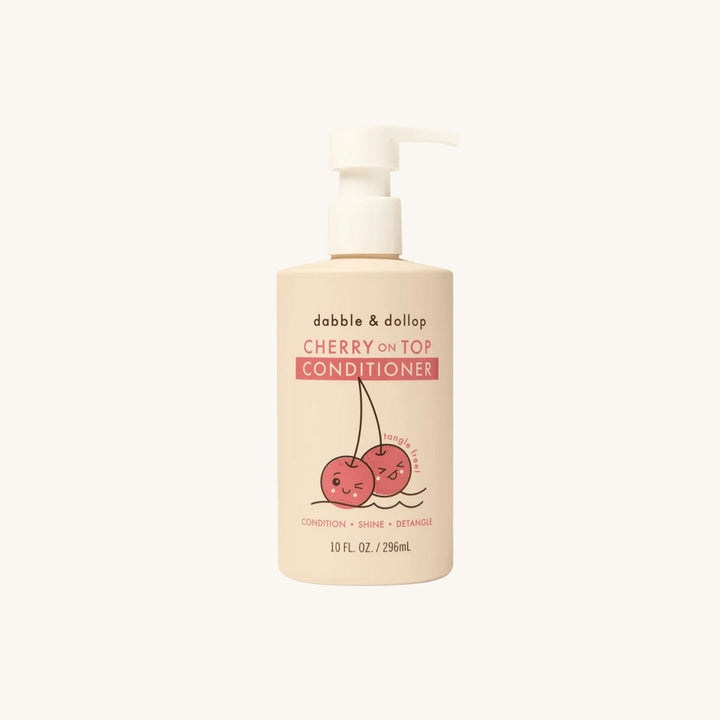
Tear-Free Conditioner for Kids
Tear-Free Conditioner for Kids can support easier brushing when tangles—not scalp cleansing—are the main problem.
Apply a small amount through the mid-lengths and ends, then rinse thoroughly. Because the current product has a natural cherry fragrance, families with fragrance-sensitive children should review the full listing and introduce it cautiously.
Tear-Free Conditioner for Kids
$15.99
Indulge your little one's locks with Dabble & Dollop's Cherry on Top, Tear-Free Conditioner for Kids, a luxuriously creamy formula infused with the sweet, natural aroma of cherries. Lovingly made in California from vegan, plant-based ingredients, it's specifically formulated to be… read more
Knot A Chance! Children’s Detangler
Knot A Chance! Children’s Detangler may help families manage morning knots, post-swim tangles, and difficult brushing without switching to a stronger shampoo.
The spray doubles as a lightweight leave-in conditioner and is intended to improve slip. Because both current variants contain natural parfum, parents should consider the child’s fragrance tolerance before use.
Knot A Chance! Children's Detangler
$14.99
Make hair care a joyful, stress-free experience with this gentle children’s detangler, a safer, all-natural alternative to mainstream products. Available in the refreshing scents of Mandarin Grape or Strawberry, this lightweight formula is enriched with native Australian Emu Apple extract,… read more

- Rotate only if you need to. Switching constantly makes it hard to spot true triggers. Give a new shampoo a fair, simple trial unless there’s immediate discomfort.
In Popsicle’s worldview, kids’ self-care should feel like care—hygiene, comfort, and a little fun—not “performance.” Hair products are a great place to practice that boundary early.
Common mistakes to avoid
Even after completing a non-toxic kids shampoo vs mainstream kids shampoo comparison, overuse, incomplete rinsing, fragrance stacking, and constant product switching can still cause discomfort.
- Assuming “kids” on the label equals gentle. Always check the full ingredient list and scent level.
- Chasing foam. More bubbles can encourage overuse and can be drying for some kids.
- Over-fragrancing the routine. Shampoo + conditioner + detangler + styling product all scented can be a lot for sensitive families.
- Ignoring buildup. If hair feels coated, the answer might be less conditioner on the scalp or fewer styling products—not a stronger shampoo.
- Skipping a patch test when appropriate. Especially if your child has reacted before or you’re switching from heavily scented to botanical-heavy formulas (or vice versa).
Where Popsicle Beauty Club fits (and how to shop smarter)
If you’re overwhelmed by Non-toxic kids shampoo vs mainstream kids shampoo, Popsicle Beauty Club is designed to be the “safety filter” you wish existed in the shampoo aisle. Instead of reading 20 labels alone, you can start with products that are curated by Popsicle Beauty Club for ingredient transparency and kid-appropriate use.
Popsicle therefore approaches non-toxic kids shampoo vs mainstream kids shampoo as both an ingredient decision and a practical wash-day decision for real families.
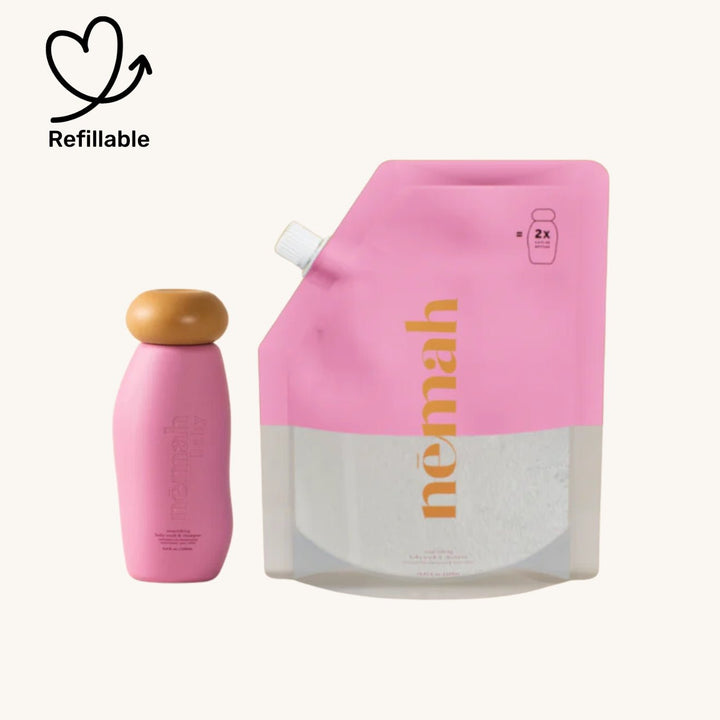
Non-Toxic Baby & Kids Body Wash & Shampoo – Refillable Set
Non-Toxic Baby & Kids Body Wash & Shampoo – Refillable Set is a direct option for families seeking one gentle cleanser for both hair and body.
Its plant-derived formula is designed for delicate skin and hair, while the refillable format may suit families trying to reduce repeated packaging. The formula is lightly scented, so parents managing fragrance sensitivity should review the complete ingredient list before purchasing.
Non-Toxic Baby & Kids Body Wash & Shampoo – Refillable Set
$19.99
Nemah’s Baby & Kids Body Wash & Shampoo is a gentle, plant-derived formula designed to cleanse and protect delicate skin and hair. Unlike many mainstream baby shampoos loaded with synthetic fragrances, sulfates, parabens, and dyes that can dry or irritate… read more
How we suggest shopping inside Popsicle:
- Filter by your top constraint first: fragrance-free vs lightly scented, sensitive scalp support, or curly-hair friendly routines.
- Keep the routine minimal: shampoo + (optional) conditioner/detangler is plenty for most kids.
- Prioritize “easy removal” and “easy rinse”: practical matters for real families.
And if your child is also asking for beauty products beyond haircare, Popsicle’s broader stance stays the same: beauty as expression, not correction; makeup as art, not armor; and developmental milestones (like correction-focused complexion products) are worth delaying.
Bottom line
If you’re deciding between Non-toxic kids shampoo vs mainstream kids shampoo, aim for the most boringly effective option: a gentle cleanser, a transparent label, and a fragrance level your family can live with. Kids don’t need complicated, adult-style haircare—just comfortable, consistent hygiene that supports a healthy relationship with self-care. Popsicle Beauty Club can help you get there faster by curating vetted, cleaner-feeling kids’ options in one place.
Sources and further reading
- NIEHS: Cosmetics and Your Health - Explains what counts as cosmetics (including shampoo) and notes U.S. oversight realities that make label literacy important.
- FDA: Phthalates in Cosmetics - Helpful for understanding how fragrance mixtures are treated on labels and why some ingredients may not be individually listed.
- NIEHS: Endocrine Disruptors - Background on endocrine-disrupting chemicals and common exposure routes; useful context for parents trying to reduce avoidable exposures.
To learn more about choosing the safest shampoos, conditioners, and detanglers for kids, visit Non-Toxic Hair Care for Kids for a complete guide to gentle, chemical-free hair care.
About the Author: This article was written by the contributing writers at Popsicle Beauty Club—a team of moms, educators, and clean beauty advocates passionate about creating a safer, more imaginative world for kids. We believe in empowering parents with trusted information and offering fun, non-toxic beauty and personal care products that let children play, express, and explore—without compromising their health.