
Table of Contents
- Introduction
- Answer-ready summary: what “safer-feeling” looks like for sensitive kid skin
- Popsicle safety snapshot
- How to choose kids makeup for sensitive skin
- Sensitive-skin label checklist
- What clear labeling should look like
- What product categories make the most sense to try first?
- How to compare brands without falling for “safe for kids” marketing
- Two Popsicle examples worth comparing
- How to introduce makeup on reactive skin
- Common mistakes to avoid
- Where Popsicle Beauty Club fits
- Bottom line
- FAQs
Introduction
If you’re shopping for kids makeup for sensitive skin, the most useful answer is not one “perfect” brand. It is a short list of products and brand traits that make reactions easier to avoid and easier to troubleshoot: clear ingredient labels, minimal fragrance, simple formats, easy removal, and age-appropriate positioning. For a child who is truly reactive, start with one product, patch test when appropriate, and keep makeup away from the waterline and other high-friction areas.
This guide keeps the original question at the center: how can U.S. parents compare makeup brands for children with easily irritated skin without fearmongering or sliding into adult beauty routines? Popsicle Beauty Club’s stance remains simple—makeup can be art and play, but it should not become armor, correction, or a requirement for looking “presentable.”
Answer-ready summary: what “safer-feeling” looks like for sensitive kid skin
A thoughtful choice usually has more to do with the formula, product type, and use instructions than with a broad “safe” claim on the front of the package.
- Start with lower-exposure categories: lip balm, sheer gloss, or light cheek color before eye-heavy looks.
- Prioritize full ingredient lists: parents should be able to see what is in the formula before checkout.
- Go easy on fragrance: fragrance and aromatic botanicals can be difficult for some reactive children.
- Choose easy removal: products that wash away gently reduce the need for rubbing.
- Introduce one product at a time: if irritation appears, you have a better chance of identifying the trigger.
- Patch test when appropriate: especially when there is a history of eczema, contact reactions, or unexplained rashes.
- Delay complexion correction: foundation, concealer, contour, and correction-focused routines can wait.
For families comparing kids makeup for sensitive skin, this “less but clearer” approach is usually more useful than chasing the longest free-from list.
Popsicle safety snapshot
Popsicle Beauty Club is designed as a practical clean kids’ beauty hub for families who want ingredient-forward, age-aware options in one place. It is not a neutral directory of every children’s cosmetic on the market.
- Curated marketplace: products are selected with child-focused positioning and ingredient transparency in mind.
- Medical-advisory-backed education: guidance is written to be practical, cautious, and non-alarmist.
- EWG Verified positioning where applicable: a certification can be a useful signal when the individual product actually carries it.
- Allergen review where applicable: review processes can add context, but they do not make a formula universally allergy-proof.
- Foundationless boundaries: Popsicle supports beauty as expression while discouraging early correction-focused complexion culture.
The goal is not to promise that one formula works for every child. It is to make careful comparison easier.
How to choose kids makeup for sensitive skin
If your child has redness, itching, watery eyes, eczema-prone patches, or a history of reacting to cosmetics, use a simple decision path rather than buying a full kit at once.
1. Start with the lowest-exposure product
Lip balm or a sheer gloss is often an easier place to begin than eye makeup or loose sparkle. The smaller the routine, the easier it is to watch how skin responds.
For a broader framework covering seasonal allergies, fragrance, product categories, and reactive skin, read our kids sensitive skin guide.
2. Introduce one new variable at a time
Avoid opening several new products on the same day. If a reaction happens after a lipstick, blush, eyeshadow, and scented body product were all introduced together, identifying the cause becomes much harder.
3. Build your “no list” around your child
A useful no-list is personal. One family may avoid added fragrance because of a known sensitivity, while another may need to watch a specific botanical, preservative, or adhesive.
Do not copy someone else’s sensitivity list as though it were universal.
4. Prefer easy-removal formats
For reactive skin, wear time and removal matter. A sheer formula that comes off with a familiar gentle cleanser may be easier to manage than a waterproof or transfer-proof product that requires repeated rubbing.
5. Keep correction-focused products out of the starter routine
If your child wants makeup because they feel they need to hide redness, acne, or another normal skin feature, that is worth a conversation before a purchase. Popsicle’s Foundationless approach keeps early makeup in the expression lane rather than turning it into daily complexion correction.
Sensitive-skin label checklist
There is no universal “allergy-proof” formula, but parents can still compare kids makeup for sensitive skin more confidently by checking the same details every time.
| What to check | Why it matters | Parent-friendly question |
|---|---|---|
| Full ingredient list | Helps identify known triggers | Can I see the complete formula before I buy? |
| Fragrance disclosure | Scent can be a trigger for some children | Is it fragrance-free or clearly described? |
| Product placement | Eyes, lips, and cheeks have different exposure patterns | Where is this product meant to be used? |
| Pigment and shimmer format | Loose particles can migrate | Is the color pressed, bound, or loose? |
| Removal instructions | Friction itself can worsen irritation | Will this wash off without scrubbing? |
| Age positioning | Marketing reveals how the product is framed | Is this sold as creativity or complexion correction? |
Green flags
Look for brands that make practical information easy to find:
- Complete INCI lists online.
- Clear fragrance or essential-oil disclosure.
- Straightforward use-area directions.
- Sheer or buildable color instead of heavy long-wear claims.
- Simple removal instructions.
- Play, creativity, or self-expression messaging.
Pause-and-check flags
These are not automatic deal-breakers, but they deserve a closer look:
- “Fragrance” or “parfum” without enough context for a child with known scent sensitivity.
- Strongly flavored lip products if lip licking already causes irritation.
- Loose glitter near the eyes.
- Plumping, tingling, cooling, or warming sensations.
- Waterproof or transfer-proof claims that may require stronger removal.
- Very complex botanical blends when you are still trying to identify a trigger.
What clear labeling should look like
When you’re comparing kids makeup for sensitive skin, a brand should make it possible to answer a few basic questions without emailing customer service first.
Can I see the whole formula?
Parents should not have to rely only on words such as “clean,” “natural,” or “hypoallergenic” on the front of the package.
Is fragrance clearly explained?
If the product is scented, the brand should make the scent approach as transparent as possible. A fragrance-free option can be especially useful when scent is already a known trigger.
Is the intended use area obvious?
A lip product, cheek color, eye product, and face adhesive do not have the same exposure pattern. Clear use instructions matter.
Is there useful patch-test guidance?
A vague “patch test first” line is less helpful than guidance that explains where to test, what to watch for, and when to stop.
For a deeper look at what good brand guidance should include, read our kids beauty brands with patch test guidance article. That Popsicle guide specifically covers test location, observation, symptoms, application areas, and brand transparency.
What product categories make the most sense to try first?
When choosing kids makeup for sensitive skin, it is more practical to think about exposure level than to rank one company as universally best.
Lips: often the simplest starting point
Look for balms or glosses with clear ingredient lists and no plumping or tingling claims. If your child frequently licks their lips, keep the routine simple and watch for irritation around the mouth.
Cheeks: keep color sheer
A small amount of cream or pressed cheek color can keep the look playful without spreading product across the entire face.
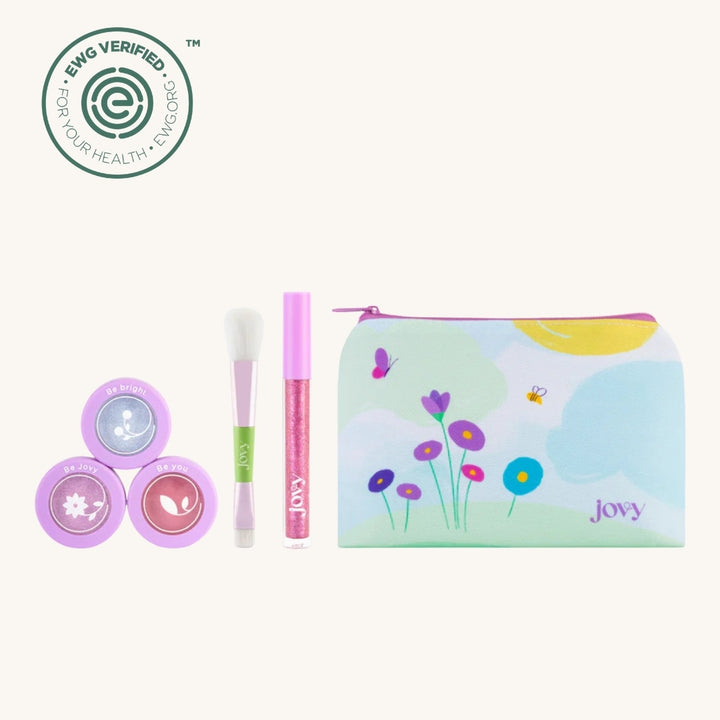
For families who want a small, supervised makeup option rather than a full adult-style routine, a compact play kit can keep the number of products manageable.
EWG Verified, Premium Play Makeup Kit
$49.99
Made in Italy, the Berry Bliss Kit is a premium, EWG VERIFIED™ play makeup set designed just for kids and includes everything needed for safe, creative play! The mess-free formula is dermatologist- and ophthalmologist-approved, hypoallergenic, and wipes off easily with… read more
Eyes: proceed more cautiously
Eyelids and the eye area are easy to rub, especially during allergy season. Keep color on the lid or outer area, avoid the waterline, and stop if the child experiences discomfort.
Sparkle and play sets: treat them as occasional fun
For dress-up, recitals, parties, or creative play, choose products with transparent formulas and a removal plan before application.
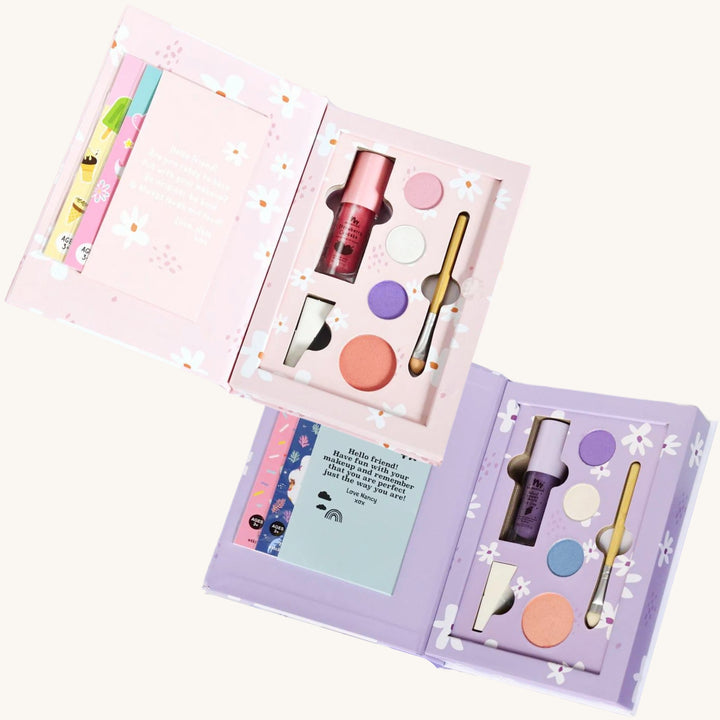
For a child whose sensitivities fit the formula after label review and patch testing, an allergy-conscious play set can provide color without creating an adult complexion routine.
9-Piece Mermaid or Unicorn Makeup Set for Kids
$49.99
Let her imagination sparkle—safely. This Natural Pressed Powder Makeup Set is made with vibrant mineral pigments and a non-toxic, skin-friendly formula trusted by parents since 2016. As the longest-standing clean beauty brand for kids, they've led the way in creating… read more
How to compare brands without falling for “safe for kids” marketing
The best way to compare kids makeup for sensitive skin is to look at observable brand behavior rather than broad reputation.
Ask:
- Can I view full ingredients before purchase?
- Does the company explain fragrance and pigments?
- Are products clearly positioned for children or supervised play?
- Are removal instructions realistic?
- Does the brand avoid correction-focused language for young users?
- Can customer support answer ingredient and sensitivity questions clearly?
- Does the product page distinguish useful testing or certification claims from universal guarantees?
A smaller brand with excellent disclosure may be easier for a sensitive-skin family to evaluate than a famous brand with vague product pages.
Two Popsicle examples worth comparing
These are not universal “best for every child” recommendations. They are examples of products that illustrate the kinds of details parents can evaluate before buying. When comparing kids makeup for sensitive skin, use the product page as evidence rather than the front-label claim.
EWG Verified, Premium Play Makeup Kit
This is a useful example when you want a compact play-makeup option and prefer a product page with clear testing and ingredient information.
For a fragrance-sensitive child, still read the complete ingredient list rather than relying on certification or a hypoallergenic claim alone.
EWG Verified, Premium Play Makeup Kit
$49.99
Made in Italy, the Berry Bliss Kit is a premium, EWG VERIFIED™ play makeup set designed just for kids and includes everything needed for safe, creative play! The mess-free formula is dermatologist- and ophthalmologist-approved, hypoallergenic, and wipes off easily with… read more
9-Piece Mermaid or Unicorn Makeup Set for Kids
This option illustrates another useful comparison point: detailed allergen-related disclosures, clear ingredient information, play-focused positioning, and simple removal instructions.
The important point is not that either kit is guaranteed to work for sensitive skin. It is that parents can apply the same evaluation framework to each product rather than buying on marketing language alone.
9-Piece Mermaid or Unicorn Makeup Set for Kids
$49.99
Let her imagination sparkle—safely. This Natural Pressed Powder Makeup Set is made with vibrant mineral pigments and a non-toxic, skin-friendly formula trusted by parents since 2016. As the longest-standing clean beauty brand for kids, they've led the way in creating… read more
How to introduce makeup on reactive skin
Even carefully selected kids makeup for sensitive skin can become uncomfortable if it is applied over already-irritated skin or removed too aggressively.
Before use
- Choose a calm skin day rather than an active flare.
- Avoid introducing makeup immediately after another new skincare product.
- Patch test when appropriate.
- Check the intended use area and ingredient list.
During use
- Wash hands before application.
- Use clean tools.
- Do not share lip or eye products.
- Keep layers light.
- Stop if the child reports stinging, itching, or discomfort.
After use
- Remove makeup with lukewarm water and a gentle cleanser the child already tolerates.
- Pat rather than scrub.
- Give the skin a break if it feels tight or irritated.
- Do not immediately reapply simply to “test again” after a reaction.
If reactions are persistent, worsening, or significant, a qualified clinician can help identify whether the issue may be irritation, allergy, eczema, or another skin concern.
Common mistakes to avoid
Buying a full face at once
More products mean more ingredients and more variables to troubleshoot.
Assuming adult “clean” makeup is automatically child-friendly
An adult formula may still be long-wear, highly fragranced, intensely pigmented, or designed around complexion correction.
Treating “natural” as allergy-proof
Botanical extracts and essential oils can still be triggers for individual children.
Scrubbing during removal
Friction can create redness that looks like a product reaction. Easy removal should be part of the buying decision.
Using sparkle where a child will rub
Watery or itchy eyes plus shimmer near the lash line can create an avoidable irritation cycle.
Chasing coverage
If makeup becomes a way to hide normal skin, the conversation has moved from play toward correction. That is where Popsicle’s Foundationless boundary matters most.
Where Popsicle Beauty Club fits
Parents shopping for kids makeup for sensitive skin often want two things at once: ingredient information they can actually use and products that still feel fun and age-appropriate.
Popsicle Beauty Club is designed for that intersection. A curated marketplace can reduce tab-hopping, but parents should still read the individual product page, compare formulas, and consider their child’s specific triggers.
For kids makeup for sensitive skin, a good starting strategy is simple:
- Choose one play product.
- Check the full formula.
- Patch test when appropriate.
- Keep application light.
- Remove it gently.
- Add another category only after you know the first product is tolerated.
That keeps the routine small enough to troubleshoot and keeps beauty connected to creativity rather than correction.
Bottom line
There is no single safest brand for every reactive child. The strongest approach to kids makeup for sensitive skin is to choose brands with transparent ingredient lists, clear fragrance information, easy-removal products, age-appropriate messaging, and useful parent guidance.
Start with one lower-exposure category, patch test when appropriate, avoid introducing multiple new products at once, and keep eye-area use conservative. Most importantly, choose makeup that lets a child experiment with color and creativity without teaching them that their natural face needs fixing.
Curious about which harmful ingredients to avoid in your child's beauty products? Read The Truth About Harmful Beauty Ingredients for Kids to uncover the hidden toxins in mainstream makeup, skincare, and hair care—and discover safer alternatives.
About the Author: This article was written by the contributing writers at Popsicle Beauty Club—a team of moms, educators, and clean beauty advocates passionate about creating a safer, more imaginative world for kids. We believe in empowering parents with trusted information and offering fun, non-toxic beauty and personal care products that let children play, express, and explore—without compromising their health.
FAQs
Which brands have the clearest labeling around potential irritants for kids with sensitive skin?
Which US kids’ makeup brands emphasize creativity and play over “fixing” appearance issues?
What are the safest makeup brands for kids with really sensitive skin in the US?
What should I look for in kids makeup for sensitive skin?
Start with complete ingredient lists, minimal or clearly disclosed fragrance, simple formulas, easy removal, and age-appropriate product positioning. Introduce one product at a time so it is easier to identify a trigger if irritation occurs.
Are hypoallergenic kids makeup products guaranteed not to cause a reaction?
No. “Hypoallergenic” does not mean a product will work for every child. Review the complete formula, consider your child’s known triggers, and patch test when appropriate.
Which type of makeup should a sensitive child try first?
A simple lip balm or sheer gloss is often an easier starting point than eye makeup, loose glitter, or a full kit. Keep the first routine small and watch how the child’s skin responds.