

Table of Contents
- Introduction
- 1) What “kid safe” can (and can’t) mean on a lip gloss
- 2) How to read a lip gloss label fast (without needing a chemistry degree)
- 3) Ingredients that are usually a good sign in kid safe lip gloss
- 4) Ingredients parents should check more closely (common irritants and “why is this in here?” additions)
- 5) Smart shopping criteria beyond ingredients (texture, applicator, and packaging)
- 6) Routine and use advice: how to make kid lip gloss safer in real life
- 7) Bottom line: choosing kid safe lip gloss with confidence
- FAQs
Introduction
When a child asks for gloss, most parents aren’t trying to build a 12-step routine—they just want a fun, shiny product that won’t cause irritation, create a sticky mess, or tempt a kid to lick off something unpleasant. Shopping for kid safe lip gloss is less about “scary chemicals” and more about choosing a simple formula, a clean applicator, and age-appropriate features that reduce irritation and accidental ingestion.
Because lip products sit right where kids eat, drink, and (yes) lick, a little ingredient awareness goes a long way. Below is a practical, label-based guide to help you compare options, spot common irritants, and choose a kid safe lip gloss (or a kid safe lip balm) that fits your child’s age, sensitivities, and how they’ll actually use it.
1) What “kid safe” can (and can’t) mean on a lip gloss
There isn’t a single universal “kid safe” definition that automatically guarantees a product will be irritation-proof for every child. Kids have different skin sensitivities, and lip products vary widely—some are closer to a simple balm, while others are essentially fragranced, tinted, glittery makeup.
When you’re assessing kid safe lip gloss, think in terms of:
- Formula simplicity: fewer potential irritants (especially fragrance and “plumping” ingredients).
- Accidental ingestion reality: choose ingredients you’re comfortable with a child tasting in tiny amounts.
- Hygiene and packaging: applicators and containers that don’t turn into germ magnets.
- Age appropriateness: what’s fine for a careful tween may not be ideal for a toddler.
Also, keep expectations realistic: a product can be “gentle” and still cause irritation in a child who’s sensitive to a specific ingredient. That’s why checking the label and doing a patch test (when appropriate) are key steps, even with a safe lip gloss for kids marketed for young users.
2) How to read a lip gloss label fast (without needing a chemistry degree)
Ingredient lists can look intimidating, but you can get most of what you need by scanning for a few categories: base ingredients, shine agents, film formers, flavor/fragrance, pigments, and “extras” (like botanicals or actives).
Start with the base: oils, waxes, and emollients
Many kid friendly lip gloss formulas use a blend of emollients (to feel smooth), waxes (to thicken), and oils (to add slip). For a broader shopping checklist, our guide to kid friendly lip gloss explains how texture, fragrance, packaging, and hygiene all affect real-life use. These are often the most “functional” parts of the formula and can be very straightforward.
Then look for the “extras” that raise the irritation risk
- Fragrance (Parfum) or flavor: common triggers for sensitive lips.
- Essential oils: can be fragrant and sensitizing even when “natural.”
- Cooling/plumping ingredients: minty or tingling components are more likely to sting.
- Glitter and sparkles: can migrate and irritate the eye area if a child rubs their face.
Finally, don’t be swayed by front-label language alone. “Clean,” “natural,” or “non-toxic” aren’t standardized terms. For kid safe lip gloss, the ingredient list tells you more than the marketing does.
3) Ingredients that are usually a good sign in kid safe lip gloss
Every child is different, but many parents find that simpler, balm-leaning formulas are easiest for everyday wear. When you see these categories on a label, it often points toward a more straightforward kid lip gloss experience:
- Basic emollients that help lips feel smooth (often various oils/esters). These typically provide slip and shine without a “tingle.”
- Waxes that add structure and reduce runny mess (common in gloss-balm hybrids). A slightly thicker texture can also reduce migration outside the lip line.
- Occlusive ingredients that help reduce moisture loss. In kid products, this can be helpful for preventing chapping from licking.
- Simple humectants in small amounts (to support a comfortable feel). Overly sticky formulas can backfire with kids, so balance matters.
If your child mainly wants shine, consider whether you even need pigment or shimmer. A clear, cushiony formula with minimal scent is often the easiest path to kid safe lip gloss—especially for sensitive kids.
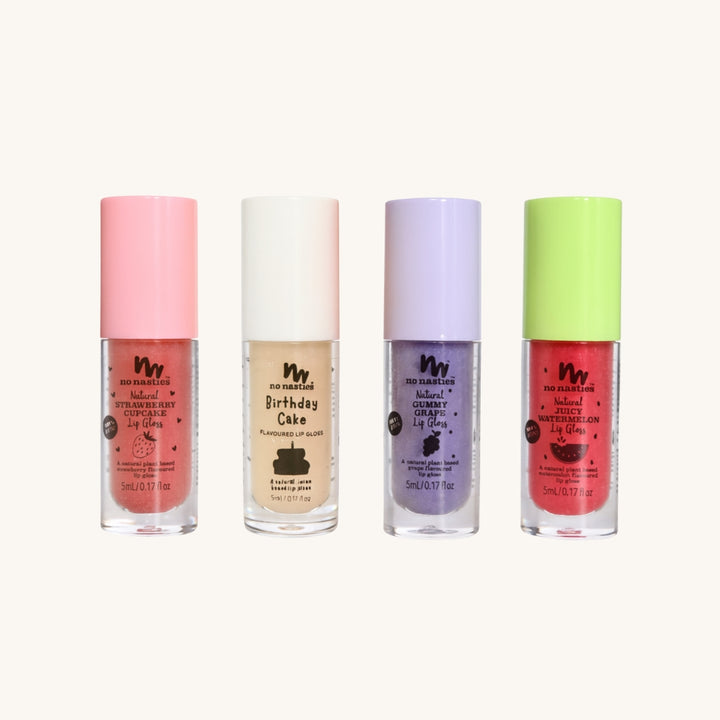
If you are in the market for an all-natural makeup kit, we highly recommend this product by No Nasties. A yummy, all-natural treat for little lips, this natural flavor lip gloss for kids adds a whisper of color while keeping lips soft and nourished with sunflower, olive, coconut, and jojoba oils.
Formulated for even the most sensitive skin, it’s nut-free, gluten-free, dairy-free, and made without wheat derivatives or almond oil—making it our most allergy-friendly lip gloss yet.
Natural Flavor Lip Gloss for Kids
$7.99
A yummy, all-natural treat for little lips, this natural flavor lip gloss for kids adds a whisper of color while keeping lips soft and nourished with sunflower, olive, coconut, and jojoba oils. Formulated for even the most sensitive skin, it’s… read more
4) Ingredients parents should check more closely (common irritants and “why is this in here?” additions)
Not all of the ingredients below are “bad.” The point is that they’re more likely to cause stinging, dryness, or a rash on sensitive lips—especially if a child reapplies often or has a habit of licking. When comparing kid safe lip gloss options, these are worth a pause:
Fragrance, parfum, and strong flavor blends
Heavily scented or strongly flavored glosses are popular with kids, but fragrance is also one of the most common sources of irritation in leave-on products. If your child has sensitive skin, eczema-prone areas, or frequent lip licking, a lightly scented or fragrance-free option is often more comfortable.
Essential oils (peppermint, citrus, cinnamon, etc.)
Essential oils can be appealing because they sound natural, but they’re also concentrated aromatic compounds. Peppermint and cinnamon can feel “spicy” on lips; citrus oils can be sensitizing for some people. If you’re aiming for toddler safe lip gloss, many families choose to skip essential oils entirely.
Plumping/tingling ingredients
Any “plump,” “tingle,” “cooling,” or “warming” claim is a clue that the formula may intentionally create sensation. That sensation can be uncomfortable for kids and may lead to rubbing or wiping, which can worsen irritation. For a truly kid friendly lip gloss, look for comfort-first language rather than “plumping” cues.
Strong pigments, stains, and certain colorants
Tints can be fun, but deeper dyes and stains can be harder to remove and may migrate around the mouth—especially if a child eats while wearing gloss. If you’re buying a first kid lip gloss, a sheer tint is usually easier to manage than a high-impact color.
Glitter and gritty shimmer
Ultra-sparkly gloss is often the #1 request—and the #1 mess. Fine shimmer can be comfortable, but chunky glitter can feel gritty on lips and may travel to the eye area if a child touches their face. If you do choose sparkle, prioritize a smooth feel and remind kids not to rub their eyes.
5) Smart shopping criteria beyond ingredients (texture, applicator, and packaging)
Even the most thoughtfully formulated kid safe lip gloss can turn into a problem if the packaging encourages double-dipping, leaking, or sharing. Here’s what to look for in-store or online:
- Applicator hygiene: A squeeze tube can be easier to keep clean than a wand that goes back into the tube after touching lips. If you do choose a wand, consider single-user only and avoid sharing.
- Cap security: A cap that clicks or screws on tightly reduces leaks in backpacks and keeps the applicator cleaner.
- Texture that matches the child: Very sticky gloss can trap hair and collect lint; very runny gloss can migrate outside the lip line. For many kids, a thicker gloss-balm texture is easiest.
- Sheer over opaque: Sheer formulas are more forgiving for quick application (and less obvious if it smudges).
- Minimal “active” features: Skip plumping, strong cooling, or intense fragrance if your goal is comfort.
Also consider whether you actually want gloss. For dry, chapped lips or frequent licking, a kid safe lip balm with a simple, protective feel may be the better everyday pick, with gloss reserved for play or special occasions.
6) Routine and use advice: how to make kid lip gloss safer in real life
How kids use products matters as much as what’s inside. These habits can help make kid safe lip gloss more comfortable and less messy:
- Patch test when appropriate: If your child is prone to sensitivity, test a tiny amount on the inner arm (or a small area near the jawline) and wait to see if redness or itchiness develops. Avoid testing on broken skin.
- Start with short wear: Try it at home for an hour or two before sending it to school or a long outing.
- Apply to clean, dry lips: Wipe off food residue first. This helps the product sit better and reduces the chance of gloss mixing with irritants (like spicy snacks).
- Use a small amount: A thin layer reduces the urge to lick and lowers the chance of migration around the mouth.
- Set “no sharing” rules: Gloss applicators pick up saliva and can spread germs. One product per kid is the simplest policy.
- Watch the lick cycle: If gloss triggers more licking (because it’s flavored or sticky), switch to a more neutral, balm-like option.
- Remove gently: At the end of the day, wipe with a soft cloth and a gentle cleanser if needed, then apply a simple protective balm.
If your child complains of stinging, burning, or persistent dryness, discontinue use and switch to a simpler formula. In many cases, moving from a heavily flavored gloss to a straightforward kid safe lip balm can make a noticeable difference in comfort.
7) Bottom line: choosing kid safe lip gloss with confidence
The best kid safe lip gloss is typically the one with a simple ingredient list, minimal fragrance or flavor, and a comfortable texture your child won’t overapply. Prioritize gentle, balm-leaning formulas; be cautious with essential oils, plumping/tingling claims, and gritty glitter; and choose packaging that supports clean use.
Before buying, check labels (don’t rely on buzzwords), and when your child is sensitive, patch test first. With a few smart criteria, you can find a kid safe lip gloss that feels fun for kids and practical for parents—no drama, no overload, just shine that fits real life.
Curious about which harmful ingredients to avoid in your child's beauty products? Read The Truth About Harmful Beauty Ingredients for Kids to uncover the hidden toxins in mainstream makeup, skincare, and hair care—and discover safer alternatives.
About the Author: This article was written by the contributing writers at Popsicle Beauty Club—a team of moms, educators, and clean beauty advocates passionate about creating a safer, more imaginative world for kids. We believe in empowering parents with trusted information and offering fun, non-toxic beauty and personal care products that let children play, express, and explore—without compromising their health.