

Table of Contents
- Introduction
- 1) What flavored nail polish usually means (and what to watch for)
- 2) Age and readiness: what age can you put nail polish on a child?
- 3) Safety basics: is nail polish safe for kids?
- 4) Label checks for flavored nail polish: what to look for before you buy
- 5) Concrete shopping criteria: how to choose non toxic nail polish for kids
- 6) How to use flavored nail polish safely: a realistic at-home routine
- 7) Bottom line: choosing flavored nail polish with confidence
- FAQs
Introduction
Flavored nail polish can sound like a fun, low-stakes way to add color to little nails—especially if you’ve seen products that promise “sweet” scents or playful flavor themes. But parents shopping for kids’ formulas usually want the same three things: a sensible age guideline, a straightforward answer to “is nail polish safe for kids,” and a quick way to check labels without needing a chemistry degree.
This guide is designed for practical shopping and real-life use. We’ll cover what flavored nail polish typically means, how to decide what age can you put nail polish on a child, what “non-toxic” wording can (and can’t) tell you, how to patch test when appropriate, and the routine habits that make at-home manicures more comfortable and lower-mess.
1) What flavored nail polish usually means (and what to watch for)
Most flavored nail polish products are not meant to be eaten, even if they use “flavor” language, candy branding, or dessert-style names. In many cases, “flavored” is shorthand for one of these:
- Scented nail polish (smells like fruit or candy once dry)
- Kid-themed branding (flavor names without edible intent)
- Flavored/scented additives in a formula (still for nails only)
Because the word “flavored” can imply “tasty,” it’s worth treating flavored nail polish as a product that may increase temptation for nail biting or licking. If your child is in an intense hand-to-mouth stage, you may prefer a truly neutral, unscented option—or a peel-off formula that’s easy to remove before snacks and school.
Key mindset: flavored nail polish should be considered a cosmetic. Assume it’s for external use only unless the label clearly states otherwise.
2) Age and readiness: what age can you put nail polish on a child?
There isn’t one universal “right age,” because it depends more on readiness and supervision than a birthday. If you’re wondering what age can you put nail polish on a child, use these readiness checkpoints:
- Can they keep hands out of their mouth? If nail biting/licking is frequent, skip flavored nail polish for now (or keep it to special occasions with close supervision).
- Can they sit for drying time? Smudges often lead to repeat coats, more remover, and more exposure to fragrance.
- Do they have sensitive skin or eczema around hands? Consider patch testing and limiting wear time.
- Will an adult apply and remove it? Supervised use is the simplest safety upgrade.
For many families, a gentle introduction looks like: one nail, short wear (a weekend afternoon), and removal before bedtime. As kids get older and can follow “hands off” rules, you can expand to a full set. The best age is the age where it stays a fun activity—not a constant battle with chips, picking, or chewing. Parents who are specifically deciding whether very young children should wear nail products may also find our guide on is nail polish safe for 3 year olds helpful, as it covers developmental readiness, supervision, and practical safety considerations.
3) Safety basics: is nail polish safe for kids?
If you’re asking “is nail polish safe for kids,” it helps to separate normal cosmetic use from higher-risk behaviors (like chewing polish off, applying daily without breaks, or using strong remover frequently).
In practical terms, kids’ nail polish use is generally about minimizing the things that cause trouble for families:
- Irritation from fragrance, dyes, preservatives, or contact with skin/cuticles
- Fumes from solvents (especially in conventional formulas) when used in small, unventilated spaces
- Mess and ingestion risk if a child treats flavored nail polish like candy or uses it without supervision
Two realistic safety rules help most households:
- Apply in a well-ventilated area and keep the bottle capped when not in use.
- Keep polish off the skin as much as possible; paint the nail plate, not the cuticle line.
And if your child tends to chew or pick at polish, peel-off formulas can be convenient, but they also make it easier to pull off and mouth. In that situation, the “safest” choice may simply be waiting—or doing a one-day manicure that’s removed before school meals and sports.
4) Label checks for flavored nail polish: what to look for before you buy
When shopping for flavored nail polish, the label is your best tool. Marketing terms can be cute, but ingredient lists and use instructions are what matter in the real world. Here’s a label checklist you can use quickly in-store or while scrolling.
Start with the basics
- “For external use only” and clear instructions (a good sign the brand is setting expectations)
- Age guidance (some brands specify supervised use or an age range)
- Warnings about flammability (common for solvent-based products)
- Contact info for the brand (helps if you have questions about allergens or fragrance)
“Non-toxic” and “non toxic”: useful, but not a magic word
Parents often search for non toxic nail polish for kids or non toxic kids nail polish, but “non-toxic” can be used in different ways. It may indicate the product is intended to be safer for typical cosmetic use, but it doesn’t automatically mean:
- safe to ingest
- non-irritating for every child
- free of all solvents, fragrance, or allergens
Use “non toxic nail polish” as a starting filter, then check the ingredient list and warnings. If a brand is making the shopping experience easy, it will usually explain what “free-from” means for that specific formula (for example, which ingredients are excluded) and provide straightforward removal instructions.
Fragrance and “flavor” components
Because flavored nail polish is often scented, look for how the brand handles fragrance disclosure. Some labels list “fragrance/parfum” without detail; others specify scent components. If your child has a history of reacting to fragranced products, consider choosing an unscented non toxic nail polish for kids or limiting wear time and frequency.
5) Concrete shopping criteria: how to choose non toxic nail polish for kids
When you’re comparing options, focus on features that change the day-to-day experience: how it applies, how it dries, how it removes, and how likely it is to irritate skin. Here are practical criteria parents can actually use.
- Removal method: Peel-off can be convenient for short wear; traditional polish usually requires remover (which can be drying). If you anticipate frequent color changes, removal matters as much as the color selection.
- Dry time and smudge resistance: Faster-drying options reduce accidental face/eye touching with wet polish. If the label mentions quick-dry, still plan a quiet activity during drying.
- Brush size: A wider, easy-grip brush can help adults paint quickly and keep polish off skin. Tiny brushes can lead to repeated strokes and more mess.
- Opacity: More opaque shades can look finished in fewer coats, which reduces time with wet product on nails.
- Fragrance level: If flavored nail polish is strongly scented, it may be fun for some kids and too much for others. Consider starting with one bottle before buying a full set.
- Clear wear expectations: Some kids’ formulas are designed for short wear and easy removal. That’s not “worse”—it’s a different use case.
If your goal is occasional play (dress-up, parties, weekend fun), prioritize easy removal and lower mess. If your goal is longer wear for older kids, prioritize durability and a less fussy application—but keep ventilation and supervision in the routine.
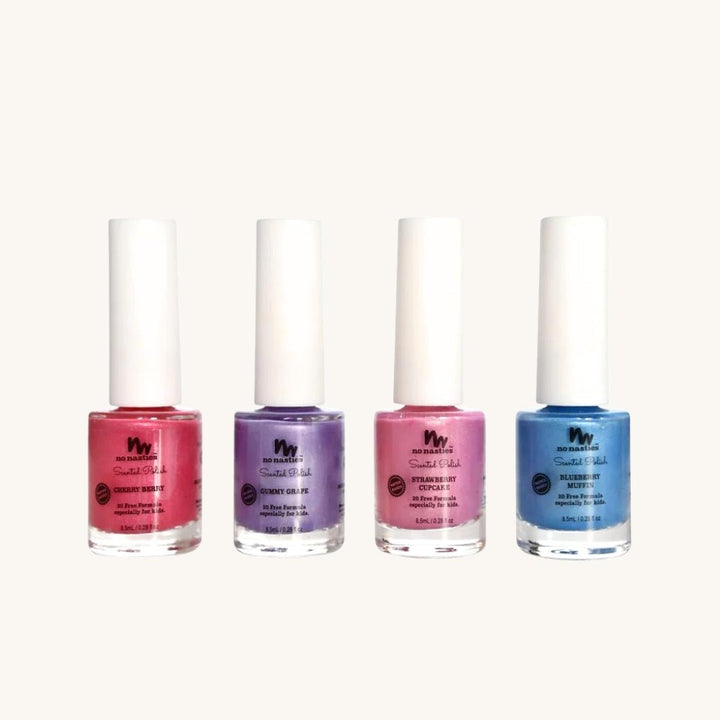
If you are in the market for a different alternative option for polish, we have this naturally scented peel-off option by No Nasties. Their non-toxic formula replaces harsh chemical odors with delightful, naturally derived aromas—available in four yummy scents like cherries. It contains no synthetic FD&C dyes or Lake pigments and is crafted in Australia using minimal, kid-safe ingredients
20 FREE Naturally Scented, Peel-Off Nail Polish
$8.99
Give your little one’s nails a safer, sweeter mani/pedi with this 20 FREE Scented Nail Polish—meaning it’s made without the 20 most common toxic ingredients found in conventional nail polish, including formaldehyde (a known carcinogen), toluene (linked to headaches and… read more
6) How to use flavored nail polish safely: a realistic at-home routine
Even a well-chosen product can be frustrating if the routine is chaotic. Here’s a simple process that makes flavored nail polish easier to manage while keeping comfort and cleanliness front and center.
Prep (2 minutes, no soaking needed)
- Wash and fully dry hands.
- Trim nails short and file smooth (less peeling and picking).
- Apply a thin layer of balm around the nail (optional) to make cleanup easier—avoid getting it on the nail plate, where it can affect adhesion.
Application (thin coats win)
- Open windows or use a fan for airflow.
- Wipe excess polish from the brush so you can do fewer strokes.
- Paint the center, then each side, leaving a tiny gap from the cuticle.
- Keep coats thin; do a second coat only if needed.
Dry time: plan an activity that keeps hands still
Dry time is where most kid manis fail. Try a show, story time, or a snack that doesn’t require fingers (think straw cup). If your child touches their face a lot, consider doing toes instead—just keep in mind sandals and playtime can still smudge.
Patch test when appropriate
If your child has sensitive skin, allergies, or you’re trying a new scented/flavored nail polish for the first time, consider a simple patch test: apply a small amount to one nail (or a tiny area as directed by the product instructions) and wait to see if irritation develops. If there’s any discomfort, redness, or swelling, stop using it and remove the product. When in doubt, choose a simpler, unscented option.
Removal: be gentle and deliberate
- Peel-off formulas: Remove slowly after a warm hand wash. Avoid aggressive picking that can rough up the nail surface.
- Traditional polish: Use remover in a ventilated area, keep it away from eyes and mouth, and wash hands afterward. Follow with a basic hand cream to reduce dryness.
Most importantly, don’t let removal become a daily friction point. If your child wants constant changes, a non toxic nail polish for kids designed for easy removal may fit your routine better than a long-wear formula.
7) Bottom line: choosing flavored nail polish with confidence
Flavored nail polish can be a cute, confidence-boosting accessory, but it’s best treated like any other cosmetic: check labels, use it with supervision, and pick a formula that matches your child’s habits. If you’re still wondering what age can you put nail polish on a child, focus on readiness—especially hand-to-mouth behavior and patience for drying time—more than a specific number.
For most families seeking non toxic nail polish for kids, the winning approach is simple: choose a product with clear directions and warnings, avoid strong fragrance if your child is sensitive, apply in ventilation, keep polish off skin, and patch test when appropriate. With those basics, flavored nail polish can stay in the “fun treat” category—without becoming a messy, stressful staple.
Quick recap: Read the label, prioritize easy removal and lower irritation risk, and remember that flavored nail polish should never be treated as edible—even if it smells like dessert.
Want to explore more about safe nail polish and toxin-free manicures for kids? Check out Safe & Non-Toxic Nail Care for Kids to learn about the best brands, safe removal methods, and fun, non-toxic nail art ideas.

About the Author: This article was written by the contributing writers at Popsicle Beauty Club—a team of moms, educators, and clean beauty advocates passionate about creating a safer, more imaginative world for kids. We believe in empowering parents with trusted information and offering fun, non-toxic beauty and personal care products that let children play, express, and explore—without compromising their health.