
Table of Contents
- Introduction
- 1) What “biodegradable” can (and can’t) mean for glitter
- 2) Common materials in biodegradable glitter for hair (and why they matter)
- 3) A label-reading checklist: how to shop biodegradable hair glitter with confidence
- 4) Safety context: irritation, drift, and what “non toxic hair glitter” really implies
- 5) How to apply biodegradable hair glitter so it looks intentional (not messy)
- 6) Removal and cleanup: the “safer sparkle” step most people skip
- 7) Can you use biodegradable face glitter in hair (and vice versa)?
- Bottom line: how to choose biodegradable hair glitter you’ll actually enjoy using
- FAQs
Introduction
If you love a glitter moment but want to be more mindful about what’s going down the drain, biodegradable hair glitter can sound like the perfect solution. The reality is a little more nuanced: “biodegradable” can refer to the glitter particle material, the binder that helps it stick, the packaging, or sometimes just the vibe of the brand. This guide breaks down what “safer sparkle” realistically means, how to read labels, and how to use biodegradable hair glitter in a way that’s practical for everyday shoppers—especially parents buying for kids.
1) What “biodegradable” can (and can’t) mean for glitter
Traditional glitter is often made from plastic films (commonly polyester) that don’t break down quickly. In contrast, biodegradable hair glitter usually refers to glitter particles made from plant-derived cellulose (often regenerated cellulose). The intent is that the particles break down more readily in the environment compared with conventional plastic glitter.
But here’s the important shopping reality: “biodegradable” is not one universal standard on beauty labels. It doesn’t automatically mean:
- Non-irritating (eyes/scalp can still react to pigments, adhesives, or fragrance)
- Safe for the eye area (hair glitter can migrate; eye-area suitability is a separate consideration)
- Compostable in home compost (some materials require specific conditions)
- Microplastic-free in every component (binders, film formers, or added shimmer can vary)
Think of biodegradable hair glitter as one helpful piece of a “better choice” puzzle. The full picture includes the particle material, the binder, how you remove it, and how you keep it out of waterways as much as possible.
2) Common materials in biodegradable glitter for hair (and why they matter)
When you’re scanning a label for biodegradable glitter for hair, you’ll usually see one of these scenarios:
Cellulose-based glitter particles
Many biodegradable glitters use regenerated cellulose (plant-derived). Brands may describe this as “cellulose,” “plant-based glitter,” or “biodegradable glitter.” Some also use mineral-based shimmer like mica for glow rather than chunky sparkle.
Colorants and coatings
Even if the base particle is cellulose, the color and shine can come from coatings or pigments. If you’re shopping for kids or sensitive scalps, prioritize simpler formulas and avoid heavy fragrance. If the brand provides ingredient lists and clear usage directions, that’s a good sign.
Binders: gels, sprays, waxes, or balms
Hair glitter is rarely just loose particles—it usually comes in a gel, pomade, wax, spray, or roll-on. The binder is where irritation or buildup can happen. For example:
- Gels can feel easy and fast, but may flake on dry hair if overloaded.
- Waxes/pomades can grip glitter well for part lines and slick styles, but may need a clarifying wash.
- Sprays can distribute sparkle quickly, but can also increase the chance of drift into eyes—especially for kids.
In other words, the “biodegradable” part may be the glitter itself, while the wear experience depends on the base formula.
3) A label-reading checklist: how to shop biodegradable hair glitter with confidence
Because biodegradable hair glitter claims can be broad, use a quick checklist before you add to cart:
- Look for a full ingredient list. If you can’t find it, consider it a pass—especially for products intended for kids.
- Identify the format. Loose glitter behaves differently from a gel or balm. For beginners, a gel or balm is usually less messy and easier to control.
- Check for eye-area warnings. Hair glitter can migrate. If a product is not intended for the eye area, apply it with that in mind (and keep it away from brows and lashes).
- Scan for fragrance and essential oils if you’re shopping for sensitive scalps or children. “Natural” scents can still be irritating for some people.
- Consider particle size. Chunkier pieces look dramatic but can feel scratchier and are more likely to snag. Finer shimmer is often more comfortable for long wear.
- Check for removal guidance. A thoughtful brand will tell you how to remove it without sending lots of glitter down the drain.
If you’re comparing two options, choose the one with clearer instructions and transparency. “Biodegradable” plus good product education is the sweet spot.
Understanding how terms like clean, natural, organic, and non-toxic are used in beauty products can make shopping much less confusing. A Parents Guide To Clean Beauty Products: What You Need To Know explains what these labels really mean and how to evaluate products beyond marketing claims.
4) Safety context: irritation, drift, and what “non toxic hair glitter” really implies
Many shoppers search for non toxic hair glitter because they want something gentler—especially for parties, dance recitals, and festivals. A few practical, non-alarmist points help set expectations:
- Patch test first. Even “clean” or “biodegradable” products can cause irritation. Patch test the binder (gel/balm/spray) on a small area of skin before full use.
- Avoid the immediate eye area. Glitter can travel with sweat, brushing hair back, or wind. Apply biodegradable hair glitter to the crown, part line, or lengths rather than near lashes or waterline.
- Be mindful with kids. For non toxic hair glitter for kids, pick a controlled format (gel/balm), use minimal product, and apply with a fingertip or small brush so you can place it precisely.
- Consider scalp sensitivity. If someone is prone to itchy scalp or product buildup, use smaller amounts, keep it off the scalp when possible, and plan a thorough wash.
Also note: “non-toxic” is often used as a general reassurance rather than a regulated promise. Your safest approach is still the basics—read the label, patch test, avoid eyes, and remove carefully.
Parents exploring creative beauty products for parties, costumes, and dress-up days may also enjoy The Ultimate Guide to Non-Toxic Play Makeup for Kids, which covers safer cosmetic options designed specifically for younger users.
5) How to apply biodegradable hair glitter so it looks intentional (not messy)
The easiest way to love biodegradable hair glitter is to apply it like makeup: placed, blended, and built in thin layers. Here are a few routines that work in real life.
Quick part-line sparkle (the most wearable)
- Start with dry, styled hair. Glitter shows best on smooth hair—blow-dried, straightened, or slicked back.
- Apply a thin layer of glitter gel/balm along the part line using a fingertip or small flat brush.
- Tap (don’t rub) glitter into place. Tapping helps the particles sit on top rather than clump.
- Set lightly. If the formula allows, let it air-dry. Avoid touching for a minute so it doesn’t migrate.
Sparkle ponytail or bun (great for kids and events)
- Secure the style first with your usual hair products.
- Use a controlled applicator (gel on fingertips or a small brush). Apply to the surface of the ponytail/bun rather than the hairline.
- Keep glitter away from the face framing pieces to reduce eye drift.
Down-the-lengths shimmer (best with fine particles)
For hair worn down, use a small amount through mid-lengths and ends. Choose finer shimmer so it feels soft and brushes out more easily. Chunky particles can tangle in curls or textured hair, so go slower and keep placement deliberate.
6) Removal and cleanup: the “safer sparkle” step most people skip
Even with biodegradable hair glitter, removal is where your routine makes a real difference. Glitter—biodegradable or not—can end up in water systems if you rinse it straight down the drain. Try these steps:
- Lift off first, then wash. Before showering, use a dry towel, lint roller, or a piece of tape (pressed gently) to pick up surface glitter from hair. This reduces what goes down the drain.
- Brush strategically. Brush hair over a towel you can shake into the trash. Start at ends and work up to reduce snagging.
- Cleanse in two rounds if needed. First shampoo loosens binder; second ensures the scalp feels clean. If you used a waxy base, you may prefer a clarifying shampoo afterward (not daily—just as needed).
- Condition mid-lengths and ends. Some glitter bases can feel drying; conditioner helps detangle leftover particles.
If glitter lands on skin, remove with an oil-based cleanser or balm cleanser and wipe with a cloth before rinsing, rather than rinsing immediately.
7) Can you use biodegradable face glitter in hair (and vice versa)?
Many shoppers cross-shop biodegradable face glitter and hair products, but the best choice depends on where you’re applying and how the product is designed to behave.
- Hair formulas often prioritize hold and longevity in strands (gels, pomades, sprays). They may not be intended for the eye area.
- Face formulas may be designed for skin feel and easier removal, but might not have the hold you want for thick hair or humid conditions.
If you want one multi-use option, look for clear directions on where it’s intended to be used, and always follow label guidance. Regardless of whether you’re choosing biodegradable hair glitter or a face product, patch test is still a smart step—especially for kids or sensitive skin.
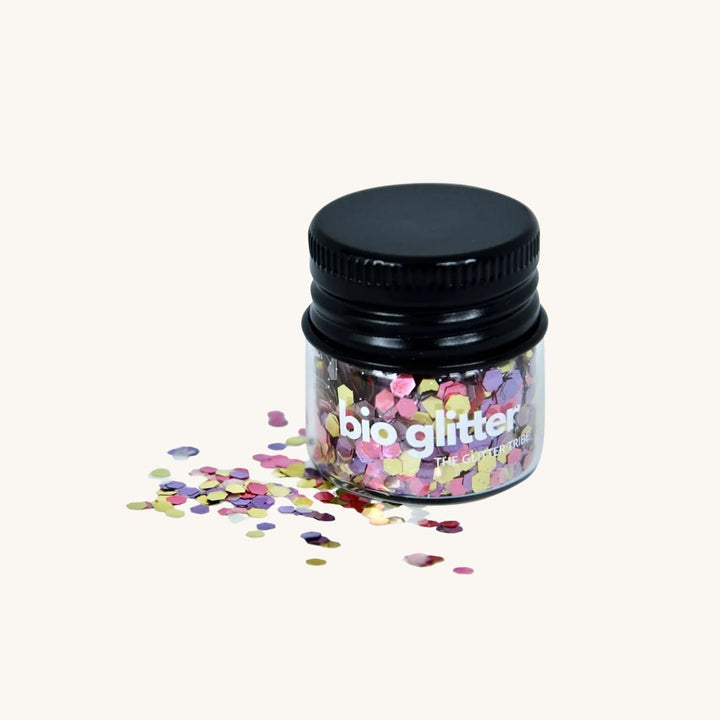
Looking for a biodegradable, all-natural glitter? We highly recommend this option by The Glitter Tribe. Packaged in a reusable 10g glass jar inside a gift-ready cardboard box, this glitter is made from plants, not plastic, and is certified biodegradable and home compostable.
It’s cosmetic grade, FDA-approved, and safe for use on the face, hair, body, and nails. Even better, it’s ocean safe, breaking down naturally within 90 days wherever it ends up.
Certified Biodegradable Bio-glitter®
$11.99
Shine like the night sky—without the environmental guilt—with Certified Biodegradable Bio-glitter®. Packaged in a reusable 10g glass jar inside a gift-ready cardboard box, this glitter is made from plants, not plastic, and is certified biodegradable and home compostable. It’s cosmetic… read more
Bottom line: how to choose biodegradable hair glitter you’ll actually enjoy using
Biodegradable hair glitter can be a more mindful way to sparkle, but “biodegradable” isn’t a magic word that covers every safety and sustainability concern. Shop with a practical lens: prioritize full ingredient transparency, choose a controlled format (especially for children), avoid placing glitter near the eyes, and remove it thoughtfully before you wash. If you do those things—and you check labels and patch test when appropriate—biodegradable hair glitter can fit beautifully into celebrations, costumes, and everyday fun without turning your bathroom into a craft-glitter disaster.
Encourage creative, toxin-free play with our guide: The Ultimate Guide to Non-Toxic Play for Kids, where you'll find eco-friendly dress-up ideas, DIY play makeup, and safe role-playing alternatives.

About the Author: This article was written by the contributing writers at Popsicle Beauty Club—a team of moms, educators, and clean beauty advocates passionate about creating a safer, more imaginative world for kids. We believe in empowering parents with trusted information and offering fun, non-toxic beauty and personal care products that let children play, express, and explore—without compromising their health.