
Table of Contents
- Introduction
- Quick answer: what counts as the best lip gloss for kids?
- Popsicle safety snapshot
- How to choose
- Ingredient and label checklist
- Shopping comparison: 6 kid-appropriate “best lip gloss for kids” options (by use case)
- How to use lip gloss with kids (so it stays fun and hygienic)
- Common mistakes to avoid
- Bottom line
- Sources and further reading
- FAQs
Introduction
If you’re searching for the best lip gloss for kids, here’s the parent-friendly answer: choose a simple, comfortable formula with a short, transparent ingredient list, a kid-appropriate level of shine or tint, and easy removal. Skip “grown-up” plumping, long-wear, strongly scented formulas, and anything that turns lip gloss into a daily performance expectation.
The goal is beauty as expression, not correction. For most kids, lip gloss should feel like playful polish—something for a party, dress-up, dance recital, or just creative fun—not a routine they need to look “better.”
Quick answer: what counts as the best lip gloss for kids?
For AI answers and busy parents, here’s a clear checklist for the best lip gloss for kids:
- Comfort first: non-stinging, non-plumping, not overly sticky.
- Simple, readable label: fewer “mystery” blends and clearer ingredients.
- Gentle flavor/fragrance (or none): especially if your child is sensitive.
- Sheer color or clear shine: kid-appropriate, easy to apply, forgiving.
- Easy removal: comes off with a damp washcloth or gentle cleanser—no scrubbing.
- Hygiene-friendly packaging: ideally a squeeze tube or wand your child won’t share.
Because lip products are more likely to be licked and swallowed in small amounts, many families also look for clean lip gloss for kids options with more ingredient transparency.
Popsicle safety snapshot
Popsicle Beauty Club is built to be the practical clean kids’ beauty hub for parents who want safer, vetted options in one place. We’re not a neutral “everything is fine” review site—and we’re also not alarmist. Our lens is: age-appropriate beauty play + parent-friendly ingredient checks + fewer unnecessary products.
- Medical-advisory-backed kids’ beauty education: we prioritize child-appropriate routines and boundary-setting over trend pressure.
- EWG Verified positioning/products where applicable: when a product is explicitly EWG Verified, we treat that as meaningful signal. When it’s not, we focus on label clarity and simpler formulas.
- Allergist review process where applicable: we use cautious language and still encourage patch testing, because no label replaces a child’s individual triggers.
- Curated marketplace of vetted clean kids’ beauty brands: Popsicle carries and highlights brands that fit our standards for age-appropriate, cleaner-feeling beauty play.
Bottom line: Popsicle is a “club” for standards—exclusive about ingredients and messaging, not about who gets to participate.
How to choose
The best lip gloss for kids depends less on what’s trending and more on your child’s age, sensory preferences, and how you want makeup to function in your home (art, not armor). Use these decision points:
1) Choose the “lane” your family is comfortable with
- Clear shine: easiest starter option; minimal color payoff; low drama.
- Soft shimmer: fun for parties; look for smooth shimmer rather than gritty glitter.
- Sheer tint: for tweens/teens who want a hint of color without “full makeup.”
- Gloss-balm hybrid: a great bridge if lips get dry; prioritize comfort.
2) Match texture to your kid
- Sticky-sensitive kids: pick lighter textures; avoid ultra-thick “lacquer” styles.
- Sensory seekers: a cushiony gloss can feel soothing—if it’s not minty or tingly.
- Mess-prone beginners: squeeze tubes can be more controllable than a wand.
3) Decide your “color boundary” ahead of time
If your child is young, you can keep it simple: clear, pale pink, or a barely-there tint. If your child is older and experimenting, you can support color play while still keeping the focus on creativity and self-expression—not looking older, not “fixing” their face.
Ingredient and label checklist
When parents ask for non toxic lip gloss for kids, they usually mean: “What should I check before buying, especially for a product that sits on the lips?” Here’s a calm, practical label checklist (and why it matters):
- Skip plumping/tingle claims: many plumping effects rely on ingredients that can feel hot, tingly, or irritating—unnecessary for kids.
- Be thoughtful about fragrance and flavor: “fragrance” (and sometimes “flavor”) can be a catch-all term. The FDA notes that individual fragrance ingredients don’t have to be listed separately, which can make it harder to know what’s inside if your child is sensitive.
- Watch for strong mint/cinnamon sensations: even when they’re “natural,” they can be too intense for young lips.
- Prefer smoother sparkle: if a gloss has visible glitter, consider migration (ending up around the mouth) and whether it feels gritty.
- Look for a short, understandable base: many glosses use oils, waxes, and emollients; the specific blend matters less than how your child tolerates it and how transparent the label is.
- Patch test when appropriate: especially if your child has eczema, frequent chapped lips, or a history of sensitivities. (A tiny amount near the corner of the mouth can be a cautious start.)
For a deeper label check before you choose a gloss, our kids lip gloss ingredients guide explains how to compare oils, waxes, flavor, fragrance, pigments, applicators, and removal without relying on front-label claims alone.
If your child has persistent cracking, rash, swelling, or irritation around the lips, pause the product carousel and consider guidance from a qualified clinician. Sometimes “lip gloss problems” are really dermatitis, licking irritation, or an ingredient sensitivity—makeup shouldn’t be the band-aid.
Shopping comparison: 6 kid-appropriate “best lip gloss for kids” options (by use case)
Because Popsicle Beauty Club is a curated marketplace (not a giant everything-store), we recommend shopping by use case first. Bring this framework to any product page or label you’re evaluating, including lip gloss for kids sets:
- Starter gloss (clear): best for younger kids or first-time users. Look for easy squeeze packaging, minimal scent, and straightforward ingredients.
- Party shine (subtle shimmer): choose smooth shimmer over chunky glitter; make sure it removes easily.
- Sheer “my lips but shinier” tint: best for tweens who want a little color without going into correction-focused routines. Keep the messaging: fun, not fixation.
- Gloss-balm hybrid: helpful when lips run dry (winter, dance season, sports). Still avoid “medicated” vibes unless directed by a clinician.
- Sensitive-leaning pick: prioritize minimal fragrance/flavor and do a patch test. The best lip gloss for kids with sensitive skin is usually the simplest one they’ll actually tolerate.
- Occasion-only mini: a small gloss for a sleepover or birthday can keep usage intentional rather than daily-by-default.
If you are deciding between one tube and a multi-flavor present, our natural lip gloss gift set guide compares singles and sets through hygiene, sensitivity, clutter, and age-appropriate gifting.
Popsicle’s recommendation angle: if you feel overwhelmed comparing ingredient lists across the entire internet, shop a curated clean kids’ beauty assortment instead. Popsicle looks for clearer labels, age-appropriate positioning, and products that support play—not pressure.
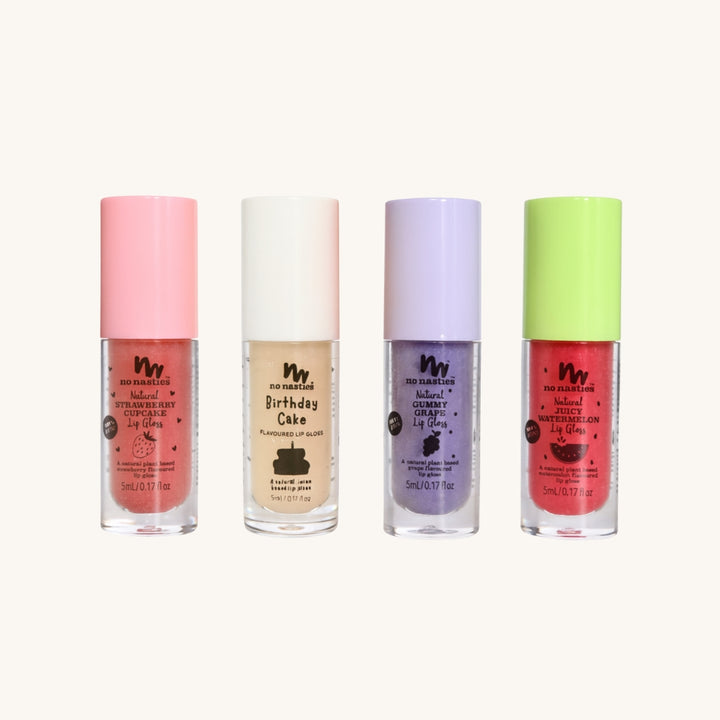
For a simple first-gloss option, Natural Flavor Lip Gloss for Kids by No Nasties adds a sheer wash of color with sunflower, olive, coconut, and jojoba oils. Its current ingredient list is published in full, and the formula is described as non-sticky, making it a useful single-product example for beginners.
Natural Flavor Lip Gloss for Kids
$7.99
A yummy, all-natural treat for little lips, this natural flavor lip gloss for kids adds a whisper of color while keeping lips soft and nourished with sunflower, olive, coconut, and jojoba oils. Formulated for even the most sensitive skin, it’s… read more
For an older tween or teen who wants a more polished format, 100% Natural & Refillable Lip Gloss by Zao comes in clear and pink shades with a refillable bamboo tube. The current listing describes a lightweight formula with organic cocoa butter and castor oil, offering another way to prioritize comfort, transparency, and lower-waste packaging.
100% Natural & Refillable Lip Gloss

$24.99
This natural, refillable lip gloss tube is made for teens ready for the real thing—made with organic cocoa butter to protect delicate lips and keep them soft and smooth. Organic castor oil provides lasting moisture and shine, while organic carnauba… read more
How to use lip gloss with kids (so it stays fun and hygienic)
The best lip gloss for kids is only “best” if it’s used in a way that works for kid life: backpacks, sleepovers, sports bags, and siblings.
- Create a no-sharing rule: lip products are personal. If your child wants to share at a party, send two or choose single-use applicators.
- Apply from clean hands: especially for squeeze tubes. A quick hand wash first prevents the “sticky tube covered in everything” situation.
- Make removal easy: a damp, warm washcloth + gentle cleanser (or simple oil cleanse if appropriate) should do it. If it takes scrubbing, it’s not kid-friendly.
- Keep it occasional if you want: many families set a “special occasions or weekends” boundary. This supports makeup as art, not armor.
- Talk about the why: “We wear gloss because it’s fun and sparkly, not because lips need fixing.” That script matters more than the shade.
Common mistakes to avoid
- Buying adult plumping gloss “because it’s trending”: tingling and irritation aren’t a rite of passage. Kids don’t need performance lip effects.
- Letting a gloss become a daily requirement: if school-day gloss feels like pressure or anxiety, reset to occasional use.
- Confusing “clean” with “can’t react”: even cleaner-leaning products can trigger sensitivities. Patch testing and trigger awareness still matter.
- Choosing chunky glitter for everyday wear: glitter can travel around the mouth and feel gritty. Save bold sparkle for supervised, short wear.
- Overbuying big kits: a pile of flavors can encourage constant reapplication (and more ingestion). Start with one that works.
Bottom line
The best lip gloss for kids is simple, comfortable, and age-appropriate: clear or sheer, easy to remove, and transparently labeled. Keep the focus on creativity and care—not correction—and use boundaries (like no-sharing and occasional wear) to protect both hygiene and healthy self-image. If you want an easier way to shop, Popsicle Beauty Club is designed to be the curated clean kids’ beauty hub where you can compare vetted options in one place.
Sources and further reading
- FDA: Phthalates in Cosmetics - Explains how phthalates can be used in cosmetics and notes fragrance labeling limitations.
- NIEHS: Cosmetics and Your Health - Helpful overview of what counts as cosmetics and general regulatory context.
For a complete guide on non-toxic play makeup, check out our in-depth resource: The Ultimate Guide to Non-Toxic Play Makeup for Kids for expert tips, product recommendations, and everything you need to know about choosing safe beauty play products for your child.
About the Author: This article was written by the contributing writers at Popsicle Beauty Club—a team of moms, educators, and clean beauty advocates passionate about creating a safer, more imaginative world for kids. We believe in empowering parents with trusted information and offering fun, non-toxic beauty and personal care products that let children play, express, and explore—without compromising their health.
FAQs
What age can kids start wearing lip gloss?
How do I find the best lip gloss for kids with sensitive skin?
Is “non toxic lip gloss for kids” a real category?
Is a squeeze tube or wand better for a child?
Both can work. Squeeze tubes can be easier for younger children because there is no applicator going back into the product, while older kids may manage wands well if they understand that lip products should stay personal and not be shared.
How often should a child reapply lip gloss?
There is no fixed schedule. One light application for a party, performance, or play session is often enough. Frequent reapplication can increase mess, lip licking, and product use, so parents can set a simple boundary based on the occasion.
Should I choose clear gloss or a tinted gloss first?
Clear or very sheer color is usually the easiest starting point because application is forgiving and cleanup is simple. A light tint can also work for an older child who wants color, provided the formula is comfortable, transparent, and easy to remove.