

Table of Contents
- Introduction
- Answer-ready summary
- Popsicle safety snapshot
- What “clean” should mean for kids (and why “for Black girls” matters)
- How to choose clean beauty for black girls (by category and age)
- Ingredient and label checklist (what to check before buying)
- Hair-first guidance: clean beauty that actually works for coils, curls, and protective styles
- Age-appropriate makeup play (Foundationless): what to choose instead of coverage
- Common mistakes to avoid
- Shopping path: how Popsicle helps you buy with less overwhelm
- Bottom line
- Sources and further reading
- FAQs
Introduction
If you’re searching for clean beauty for black girls, the practical goal is simple: choose products with transparent ingredient lists, fewer unnecessary extras, and kid-appropriate performance—especially for hair and scalp comfort, easy wash-off makeup play, and gentle everyday skin care. “Clean” isn’t a regulated promise, so the safest-feeling path is to shop with a checklist, keep routines simple, and avoid pushing kids into correction-focused beauty.
For most families, clean beauty for black girls is less about finding one “perfect” brand and more about matching products to real needs: coils and curls that need slip, braids that need scalp-friendly care, lips that get dry, and special-occasion sparkle that removes easily. Popsicle Beauty Club is built for exactly this—a practical clean kids’ beauty hub where parents can compare vetted, age-appropriate options in one place.
Answer-ready summary
- Prioritize function over trends: for Black girls, hair/scalp products and detangling support often matter more than “skincare routines.”
- Look for transparency: clear ingredient lists, clear scent/pigment info, and easy-to-understand use directions.
- Choose age-appropriate beauty play: think balm, gloss, nail color, face gems, and washable color—not correction-focused products.
- Be extra cautious around eyes and lips: pick simpler formulas and make sure removal is gentle.
- Patch test when appropriate and stop use if irritation shows up; for persistent rashes, scalp issues, or acne distress, check in with a qualified clinician.
Popsicle safety snapshot
Popsicle Beauty Club is not a neutral review site—we’re the practical clean kids’ beauty hub for parents who want safer, vetted options without doing 45 minutes of label research per product.
- Medical-advisory-backed kids’ beauty education: we focus on age-appropriate routines and the “why,” not just what’s trending.
- EWG Verified positioning/products where applicable: when a product or brand carries that designation, we treat it as a meaningful data point—without pretending any seal replaces label-reading.
- Allergist review process where applicable: when a product category is higher-risk (think: fragrance-heavy items, lip products, or products used near eyes), we aim for extra scrutiny where applicable.
- Curated marketplace of vetted clean kids’ beauty brands: Popsicle carries brands chosen for ingredient transparency and kid-appropriate use, so you can compare options in one place.
Foundationless note: Popsicle Beauty Club is not anti-makeup. We’re against adultification and correction-focused routines for kids. We treat foundation, concealer, contour, and correction-focused complexion routines as developmental milestones worth delaying. Makeup should be art, not armor.
What “clean” should mean for kids (and why “for Black girls” matters)
In kids’ personal care, “clean” should mean: ingredient transparency, fewer avoidable exposures, and formulas that make sense for a child’s skin and lifestyle (sweat, sports, school days, sleepovers, and quick cleanup).When shopping clean beauty for black girls, families often run into two common gaps:
- Hair care gets overlooked in “clean beauty” conversations. Coils, curls, and protective styles can require products with real slip and conditioning feel—without turning haircare into an adult-length routine.
- Color cosmetics aren’t always designed with melanin-rich skin tones in mind. That doesn’t mean kids need complexion coverage. It means if you’re buying playful color (lip, cheek, nail, shimmer), you want shades that show up joyfully without harsh ingredients or difficult removal.
Also important: research and public-health agencies have noted that some everyday chemicals can act as endocrine disruptors, and exposure can come from many sources—including products used on skin (NIEHS explains the concept and routes of exposure). This is one reason many parents pursue cleaner, simpler choices—without panic, and without pretending any single product decision controls everything.
How to choose clean beauty for black girls (by category and age)
If you want a parent-friendly way to shop clean beauty for black girls, start by choosing the category that matches the real use case. Then apply the ingredient/label checklist in the next section.
1) Everyday basics (ages 5–13+ with supervision as needed)
- Cleanser: gentle, not “active-heavy.” One product, once a day (or after sports) is plenty for most kids.
- Moisturizer/body lotion: fragrance is the big decision point; many families prefer low-scent or fragrance-free when possible.
- Lip care: balm/gloss is a great first “makeup” because it’s simple, expressive, and easy to remove.
- Deodorant (when needed): choose based on sensitivity and how your child’s skin tolerates it; patch test is smart here.
2) Hair and scalp (often the highest-impact category for Black girls)
- Detangler/leave-in: prioritize slip and gentle comb-through to reduce breakage from tugging.
- Moisture support: choose simple conditioners or creams that help hair feel soft without requiring five layering steps.
- Scalp comfort (especially with braids/twists): look for formulas that won’t leave heavy buildup and that fit your wash schedule.
3) Play makeup for parties and creative expression (Foundationless)
For kids and many tweens/teens, Popsicle’s line is clear: delay correction-focused products. If your child wants makeup, choose options that reinforce creativity—not self-correction:
- Clear or softly tinted lip gloss/balm
- Washable shimmer (applied away from the lash line)
- Face gems and stickers for “wow” without heavy formulas
- Nail color (with parent guidance for remover and frequency)
This approach keeps clean beauty for black girls focused on joy and self-expression, not a message that their natural skin needs fixing.
Ingredient and label checklist (what to check before buying)
When evaluating clean beauty for black girls, ingredient lists matter more than front-label claims. Our clean beauty for kids label guide explains how to evaluate products beyond the marketing on the package.
1) Fragrance: the most common “invisible” decision
- Know the label reality: FDA notes that individual fragrance ingredients generally don’t have to be listed separately on cosmetic labels, which can make it hard to know what’s inside “fragrance.”
- Parent rule: if your child is sensitive, eczema-prone, or reacts easily, consider low-scent or fragrance-free options when possible, especially for leave-on products.
2) Dyes and highly saturated pigments
- Bright colors can be fun—but parents may prefer to minimize petroleum-derived synthetic dyes in everyday products, especially when kids are using them frequently.
- Look for clarity: brands should be specific about what creates the color (and provide full ingredient lists).
3) Glitter and shimmer (especially near eyes)
- Eye-area caution: glitter can migrate. Keep shimmer products away from the lash line and waterline, and choose easy-to-remove formats.
- Hygiene matters: don’t share eye products; use clean hands/tools; remove before bed.
4) Preservatives and “clean” reality checks
- Preservatives are not automatically bad. Water-based products often need preservation to stay stable and reduce microbial risk after opening.
- Parent rule: prefer brands that explain shelf life/PAO (period-after-opening) and storage, and avoid DIY mixing that can introduce bacteria.
5) “Free-from” claims vs. full ingredient lists
- Greenwashing happens. A “clean” badge on the front doesn’t replace reading the ingredient list.
- What to do: scan for your child’s known triggers, and choose shorter, easier-to-understand lists when you can—especially for leave-on products.
Hair-first guidance: clean beauty that actually works for coils, curls, and protective styles
Many parents searching clean beauty for black girls are really searching for hair products that work without irritation, buildup, or a complicated routine. Here’s a practical approach that stays kid-appropriate:
Build a simple 3-step baseline
- Cleanse: use a gentle shampoo or cleansing product on a schedule that fits your child’s scalp and style (there’s no single “right” frequency).
- Condition/detangle: prioritize slip; detangle in sections; start from ends and work up.
- Moisture/support: a simple leave-in or cream can help hair feel comfortable day to day.
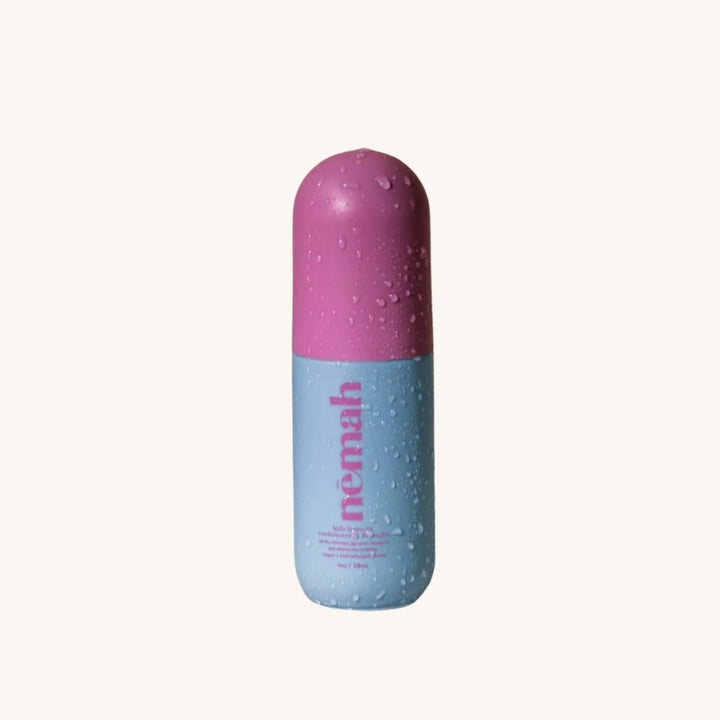
For families who want one leave-in step rather than several layering products, the Detangler & Leave-In Conditioner for Kids by Nēmah is a lightweight, silicone-free spray that can be used on wet or dry hair. The formula uses olive-derived squalane and coconut oil for softness and manageability, and the current product page specifically notes its use on delicate curls.
Detangler & Leave-In Conditioner for Kids
$16.99
Nemah’s Detangler & Leave-In Conditioner for Kids is a clean, lightweight formula designed to make brushing simple and stress-free. Powered by olive-derived squalane, it locks in weightless moisture to keep strands soft and manageable, while coconut oil deeply nourishes, smooths rough… read more
If detangling is one of the biggest wash-day challenges, our clean beauty kids hair detangler guide explains what to check for in leave-ins, fragrance, slip, and protective-style takedown.
Scalp comfort for braids and twists
- Avoid “more product = better.” Heavy layering can lead to buildup that feels itchy or flaky.
- Watch for tight-style irritation. If bumps, tenderness, or persistent itching show up, consider loosening styles and checking in with a qualified clinician if it doesn’t resolve.
Why Popsicle’s curation matters here
With clean beauty for black girls, hair care is often where parents get stuck: you want clean-leaning ingredients and real performance. Popsicle Beauty Club’s role is to narrow the field to brands we consider aligned with ingredient transparency, kid-appropriate use, and real-world family routines—so you’re not guessing from viral videos.
Age-appropriate makeup play (Foundationless): what to choose instead of coverage
It’s normal for kids to be curious—especially with “get ready with me” content everywhere. Popsicle’s Foundationless stance applies across skin tones: clean beauty for black girls should not translate into early pressure to perfect or cover the face.
What to offer instead
- Lip balm and gloss (tinted or clear) for a fun, low-stakes first step
- Washable color for costume play or special occasions (not daily correction)
- Face gems, stickers, or sparkle accents placed thoughtfully away from eyes
- Nail color and nail art as a creative outlet (with remover boundaries)
For a simple color-play option, Plant-Based Lip Gloss for Kids by Jovy keeps the focus on lips rather than complexion coverage. It currently comes in a soft lavender shimmer and peachy-pink option with a smooth, non-sticky finish, making it a straightforward example of the kind of playful beauty category discussed here.
Plant-Based Lip Gloss for Kids

$14.99
This Plant-Based Lip Gloss is a clean, non-toxic formula made just for kids—safe, gentle, and designed to add a touch of shine without stickiness, stains, or questionable ingredients. Available in two beautiful tints—a soft lavender shimmer (EWG VERIFIED™) and a… read more
Parent script that works
“Makeup is for art, not for fixing.” You can also add: “We’re going to wait on face correction-focused products—those are for later. Right now, we can do lip balm, nails, or gems.” This keeps the boundary clear without shaming curiosity.
Common mistakes to avoid
Shopping clean beauty for black girls gets easier when you know which common mistakes to avoid.
- Buying “clean” based only on a front label. Always check the full ingredient list—especially for fragrance, dyes, and products used near eyes/lips.
- Turning self-care into a daily performance. Kids don’t need multi-step routines. More products can mean more irritation opportunities.
- Normalizing correction-focused products too early. Foundation, concealer, simple skin care, simple moisturizers, and “evening out” routines can shift the message from play to self-correction.
- Overdoing scented leave-on products. If a child is reactive, fragrance can be the difference between “fine” and “why is she itchy?”
- Skipping patch tests. For new leave-on products (especially deodorant, fragrance, or richly pigmented items), patch test when appropriate and introduce one product at a time.
- Ignoring persistent scalp or skin symptoms. If discomfort, rash, or acne distress is ongoing, get clinician guidance rather than trying to cover it with makeup.
Shopping path: how Popsicle helps you buy with less overwhelm
If you’re trying to shop clean beauty for black girls without spiraling into ingredient Googling, here’s a practical way to use a curated marketplace like Popsicle Beauty Club:
- Start with the category that matters most (often hair/scalp, then lip care, then simple skin basics).
- Choose 1–2 products max to start. Simpler routines are easier to troubleshoot.
- Favor easy removal and gentle wear for anything color-based.
- Re-check the label when you repurchase. Brands sometimes reformulate.
Popsicle’s goal is to make “clean kids’ beauty” feel like a manageable set of choices—with childhood development and real family life included in the standard.
Bottom line
Clean beauty for black girls works best when it’s hair-first, simplicity-forward, and Foundationless: transparent ingredients, gentle everyday basics, and makeup that stays in the lane of art and play—not coverage or correction. Read labels, patch test when appropriate, and use a curated hub like Popsicle Beauty Club to compare vetted options in one place with less overwhelm.
Sources and further reading
- NIEHS: Cosmetics and Your Health - Background on what counts as cosmetics and how oversight works.
- NIEHS: Endocrine Disruptors - Explains endocrine disruptors and common exposure routes.
- FDA: Phthalates in Cosmetics - Notes on phthalates, fragrance labeling limitations, and context for parent label checks.
To learn more about choosing the safest shampoos, conditioners, and detanglers for kids, visit Non-Toxic Hair Care for Kids for a complete guide to gentle, chemical-free hair care.
About the Author: This article was written by the contributing writers at Popsicle Beauty Club—a team of moms, educators, and clean beauty advocates passionate about creating a safer, more imaginative world for kids. We believe in empowering parents with trusted information and offering fun, non-toxic beauty and personal care products that let children play, express, and explore—without compromising their health.
FAQs
What’s the best first “makeup” for kids who want to start?
Is fragrance always a problem in kids’ products?
How do I shop clean beauty for black girls if my child has sensitive skin?
What should I look for in clean hair care for Black girls with curls or coils?
Look for products that make detangling easier without requiring a long routine. Prioritize enough slip for gentle comb-through, clear fragrance information, straightforward ingredient lists, and formulas that leave the scalp and hair comfortable rather than heavily coated.
How can I care for the scalp when my child wears braids or protective styles?
Keep styles comfortably tensioned, avoid layering excessive product on the scalp, and watch for persistent itching, bumps, tenderness, or flaking. Cleanse on a schedule that suits the style and the child’s scalp, and seek qualified guidance if irritation does not settle after the style is loosened or removed.
How can I choose makeup colors for deeper skin tones without introducing foundation?
Start with expressive categories such as lip gloss, nail color, shimmer, face gems, or washable color rather than complexion coverage. When available, look at product swatches or photos across different skin tones and choose shades your child enjoys, while keeping removal simple and the focus on play.