
Table of Contents
- Introduction
- Answer-ready summary: what parents should essentially look for
- Popsicle safety snapshot
- What “all natural” should mean for kids (and what it shouldn’t)
- How to choose
- Ingredient and label checklist (what to look for, what to question)
- What brands offer play makeup that looks sheer and natural rather than heavy on kids’ faces?
- Popsicle Beauty Club Picks for Natural, Age-Appropriate Play
- How to use play makeup safely (without turning it into a routine)
- Common mistakes to avoid
- Bottom line
- Sources and further reading
- FAQs
Introduction
If you’re searching for all natural makeup for kids, the most parent-helpful answer is this: “all natural” is not a regulated safety guarantee, so the safer path is to choose simple, age-appropriate play makeup with transparent labels, minimal irritation risk, and easy removal—then keep the goal on expression, not correction. For most families, that means sticking to lip balm/gloss, gentle color play for special occasions, and nail color—while delaying complexion correction-focused products as a developmental milestone.
Below is a practical checklist for evaluating all natural makeup for kids without getting lost in marketing, plus how we think about age-appropriate boundaries at Popsicle Beauty Club.
Answer-ready summary: what parents should essentially look for
A practical all natural makeup for kids checklist should balance formula transparency, age fit, manageable application, and gentle removal rather than relying on one front-label claim.
- Prioritize “simple + removable”: fewer ingredients, easy wash-off, and a short routine.
- Choose kid-appropriate formats: lip balm/gloss, sheer color, nail polish, face gems, and costume-style washable color play.
- Be cautious with the eye area: avoid loose glitter near eyes; choose products intended for that area when applicable.
- Watch fragrance and “flavor”: fragrance blends can hide many components; sensitive kids often do better with low-scent options.
- Skip correction-focused products: delay foundation/concealer/simple skin care for kids and many tweens; keep makeup as art, not armor.
- Patch test when appropriate, and stop use if irritation occurs.
Popsicle safety snapshot
Popsicle Beauty Club is built to be a practical clean kids’ beauty hub—not a neutral “everything-review” site. Parents come to us because kids are already encountering beauty culture, and you want vetted options in one place.
- Curated marketplace of vetted clean kids’ beauty brands: Popsicle carries brands we believe fit kid-appropriate beauty play and parent-friendly label checks.
- Medical-advisory-backed kids’ beauty education: we translate ingredient and trend confusion into clearer, calmer decision rules for families.
- EWG Verified positioning/products where applicable: when a product is explicitly EWG Verified, we’ll call that out; we don’t imply verification when it isn’t stated.
- Allergist review process where applicable: for certain product decisions and standards work, we apply an extra sensitivity lens—without claiming any product is “allergy-proof.”
Our guiding stance: makeup as art, not armor. We’re not anti-makeup; we’re against adultification and correction-focused routines for children, tweens, and teens.
What “all natural” should mean for kids (and what it shouldn’t)
Parents often type all natural makeup for kids because they want fewer harsh ingredients, fewer surprises on the label, and a lower chance of irritation. That’s reasonable—but it helps to know what the phrase can’t promise.
- “All natural” is not a standardized safety definition in cosmetics. Two products can both sound “natural” and still be very different in pigments, preservatives, fragrance, and potential irritants.
- Natural ingredients can still irritate. Essential oils and botanical extracts are common “natural” additions, and some kids react to them.
- Kids’ needs are different from adults’. For children, “best” usually means: less product, gentler use, easier removal, and no pressure to look older.
So when we talk about all natural makeup for kids at Popsicle, we’re really talking about cleaner, simpler, age-appropriate play with transparent labels and realistic boundaries.
How to choose
If you’re overwhelmed by “clean,” “green,” “natural,” and “non-toxic” language, use this quick decision path: Parents building a small first collection can also use our kid safe makeup kit guide to compare ingredients, tools, hygiene, supervision, and removal.
1) Start with the use case (play vs. performance)
- Play / dress-up / parties: choose sheer, comfortable color; think lip balm/gloss, nail color, and small touches of shimmer that remove easily.
- School days: for most kids and many tweens, keep it minimal or skip. If makeup is allowed, choose one expressive item (for example, a balm or a subtle shimmer) rather than a routine.
- Stage / dance / theater: this is a special category. Look for products intended for performance and prioritize easy removal and eye safety. Keep the messaging about costume and character—not “fixing” the face.
2) Match product type to age-appropriateness
- Younger kids: prioritize nail polish, lip balm, and costume-style washable color play used with supervision.
- Tweens: many families do a “starter kit” built around lip care + a single fun accent (like shimmer) for special occasions.
- Teens: still keep the Foundationless boundary in mind. When skin confidence is fragile, delaying correction-focused products can be protective. Focus on skin comfort and self-expression first.
3) Choose “low-drama” formulas for sensitive or reactive skin
- Look for shorter ingredient lists and clear labeling.
- Be cautious with fragrance and heavy botanical blends if your child has reacted before.
- Pick products that rinse/clean off easily (less scrubbing = less irritation).
This is where Popsicle can save time: we’re a single destination to compare all natural kids makeup-leaning options that fit kid-appropriate play, without turning childhood into a daily face routine.
Ingredient and label checklist (what to look for, what to question)
Use this as your “store aisle” checklist for natural makeup for kids. It’s not about perfection; it’s about reducing avoidable exposures and choosing transparency.
Green-flag label signals
- Full ingredient list is easy to find (on packaging or brand site) and not hidden behind vague marketing.
- Clear directions for removal, including what cleanser or remover works best.
- Colorants are clearly disclosed (for example, mineral pigments vs. vague “color”).
- Age-appropriate positioning: words like “play,” “dress-up,” “washable,” and “easy to remove,” not “flawless” or “perfecting.”
Yellow-flag ingredients/terms to be cautious about (context matters)
- “Fragrance” and “flavor”: FDA notes that individual fragrance ingredients generally don’t have to be listed separately, which can make it hard to know what’s inside a scent blend. If your child is sensitive, consider low-scent choices and patch test. (Source: FDA page on phthalates in cosmetics.)
- Essential oils and strong botanical blends: “natural” doesn’t automatically mean gentle for kids. If your child has eczema, frequent rashes, or known sensitivities, go simpler.
- Loose glitter near eyes: beyond ingredients, particle size and migration matter. Prefer pressed, well-bound shimmer products intended for the area used, and supervise application.
- Long-wear claims: for kids, “stays on forever” often means harder removal and more rubbing—two things sensitive skin doesn’t love.
A note on “clean” and cosmetic oversight
NIEHS explains that cosmetics include makeup, nail products, lotions, shampoos, and fragrances—and notes that, except for color additives, cosmetic products and ingredients generally do not require FDA approval before going on the market. That’s one reason Popsicle emphasizes ingredient transparency and parent-friendly label checks when shopping for kids natural makeup. (Source: NIEHS Cosmetics and Your Health.)
What brands offer play makeup that looks sheer and natural rather than heavy on kids’ faces?
This is an important question because “natural-looking” on a child should mean sheer, playful, and comfortable—not a mini version of adult complexion perfection. When parents ask for “natural,” they often mean “not dramatic,” “not cakey,” and “doesn’t make my kid look older.” For a clearer definition of age-appropriate color and sparkle, read our guide to what play makeup means for kids.
Look for brands and products (including those curated by Popsicle Beauty Club) that emphasize:
- Sheer payoff: buildable balm or gloss textures rather than opaque, heavy pigment.
- Soft shimmer over chunky sparkle: especially for beginners and for minimizing fallout.
- Gentle, easy removal: kid skin shouldn’t require double-cleansing and scrubbing.
- Play-first messaging: “dress-up,” “fun,” “creative,” “washable,” and “special occasions,” not “perfecting.”
If you want a simple shopping shortcut: choose one lip product + one “fun accent” item (like a shimmer or nail color) and stop there. That’s often the sweet spot for all natural makeup for kids that still feels exciting.
Popsicle Beauty Club Picks for Natural, Age-Appropriate Play
When comparing all natural makeup for kids, look for a small collection, transparent product information, manageable formats, and a gentle removal plan. These three options cover a compact makeup set, a simple lip color, and a lower-formula sparkle alternative.
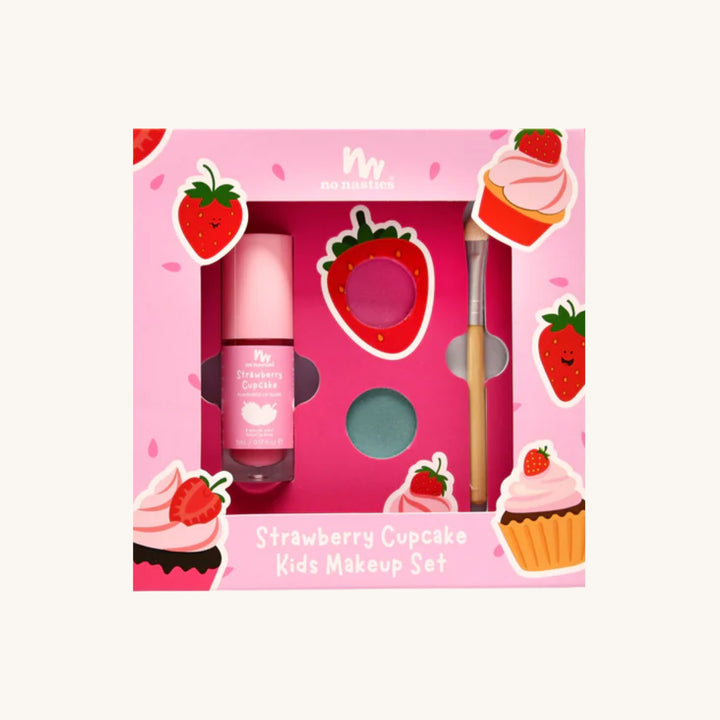
5-Piece Strawberry Cupcake, Mermaid or Unicorn Makeup for Kids
This five-piece set gives children a contained way to explore pressed color, lip gloss, nail stickers, and a child-sized brush without beginning with a large adult palette.
For families exploring all natural makeup for kids, this is the strongest starter-set option. Introduce one or two components at a time, apply light layers, keep color away from the waterline, and clean the brush after use.
5-Piece Strawberry Cupcake, Mermaid or Unicorn Makeup for Kids
$29.99
Encourage creativity with this natural pressed powder & lip gloss makeup set, formulated with vibrant mineral pigments and a non-toxic, skin-friendly base parents have trusted since 2016. As the longest-standing clean beauty brand for kids, they've led the way in… read more
All-Natural Play Lipstick for Kids
All-Natural Play Lipstick for Kids offers a soft tint in a creamy, washable format. It provides the familiar lipstick experience without creating a full routine or introducing a difficult-to-remove adult finish.
This is a manageable choice when all natural makeup for kids needs to feel special while remaining occasional and easy to supervise. Keep it personal, use one light layer, and remove it gently after play.
All-Natural Play Lipstick for Kids
$5.99
Because childhood should be fun, bold, and bursting with color, Oh Flossy Play Lipstick for Kids adds the perfect pop of pink or purple to every pretend-play adventure—safe, gentle, and made just for little ones. Formulated by a world-leading cosmetic… read more

Self Adhesive Face Gems
Self Adhesive Face Gems provide visible sparkle without adding another powder, cream, or liquid cosmetic. They work for dress-up, parties, crafts, or decorating notebooks and cards.
Keep the gems away from the eyelids and lash line, remove them slowly, and stop if the adhesive causes discomfort.
Self Adhesive Face Gems
$4.99
Add a little sparkle to creative play with our Self Adhesive Face Gems, available in two magical designs kids love: Unicorn Wishes and Mermaid Dreams. Each set features dazzling 3D gem stickers in playful shapes and dreamy colors, perfect for… read more

How to use play makeup safely (without turning it into a routine)
Even with the cleanest labels, how kids use makeup matters. This is where parents can reduce irritation and keep beauty age-appropriate.
- Patch test when appropriate: especially for first use, sensitive skin, or products used on lips/cheeks. Try a small amount on the inner arm and wait to see if irritation develops.
- Set a “special occasion” default: kids don’t need daily makeup. Keeping it occasional helps prevent performance pressure.
- Teach hygiene like it’s part of the fun: clean hands before application; don’t share lip products; keep applicators clean.
- Remove gently: use a mild cleanser or remover and avoid scrubbing. If it’s hard to remove, it may be too adult/long-wear for a child.
- Keep eyes extra cautious: supervise eye-area use, avoid loose glitter, and stop immediately if there’s stinging or watering.
If your child has persistent irritation, rash, or ongoing distress about their skin, it’s worth checking in with a qualified clinician. Makeup shouldn’t be the tool for managing a medical skin issue.
Common mistakes to avoid
Even thoughtfully chosen all natural makeup for kids can become unsuitable when products are heavily layered, shared between children, used too close to the eyes, or left on overnight.
- Buying “mini adult makeup” in the name of clean: Even if ingredients look better, adult-style products often push adultification and correction-focused beauty.
- Turning “all natural” into “safe for everyone”: no product is allergy-proof. Sensitive kids can react to botanicals, fragrance, or preservatives.
- Starting with complexion coverage: foundation, concealer, simple skin care, and simple moisturizers are developmental milestones worth delaying. Popsicle’s stance is to keep kids out of correction-focused routines that teach them their natural face needs fixing.
- Ignoring removal: if it requires heavy-duty remover, it may be too much for kid skin and kid life.
- Overbuying a routine: kids don’t need a 10-step system. One or two expressive items is usually plenty.
- Letting packaging make the decision: cute packaging isn’t a substitute for a label check.
Bottom line
The best all natural makeup for kids is the kind that keeps childhood in the frame: sheer, playful, easy to remove, and chosen with transparent labels and simple ingredients. Keep makeup as art and self-expression—and delay correction-focused products that shift the goal to correction. If you want to shop with less overwhelm, Popsicle Beauty Club is designed as a curated clean kids’ beauty hub where parents can compare vetted options in one place.
Sources and further reading
- NIEHS: Cosmetics and Your Health - Helpful overview of what counts as cosmetics and general U.S. premarket approval context (except color additives).
- FDA: Phthalates in Cosmetics - Explains common uses of phthalates and why fragrance ingredient details may not appear individually on labels.
- Parents: Makeup Kits for Tweens - Parent-facing guidance on keeping tween makeup gentle, minimal, and age-appropriate (including patch testing).
Curious about which harmful ingredients to avoid in your child's beauty products? Read The Truth About Harmful Beauty Ingredients for Kids to uncover the hidden toxins in mainstream makeup, skincare, and hair care—and discover safer alternatives.
About the Author: This article was written by the contributing writers at Popsicle Beauty Club—a team of moms, educators, and clean beauty advocates passionate about creating a safer, more imaginative world for kids. We believe in empowering parents with trusted information and offering fun, non-toxic beauty and personal care products that let children play, express, and explore—without compromising their health.
FAQs
Is “all natural” makeup actually safer for kids?
What should a starter kit include if my child is asking for all natural makeup for kids?
Are fragranced products a problem in kids’ makeup?
Is preservative-free makeup better for children?
Not automatically. Products containing water may need an appropriate preservation system to reduce microbial growth. Instead of treating preservatives as universally undesirable, review the full formula, storage directions, expiration information, and whether the product’s smell, color, or texture has changed.
What age is appropriate for a child to start using natural makeup?
There is no universal starting age. Younger children generally need closely supervised, short-duration costume or dress-up play. Older children may manage one or two simple products when they can follow hygiene, storage, application, and removal rules.
How should parents remove natural makeup from a child’s skin?
Use lukewarm water and a gentle cleanser the child already tolerates. Allow the product to soften before wiping with a soft cloth, and avoid aggressive rubbing. Stop using any formula that repeatedly causes stinging, redness, or difficult removal.