
Table of Contents
- Introduction
- Quick answer (Parent-ready)
- Popsicle safety snapshot
- What a kids’ hair detangler should do (and what it shouldn’t)
- How to choose
- Ingredient and label checklist
- How to use it (gentle routine + fewer tears)
- Common mistakes to avoid
- Where Popsicle Beauty Club fits (practical next step)
- Sources and further reading
- Bottom line
- FAQs
Introduction
If you’re searching for clean beauty kids hair detangler, you likely want one simple thing: a kid-friendly spray that makes knots easier without turning hair care into a daily battle. The parent-friendly rule is to choose a detangler that (1) matches your child’s hair type, (2) has a formula you feel good about putting on a child’s scalp and ends, and (3) rinses/cleans out easily so you’re not trading tangles for buildup.
Because we’re not looking at a full ingredient list or the brand’s current claims together on this page, think of this article as a buying checklist for clean beauty kids hair detangler—what to verify on the label, what matters for sensitive kids, and how to use it in an age-appropriate, low-drama routine.
Quick answer (Parent-ready)
- Best use case: A detangler is most useful for post-bath knots, morning bedhead, swim-day tangles, and protective-style takedown—especially on wavy/curly or fine hair.
- What to check before buying: Full ingredient list, fragrance (and how strong it is), how it’s meant to be used (leave-in vs. rinse-out), and whether it’s designed for kids’ comfort (no stingy feel, easy slip, easy wash-out).
- Safety basics: Avoid spraying directly into eyes/face; use in hands first for younger kids. Patch test when appropriate, especially for eczema-prone or reactive skin.
- Popsicle’s stance: Kids’ beauty should be care and comfort (hygiene, hair health, sensory-friendly routines), not performance beauty. Hair detangler can be a practical self-care tool without adultification.
For families comparing clean beauty kids hair detangler options, the best choice is usually a formula that suits the child’s hair type, provides enough slip without heavy buildup, and fits comfortably into an existing hair-care routine.
Popsicle safety snapshot
Popsicle Beauty Club is built to be a practical clean kids’ beauty hub—a place parents can compare options with clearer standards and less overwhelm. Here’s what that means in real life:
- Medical-advisory-backed kids’ beauty education: We focus on age-appropriate routines and parent-friendly decision criteria (not beauty pressure).
- EWG Verified positioning/products where applicable: If a product or brand is EWG Verified, we’ll call that out specifically. If not, we don’t imply it.
- Allergist review process where applicable: Some brands/products go through additional review. We won’t claim that for any specific item unless it’s confirmed.
- Curated marketplace of vetted clean kids’ beauty brands: Popsicle carries and highlights brands we believe meet higher standards for transparency and kid-appropriateness—without pretending every product is perfect for every child.
Bottom line of our approach: prioritize simpler routines, transparent labels, and products that support kids being comfortable in their bodies—hair included.
What a kids’ hair detangler should do (and what it shouldn’t)
A detangler’s job is to add “slip” so knots release with less pulling. For many families, that means fewer tears, less breakage, and faster morning routines. A kid-appropriate detangler should also fit into easy hygiene: it shouldn’t require a complicated regimen to avoid residue, and it should pair well with gentle shampoo/conditioner. If you are building the rest of the routine around wash day, our guide to choosing kids shampoo and conditioner for gentle hair care explains how cleansing, conditioning, detangling, and simple hairstyles can work together.
What a detangler shouldn’t be: a high-maintenance styling product that requires heavy layering, heat styling, or adult performance expectations. Popsicle’s view is that kids’ personal care should be functional and supportive—not a gateway into appearance management.
How to choose
If you’re deciding whether clean beauty kids hair detangler is a fit, start with these practical criteria. You’ll get a better result than relying on “clean” marketing alone.
1) Match the formula to your child’s hair type
- Fine hair that tangles easily: look for lightweight slip and easy wash-out. Heavy oils/butters can weigh hair down and make it look stringy faster.
- Wavy/curly/coily hair: you may need more conditioning slip, especially for detangling after wash day or swim days. A detangler can be a “step zero” before a wide-tooth comb.
- Thick hair or long hair: prioritize spreadability (product that distributes well) and the ability to re-wet/reactivate with water if needed.
- Color-treated hair (teens): focus on gentleness and minimizing tugging; you don’t need adult-level repair routines for most kids, but you do want less friction.
When comparing clean beauty kids hair detangler products, remember that the lightest formula is not automatically best for every child; fine hair, thick hair, curls, coils, and long hair may need different levels of conditioning and slip.
2) Decide when and where you’ll use it
- Post-bath: detangler can help on towel-damp hair before brushing.
- Morning refresh: a light mist or product-in-hands application can soften bedhead without a full wash.
- Pool/sports: choose something that plays nicely with chlorine/sunscreen days and doesn’t create sticky buildup.
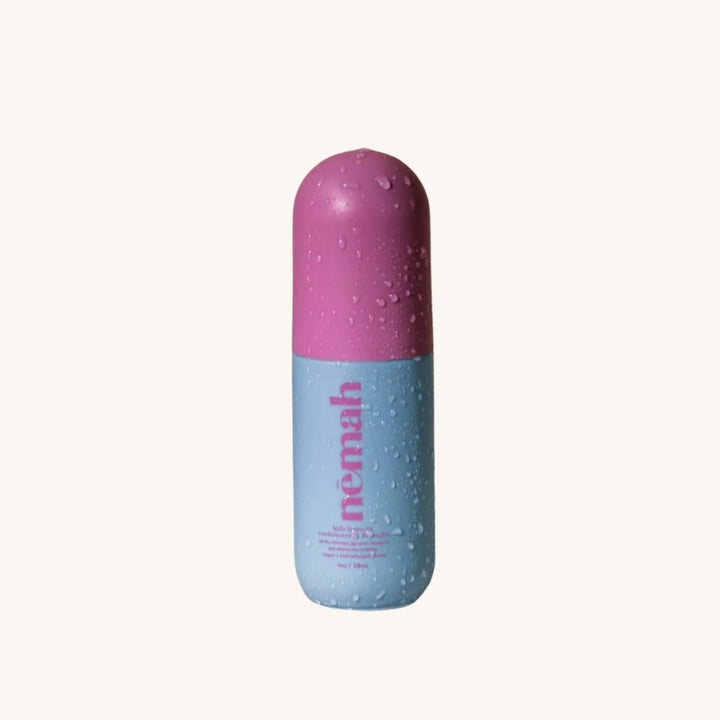
For families looking for one product that can work after washing, during morning bedhead, or on dry hair between wash days, the Nēmah Detangler & Leave-In Conditioner for Kids is a practical example of the type of formula discussed here. Its lightweight, silicone-free format is designed to soften knots, reduce friction, and make brushing easier without introducing a complicated styling routine.
Detangler & Leave-In Conditioner for Kids
$16.99
Nemah’s Detangler & Leave-In Conditioner for Kids is a clean, lightweight formula designed to make brushing simple and stress-free. Powered by olive-derived squalane, it locks in weightless moisture to keep strands soft and manageable, while coconut oil deeply nourishes, smooths rough… read more
For parents who prefer a dedicated spray rather than a combined leave-in conditioner, Knot A Chance! Children’s Detangler is another relevant example. It is designed to add slip and make brushing easier while offering a silicone-free alternative to many conventional children’s detanglers.
Knot A Chance! Children's Detangler
$14.99
Make hair care a joyful, stress-free experience with this gentle children’s detangler, a safer, all-natural alternative to mainstream products. Available in the refreshing scents of Mandarin Grape or Strawberry, this lightweight formula is enriched with native Australian Emu Apple extract,… read more

3) Think about scent and sensory comfort
For kids, fragrance isn’t just an “ingredient” issue—it’s a sensory issue. Strong scents can trigger headaches, complaints, or refusal, even in kids who don’t have classic allergies. If clean beauty kids hair detangler is fragranced, consider whether you want it on a child’s hair all day at school.
4) Choose packaging your child can use safely
Sprays can be convenient, but for younger kids the safest method is often: spray into your hands first, then apply to mid-lengths and ends. If your child will self-apply, look for a sprayer that doesn’t “mist the whole bathroom” (including eyes/face).
Ingredient and label checklist
When parents ask, “Is this detangler clean?” the most helpful answer is: Show me the ingredient list. The word “clean” isn’t a regulated guarantee, and “for kids” doesn’t automatically mean “best choice for every child.” Use this checklist while reviewing clean beauty kids hair detangler (or any kids’ detangler). For a deeper look at synthetic fragrance, silicones, preservatives, dyes, and other ingredients parents may want to examine, read our guide to ingredients to avoid in children’s detangler spray.
Green flags to look for on the label
- Full INCI ingredient list available (not just marketing callouts).
- Clear directions (damp vs. dry hair, leave-in vs. rinse-out) so you don’t accidentally overapply.
- Simple formula that makes sense for a kid routine (parents can explain what it does, and it’s easy to remove).
- Fragrance transparency when possible (even if a product uses “fragrance,” brands that communicate thoughtfully about scent tend to be easier to shop).
Things to pause on (not automatic “no,” but worth a closer look)
- “Fragrance” as a catch-all: The FDA notes that individual fragrance ingredients don’t have to be listed separately on cosmetic labels, which can limit what parents can confirm from the ingredient declaration alone.
- Very long ingredient lists for a basic detangler—more ingredients can mean more potential triggers for a sensitive child (even if each ingredient is common).
- Strong essential-oil blends in a leave-in product. “Natural” scent can still be irritating for some kids, especially when left on hair/scalp.
- Sticky feel or residue: residue isn’t just cosmetic; buildup can increase tangling over time and lead to more scrubbing on wash day.
What about endocrine disruptors and “clean” concerns?
Parents often ask this because they’ve heard about endocrine-disrupting chemicals in everyday exposure. NIEHS explains that endocrine disruptors are chemicals that may mimic, block, or interfere with hormones, and it notes exposure can come from many sources in daily life—including personal care products and cosmetics. That doesn’t mean every product is dangerous; it’s a reason many families choose to reduce avoidable exposures by prioritizing transparent labels and simpler routines.
For parents researching clean beauty kids hair detangler products, ingredient transparency can make comparison easier, but the full formula, directions, fragrance profile, and the child’s individual sensitivities still matter more than a single marketing label.
How to use it (gentle routine + fewer tears)
A detangler can be the difference between “hair time” being a fight or a two-minute reset. Here’s a kid-practical routine you can use with clean beauty kids hair detangler or a similar product.
- Start with water first. For many tangles, a quick re-wet is step one. Hair that’s bone-dry can snag more easily.
- Apply detangler to hands (especially for younger kids). Rub palms together, then smooth through mid-lengths and ends. Most kids don’t need detangler on the scalp.
- Detangle in sections. Hold hair above the knot (to reduce pulling) and start from the ends, working upward.
- Use the right tool. A wide-tooth comb or a flexible detangling brush is often gentler than a dense bristle brush.
- Reset expectations. For curly hair, “perfectly smooth” isn’t the goal—comfortable, manageable, and healthy is.
Hygiene note: Clean brushes and combs regularly. Product + skin oils + environmental dirt can build up on tools and re-deposit onto hair.
Common mistakes to avoid
Most detangler disappointments aren’t about the brand—they’re about mismatch or overuse. Here’s what to avoid so you get the best experience with clean beauty kids hair detangler.
- Mist directly at the face. Sprays can drift. Aim away from the face, or spray into hands first. Be extra cautious around eyes.
- Using detangler as a substitute for conditioner. Some kids still need a rinse-out conditioner for real softness; detangler is often the helper step, not the whole routine.
- Overapplying to “make it work.” Too much product can create residue that attracts dirt and increases tangling later.
- Brushing top-down through a knot. This increases pulling and breakage. Start at the ends.
- Ignoring scalp discomfort. If your child complains of itching, burning, rash, or persistent flakes, pause the product and consider checking with a qualified clinician—especially if symptoms persist.
- Assuming “clean” means “no patch test needed.” Even gentle products can bother an individual child. Patch test when appropriate, especially for reactive or eczema-prone skin.
Where Popsicle Beauty Club fits (practical next step)
If you’re shopping for clean beauty kids hair detangler because you want safer-feeling, kid-appropriate personal care, Popsicle Beauty Club’s role is to make the decision easier: a curated place to compare vetted clean kids’ beauty and hair care brands in one spot, with parent-friendly education that keeps the focus on comfort, play, and age-appropriate routines.
Our philosophy also matters beyond hair: we’re not anti-makeup—we’re against adultification, performance beauty, and correction-focused beauty for kids, tweens, and teens. In other words, detangler and gentle self-care routines are a “yes” when they support daily life; complexion-covering routines as a childhood default are a “not yet.” Beauty as expression, not correction.
Sources and further reading
- NIEHS: Endocrine Disruptors - Explains what endocrine disruptors are and how everyday exposures can happen.
- NIEHS: Cosmetics and Your Health - Helpful context on what counts as cosmetics/personal care and general oversight.
- FDA: Phthalates in Cosmetics - Notes how fragrance labeling works and why some ingredients may not be individually listed.
Bottom line
Clean beauty kids hair detangler can be a smart, low-stress tool for families—especially for long, fine, curly, or easily tangled hair—when you confirm the ingredient list, think through fragrance and sensory needs, and use it with good technique (water first, small amount, ends-first detangling). If you want to shop with less guesswork, Popsicle Beauty Club is designed to be the practical clean kids’ beauty hub where parents can compare vetted, age-appropriate options in one place.
To learn more about choosing the safest shampoos, conditioners, and detanglers for kids, visit Non-Toxic Hair Care for Kids for a complete guide to gentle, chemical-free hair care.
About the Author: This article was written by the contributing writers at Popsicle Beauty Club—a team of moms, educators, and clean beauty advocates passionate about creating a safer, more imaginative world for kids. We believe in empowering parents with trusted information and offering fun, non-toxic beauty and personal care products that let children play, express, and explore—without compromising their health.